
StraightSmile Solutions®
Which Comes First on Phase 1 Airway Cases? Ortho, ENT, or OMT?

Which Comes First on Phase 1 Airway Cases? Ortho, ENT, or OMT?
I. Introduction
● The perplexing dilemma in orthodontics and airway cases
● The need for collaboration among ENTs, OMTs, orthodontists, primary care dentists, and physicians
II. Comprehensive Assessment
● Importance of a comprehensive assessment
● Steps in the assessment process
Sleep Screening
Cephalometric X-ray
CBCT scan for airway evaluation (e.g., Beam Raiders)
● Uncovering issues such as adenoids, lingual tonsils, and facial growth patterns
III. The Role of the ENT
● Determining when the ENT should lead
● Addressing concerns when parents resist orthodontic intervention
● The potential consequences of expanding a child’s mouth with existing nocturnal breathing issues
● Using CBCT scans to support the case for ENT intervention
● Involving the primary care physician or pediatrician if needed
IV. Timing of Orthodontic Treatment
● Optimizing the airway before orthodontic expansion
● Considerations based on patient age and skeletal maturity
● Addressing functional problems with OMT
● The variability of the order of intervention in different cases
V. The Role of Oral Myofunctional Therapy (OMT)
● Correcting habits related to breathing, swallowing, and speech
● Importance of a qualified oral myofunctional therapist
● A collaborative approach involving orthodontists, ENTs, and OMTs
VI. Ensuring Proper Sequence for Treatment
● Preventing compromised treatment outcomes
● The significance of collaboration and communication
● Risks of not following the correct sequence
VII. The Value of Interdisciplinary Care
● Additional fees vs. life-changing results for patients and families
● Satisfaction in achieving positive outcomes
● Impact of interdisciplinary care on patients’ lives
VIII. Conclusion
● The nuanced decision of intervention order in airway cases
● Emphasizing collaboration, communication, and sequence for optimal outcomes
● Making a difference in patients’ lives through precision and teamwork in healthcare.
IX. Alternative Options and Resources
A. Continuing Education
● Introduction to the C course covering expansion, evaluation, and on-demand credits.
● Cost-effective learning opportunities through collaboration.
B. Free Resources
● Dr. Amanda offers free resources, such as the phase one CEC course.
● Availability of courses for less than $500 at Straight Smile Solutions.
Identifying Growth Tendencies in Class III Growing Kids
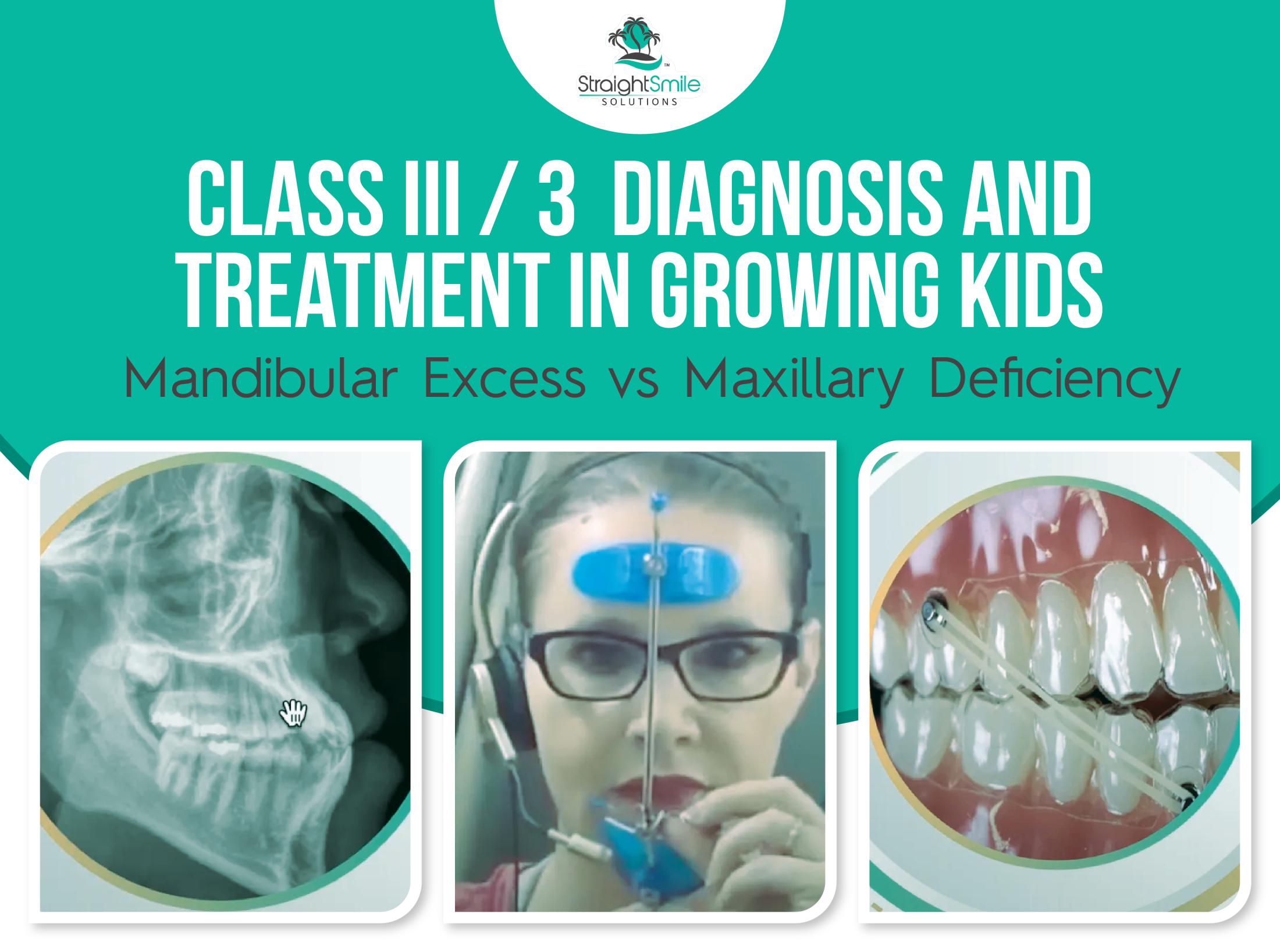
Have you ever wondered about developing a treatment plan for class III growing kids? In many cases, coming up with a class III orthodontics treatment plan can seem a little difficult, but this shouldn’t have to stop you from finding the right approach. Fortunately, our experts have outlined some of the things you should know to help in diagnosing the correct treatment plan for children with Class III cases.
Class III Growth Tendencies in Growing Kids
When coming up with an orthodontics treatment plan for growing children, it’s important to consider the different growth tendencies that growing individuals can express.
Of course, before you go ahead with this, making sure you’ve taken a Ceph is the gold standard of your orthodontics treatment plan. However, you may be able to get an idea of the correct diagnosis by eye.
Mandibular Excess vs Maxillary Deficiency Cases
Generally speaking, maxillary deficiency cases will show up in much younger patients than a mandibular excess. Indeed, mandibular excess cases tend to worsen as the patient’s growth slows down towards the end of their growth, often at the worst point around the end of puberty.
Always consider skeletal growth when addressing mandibular excess and maxillary deficiency cases. Luckily, Class III cases in younger patients is generally easier than in older, non-growing patients, provided they are enthusiastic about the orthodontics treatment plan.
Depending on the case in question, you may be able to move the lower teeth back, the upper teeth or upper jaw forward. Always complete an airway and OMT evaluation before progressing with these cases, to be sure.
Tackling Refinements Sequential Distalization with Invisalign and Clear Aligners
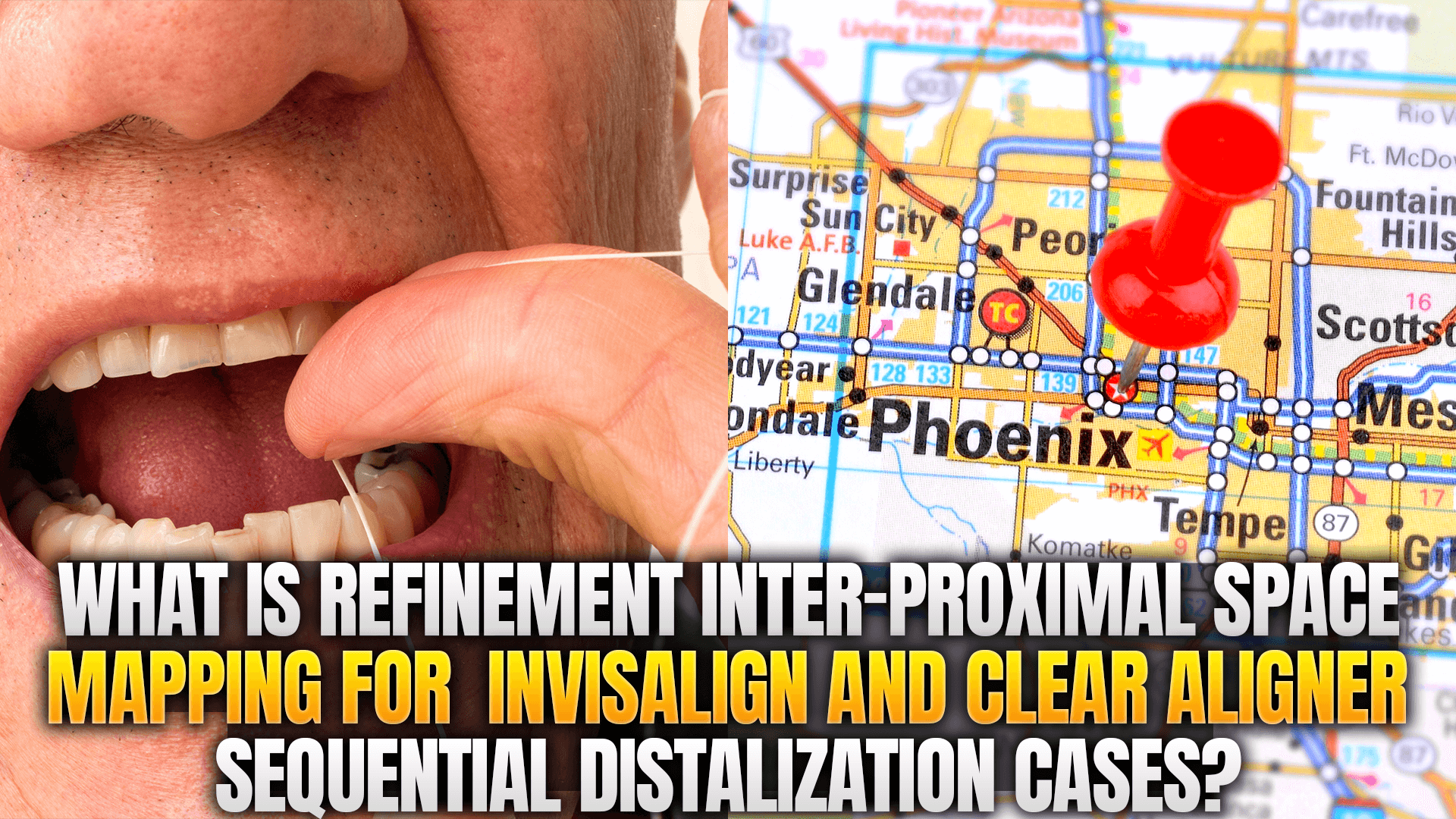
If you’ve been working with a clear aligners company that allows proper sequential distalization, it’s worth noting that these cases will usually be quite time consuming, and you may end up doing one or two refinements, even if you take it slow and low and tackle things properly. But how should you handle refinements for these?
Tackling Refinements for Sequential Distalization
With a typical refinement, you’ll usually take a scan, a set of photos, get bite marks, take a panoramic x-ray, and so on. However, with a sequential distalization refinement, you’ll need to go a step further. In these cases, always map the spaces in the back of the teeth in addition to the usual checks.
To get an accurate measure, especially for open contacts, you’ll need to use an IPR gauge. Usually, gaps will be no larger than 0.5.
Include these in your progress notes or an IPR form; this allows you to cross reference with the ClinCheck to ensure the spaces are being picked up (especially smaller ones). If needed, you could potentially add ghost IPR to the next setup to make the treatment plan more accurate. This also allows you to demonstrate to the patient that yes, the treatment plan is progressing – even though they may not be able to see much change in the front of the teeth immediately.
Of course, before making any decisions on refinements and revisions for sequential distalization, always take a Ceph to check that the movements won’t cause adverse effects to the soft tissue and the bone.
How to Transfer Orthodontists
How to Break Up with Your Orthodontist
Introduction
The journey toward a straighter smile can sometimes feel like a relationship in orthodontics. Dr. Amanda, an expert from Straight Smile Solutions, delves into the delicate topic of contemplating a “breakup” with your orthodontist.
● Dr. Amanda from Straight Smile Solutions addresses patient concerns about orthodontic treatment dissatisfaction.
● Emphasizes the variability in treatment duration and the importance of patient satisfaction.
II. Factors Affecting Treatment Duration
● Orthodontists estimate treatment duration, but various variables can impact progress.
● Factors: tooth movement rates, patient compliance, missed appointments, external factors (e.g., COVID-19).
III. Recognizing Treatment Timelines
● Stress the importance of understanding that treatment timelines are estimates, not fixed.
IV. Handling Dissatisfaction
A. Initiate a Conversation – Patients should contact the orthodontist’s office in advance to request a meeting. – Meeting with the orthodontist and office manager for comprehensive discussion and evaluation.
B. Review Treatment Contract – Patients should refer to their treatment contract for terms and conditions. – Discuss provisions for discontinuation or transfers.
C. Alternative Actions – Mention options like filing complaints with the State Dental Board or insurance, but not as a first resort.
V. Orthodontic Relationships
● Compare orthodontic relationships to dating, emphasizing their long-term nature.
● Normalize occasional considerations of discontinuation.
VI. Seeking Second Opinions
● Encourage patients to seek second opinions from other orthodontists if dissatisfied.
● This can provide valuable insights and improve communication with the original orthodontist.
VII. Maintaining a Friendly Yet Firm Approach
● Advise patients to communicate openly with their orthodontic team.
● Orthodontists are willing to make adjustments to address concerns.
VIII. Conclusion
● Dr. Amanda provides a comprehensive overview of handling orthodontic treatment dissatisfaction.
● Highlights the importance of communication, understanding contracts, and seeking second opinions.
● The goal is patient satisfaction and a successful orthodontic journey.
By offering guidance on understanding treatment contracts and seeking second opinions, Dr. Amanda empowers you to make informed decisions and ultimately achieve the best possible outcome on your orthodontic journey, reinforcing that a successful relationship with your orthodontist is built on trust and open dialogue.
Do You Need a New Pano or OPG for Every Refinement or Revision Case?

Have you ever wondered about taking panos and OCGs for revision and refinement cases? In many cases, this will come down to a case-by-case decision, but there are some things you can keep in mind.
Do You Need a New Pano / OPG for Every Revision or Refinement?
Unfortunately, there’s no clear answer on whether you need a new pano or OPG for every revision or refinement case. Indeed, this will depend on your local regulations.
With that being said, it’s generally good advice to take progress panoramic x-rays every twelve months (or more) during active treatment. As such, you should generally consider taking an additional pano in the following scenarios:
– If you haven’t taken a pano for a while (which is important as standard of care)
– If you’re not sure of how the case is progressing
– If you’ve made changes to the original treatment plan
– If you or the patient have/has concerns or complaints
– If the treatment plan has difficult movements (e.g., uprighting premolars, canine exposures)
If you’re not 100% sure, make sure to take a new pano to help inform your approach to revisions or refinements.
Get Professional Advice
If you are still unsure about whether you need a new panoramic x-ray or OPG for every revision or refinement case, please don’t hesitate to get in touch with our friendly team here at Straight Smile Solutions. We’re proud to provide personalized consulting services for general dentists providing orthodontics cases, and we can help you work out the most effective treatment plan for your revision or refinement, too.
What Should I Do When an Invisalign Aligner or Clear Aligner Breaks?
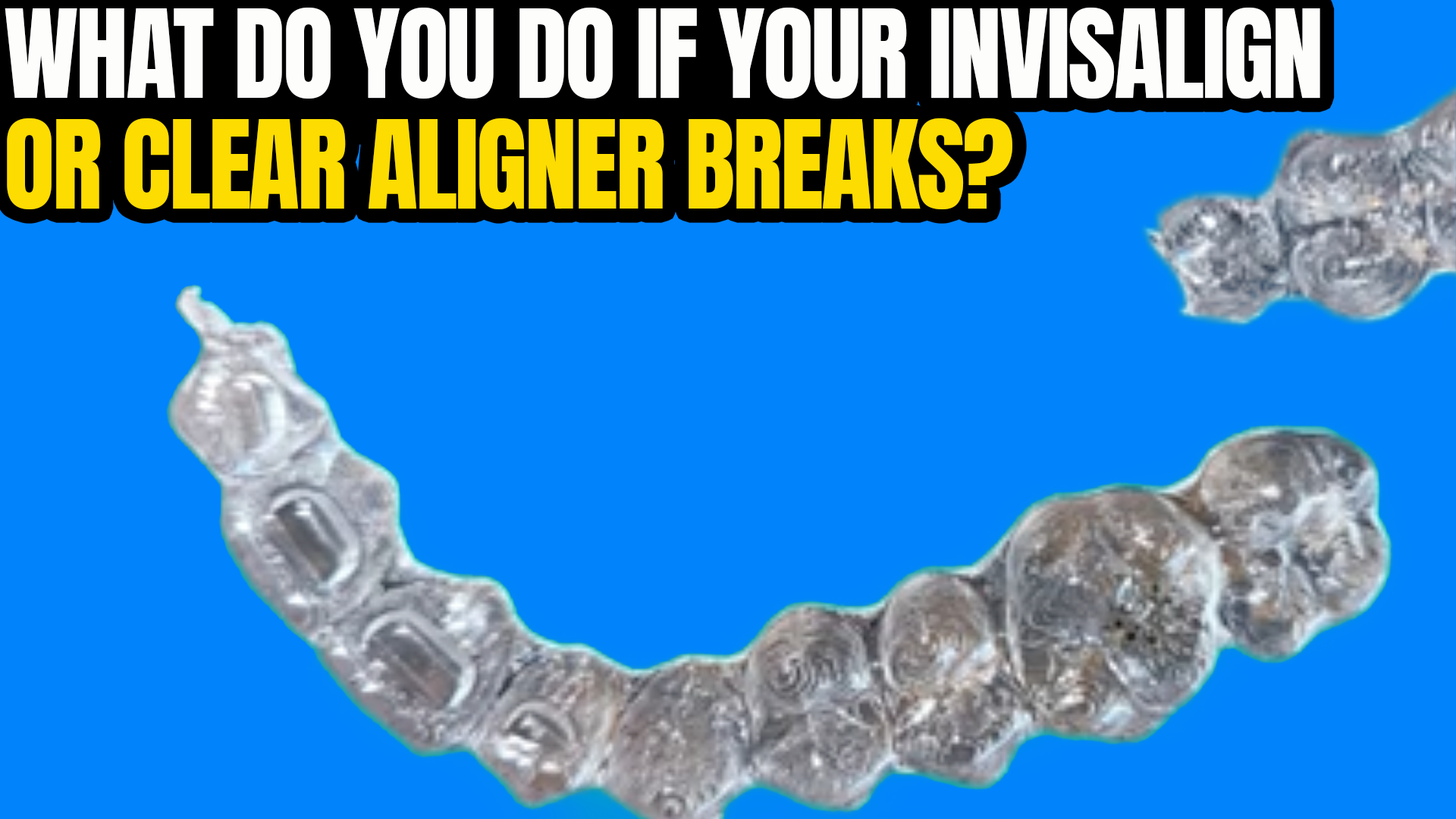
Have you ever wondered about how to tackle breakage with Invisalign aligners or clear aligners? Broken aligners can be a real nuisance, but they’re not too difficult to address if you know how. So, without further ado, we’ve outlined some of the main things you need to know about what to do when an Invisalign or clear aligner breaks.
What to do When Invisalign or Clear Aligners Break?
When dealing with Invisalign and clear aligners, it’s well worth knowing what to do when things go wrong.
There are two main causes of clear aligner or Invisalign breakages. Before you tackle the break, you need to understand why the aligners broke. Common reasons include:
– The aligners did not fit / track properly (causing gaps between the teeth and the aligner)
– Patients wore the aligners for too long (ideally, no longer than seven days if it’s fully inserted, tracking, and it’s properly staged)
It’s always crucial to create a digital accountability loop for your cases to make sure the aligners are properly fitted.
Once you’ve worked out the cause, make sure the patients have another type of aligner to wear; ideally, encourage patients to keep at least the last five sets of aligners. If one breaks, they can then potentially revert back to the previous aligner until a new one comes through.
Some other options when an aligner breaks include:
– Using a suck-down machine temporarily
– Contacting a local lab for a 24-hour turnaround aligner
Never leave your patient wearing nothing, as their teeth will slowly shift while waiting. Allow the teeth to stabilize for a week before taking the next steps with the treatment plan.
VPC, Refinement, or Retainers? When are you DONE with that Invisalign or Clear Aligner Case?
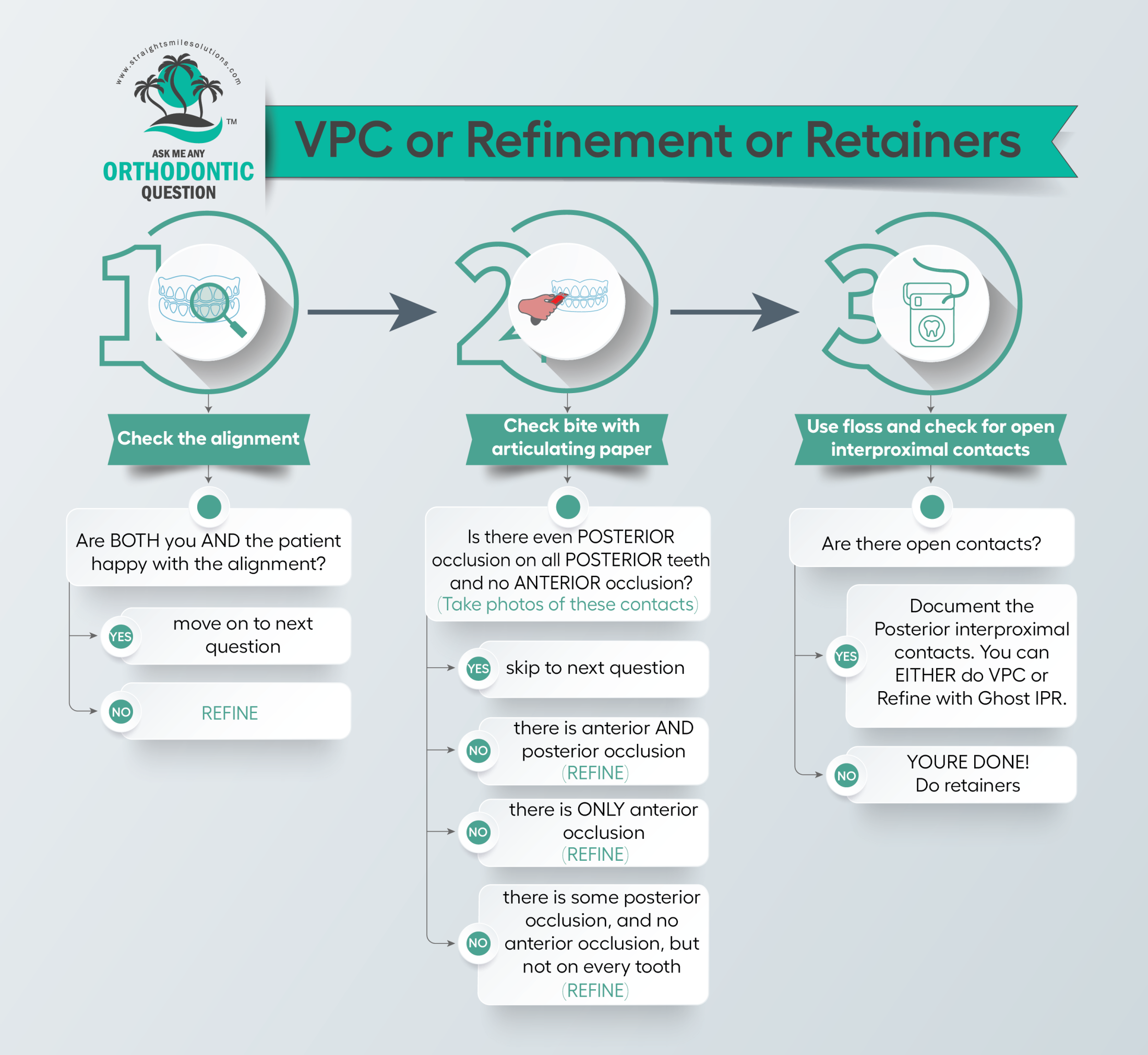
A. Dr. Amanda’s guidance on decision-making in late-stage Invisalign treatment
B. Three main options: refinement, Virtual Power Chain (VPC), or transitioning to retainers
II. Assessing Alignment
A. Dr. Amanda advises patients to assess tooth alignment
B. Suggests taking a panoramic X-ray for root alignment confirmation
C. Encourages subjective evaluation by patients
D. Advocates involving friends and family for input
III. Alignment Satisfaction
A. If both patient and dentist are content with alignment, no further adjustments are needed
IV. Checking the Bite
A. Emphasizing the importance of even posterior occlusion
B. Stressing the avoidance of anterior occlusion between specific teeth
C. The necessity of addressing bite issues if they persist
V. Refinement
A. Explains the need for refinement to balance occlusion
B. Mention potential additional tooth adjustments or IPR (interproximal reduction)
C. Stress on checking for open contacts after refinement
D. Importance of documenting open contact locations
VI. Open Contacts Resolution
A. Discuss common occurrences of open contacts
B. Suggest measuring and documenting open contact locations accurately
C. Options for addressing open contacts: VPC, ghost IPR, or additional refinement
VII. Transition to Retainers
A. Occurs when there are no open contacts left
B. Signifies achievement of desired results
VIII. Summary
A. Dr. Amanda’s comprehensive guidance on Invisalign progress assessment
B. Prioritizing patient input and collaboration for optimal outcomes in each case
Dr. Amanda advises Invisalign patients on key decisions as treatment nears completion. Patients should assess teeth alignment and bite, involving others for input. Refinement or Virtual Power Chain (VPC) may be needed if issues persist. Addressing open contacts is crucial, with VPC or refinement as options. If none, the successful treatment concludes with retainers. Dr. Amanda’s patient-centric approach prioritizes collaboration for optimal outcomes.
Self Ligating / Damon Braces vs Traditional Mini Twin
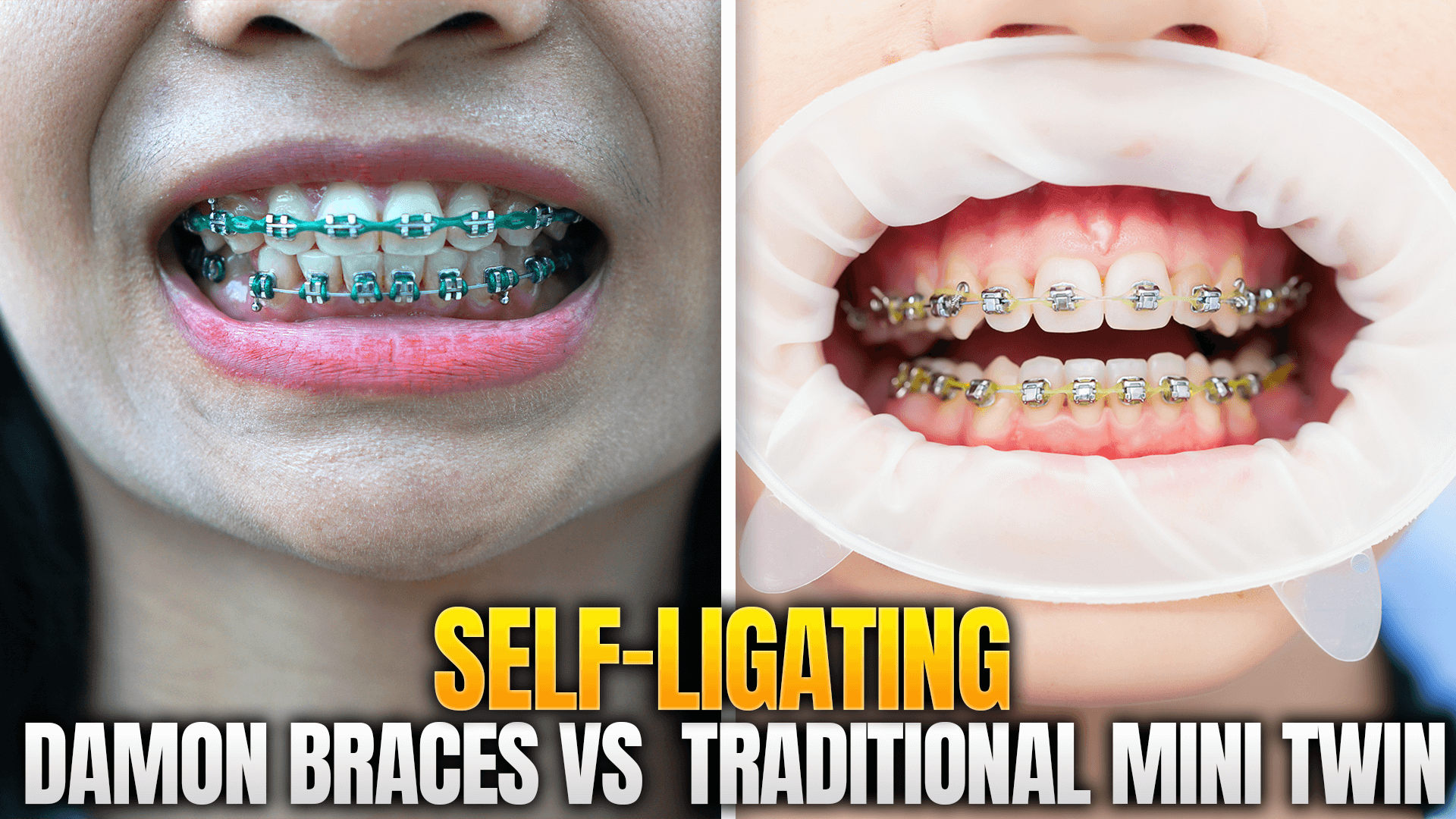
Choosing the ideal type of brackets isn’t necessarily a two-minute task. One decision you’ll need to make here is whether to use self-ligating braces (sometimes known as Damon braces) or a traditional brace design. Luckily, we’ve summarized some of the main things you need to know when developing your treatment plan to help.
How Self-Ligating Braces and Traditional Mini Twin Braces Differ
Self-ligating brackets can be an excellent option to cut down on the number of times you need to see a patient during their braces treatment plan. Critically, if you’re in the initial stage and undoing crowding, self-ligating brackets can potentially mean patients only need to come into the clinic every two or three months; this is substantially less often than traditional rubber tie or o-ring cases, which may need changing every four to six weeks.
However, it’s worth noting that self-ligating braces are significantly more expensive to purchase in many cases.
When To Use Each Type
Traditional mini twin and self-ligating braces can lend themselves to different scenarios. If you have a case that shows crowding, self-ligating brackets may be quicker or may not need as many visits to the orthodontics clinic.
However, if the patient needs spacing, self-ligating braces usually won’t offer a benefit in terms of clinic visits. After all, the patient will still need to come in regularly to get their virtual power chain changed anyway.
Metal vs Plastic vs Ceramic Brackets
Metal vs Plastic vs Ceramic Brackets
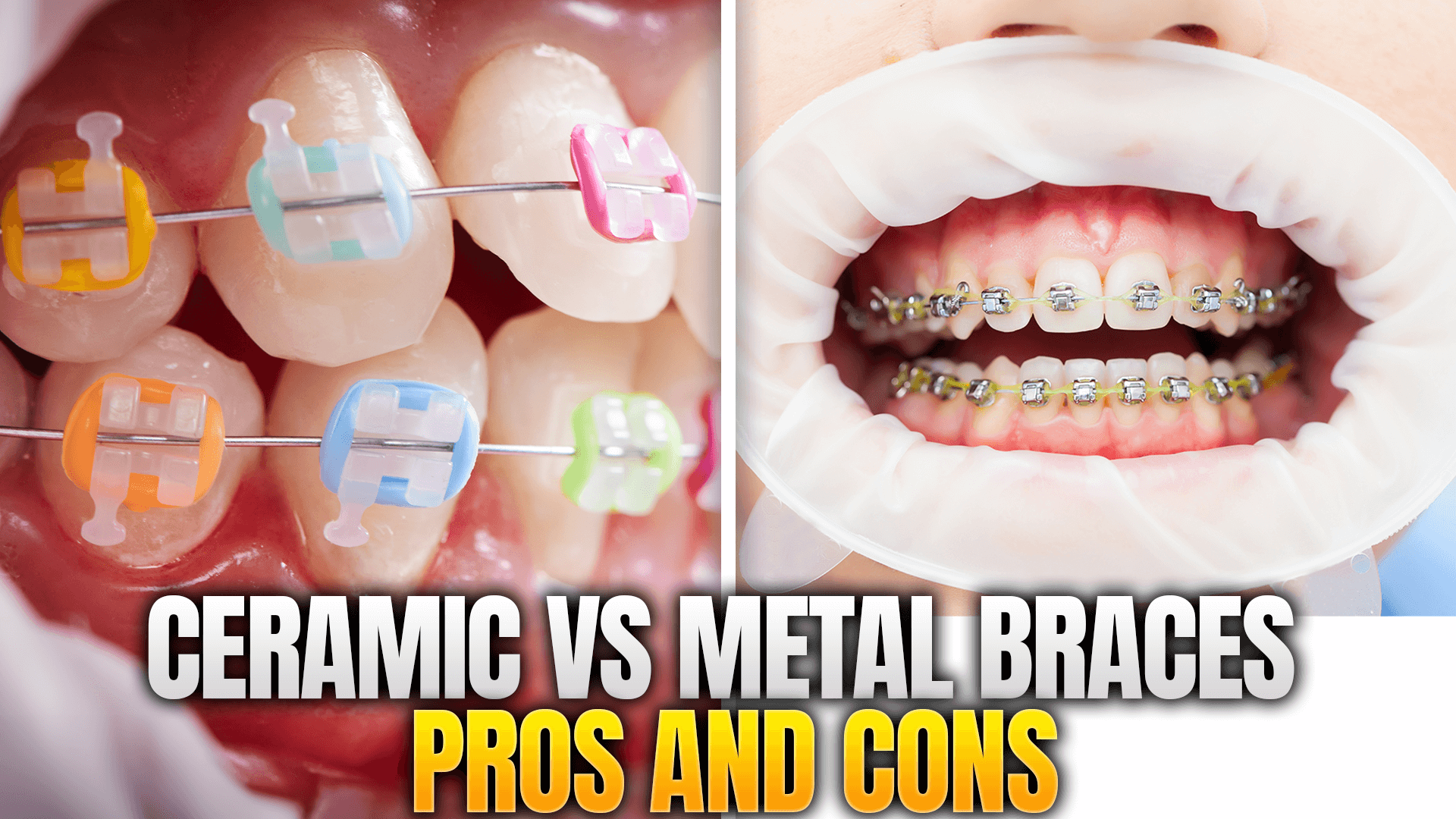
Have you ever wondered about whether metal or ceramic brackets might be better suited to your orthodontics needs? It’s not always easy to work out whether metal or ceramic brackets could be best for your cases, but there are pros and cons for both materials – and we’ve outlined the main things you’ll need to know to inform your orthodontics braces cases as follows.
Metal vs Plastic vs Ceramic Braces
When planning your orthodontics braces cases, choosing the right material is crucial. Of course, this will often come down to the brand in question; poorly made brackets should always be avoided, no matter the material.
- Plastic brackets are generally cheap to purchase, but they can give less effective results sometimes. Plastic brackets may be more prone to staining and sliding. They also don’t quite achieve the same torque.
- Ceramic brackets are a slightly better option for quality than plastic brackets, and they’re often superior for optical translucency and blend in a lot better. They are also more resistant to staining than plastics. However, they are higher profile.
- Metal brackets, on the whole, are generally a great all-round solution. They’re usually more affordable than ceramic brackets and provide excellent durability, but they can be more noticeable for the patient.
For further support, don’t hesitate to contact our experts here at Straight Smile Solutions for further support! And don’t forget, clear aligners can often be used as an alternative to traditional brackets and aligners, too.
Invisalign First Launches 3D Printed Expanders in Canada

Align Technology is launching their own brand of palatal expanders that clip/ attach to their clear aligners!! Read more below.
It is being launched in Canada now, and will be available in the US in 2024 but only with Invisalign First®.
We’ll post more information, when we know it!!
https://investor.aligntech.com/news-releases/news-release-details/align-technology-introduces-invisalignr-palatal-expander-system