
StraightSmile Solutions®
Compromised Class III Cases with Camouflage Orthodontics
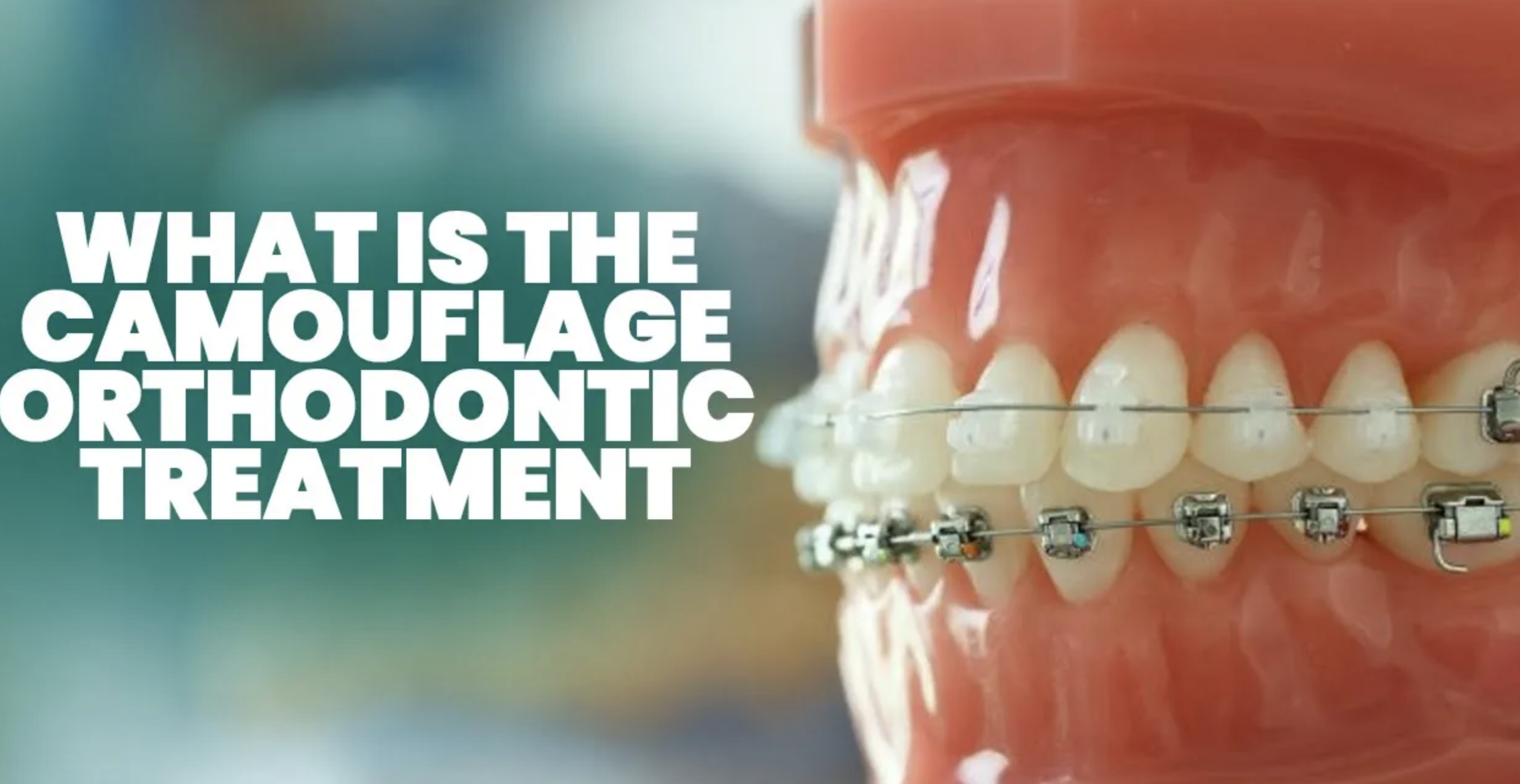
In some scenarios, you get presented with a client whose case is anything but straightforward – and Class III compromised camouflage cases represent this perfectly. But how do you come up with an orthodontics treatment plan for Class III cases with camouflage orthodontics? Well, today’s guide can help.
What are Camouflaged Orthodontics Cases?
First, let’s briefly clarify what a camouflaged case is. In camouflaged treatment plans, there is usually an issue with the jaw bones directly, and rather than going down the route of full jaw surgery, the patient would prefer to move the teeth instead to improve the appearance and fix the bite (without necessarily tackling the root cause of the problem).
Tackling Class III Cases with Camouflage Orthodontics
In many cases, tackling class III cases requires extracting lower 8s or lower incisors, sequential distalization, jaw surgery, or lower IPR. This decision should always be based on the bone positioning (shown with a CEPH) and the angulations of the teeth.
Depending on the nature of the case, lower sequential distalization may be effective if you need to retain the angle of the incisor. Lower IPR may also be possible in some cases.
Don’t forget, if there’s any chance the patient will continue to grow, make sure you’ve expressed this very clearly and have signed recognition from the patient of the fact that they may outgrow the treatment provided now.
It’s also vital to let the patient know that while you’re trying to fix the bite, since this is a compromised camouflaged case, it’s not the perfect solution; make sure you get the patient to sign a compromise form recognizing the limitations of this treatment, too.
Why I Don’t Normally Adjust Midlines on a First Invisalign Clincheck
Why I Don’t Normally Adjust Midlines on a First Invisalign Clincheck
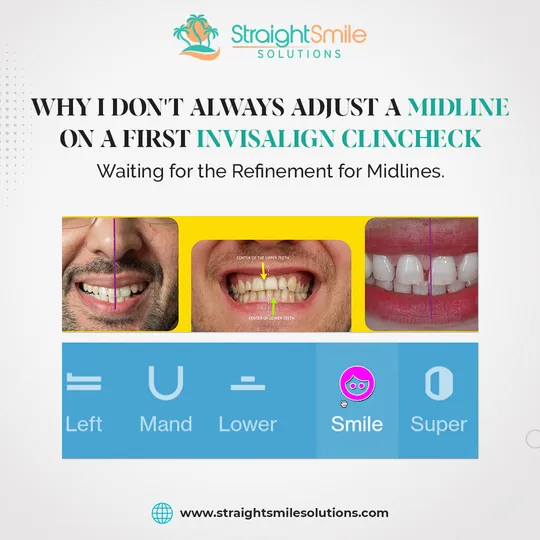
Invisalign 6.0 introduces a remarkable ” smile ” feature to address midline considerations effectively. This feature stands out as a unique offering within the Invisalign brand.
Importance of Cautious Midline Adjustments:
- It is advised not to make significant midline adjustments during the initial ClinCheck, especially with aligner systems like Invisalign.
- The rationale behind this guideline becomes clear when delving into the functionalities of the “smile” feature.
Understanding the “Smile” Feature:
- The “smile” feature integrates the “in-face” feature with the Invisalign practice app and iTero scans.
- Previous videos provide insight into the “in-face” feature, aiding viewers in understanding this integration.
- By merging wide smile photos and iTero scans, an AI-powered preview of midlines, gums, tooth positions, and more is generated within the ClinCheck.
Implications for Treatment Progress:
- The “smile” feature offers an AI-assisted projection of the patient’s face with anticipated treatment progress.
- This projection aids in making informed decisions about midlines and other relevant factors, contributing to enhanced treatment planning.
Caution in Midline Alterations:
- Before accessing the “smile” feature, drastic midline changes are discouraged.
- Cases involving significant asymmetry or anteroposterior (AP) issues may be exceptions, but extreme midline alterations, even down to millimeter-level interproximal reduction (IPR), should be avoided.
Focus on Comprehensive Cases:
- The feature primarily targets comprehensive cases, addressing midline, periodontal, AP, transverse, vertical, and occlusal concerns.
- Alternative aligner systems might be suitable for less complex cases, yet operating within a comprehensive treatment plan is recommended.
Integration for Better Outcomes:
- Incorporating the “smile” feature into the workflow is highly recommended, especially for moderate or light cases.
- Referencing visual assessments can lead to unpredictable outcomes, additional refinements, and patient dissatisfaction.
Avoiding Complications:
- Overlooking midline issues can lead to complications, underscoring the significance of the “smile” feature.
- The feature minimizes risks and enhances treatment predictability, ensuring patient satisfaction.
Striving for Comprehensive Planning:
- Aligner systems, notably Invisalign 6.0, necessitate meticulous midline considerations.
- Leveraging advanced features, such as the “smile” feature, aligns with the goal of comprehensive planning and execution.
Conclusion
- Midline factors should be considered when working with aligner systems, especially Invisalign 6.0.
- Drastic midline changes in the initial ClinCheck should be avoided, while the “smile” feature should be embraced for enhanced treatment progress projection.
- A higher level of predictability can be achieved through comprehensive planning and the utilization of advanced features, resulting in satisfied patients.
Advanced Invisalign with MA
Advanced Invisalign with MA
In mandibular advancement (MA), a few intriguing peculiarities defy conventional teachings, unveiling a path less traveled for exceptional results.
Defying Norms and Embracing Divergence
● Post-MA outcomes often stray from conventional expectations.
● Anticipated vs. actual results exhibit a noticeable disparity.
● An unconventional approach yields remarkable results by diverging from the predicted trajectory.
Distinctive Approach: Twin Blocks vs. ClinCheck AI
● The usage of twin blocks introduces unique elements to MA.
● An alternative approach requires attentive compliance, particularly with young patients.
● In contrast with ClinCheck, AI’s realism highlights divergence due to distinctive methodologies.
Skepticism in the Face of ClinCheck and MA Union
● Skepticism arises due to ClinCheck’s sole focus on teeth alignment.
● Reality encompasses broader factors, leading to unaccounted deviations.
● The transparent approach contrasts with the conventional process by embracing complexities.
Transition Phase: A Nexus of Deviation
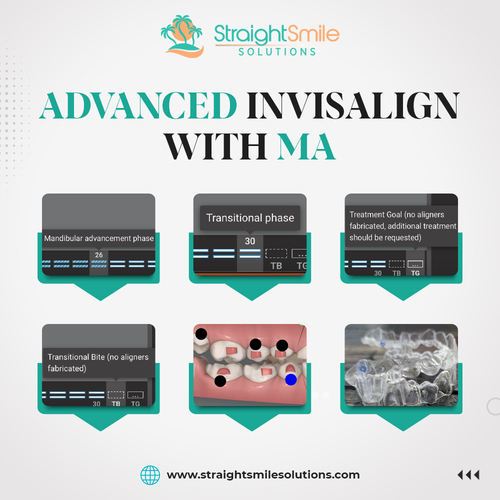
● Active mandibular advancement ends up in a transition phase.
● ClinCheck model deviations become prominent at this juncture.
● Roadmap shift in the “hash section” prompts unexpected outcomes, like posterior open bites.
Innovative Strategies Arising from Divergence
● Divergence from expected outcomes catalyzes inventive responses.
● “Sloppy bonded retainers” emerge as cost-effective and efficient solutions.
● Leveraging Invisalign for targeted tray creation and bite alignment proves successful.
Transparency and Patient Resonance
● The candid approach acknowledges the inherent complexities of MA.
● Patients respond to honesty and innovative techniques.
● Instilled confidence paves the way for desired outcomes.
Defying Convention for Exceptional Excellence
● The unconventional approach reflects a dedication to superior outcomes.
● Skepticism towards ClinCheck spurs the development of alternative strategies.
● Transparency, innovation, and commitment ensure remarkable case results.
Summary
Ultimately, the journey through mandibular advancement demonstrates that departing from the conventional path can lead to exceptional outcomes. Divergence from predicted trajectories prompts innovative solutions that address the complexities of real-world scenarios. By embracing these nuances and challenges, orthodontists can instill confidence in their patients while achieving remarkable success.
Learn to Read Invisalign ClinChecks Before Starting!
Reading Your Invisalign ClinCheck for VPC and Passive Invisalign Aligners
Have you been looking to learn more about how to use Invisalign ClinCheck? In many cases, getting started with ClinCheck can seem a bit tricky, but this isn’t that tough if you know some of the key principles.
So, once you’ve mastered the basics of Phase 1 orthodontics and straight wire ortho, learning how to use aligners successfully with Invisalign ClinCheck can really help streamline the process and improve your cases.
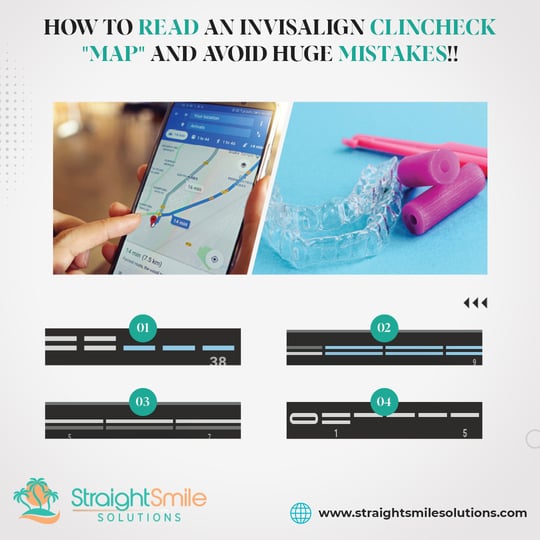
When it comes to orthodontics and clear aligner cases, understanding and using the ClinCheck requires you to first be able to read them – much like reading a map.
There are a few common things to watch for on your Invisalign ClinChecks:
- Blue refers to VPC or overcorrection aligners (ideally, remove these from your default preferences unless advised by a professional orthodontist, such as our experts at Straight Smile Solutions). Note that a Blue hash refers to MA
- Grey denotes passive aligners. These are usually used alongside regular aligners as part of a patient’s treatment plan. Note that a grey hash refers to a bite jump (which can be a little unpredictable sometimes)
- Aligners that randomly stop on the ClinCheck mean you’ll only get a limited number of aligners. We recommend avoiding this approach; always try to ensure you have dual arch treatment plans rather than a single arch approach.
Always check the lowers on the Invisalign ClinCheck before you proceed. If you’re at all unsure, try to hover your mouse over the ClinCheck for a direct explanation (or contact us, and we’ll do our best to help out).
What are Camouflage Orthodontic Treatment Plans?
What is Camouflage Orthodontic Treatment?
Have you ever wondered what a camouflage orthodontic treatment plan might be? In many cases, finishing cases normally might not be possible for a myriad of reasons, such as when the perfect result may not be easily attainable. In these scenarios, camouflage orthodontic treatments might help – but what actually are they?
What are Camouflage Orthodontic Treatment Plans?
Camouflage orthodontic treatment plans are generally used when a perfect treatment is not possible, often due to physiological limitations (e.g. an uneven jaw shape) or financial reasons. In general, a camouflage case results in pretty good results, but it won’t be quite as perfect as the optimal treatment plan would have given.
Why Finishing Cases with Camouflage Orthodontics Might Be Needed
There are numerous reasons camouflage might be needed. These include:
– Patients don’t want to undergo a specific treatment plan
– There is a discrepancy that needs treatment to make the teeth look straight
– The patient cannot afford jaw surgery to fix the problem at the source
In the above cases, finishing cases with camouflage treatment plans won’t be ideal, but it can help to hide the problem. In the case of jaw issues, for example, a treatment plan may help mask issues with the tooth alignment, but the jaw shape may still be off.
Are Camouflage Orthodontic Treatments Always Suitable?
It’s important to clarify that not every case will be a candidate for camouflage orthodontic treatment. For example, a smaller lower jaw may be less suited to camouflage since you’ll need to remove teeth from the upper jaw and/or slide the teeth back. This can have many impacts on airways or tongue space, so it may not always be suitable or ideal for Class II and Class III cases and the like.
If you’re unsure whether camouflage orthodontics could be suitable anymore, contact a professional orthodontist for specific case-by-case support.
Should you Change the Invisalign Attachments?
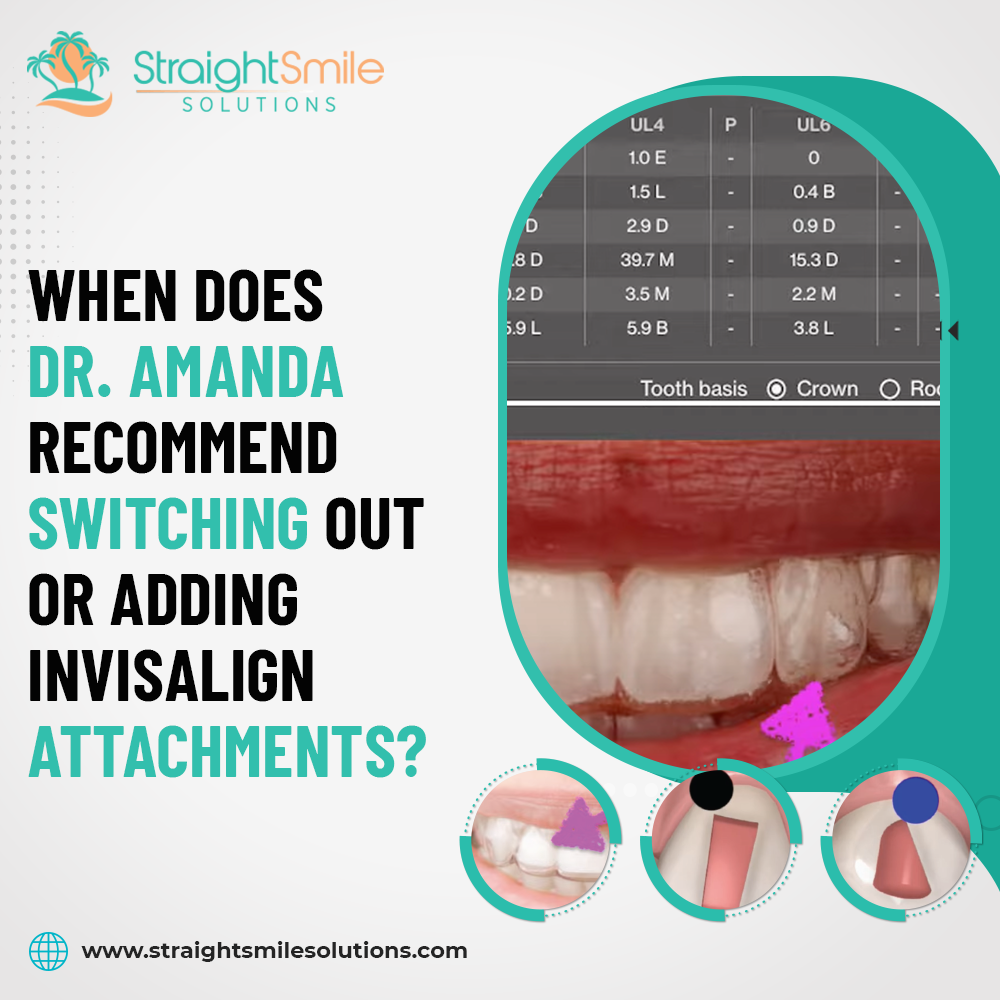
Invisalign Attachments- Changing them Out
Invisalign attachments play a vital role in orthodontic treatment, enhancing the effectiveness and predictability of the aligner system.
Here are key points to consider:
● Accessing Invisalign Channel: To explore the comprehensive Invisalign content, head to the YouTube channel “Straight Smile Solutions.” With over 1600 videos, this dedicated channel offers information on Invisalign treatment.
● Recommended Preparations: Prioritize learning foundational concepts before diving into attachments. Familiarize yourself with Straight Wire Braces, Phase One Appliances, and Functional Appliances for a well-rounded understanding.
● Sequencing is Key: Sequential learning is crucial. Start with Straight Wire and Phase One methods, followed by aligner treatments. This order aligns with established orthodontic education patterns.
● Beneficial Alignment Tools: Trust Invisalign’s AI-powered attachment recommendations, especially for routine cases. This system efficiently predicts movement, ensuring optimal results.
● Challenging Cases: For complex cases involving anterior-posterior, class two/class three issues, deep bites, open bites, transverse issues, or significant crowding/spacing, additional refinement stages may be required. Attachments may need customization.
● Attachment Preferences: Avoid unnecessary preferences in your aligner setup. Clear preferences for accurate tracking and predictable results. Removing engine training-related preferences is essential to prevent complicating cases.
● Attachment Size and Type: Assess each case’s needs. Attachments should be selected based on AI recommendations, focusing on significant movements like rotations, extrusions, and torquing. Larger attachments may be beneficial.
● Black and Blue Dots: Check for “black and blue dots” indicating challenging movements. Address these movements with proper attachment placement, improving predictability.
● Refinement and Lateral Cases: Prioritize attachment application for challenging refinements and lateral movements. This step minimizes tracking issues and enhances treatment effectiveness.
● Attachment less Aligners: Avoid starting cases without attachments, especially anterior attachmentless aligners. Such cases may lead to unpredictability, extended treatment times, and patient dissatisfaction.
● Clear Aligner Craft: Consider using Clear Aligner Craft for attachmentless cases. The higher trim line and firmer material could improve success rates.
Summary
Invisalign attachments are a valuable tool to ensure efficient and successful orthodontic outcomes. Follow the recommended learning sequence, trust the AI-powered suggestions, and customize attachments for complex cases. By prioritizing attachment placement and focusing on predictability, orthodontists can deliver exceptional results through Invisalign treatment.
Fiverr for Dentists – How it Can Work For You

Are you the sort of person who regularly procrastinates when it comes to getting projects completed? As a dentist, there’s a good chance you’ve got enough on your plate with finishing cases to dedicate time to other activities, such as creating dentist videos or designing your website.
And, of course, there’s also the challenge of learning an entirely new skill that you might not otherwise need to use – and that’s no doubt time consuming. Luckily, platforms such as Fiverr can be an excellent place for dentists to outsource some of their projects, allowing you to focus on finishing cases instead (and all for a very low fee).
Getting Started With Fiverr
If you think you might be able to outsource some of your projects to someone, getting started with Fiverr is easy. Simply create an account, then head to the main navigation bar at the top of the page and search for services. Fiverr suggests numerous different options, such as copywriting, proofreading, and even infographic making.
When choosing a freelancer, make sure to check out the reviews and the number of stars a freelancer has to inform your decision. Remember: someone with more experience may be more expensive, while those with less experience will generally be cheaper.
Fiverr’s also a great place to learn how to do things yourself if you so want. So, if you don’t want to keep outsourcing the job to someone else, you can potentially find people on Fiverr to teach you how to do it (for example, how to create an effective LinkedIn advert or optimize YouTube videos).
If you’re unsure where to start, don’t hesitate to reach out to our team, and we’d be happy to suggest who we use. From dentist videos and background music to content creation and even ad campaign support, there really are so many great ways for dentists to use the platform and save a little time and money.
Do you ALWAYS need retention for Phase 1 Interceptive Treatment?
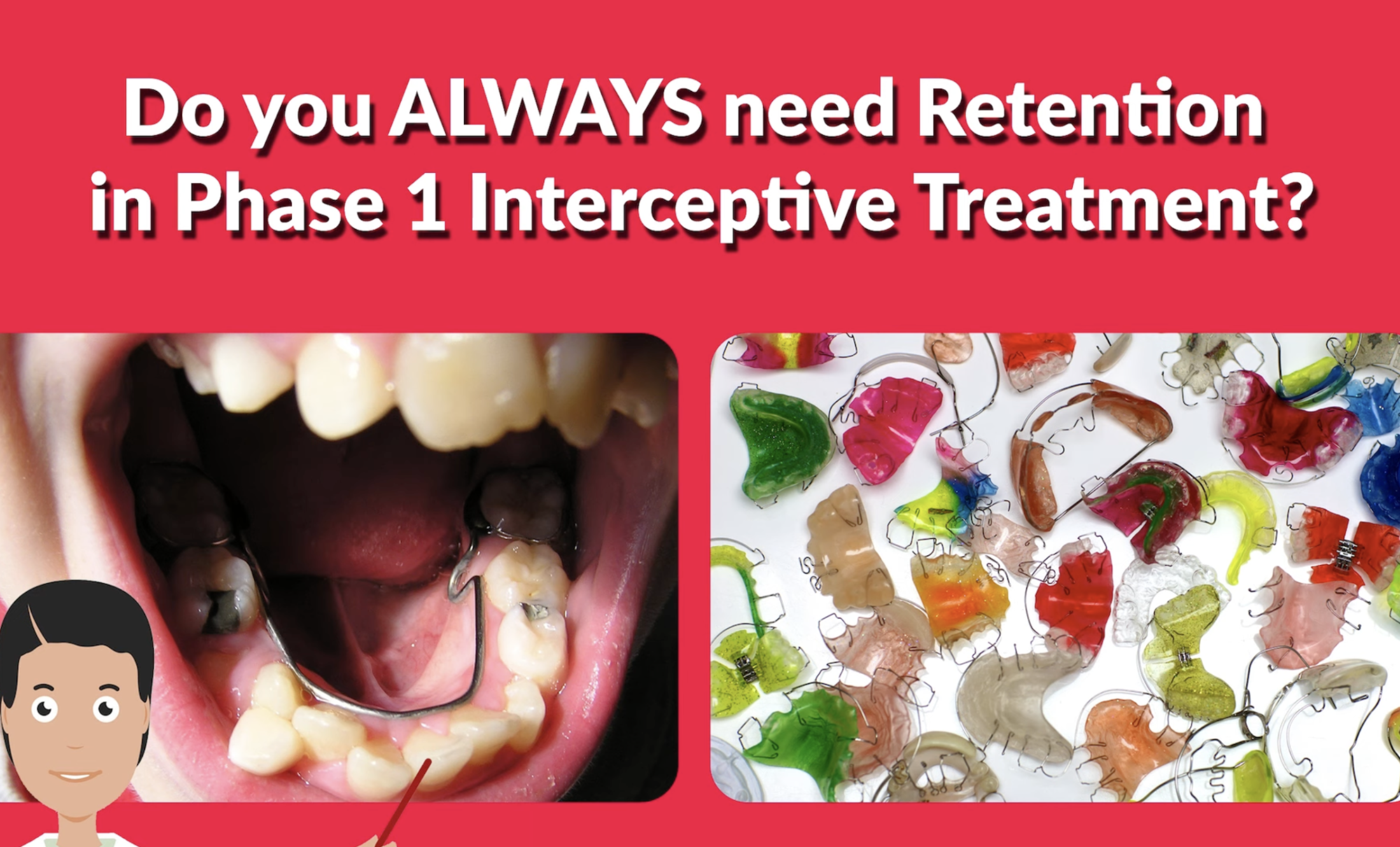
Do you ALWAYS need retention for Phase 1 Interceptive Treatment?
The age-old question of whether retainers are necessary after Phase 1 orthodontic treatment remains a topic of debate among orthodontists. The answer is not straightforward and depends on various factors, such as the patient’s initial condition, the treatment undertaken, and the patient’s preferences.
Understanding the Complexity
A foundational understanding of Phase 1 interceptive treatment is essential to grasp this topic’s details. Prior knowledge from an extensive 13-hour course on this subject is recommended, which can be accessed through YouTube or a newly launched organized course on the website Straight smile solutions.
Options and Considerations
Different treatment scenarios yield varying stability outcomes:
● Transverse correction: When Phase 1 addresses transverse issues like bite problems, maintaining the corrected position for the recommended 3 to 6 months is typically stable. A transpalatal arch (TPA) can help ensure transverse stability.
● Vertical correction: For deep bite corrections, maintaining the correction for 4 to 6 months is generally stable, with slight relapse. Customized retainers can help counter this minor relapse.
● Lower jaw growth correction: Corrections involving lower jaw growth tend to be stable, often with minimal relapse. Over-correction strategies can be employed to counter any potential relapse.
● Aligning teeth: Aligning teeth can lead to relapse due to the memory of periodontal ligaments. Therefore, some form of retention, such as retainers or other options, is usually necessary for a stable outcome.
Retention Options and Education
The Phase 1 course comprehensively covers various retention options, including bonding retainers, Thoreau retainers, and lower lingual arches. Choosing the appropriate retention method depends on the specific treatment and the patient’s expectations.
Upcoming CE Course
An upcoming Continuing Education (CE) course is set to be launched by CE Zoom, providing an in-depth exploration of Phase 1 treatment. The course will be available with and without case assistance and will be certified for CE credit, catering to diverse state CE requirements. This course offers a more concise understanding of the topic and benefits practitioners seeking to enhance their knowledge.
Personalized Approach
The necessity for retainers post-Phase 1 varies depending on the treatment and the patient’s needs. If the patient is committed to Phase 2 and accepts minor aesthetic relapse, retainers may be optional. However, personalized retainer options, such as bonding retainers or other solutions, can be discussed for patients prioritizing minimal relapse.
Conclusion
Whether retainers are required after Phase 1 orthodontic treatment is contingent on the specifics of the treatment conducted, patient preferences, and expected outcomes. While some corrections are stable without retention, aligning teeth and certain corrective measures necessitate a tailored retention plan. Considering the initial condition, treatment strategies, and patient expectations, an informed approach is essential for optimal post-Phase 1 care.
Mixed Dentition Invisalign Cases
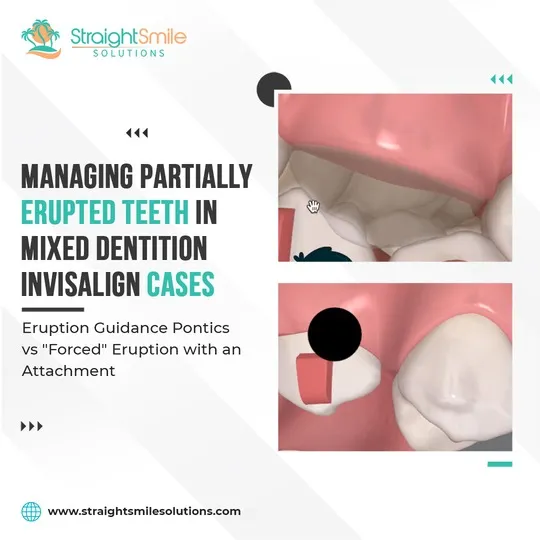
Mixed Dentition Invisalign Cases- Eruptive Guidance Pontics vs Forced Eruption
● Dr. Amanda from straightsmilesolutions.com discusses mixed dentition cases.
● Focus on Invisalign due to its advantages over other aligner companies.
Choosing the Right Aligner Solution
When handling mixed dentition cases, specifically situations where both baby and permanent teeth are present, carefully consider your aligner choice. While various aligner companies are available, Invisalign is the superior option for managing such cases due to its unique features tailored to this scenario.
Caution Against Other Aligner Companies
It’s advised to avoid using other aligner companies for mixed dentition cases. This recommendation is because these companies lack the proprietary features to handle the complexities associated with teeth erupting and shifting in mixed dentition. The proprietary aspects owned by Invisalign’s parent company, Align Technology, provide the tools to manage such cases successfully.
Advantages of Invisalign for Mixed Dentition Cases
Invisalign is specifically recommended for mixed dentition cases due to its effectiveness in handling challenging scenarios. This aligner system is particularly well-suited for complex cases involving a mix of baby and permanent teeth and cases with periodontal considerations. While other brands may be suitable for simpler cases, Invisalign’s capabilities shine in more intricate situations.
Invisalign Preferences and Refinements
Understanding your Invisalign preferences is crucial for successful treatment. Utilizing Invisalign’s technology requires careful management and multiple refinements, especially in mixed dentition cases. Always opt for Invisalign 5, rather than lighter versions, to ensure comprehensive treatment planning.
Eruptive Guidance Pontics for Natural Eruption
For cases where natural tooth eruption is still occurring, prioritize using eruptive guidance pontics. These shell-like attachments support the natural eruption process, allowing teeth to come in without unnecessary force. In instances where teeth are partially erupted, avoid forcing their eruption with attachments, as it can negatively impact gum health and tooth vitality.
Collaboration with Clinical Team and Patient Communication
In cases where Invisalign’s default approach involves forced eruption, consider requesting eruptive guidance pontics. If your request is initially denied, arranging a meeting with Invisalign’s clinical team and explaining the rationale behind your request can often lead to a more favorable outcome. Always ensure thorough communication with the patient, including explaining potential multiple refinements that might be required.
Financial Considerations and Patient Satisfaction
When dealing with complex cases involving mixed dentition, avoiding accepting payment upfront is advisable. Perform a thorough clinical evaluation and treatment planning before committing to the case financially. This step prevents the need for refunds and ensures a better experience for both the patient and the practitioner.
Case Suitability and Patient Requirements
It’s important to note that Invisalign might reject cases involving patients with significant overjets or small lower jaws. Additionally, cases, where patients are still undergoing mixed dentition might be declined due to the need for retention.
Summary
Due to its specialized capabilities and features, Invisalign is the preferred choice when dealing with mixed dentition cases, particularly those involving both baby and permanent teeth. Effective communication, proper treatment planning, and carefully considering the patient’s unique needs are key to successful outcomes.
Which Mouth Guards Can Patients Use with Braces or Aligners ?
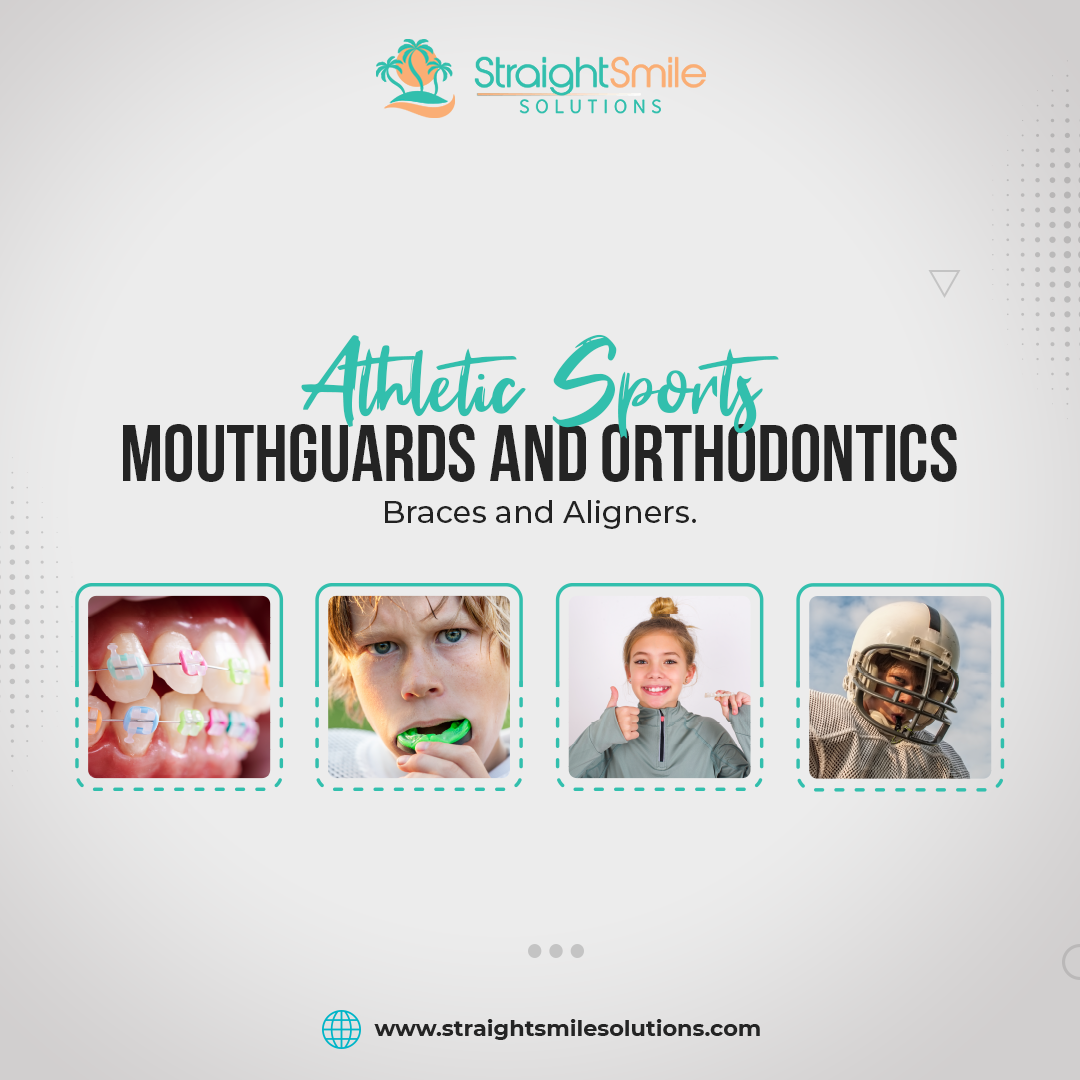
Using Mouth Guards with Braces and Aligners in Athletic Patients
When it comes to orthodontics, making sure you’ve considered the patient’s unique requirements is highly important to provide a reliable and effective treatment plan.
As part of this, looking at whether or not the patient is athletic and engaged in regular sports is highly important; after all, many athletic patients use mouth guards, but these can actually compromise the success of a treatment plan if not accounted for.
Should Patients Wear Mouth Guards with Braces or Clear Aligners?
Mouth guards are generally a requirement for most sporting activities nowadays for liabilities. As such, if you have an athletic patient in need of braces or aligners, it’s crucial to consider how these will work alongside a mouth guard.
Generally speaking, if your patient regularly engages in contact sports or wears a mouth guard, braces will be much more likely to get knocked off. However, there are ways around this – and this can actually be very important, as the consequences of face injuries while wearing braces can sometimes be severe.
Which Mouth Guards Can Patients Use with Braces or Aligners
If you have an athletic patient who needs to use a mouth guard, they could use one of the following two options:
– Specialist braces / clear aligner mouth guards are designed with braces and aligners in mind. These generally aren’t as snug as a custom set of mouth guards, but they can provide some additional protection and reduce the risk of injury. These are available from places such as Amazon or Dicks Sporting Goods.
– Boil and bite mouth guards can be altered regularly alongside the treatment simply by reboiling and readjusting the shape of the mouth guard. Since these can be modified as the teeth change, they work well alongside aligners and braces – but try to find one that can be remodified several times over to reduce the cost involved.
Both options can work well for braces and clear aligner patients. However, custom mouth guards are generally not advisable since the braces or aligners will continually alter the teeth; the patient would require a new custom aligner very often (potentially weekly). This could cost hundreds for each custom mouth guard, so an alternative may be more affordable.