
StraightSmile Solutions®
Bonding Buttons and Attachments to Crowns: What You Should Know
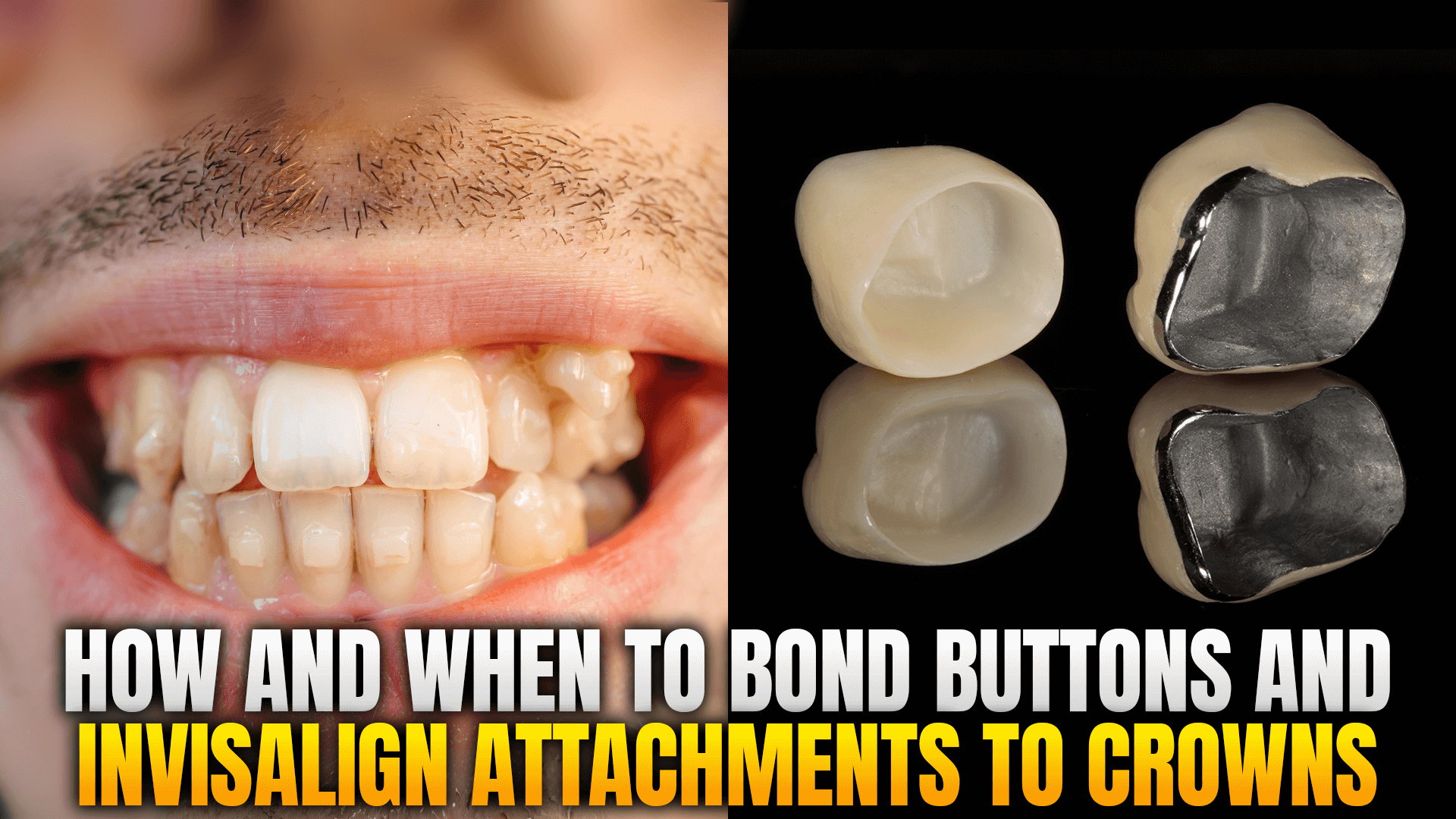
Bonding Buttons and Attachments to Crowns: What You Should Know
If you’ve been taking on Invisalign or clear aligner cases, knowing how to tackle cases with crowns is hugely important. In line with this, today’s brief guide outlines the core things you need to know to help with this.
Should You Bond Buttons and Attachments to Crowns?
If you’ve got a patient with crowns, it’s first important to clarify whether you should even consider bonding buttons and attachments to the crown. Well, for simple cases (e.g., mild to moderate crowding or Class I), you may just be able to bypass the tooth by blocking off buttons or attachments. This is because attachments may be less needed in easier cases. However, for more severe cases (e.g., extreme crowding), you may need a button or attachment.
If you’re not sure, you’ll likely want to run this by an experienced orthodontist first. Luckily, our experts here at Straight Smile Solutions can help with this, so if you need a one-to-one consultation to help with your decision, contact us today and we’d be thrilled to help!
What to Do When You Need a Button or Attachment on a Crown Tooth
If you have a patient who has a severe case and has crown over a tooth, you’ll need to consider the crown material. Crowns are usually made from porcelain, gold, or stainless steel. If the patient has a stainless steel crown, these are usually temporary, so it’s usually best not to do ortho in these cases.
If the patient has a gold crown, you may need to fit a fitted band over the gold. However, you can’t bond or glue a button to metal, so that option’s out (unless you drill a hole in the gold crown).
Finally, for porcelain crowns, you may be able to bond, depending on the type of porcelain. Usually, new porcelain crowns that are shiny won’t bond buttons well, so you may need to drill a hole in the crown to bond. You can also get dedicated porcelain bonding kits.
Always get a written disclaimer before doing the treatment plan so the patient is aware that the crowns may need to be damaged if bonding doesn’t work. Otherwise, you may be liable for the cost of new crowns after ortho finishes.
Can you Expand with RPE or Schwartz the SAME TIME as Lower Invisalign Clear Aligners?

Can you Expand with RPE or Schwartz the SAME TIME as Lower Invisalign Clear Aligners?
I. Introduction
A. Dr. Amanda from Straight Smile Solutions
B. Upcoming Invisalign technology expansion
C. Need for creative solutions in the absence of expanders
II. Phase One Course at Straight Smile Solutions
A. Resources available (playlist and course)
B. Affordable cost
III. Scenario Discussion
A. The need for palatal expansion in growing kids
B. The desire to avoid braces
IV. Utilizing Invisalign for Palatal Expansion
A. Exploring an unconventional approach
B. Aligning teeth before expansion
C. Requesting alignment with maximum transverse movements
D. Avoiding other treatment elements like proclamation, IPR, etc.
V. Process Steps
A. Preparation before expander delivery
B. Patient communication about Invisalign in stages
C. Upper expander delivery
D. Caution on speed to avoid scissor bite
E. Aligning front teeth
VI. Progression and Bite Settling
A. Monitoring treatment progress
B. Retaining upper bite after expander removal
C. Refinement process with Invisalign on the bottom
VII. Handling Upper Aligners
A. Disposing of upper aligners
B. Explaining Invisalign’s limitations
C. The importance of traditional expansion
D. The need for bone retention and remodeling
VIII. Conclusion
A. Success of the unconventional approach
B. Continued use until Invisalign expanders are available
C. Awaiting the launch of expanders for improved treatment options.
Summary
The concurrent use of RPE (Rapid Palatal Expansion) or Schwartz appliances alongside lower Invisalign Clear Aligners represents a promising and versatile approach in orthodontics. This dual treatment strategy can effectively address upper arch expansion needs and lower arch alignment issues, offering patients a comprehensive solution for their orthodontic concerns. By combining these techniques, orthodontists can provide a more balanced and harmonious smile transformation, ensuring optimal dental health and aesthetics. This innovative approach empowers patients to achieve their desired results efficiently and discreetly, further exemplifying the ever-evolving landscape of orthodontic care.
Can you Delay RPE Palatal Expansion in a Mixed Dentition Patient? Risks
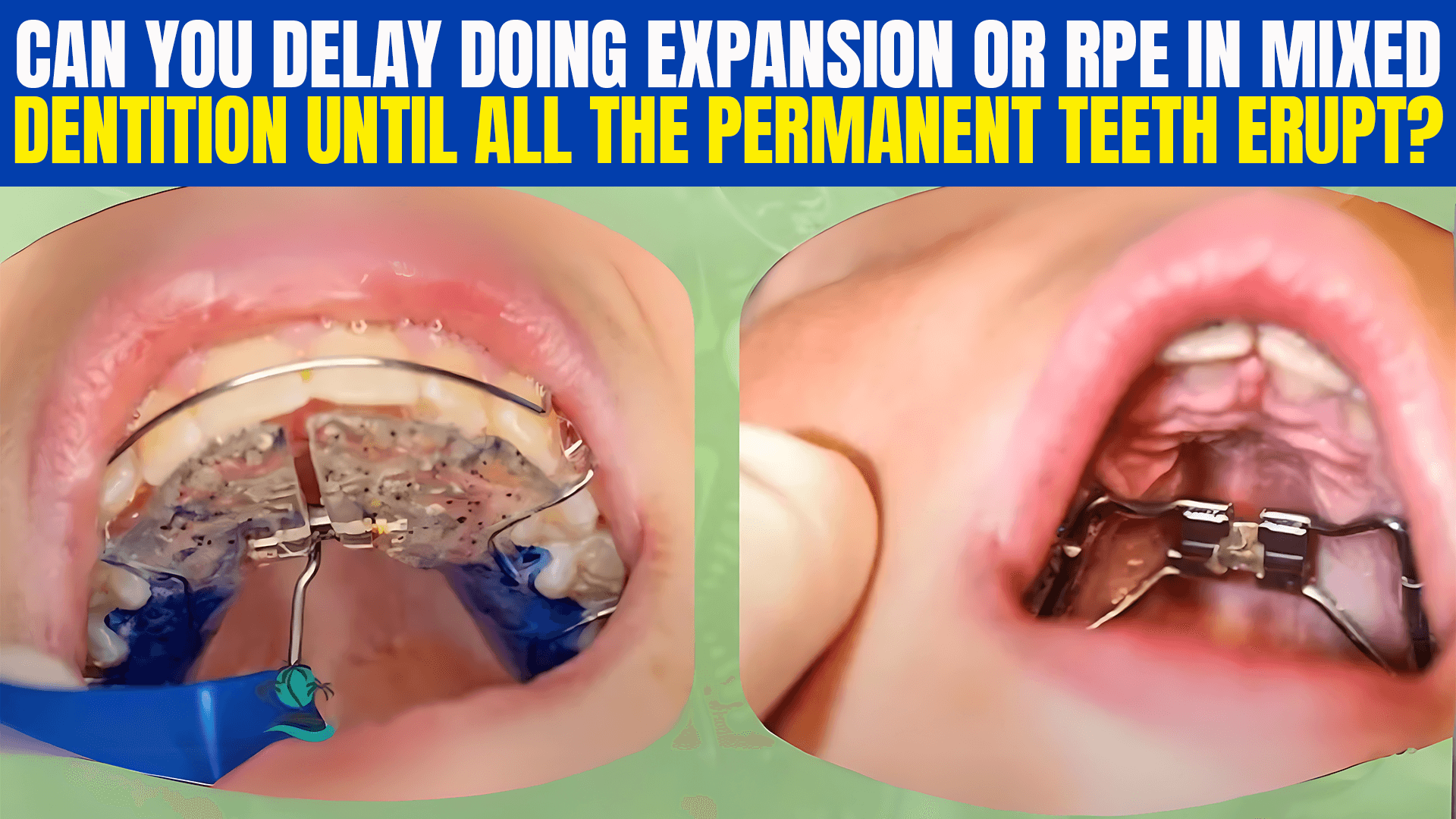
Can you Delay RPE Palatal Expansion in a Mixed Dentition Patient? Risks
I. Introduction
● Dr. Amanda of Straight Smile Solutions discusses the need for early expansion in mixed dentition cases.
● Promotes her phase one course for comprehensive understanding.
II. Can We Wait?
● Addressing the question of whether expansion can be delayed when the patient is in mixed dentition.
III. Reasons for Expansion
● The main reasons for early expansion include:
➢ Airway issues and symptoms related to airway problems.
➢ Crowding, vaulted palate, and insufficient space.
➢ Eruption lanes, potential impactions, and lack of space for teeth.
➢ Growth issues and unfavorable vertical growth patterns.
➢ Space creation for future dental work and reduced risk of impactions.
IV. Airway Concerns
● Exploring airway issues and their connection with expansion.
● Mention the importance of sleep-disordered breathing forms.
V. Growth Patterns
● Discussing how patients with airway issues tend to grow down and back instead of forward.
● Describing the need to prevent unfavorable vertical growth patterns.
VI. Eruption Lanes
● Highlighting the importance of clear eruption guidance lanes for teeth.
● Discussing the connection between expansion and improved outcomes.
VII. Timing of Puberty
● Emphasizing the significance of considering puberty timing.
● Encouraging practitioners to determine when puberty will occur, especially in girls.
VIII. Boys vs. Girls
● Comparing the importance of early expansion for boys and girls.
● Boys may need it for different reasons, while girls require careful timing.
IX. Advantages of Early Expansion
● The potential to save money, time, and discomfort by addressing expansion at a younger age.
● Discussing better outcomes and patient readiness.
X. Conclusion
● Dr. Amanda recommends starting expansion as soon as first molars and a few incisors are present.
● Early expansion often leads to better success compared to waiting until adolescence.
Summary
Dr. Amanda from Straight Smile Solutions addressed whether to wait for expansion treatment in mixed dentition cases. She highlighted the primary reasons for early intervention, including airway issues, unfavorable growth patterns, space concerns, and timing of puberty. Early expansion improves the airway and growth and can lead to a more efficient and cost-effective orthodontic journey. Dr. Amanda emphasized the importance of early action and shared valuable resources for in-depth information on the subject.
What You Need to Know About Crown to Root Ratios
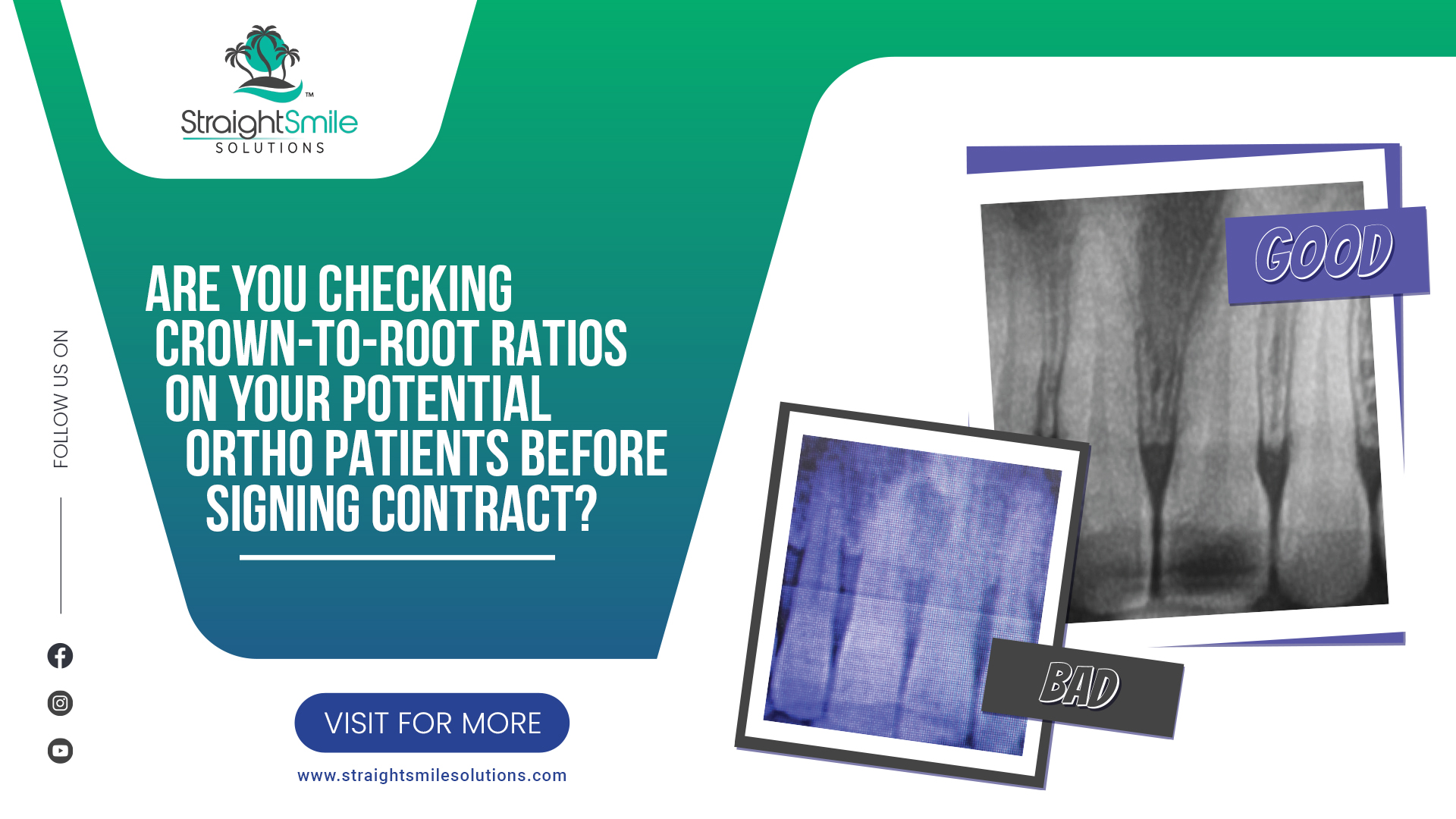
What You Need to Know About Crown to Root Ratios
Have you ever wondered about what crown-to-root ratios are and what the optimal crown to root ratio should be before ortho starts? When developing a treatment plan, crown-to-root ratios can significantly impact the approach you take. In line with this, we’ve outlined some key things you should know to help.
Always Start with a Panoramic X-ray
Before ortho starts, one of the first tips we recommend is to take a panoramic x-ray. Indeed, a panoramic allows you to check more pathology, further helping inform your decision without worrying about blind spots or unknowns.
What Should the Crown to Root Ratio Be?
In most cases, you’ll want to make sure that at least 50% of the tooth is in the bone when creating an orthodontics treatment plan. In other words, the crown to root ratio should be 1:1 or better (i.e., with more of the root embedded in the bone).
Always consider the patient’s history of periodontal disease as well when making your treatment plan. If there was a history of periodontal disease or if the crown to root ratio was not correct when ortho starts, there’s a chance of poor prognosis (potentially even with the teeth falling out).
Always Consider Individual Cases
In some cases, it’s worth noting that individual cases might not be as clear-cut. For example, you may have a borderline case that needs a PA x-ray to check the tooth isn’t inclined differently. A periodontist should also check this before ortho starts to make sure orthodontics is safe for the patient; always get the periodontist’s confirmation in writing before progressing if there’s any uncertainty.
And remember: if you have a borderline case, make the treatment plan as gradual and gentle as possible. Make sure that the patient also returns to their periodontist for a check-up regularly (every few months).
The patient also needs to know at the outset that if things aren’t progressing as expected, the treatment plan may need to stop, in which case the patient will be billed for services rendered. You may need to explain “billed for services rendered” to the patient at the outset so they know how this works.
Is it “OK” to Take Off Invisalign Attachments from another Doc’s Patient?
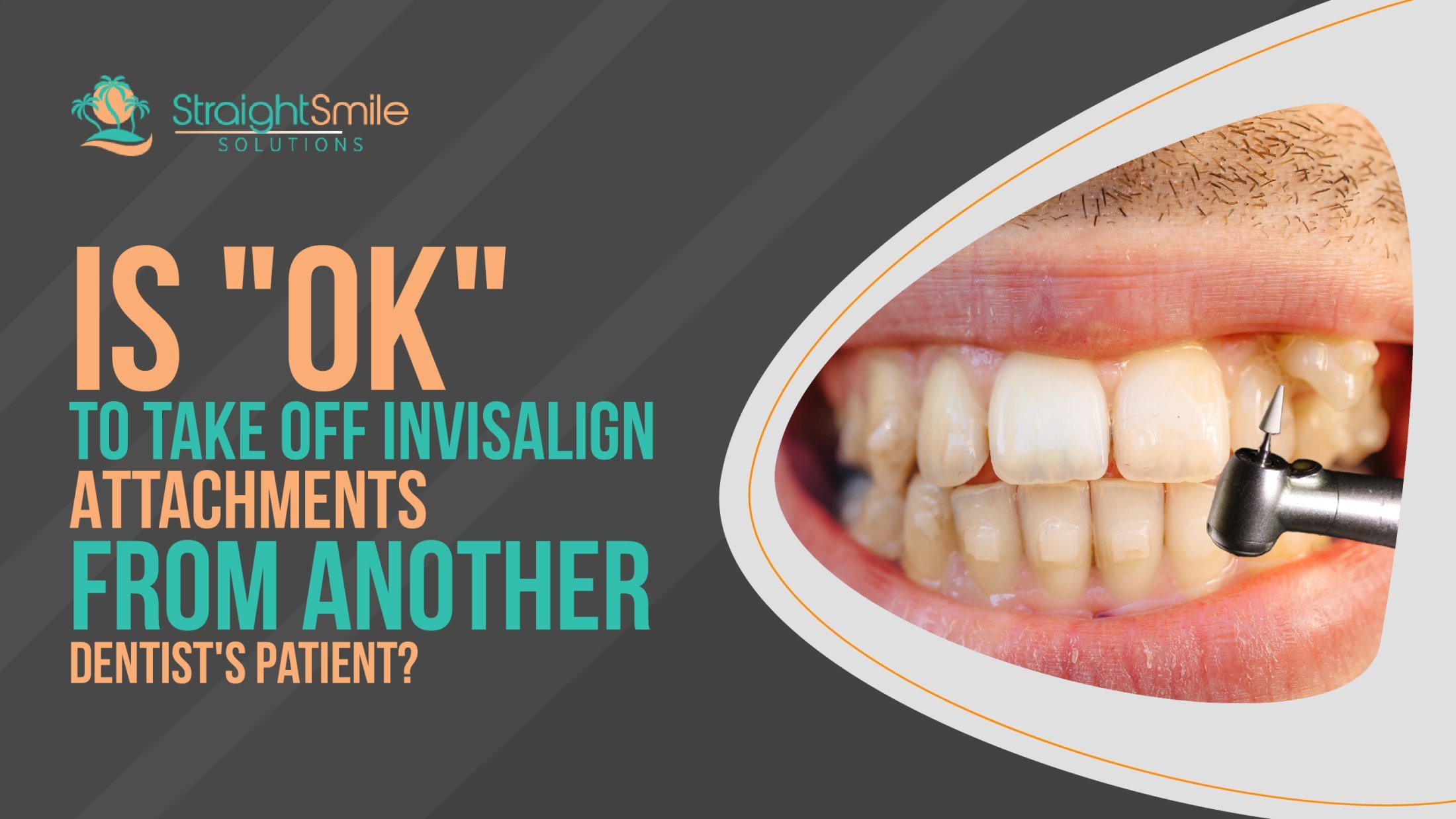
Is it “OK” to Take Off Invisalign Attachments from another Doc’s Patient?
1. Initial Context: Invisalign is a removable form of braces. When patients have attachments, they are under treatment and the care of a particular orthodontist. Removing these attachments implies that the orthodontist is now part of the treatment plan and responsible for any potential damage.
2. Patient Relocation: If a patient moves states and requests the removal of their attachments, the orthodontist may discontinue treatment. However, this requires several procedures and necessary paperwork.
3. Required Procedures include deep bonding (polishing the teeth) and taking vinyl records before and after the procedure—a clear understanding of the patient’s condition and the type of retainers used.
4. Type of Retainers: If the patient is unaware of the type of retainers used, the orthodontist should not remove the attachments. The orthodontist becomes responsible for the patient’s relapse and retainer retention visits, thus necessitating the proper documentation.
5. Scenarios for Removal: Situations might involve checking with articulating paper, scanning, and x-rays. If the patient’s occlusion is unbalanced, the orthodontist may need to bond the teeth while working on bite settling. If complications arise, the orthodontist must start the Invisalign process again unless the case has been transferred formally.
6. Proper Protocol and Charges: Proper procedures and documentation are crucial for a patient’s relocation. A complete evaluation of the patient’s teeth, airway, and contacts is performed, considering the new case. The orthodontist may charge at least $1,000 for retainer work. Additional costs may apply for other services.
7. Refunds and Old Dentists: Patients may have already paid another doctor for the procedure, and it’s their responsibility to seek a refund. While some may wish to return to their old dentist, this is not always possible. Issues arise not because of patient relocation but because the original doctor discontinues treatment.
8. Standard of Care: Withholding treatment until the patient pays their bill often leads to a messy situation and can negatively impact the dentist’s reputation.
9. EO Release Form: When a patient moves, the dentist should provide an EO release form with all pertinent information. The charge should remain at $1,000 without fluctuation. If the dentist isn’t familiar with removal procedures, the patient should be referred to an orthodontist.
Please consult your liability insurance and dental practice for any questions or concerns.
Ordering New Vivara Retainers for Archived Patients

Ordering New Vivara Retainers for Archived Patients
We all like to hope that our patients will see great results after finishing cases, but often, they may still need follow up treatment plans to ensure they’re keeping on track and not slipping. In line with this, today’s brief guide looks at some of the key things you need to know about ordering new Vivara retainers to help.
Ordering New Vivara Retainers for Archived Patients
If you have an archived patient who has finished their case(s) over five years ago, you may assume that you’ll have to completely set up the retainers again. However, with Vivara, this may not actually be the case. In fact, it’s possible to get Vivara retainers for archived patients, even five years ago.
To do so, use the following steps:
– Find the archived patient
– Unarchive the patient
– Go to “new Vivara subscription”
– Select “use upper arch from the previous retainer”
– Pay the retainer charge
It’s worth noting that archived patients’ scans will usually be deleted after ten years. However, you may be able to cloud store models to secure them.
Should I Rescan Patients Before Giving a Retainer?
In many cases, it’s worth checking your Patients individually to decide whether you should rescan. Sometimes, you’ll find that archived patients’ old Vivara retainers will still fit perfectly after many years. However, this may not always be the case. You should ideally do a virtual visit to be sure, but if you’re concerned, make sure to rescan if they need it. This will naturally cost a lot more, though.
Phase 1 Retention Retainer Options
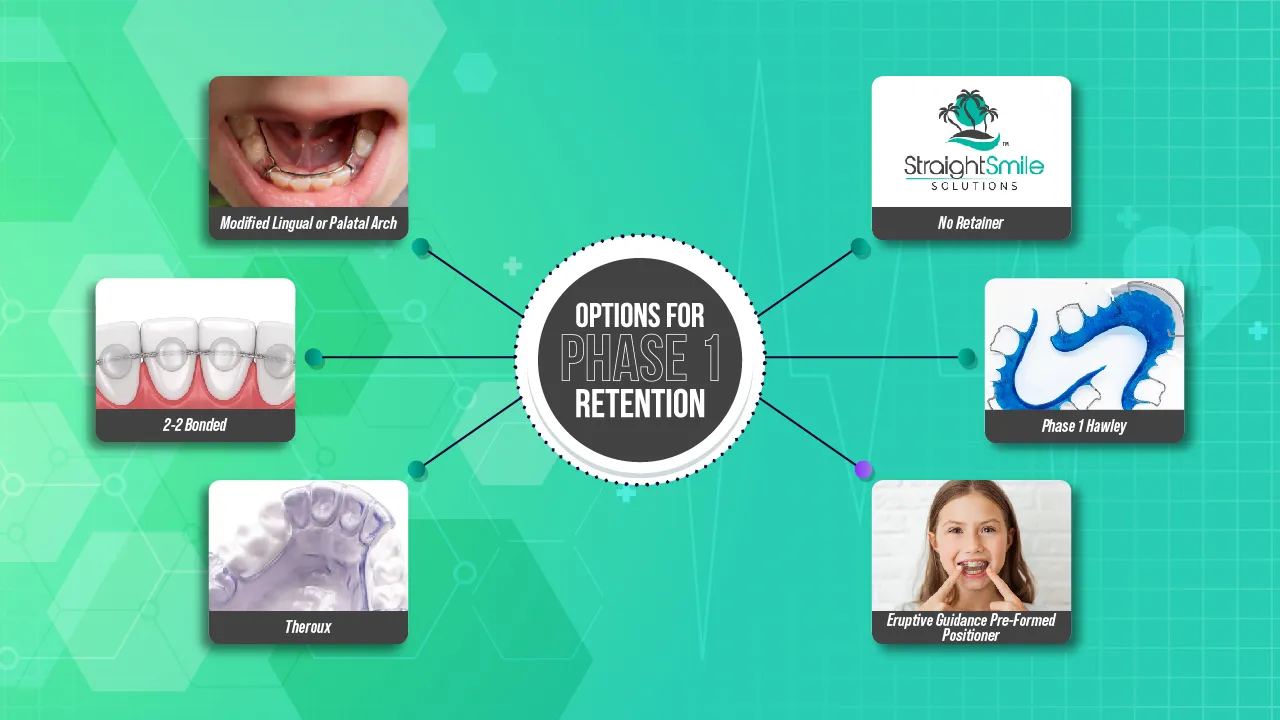
Phase 1 Retention Retainer Options
● Dr. Amanda from Straight Smile Solutions
● Updated video on Phase One retention options
● Originally thought there were four options, but there are six
● Emphasizing the importance of patient-specific choices
II. Purpose of Phase One Treatment
● Interceptive orthodontics explained
● Focusing on correcting bite issues and creating space
● Addressing transverse, sagittal, and vertical problems
● Mention of class II, class III, and vertical issues
● Connection to habits and their effects on dental health
III. Factors Influencing Retention
● Retention needs depend on the specific treatment
● Stability of expansion, lower jaw growth, and upper jaw growth
● Importance of vertical correction and its stability
● Impact of canine eruption and habits on retention needs
● Consideration of parental preferences and patient compliance
IV. Retention Options
A. No Retainer
– Sometimes a retainer is not necessary
– Parental consent plays a role
B. Phase One Hawley Retainer
– Traditional Hawley retainer
– Adams clasp recommended
– Customizable with colors and designs
C. Bonded Retainers (Upper and Lower)
– Indirect bonding option
– Considered for its durability
– Cosmetic concerns and potential breakage
D. Thorough Retainer
– Explained as a modified Essix retainer
– Covers permanent teeth and palate
– Effectiveness in addressing transverse issues
E. Modified Lingual or Palatal Arch
– Used primarily on the lower arch
– Aesthetic concerns on the upper arch
– Emphasized durability and stability
F. Preformed Eruptive Guidance Appliances
– Mention of HealthyStart (with caution)
– Cost-effective and effective for eruption guidance
– Mention of alternative brand UConcept
V. Pricing Considerations
● Approximate cost ranges for each retention option
● Factors affecting pricing, such as customization and lab work
● Note on HealthyStart’s retainer cost and alternative options
VI. Conclusion
● Dr. Amanda’s preferred retention choice: Preformed Eruptive Guidance Appliances
● Encouragement for viewers to explore different options
● Reference to additional content and resources on the topic
Each option has advantages and considerations, and the choice should be made after thoroughly evaluating the patient’s case. Ultimately, effective phase one retention ensures the success of subsequent orthodontic phases and the patient’s long-term dental health.
Nighttime Clear Aligners: Are They Any Good?
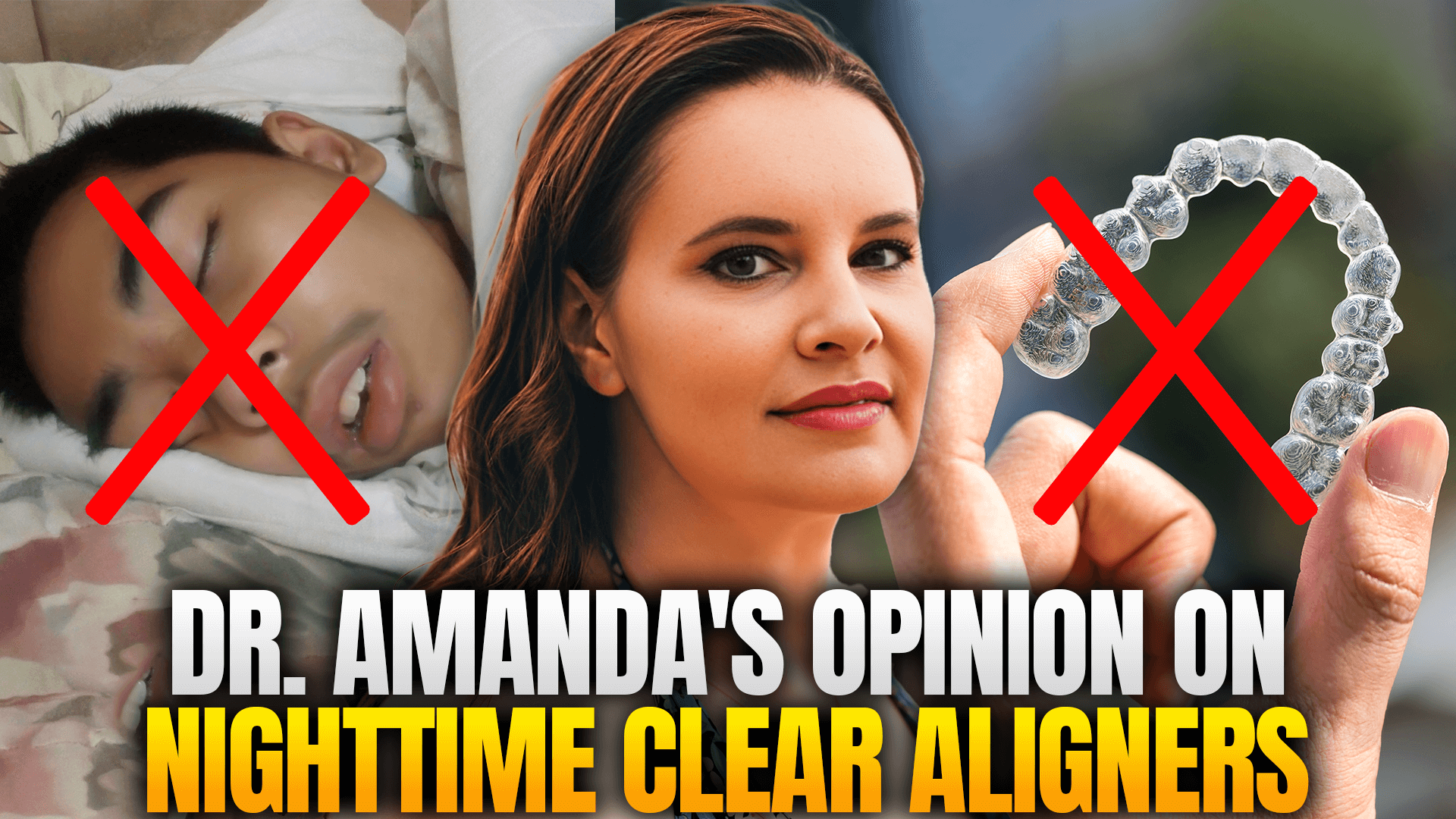
Nighttime Clear Aligners: Are They Any Good?
Have you ever thought about trying nighttime clear aligners for your orthodontics cases? There are countless possible ways to use clear aligners, but do nighttime clear aligners really work? We’ve outlined some of the key things you need to know about nighttime clear aligners as follows.
What are Nighttime Clear Aligners?
Nighttime clear aligners are a type of aligner used only during the nighttime hours, meaning they provide intermittent force to the teeth. They can be much more practical options for patients, but this doesn’t necessarily mean they work well.
Can Nighttime Clear Aligners Work for Orthodontics Patients?
When nighttime clear aligners first became popular, there was very little data available on whether these can actually work. Unfortunately, when attempting to move or realign the teeth, inflammatory responses can occur. Intermittent forces (i.e., non continual pressure) can make this feel even more uncomfortable.
As such, on the whole, we generally recommend going for full-time aligners rather than nighttime aligners to reduce the discomfort experienced by the patient and to lessen the amount of pressure and force applied to the teeth (which can reduce the risk of complications).
Overall, the most effective approach to moving teeth is to take a very slow and gradual approach. Try to use weekly aligners with marginal movements (0.2 to 0.25 movements are usually effective) instead of going for intermittent forces instead.
Wearing a Theroux Retainer for Too Long
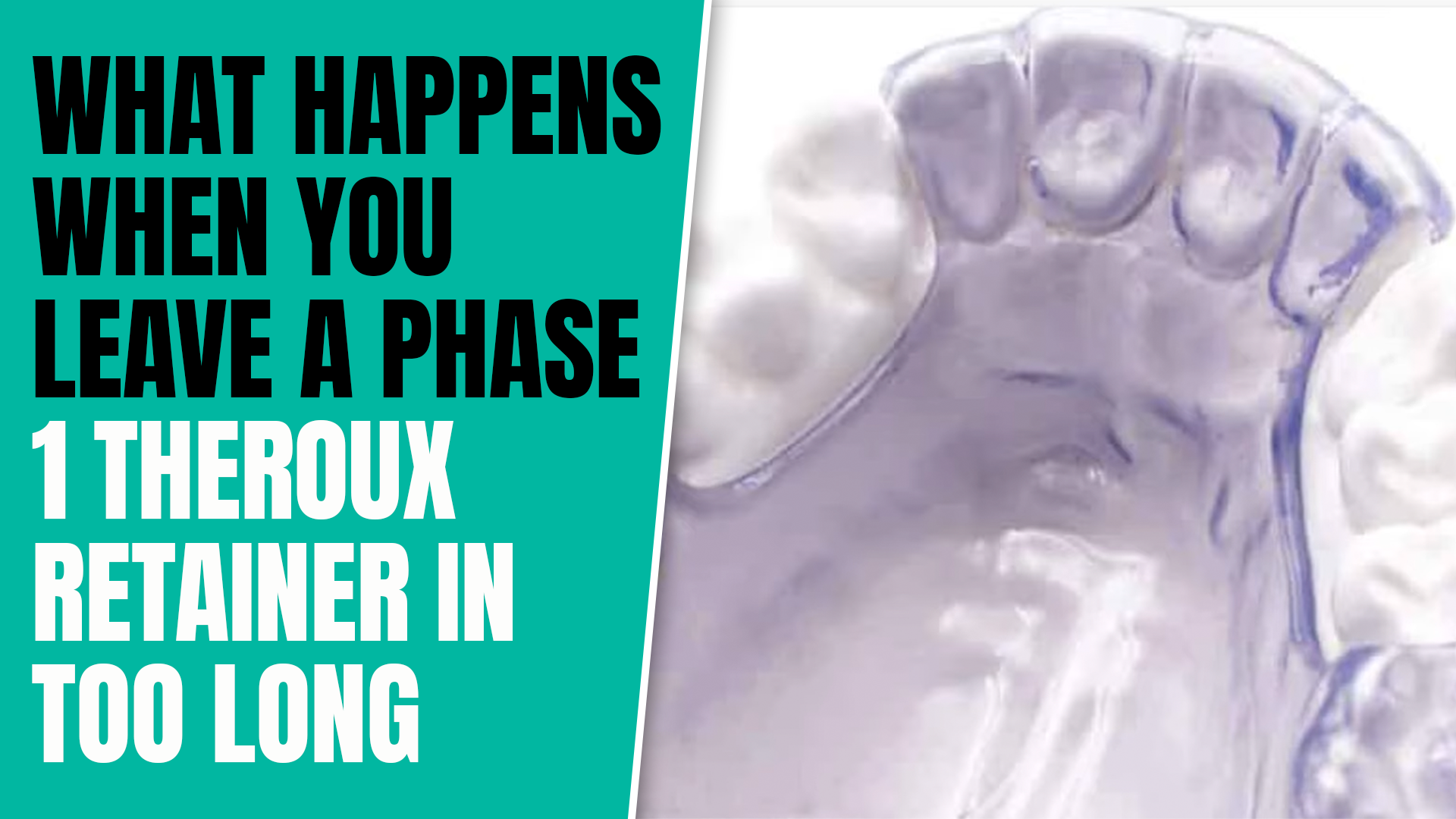
Wearing a Theroux Retainer for Too Long
When finishing cases with Phase I treatment plans, Theroux retainers can be an excellent option for retention. However, wearing a Theroux retainer for too long may be problematic, which is important to keep in mind.
What are the Options for Phase I Retainers?
Phase I treatment plans are carried out as the first set of orthodontics in young, growing patients to fix bites, usually between six and nine years old.
Some of the different options for retainers when finishing cases with Phase I (and before ortho starts on Phase II if needed) include:
– Bonded retainers go behind the lingual teeth on either the top or the bottom
– Pre-finished / healthy start G retainers are highly effective (albeit expensive) Phase I and Phase II retainers
– Theroux retainers aren’t always advertised as often, but they are thicker than regular retainers and can provide excellent results.
You may not always need to use retainers, depending on the type of orthodontics work you have done on the patient.
If you decide to use Theroux retainers, it’s important to check patients every three to six months to ensure that the retainer still fits properly.
Unfortunately, though, Theroux retainers can potentially be worn for too long, which can leave the uncovered teeth prone to continually erupting (while others are not). This can mean that only the uncovered teeth will have contact once the Theroux retainers are removed.
In other words, you’ll have both posterior and anterior openbite in the patient. Fortunately, this can be fixed in Phase II, but it’s still worth finishing cases with regular checkups.
Get Professional Support
If you need professional support, please don’t hesitate to contact our experts here at Straight Smile Solutions. Our team can help guide you through your Phase I orthodontics cases, helping ensure you’re well-equipped when ortho starts.
How to Choose the Right Dental School
Have you been looking to invest in general dentistry or orthodontics training? There’s only so far that online orthodontic courses can take you; as such, ensuring you’ve chosen the right dental school that equips you with the full orthodontics training and education you need is vital. Luckily, we’ve summarized some of the key things you need to look for to find the perfect dental school for general dentistry and orthodontic education.
How to Choose the Right Dental School
When looking for a dental school that offers general dentistry and orthodontic classes, the following factors are crucial to keep in mind:
1) Costs: There are a lot of costs associated with dentistry and orthodontics training. These include room, board, supplies, equipment, and the like.
a. Make sure you’ve asked for the total cost over the four-year period; contacting other students to see what sort of financial support and costs are associated can also help.
2) Graduation percentage: You don’t want to be retaking courses or giving up on your degree part-way through. So, always check the percentage of students who graduate successfully (first time) within four years for national and state boards. Look for a less than 10% fail rate at most.
a. Don’t go to a school that doesn’t have good stats here; otherwise, you could end up staying (and paying) for even longer.
3) What states are covered? Not every state will be covered by your training and licensure necessarily. Always check the states your course training can cover and ensure these align with your working goals. Not having the correct licensure can cause a lot of problems long-term.
4) Is there guaranteed reciprocity? It’s important to check whether the course offers guaranteed reciprocity.
Always check when procedures should be completed by when making your decision, too. Other key factors to consider include the facilities and whether the school is likely to continue operating or if it’s at risk of closure.