
StraightSmile Solutions®
Can You Leave Impacted Canines in Orthodontic Cases?

When tackling orthodontics cases, there’s a good chance you’ll occasionally come across a trickier situation, and knowing how to create the right treatment plan for these can sometimes be tough. One such example is for patients who have impacted canines – but can you leave impacted canines, or should these be addressed first?
Can I Leave Impacted Canines in Orthodontic Cases?
In some cases, it can be obvious that an impacted canine will cause problems during an orthodontic treatment plan. As such, in situations where impacted canines are likely to cause damage to the surrounding teeth during ortho treatment, you will need to address the impacted canines first. This is most common when canines have erupted near to the roots of other teeth.
However, even if you think it might be possible, you should always get professional advice before you agree to do orthodontics for an impacted canines client. Indeed, if something should go wrong because the teeth haven’t been removed, you’ll be liable.
Even if the impacted canines seem high and low risk, always send the CBDT to a dental radiologist or OS first. In the referral form, ask the specialist whether it would be okay to do an orthodontic treatment plan while leaving the affected teeth impacted. The specialist should then let you know whether there is any risk with such cases; make sure you get this in writing to cover yourself, just in case. Also, make sure there is a section relating to this for the informed consent form to cover your business.
When do you need to cover erupting 2nd or 3rd molars with an invisible or clear aligner tray?
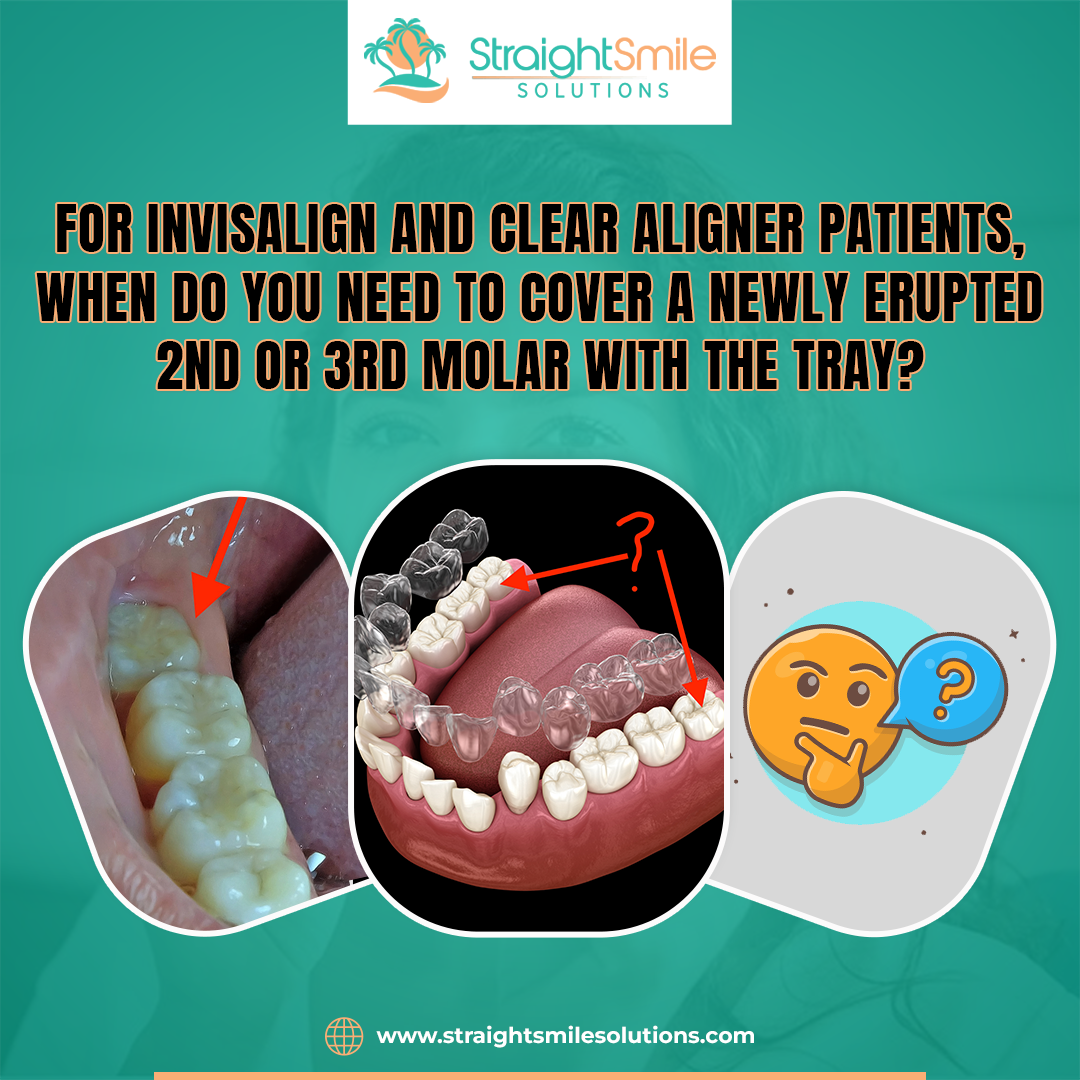
When do you need to cover erupting 2nd or 3rd molars with an invisible or clear aligner tray?
I. Introduction
Dr. Amanda from StraightSmile Solutions delves into the intricacies of erupting molars, whether in a 12-year-old or an 18 to 19-year-old patient. Whether it’s the emergence of second molars or the arrival of wisdom teeth, vigilance during aligner treatments is crucial. Failing to cover these erupting teeth can lead to complications, affecting the alignment’s thickness and causing unforeseen challenges. This is particularly relevant when molars haven’t fully erupted, necessitating refinements. The importance of a comprehensive approach becomes evident, emphasizing the need to address wisdom teeth mysteries before initiating treatments.
II. Why Erupting Molars Matter
A. Alignment Thickness
1. Two fractions of a millimeter impact
2. Cumulative effect with multiple erupting teeth
B. Mouth Propagation
1. Open mouth effect on erupting teeth
2. Continuous eruption until contact is made
III. Risks of Uncovered Erupting Teeth
A. Super Eruption
1. Increased difficulty in intrusion later
2. Prevention is easier than correction
B. Overlooking Eruption
1. Common oversight in treatment planning
2. Impact on the alignment process
IV. Considerations in Treatment Planning
A. Mixed Dentition Cases
1. Incomplete eruption of second molars
2. Need for coverage even if straightening in aligners
B. Wisdom Teeth
1. Ensure they are either fully erupted or impacted
2. Risks of mid-treatment eruption
V. Refinement and Rescan
A. Wisdom Teeth Mystery
1. Suggest solving before starting treatment
2. Unforeseen refinements may increase costs
B. Comprehensive Cases
1. Advocacy for unlimited or comprehensive cases
2. Avoid limitations on refinements
VI. Wisdom Teeth Management
A. Importance of Early Assessment
1. Wisdom teeth status before treatment initiation
2. Addressing potential complications in advance
B. Refinement Challenges
1. Uneven eruption timing
2. Planning for multiple refinements if needed
VII. Monitoring Eruption Progress
A. Articulating Paper Check
1. Assessing contact with adjacent teeth
2. Ensuring proper alignment during eruption
B. Accusal Plane Level
1. Trigger for coverage initiation
2. Guidelines for covering erupting molars
VIII. Coverage Guidelines
A. Minimum Coverage
1. A bare minimum of one-half
2. Recommended coverage of at least 2/3
B. Tipping Concerns
1. Risks associated with minimal coverage
2. Aim for 100% coverage when planning movement
IX. Contrasting with Braces
A. Brackets Usage
1. Limited use unless necessary
2. Application at the 18 NTI stage
B. Straight Wire Course
1. Different approach to braces
2. Specific circumstances for bracket application
X. Clinical Considerations
A. Reminder to consider all molars, including wisdom teeth
B. Caution against starting treatment without accounting for all erupting teeth
C. Recommendation for comprehensive cases with many refinements
D. Highlighting the need for planning before treatment initiation
XI. Conclusion
It is crucial to closely monitor erupting molars during orthodontic treatment, whether dealing with second molars or wisdom teeth. Neglecting to cover them may lead to complications, such as super eruption, making future adjustments more challenging. Considering the entire dentition, including wisdom teeth, is essential before initiating treatment, preventing the need for multiple refinements. The key is timely intervention when molars are at the occlusal plane, aiming to cover at least two-thirds to ensure effective results. This approach differs from traditional braces, emphasizing a strategic and customized orthodontic plan.
How we Pay our Associates for Invisalign- W2
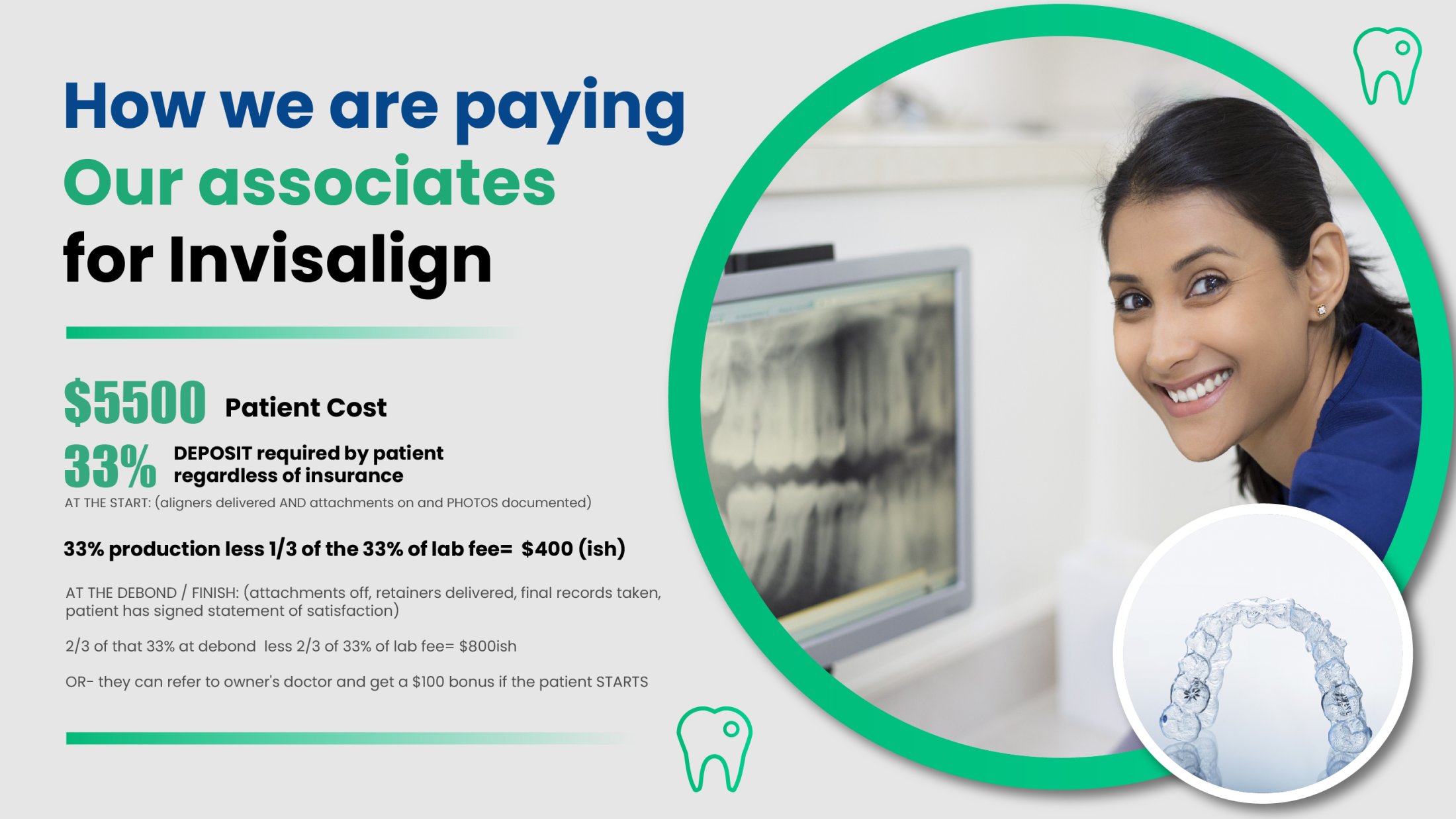
How we Pay our Associates for Invisalign- W2
I. Introduction
Dr. Amanda from StraightSmile Solutions provides a unique incentive structure to ensure associates provide excellent Invisalign treatment. Associates receive one-third of the production fee upfront when aligners are delivered, and attachments are placed. To receive the remaining two-thirds upon completion, associates must properly manage cases end-to-end, incentivizing accountability and quality care. This model ultimately benefits both patient satisfaction and the practice’s bottom line.
Background on Straight Smile Solutions
1. Website: straightsmilesolutions.com
2. Expertise in Invisalign cases
II. Compensation Structure for Associates
A. Preference for Owner Doctors
● Emphasis on experience
● Exceptions for enthusiastic associates
B. Consideration of Friends and Family Discount
III. Challenges Faced by Owners and Associates
A. Past experiences leading to financial stress
B. Addressing issues like inadequate treatment planning
C. Importance of commitment to case completion
IV. Compensation Breakdown
A. Patient Acquisition and Initial Deposit
● 33% deposit requirement
● Lab fee coverage
B. Aligner Delivery and Attachments
● Start of compensation
● Associates receive 1/3 of their total compensation
C. Incentivizing Case Completion
● Associates only receive additional funds at case completion
● Encouraging proper treatment planning and patient management
D. Photos as Documentation
● Standard practice for accountability
● Aligners in, aligners out, and bite marks documented
V. Patient Costs and Regional Variances
A. Cost considerations in affluent areas
B. $6,500 to $7,500 range for patient charges
C. Inclusion of one set of retainers in the package
D. Discussion on potential upgrade specials
VI. Financing Options
A. 33% deposit as a standard requirement
B. Third-party payment situations
C. Exclusion of in-house financing
D. Consideration of regional economic differences
VII. Alternative Strategies for Affordability
A. White label aligners with batch printing
B. Cost reduction through volume and efficient screening
C. Flexibility based on the economic profile of the region
VIII. Associate Options at Different Stages
A. Associates receive 1/3 of the compensation at the start
B. The remainder is received at the DB bond stage
C. Bonus option for associates who refer cases to owner doctors
IX. Benefits of Compensation Model
A. Incentivizes excellent planning and patient management
B. Ensures associate remains invested through case completion
C. Win-win for associate with referral option
X. White Label Aligners as an Alternative
● Suggestion for cost-effective solutions in Blue Collar areas
● A brief explanation of white label aligners and batch printing
● Importance of volume for reducing lab fees
XI. Addressing Turnover and Case Completion
A. Turnover in the Dental Industry
● High turnover, especially in areas with military presence.
● The burden of completing unfinished cases.
B. Motivating Associates for Case Completion
● Incentivizing proper treatment planning.
● Accountability loop management.
● Avoidance of incomplete cases and subsequent rework.
Conclusion
The innovative approach outlined by StraightSmile Solutions offers a transparent and fair compensation model for associates engaged in Invisalign cases. This approach prioritizes patient accountability and high-quality treatment planning, tries to avoid unfinished cases, and guarantees patient satisfaction. The flexibility in payment structures, including a referral bonus, demonstrates a commitment to collaboration and success for associates and the practice. This strategic approach addresses financial concerns and emphasizes long-term partnerships and exceptional orthodontic care.
Easy Lower 2nd Molar Uprighting WITHOUT TADS

Easy Lower 2nd Molar Uprighting WITHOUT TADS
I. Introduction
Dr. Amanda from Straightsmile Solutions offers a simple method for uprighting a lower second molar, requiring the absence of the third molar and visibility of a portion above the gum line. This technique eliminates the need for temporary anchorage devices (TADs) and is effective for younger individuals with molars angled 30-70 degrees. The technique and associated tools, such as the Halterman appliance, are available for detailed guidance. This cost-effective and comfortable alternative is worth considering.
II. Conditions for Uprighting
Two essential conditions for successful uprighting:
● The third molar must be gone and not impacted.
● A portion (30-20%) of the second molar should be above the gum line.
III. Additional Considerations
● In situations where the third molar is completely below, the recommendation is to wait or consider extraction.
● Ideal angulation for successful uprighting (30-70°).
● It is important to ensure no ankylosis through dentistry or CBCT.
IV. Patient Age Consideration
● Ideal age range for the procedure (11-15 years old).
● Prognosis tends to decrease after this age range.
V. Methods of Uprighting
● Possibility of performing uprighting without temporary anchorage devices (tads).
● Mention of using a lower appliance or a “widget” before braces.
● Recommendation to use a Halterman appliance for cases without braces.
VI. Halterman Appliance Description
● Description of the Halterman appliance.
● Placement on the first or sixth molar, depending on braces presence.
● Discussion of lingual arch usage for stability.
VII. Activation Process
● Explanation of the activation process using a canal lever, hook, and power chain.
● Emphasis on extrusive and distal forces applied to upright the second molar.
VIII. Potential Issues and Solutions
● Caution regarding potential problems, such as periodontal defects.
● Recommendation to avoid rapid adjustments to prevent complications.
● Mention the spacer technique and its role in overcoming certain issues.
IX. Duration of Procedure
● Approximate timeframe for the procedure (4-12 months).
● Periodic reactivation every few weeks in the office.
X. Cost and Accessibility
● Cost estimation for the procedure, including lab expenses.
● Affordability and accessibility as compared to alternative methods.
● Positive aspects of cost-effectiveness and patient comfort.
XI. Acknowledgment
● Mention of previous use of similar techniques in dental residency
● Encouragement to explore further resources on the YouTube channel
Conclusion
The Halterman technique offers a viable, cost-effective solution for uprighting molars without needing TADs. The success of this method depends on specific conditions, including the absence of impactions, a portion of the molar above the gum line, and favorable angulation. While not without challenges, the technique provides a more comfortable and affordable alternative to TADs, making it a practical option for certain cases. The step-by-step approach, involving the use of a specialized appliance, offers a promising pathway to achieving desired results, contributing to patient satisfaction and overall oral health.
Missing Tooth Cases; Invisalign and Clear Aligners or Braces?
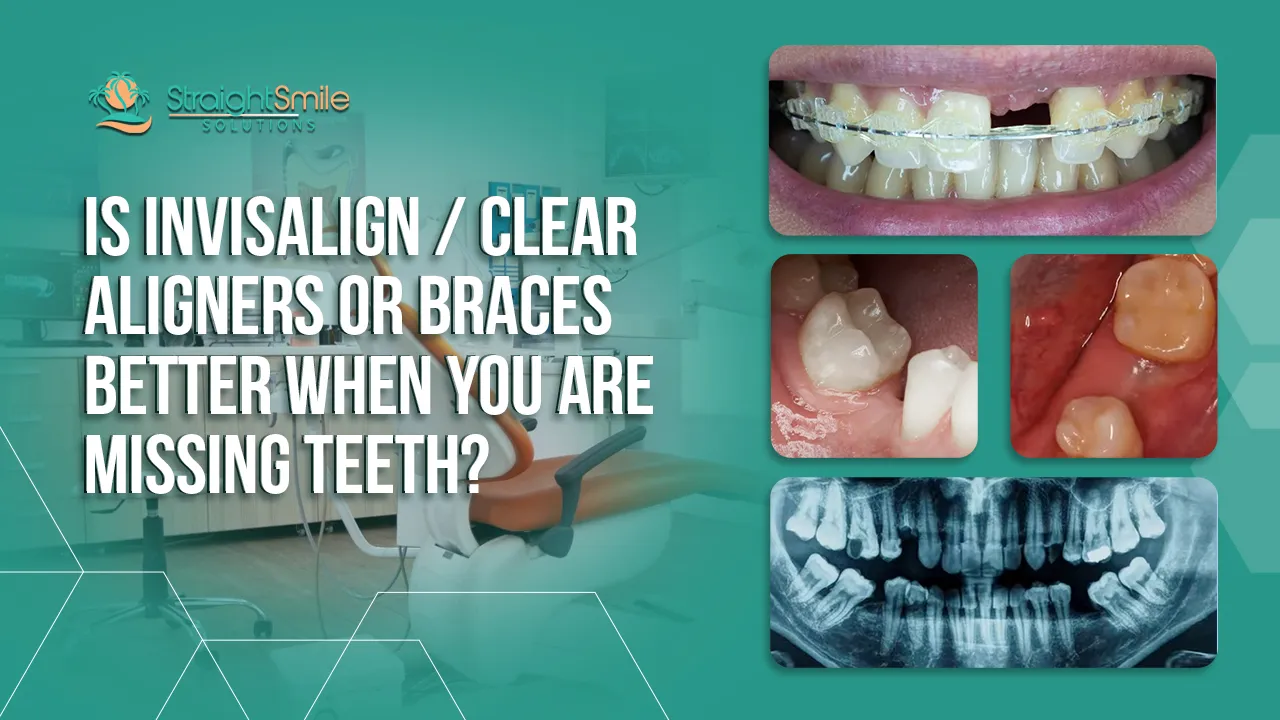
Missing Tooth Cases; Invisalign and Clear Aligners or Braces?
When we think about typical clear aligner cases, we tend to think about patients who have a full set of teeth – however, occasionally, you may have a patient who has recently lost a tooth asking for clear aligners or braces. Knowing how to approach these cases might not always be clear, which is why we’ve outlined some key things to consider today.
Which is Better for Missing Teeth: Clear Aligners (Invisalign) or Braces?
There’s no simple way to say whether you should use clear aligners such as Invisalign or braces with a missing tooth patient. This will generally depend on two things, in particular:
1) Where is the missing tooth located? First, you should consider where the missing tooth is located. If the missing tooth is in the back of the mouth and the patient doesn’t need a pontic, both braces and clear aligners could work.
2) How big is the span? In addition to considering where the missing tooth is located, you should also consider how big the span is (i.e., is the empty space large or small). If the missing tooth has a small span, braces may work, but this could still have complications compared to using clear aligners.
While you can potentially use braces on a missing tooth patient, this may represent a choking hazard, meaning this can have a lot of liability involved. Moreover, when working up to heavier wires, there may be a greater risk of the wires snapping, so a very soft diet will be crucial.
Fortunately, products such as Invisalign can work with missing tooth cases with a pontic, so be sure to keep this option in mind.
Success with Eruptive Guidance Biotrainers- Can they Replace RPE? Active vs Passive Wear
 Success with Eruptive Guidance Biotrainers- Can they Replace RPE? Active vs Passive Wear
Introduction
Dr. Amanda from StraightSmile Solutions discusses pre-orthodontic treatment with biotrainers and eruptive guidance appliances. Eruptive guidance biotrainers are showing promise for accurately guiding and regulating exercise intensity. By providing direct muscle feedback, these devices may reduce reliance on the subjective RPE scale. However, more research is needed to evaluate biotrainer effectiveness and user acceptance for both active and passive wear applications across various exercise modalities.
I. Overview
A. Pre-treatment orthodontic appliances like biotrainers can work to straighten teeth if used correctly
B. Success depends on several factors:
1. Starting age – earlier is better (ages 2-6 ideal)
2. Severity – works better for milder cases
3. Wear time
a. Must be worn actively 4-6 hrs/day plus overnight
b. Passive overnight wear alone has limited effect
C. Not a standalone treatment for all orthodontic issues
1. Won’t expand palate or split midline suture
2. May need supplemental treatment (e.g. myofunctional therapy)
II. Using Biotrainers for Early Intervention
A. Goal is to guide eruption of incoming teeth
B. Appliance features eruption guidance slots
C. Progressive series of appliances as child grows
D. Can help avoid future orthodontic treatment
E. Success factors
1. Compliance with wear time
2. Starting very early around age 2-5
III. Limitations
● Extremely time-consuming and difficult compliance, especially for older kids
● Most patients unwilling or unable to wear appliances actively during day
● Not a standalone treatment for more significant orthodontic issues
● Will not expand palate sutures or correct breathing/airway problems
IV. Appropriate use and billing
A. Can work for the right patient if worn properly
B. Should be affordable, not $4000-6000
C. Doctors should not bill insurance for these
D. Set patient expectations – no promises or guarantees
V. Considerations in Clinical Practice
A. Set realistic expectations about effectiveness
B. Bill cash not insurance for these appliances
C. No guarantees of results given variability in compliance
D. Consider supplemental therapies as needed
Summary
Biotrainers and early orthodontic guidance appliances can be an affordable option for mild alignment issues in some pediatric patients but have limitations in more severe clinical situations. Starting very early and maintaining patient compliance with wear time is critical to success. Supplemental treatments may still be needed depending on the clinical factors present in each unique case. While early treatment can work for the right patient who is extremely compliant, it is not a miracle cure-all. Most cases still require traditional orthodontics or adjunctive care from other specialists.
Invisalign for Palatal Expansion Cases
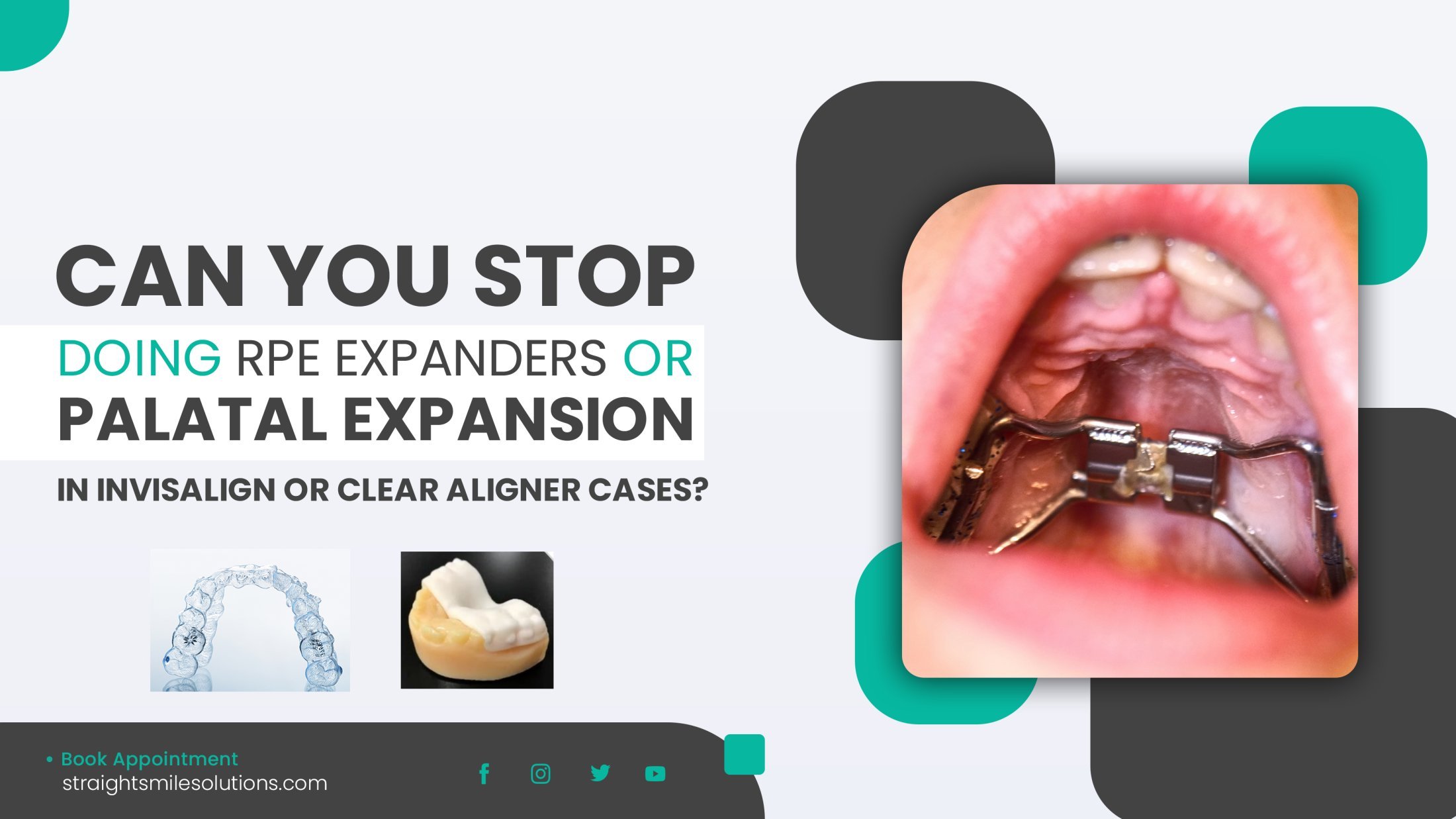
Have you ever wondered about whether you could use Invisalign or clear aligners as an alternative to doing RPE expanders or palatal expansion on your patients? Palatal expansion can be a useful tool, but if you are doing an Invisalign or clear aligner case, you may want to consider: is palatal expansion really necessary?
Using Invisalign for Palatal Expansion Cases
If you have a patient who needs palatal expansion, an alternative option may now be available. Indeed, Invisalign is releasing its range of expanders designed to clip into your patient’s clear aligners.
As such, if this Invisalign product is rolled out and available for you to try, it may be possible to go straight into your Class II cases that need palatal expansion without having to do the expansion first. This could be incredibly useful for streamlining palatal expansion cases.
However, in some cases, it’s worth noting that more minor expansion cases may not necessarily need expanders at all. In E&T, vaulted palate, and airway issue cases, for example (among others), you’ll definitely want to still use an expander. However, in cases where the palate is only slightly constricted, and there are no significant complications (such as airway difficulties), it may be possible potentially to see improvements with Invisalign alone.
Orthodontic Relapse Due to Airway Issues and Mouth breathing
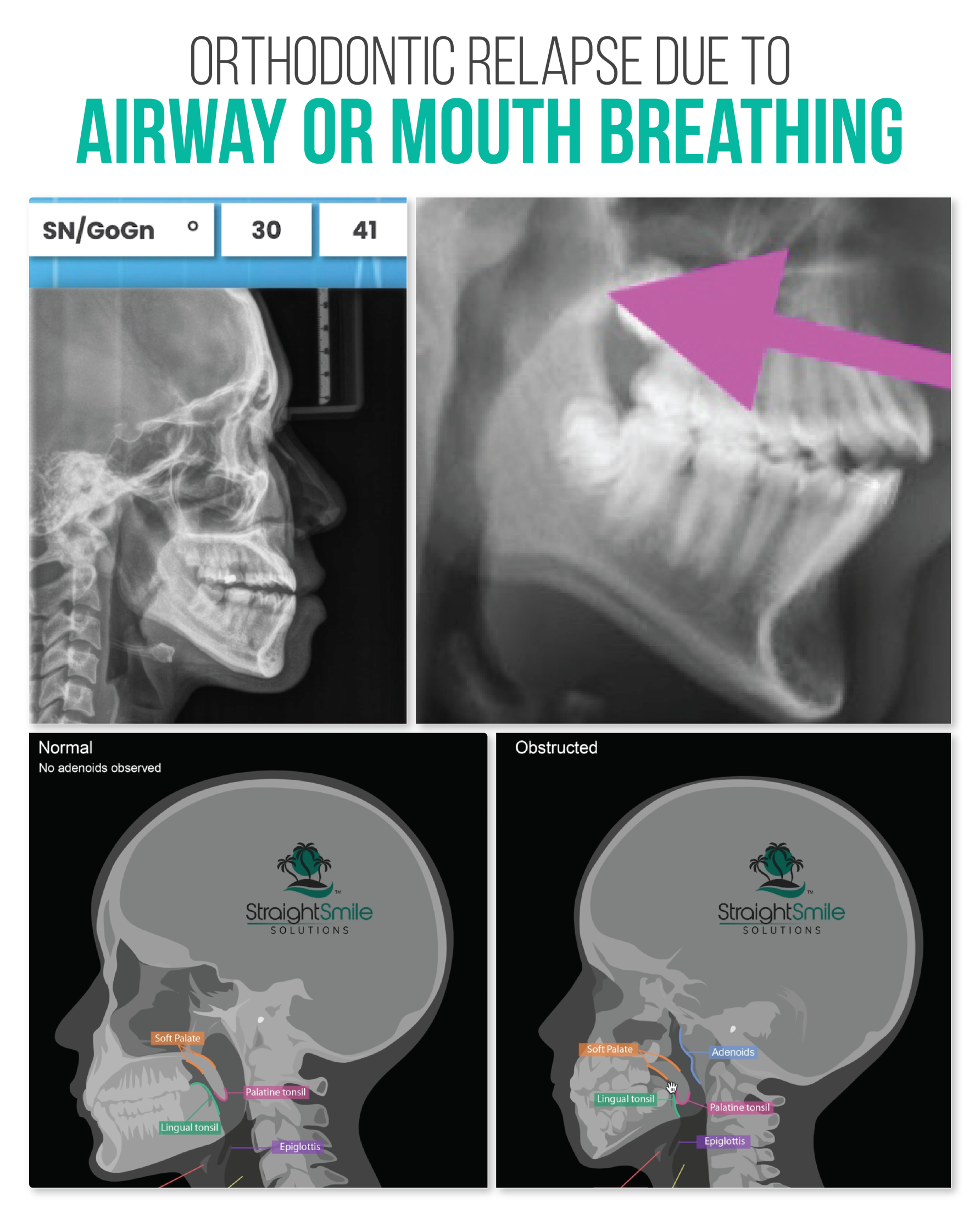
Orthodontic Relapse Due to Airway Issues and Mouth breathing
I. Introduction
Orthodontic relapse is a persistent issue, often caused by underlying issues like mouth breathing and airway problems. Dr. Amanda from StraightSmile Solutions emphasizes comprehensive screenings and enlisting OMT and ENT experts when necessary. She provides proactive solutions, such as patient release forms and webinars, to address root causes and ensure optimal, lasting orthodontic outcomes. Her insights help practitioners respond appropriately and prevent complications.
A. Orthodontic relapse is a common issue often caused by poor habits like mouth breathing and airway problems
B. These problems can be addressed with treatments like Orthodontic Movement Therapy (OMT) to prevent relapse
II. Recommendations from Dr. Amanda
A. Get a written release from ENT stating surgery is not needed to proceed with orthodontics
● Template available for free
B. Attend Dr. Amanda’s webinar to get free documents
● Can request free ENT document
● Also offers document templates for free
C. Emphasizes screening patients for sleep disorders and airway issues
● Parents often don’t put in the effort to properly screen
● This can lead to patients not getting proper treatment
III. Preventing Complications and Relapse
A. Record patients’ sleep during procedures to identify potential problems
B. If airway issues are not addressed, further treatment may be needed
● The jaw may still grow down and back
● This can lead to open bite
● May require jaw surgery later, depending on age and severity
C. Need extensive documentation to protect patient
● Free redo of treatment
● Insurance coverage
● Potential refund
D. More unpredictable growth with standard braces vs. clear aligners
E. Have patients sign informed consent documents to set expectations
IV. Role of OMT and ENT
A. Can identify issues like adenoids/lingual tonsils with imaging
B. If red flags are found, refer to OMT and ENT
C. More virtual OMT options and training orthodontic teams on it is helpful
V. Importance of patient screening and documentation
A. Get a written release that surgery is not needed
B. Provide extensive documentation to protect patient
● Free touch-ups, insurance coverage, refunds
C. Screen for sleep disorders and airway issues
● Parents often don’t screen well enough
D. Record sleep during procedures to identify issues
VI. Additional treatments sometimes needed
A. If the airway is not addressed, further problems likely
● Jaw grows down and back
● Anterior open bite
B. May need ortho plus jaw surgery
● Depends on age and severity
C. Informed consent doesn’t explain enough
● Need to protect patients better
VII. Managing unpredictable growth
A. Growth unpredictable with standard braces
B. Improve informed consent forms
C. Check adenoids on x-ray and lingual tonsils
VIII. Conclusion
Dr. Amanda stresses the importance of screening for airway and sleep issues to prevent orthodontic relapse. She provides free documents and templates to improve informed consent and protect patients. More virtual OMT options and staff training on implementation could further enhance outcomes.
Understanding SN/GoGN (Mandibular Plane Angle) in CEPHs
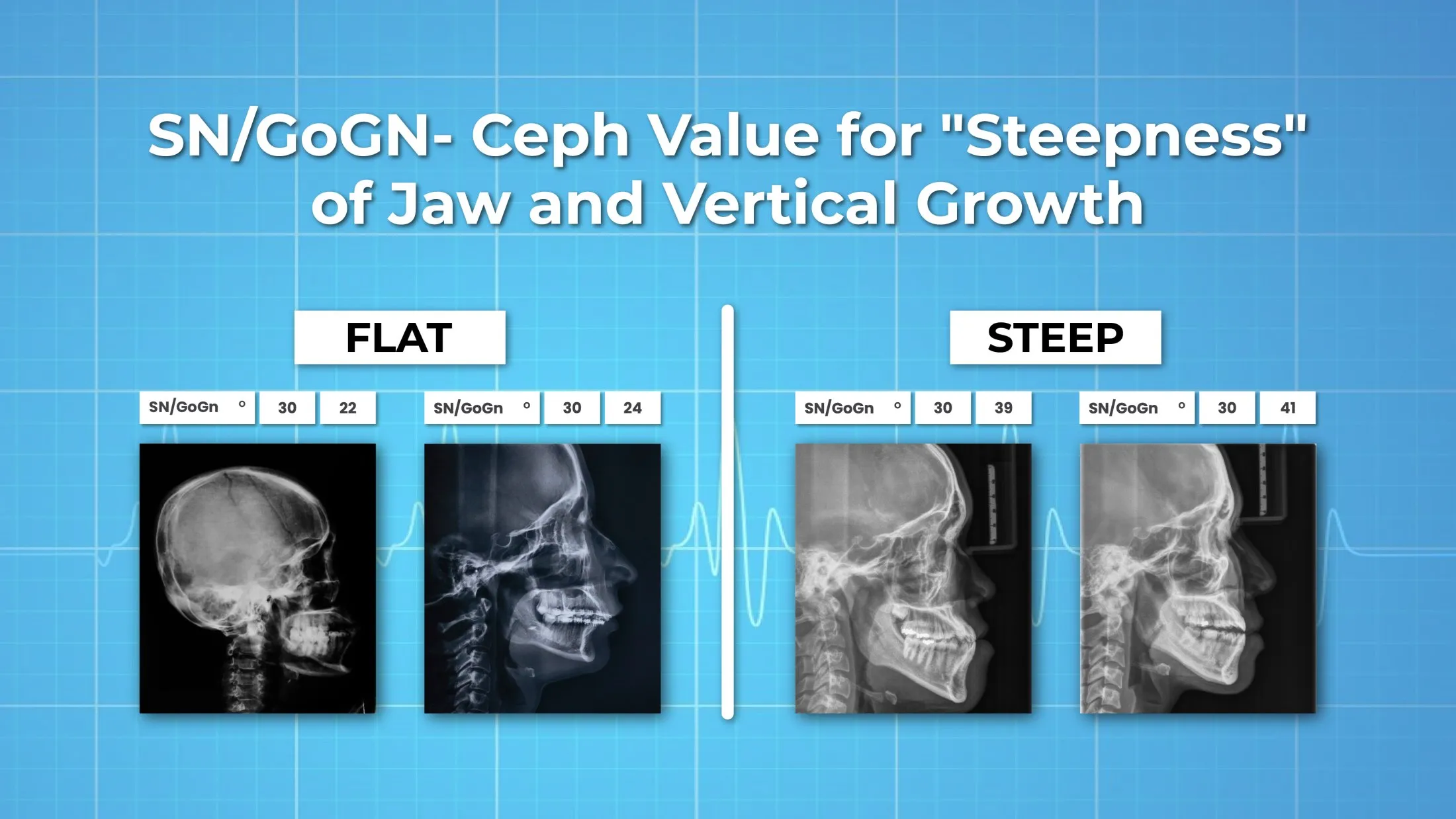
Understanding SN/GoGN (Mandibular Plane Angle) in CEPHs
CEPHs are an incredibly useful tool when working out the right treatment plan for an orthodontics patient. However, there’s a lot you’ll need to know as part of this – and understanding the different values is integral. Luckily, we’ve outlined some key things you should know about SN/GoGN values in your CEPH results to help inform your ortho treatment plans.
What is the SN/GoGN?
First, we need to define what the SN/GoGN measures. The SN/GoGN value in CEPHs measures the angle of the lower jaw relative to the cranial base. This can then indicate whether the growth is going flat or vertical (steep) in the patient.
As you complete more CEPHs during your orthodontic career, you’ll likely begin to recognize when a patient is growing flat or steep without even needing to reference the numbers first.
What is the Normal Value?
The normal value should be around 30. However, a patient who is growing flat will likely have a lower number than this; meanwhile, a patient growing steeply will have a higher number.
What Does a Flat or Steep Jaw Mean?
If your patient is flat, this will often be a genetic trait and accompanied by a very square-shaped jaw, or this may be the result of Class II cases. It’s rare for a flat bite to be Class III.
Contrastingly, a steep patient will often be a Class III case. It can also be due to a downwards and backward growth openbite. These steep jaw patients may commonly also experience difficulties with their airways, which may need addressing.
What is the CR-CO Shift Triad In Mixed Dentition Treatment Planning?
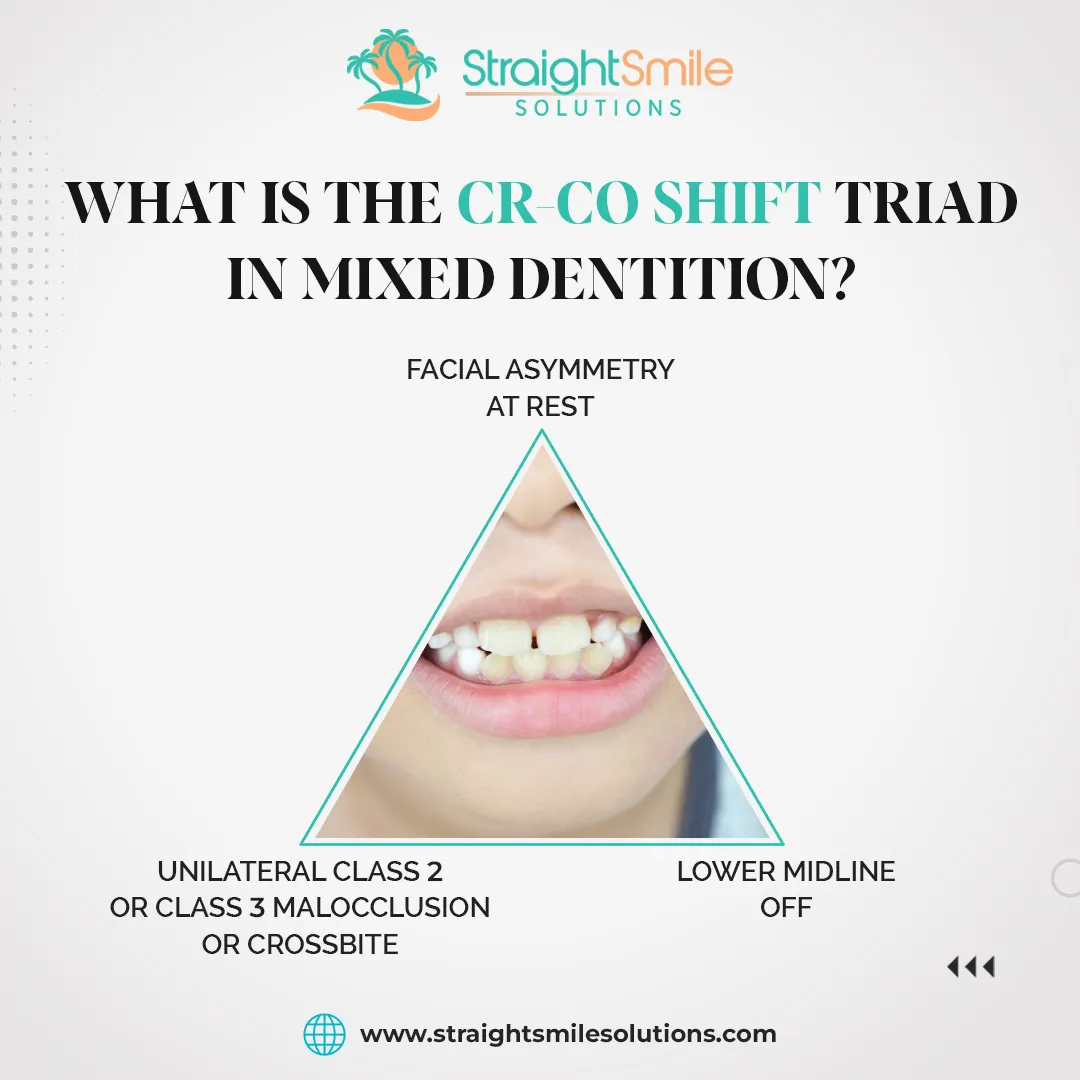
Dr. Amanda from Straight Smile Solutions discusses the CCO Shift Triad, a concept crucial for recognizing CR-CO shifts in mixed dentition patients. This knowledge is essential for general, pediatric, and aligner dentists to achieve optimal outcomes. Visit Straight Smile Solutions for more insights.
I. The CCO Shift Triad
A. CCO shifts are very common in mixed dentition patients
B. Orthodontists are trained to spot CCO shifts easily, but general and pediatric dentists may not notice them as readily
C. It’s important to identify CCO shifts before planning treatment, as treating the apparent issues without unraveling the shift first can lead to poor outcomes
D. Screen every kid patient for signs of a CCO shift
II. 3 Signs of a CCO Shift
A. Facial asymmetry
1. Jaw off to one side (usually lower jaw)
2. Likely due to a shift rather than true asymmetry B. Unilateral class 2 or 3
3. Very rare to have a true unilateral class 2 or 3 in kids – it’s usually bilateral with a shift C. Lower midline off
4. Upper midline is on, lower midline shifted
5. Seen with the other 2 signs
III. Implications for Treatment Planning
A. Don’t take apparent issues at face value without considering an underlying shift
1. Apparent midline discrepancies
2. Apparent unilateral class 2 or 3 B. Put “re-evaluate for shift” in the treatment plan
3. Reassess in 6-12 months to see if asymmetry or discrepancies persist after unraveling any shift C. Be especially vigilant with aligner cases, as a shift can’t be fully unwound like with braces
IV. Learn More
A. Other videos on the YouTube channel about CCO shifts
Assessing and managing this triad is crucial for proper orthodontic treatment planning and helping guide eruption of permanent teeth into optimal positions. Proper diagnosis and early treatment can prevent more complex issues.