
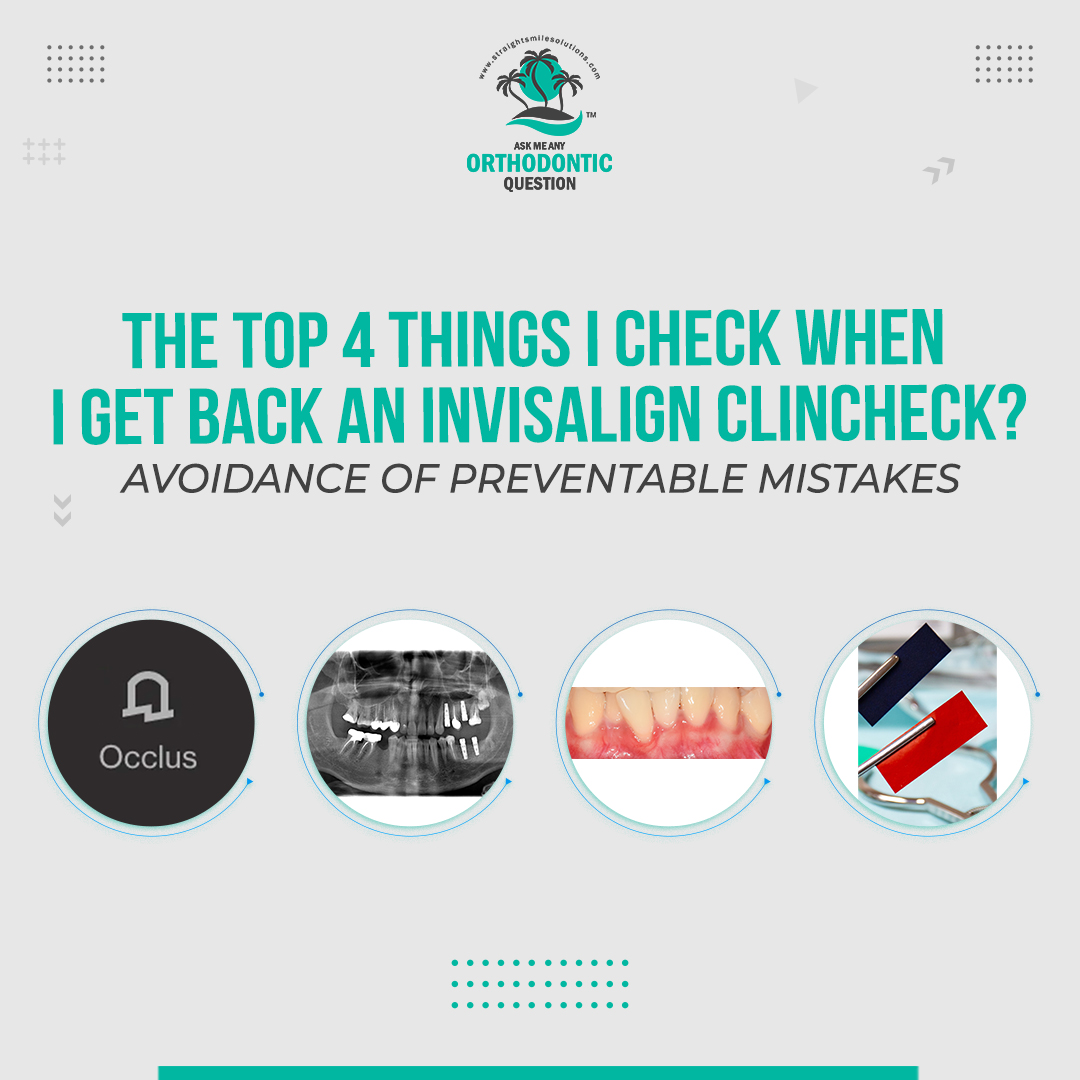
 The TOP 4 things I check when I get back an Invisalign ClinCheck?-Avoidance of Preventable Mistakes
In recent years, orthodontic treatment has undergone a revolutionary transformation with the advent of Invisalign – an innovative alternative to traditional braces that offers a more discreet and convenient way to achieve a confident smile. The Invisalign system’s popularity has soared due to its virtually invisible aligners, customizable treatment plans, and impressive results. However, the key to unlocking the full potential of Invisalign lies in the meticulous evaluation of ClinCheck plans, the virtual representations of a patient’s treatment journey.
A ClinCheck plan is the roadmap for Invisalign treatment, outlining the step-by-step progression of teeth alignment. But how can orthodontists ensure the accuracy and effectiveness of these plans before proceeding with the treatment? This is where an in-depth evaluation of Invisalign ClinCheck plans comes into play, ensuring that the orthodontist’s vision aligns with the final results.
Key Aspects of Invisalign Clincheck Review:
Reference Points and Pre-Treatment Analysis:
● Panoramic X-ray submission is crucial to begin the treatment journey.
● X-ray provides insights into the dental structure, aiding treatment planning.
● Understanding root positions, underlying issues, and bone density is vital.
Review of Movements and Attachments:
● Invisalign’s magic lies in gentle teeth movement.
● Evaluate achievable movements in harmony with facial structure.
● Verify proper placement of attachments controlling aligner force.
Occlusion Verification and Articulating Paper:
● Seamless bite is essential for function and aesthetics.
● Analyze occlusion to prevent future complications.
● Use articulating paper to map and adjust the bite.
Anterior Bite Turbos and Double-Tracking:
● Anterior bite turbos mitigate excessive bite forces.
● Double-tracking enhances treatment for complex cases.
● The patient wears each aligner set for an extended period.
Evaluation of Root Scalloping and Crowding:
● Examine root scalloping’s impact on tooth movement.
● Address crowding through teeth slenderizing or reduction.
● Root curvature affects movement effectiveness.
Considering Extraction as a Treatment Option:
● Extraction option for severe crowding situations.
● Strategic removal of teeth creates space for alignment.
● The patient’s dental structure guides extraction decisions.
Conclusion
As an orthodontist, make well-informed decisions aligning with your professional skills and patients’ desires. This process involves precision, as every detail matters, from the positions of teeth roots to the alignment of the bite. As you review each ClinCheck plan attentively, remember that your expertise and focus are essential for a transformation journey. Your decisions aren’t just about aligning teeth but about creating confidence, self-assurance, and the perfect smile.