
StraightSmile Solutions®
Mastering Extrusions: Advanced Boot-Strap Technique with Invisalign Tracking Without Refinement
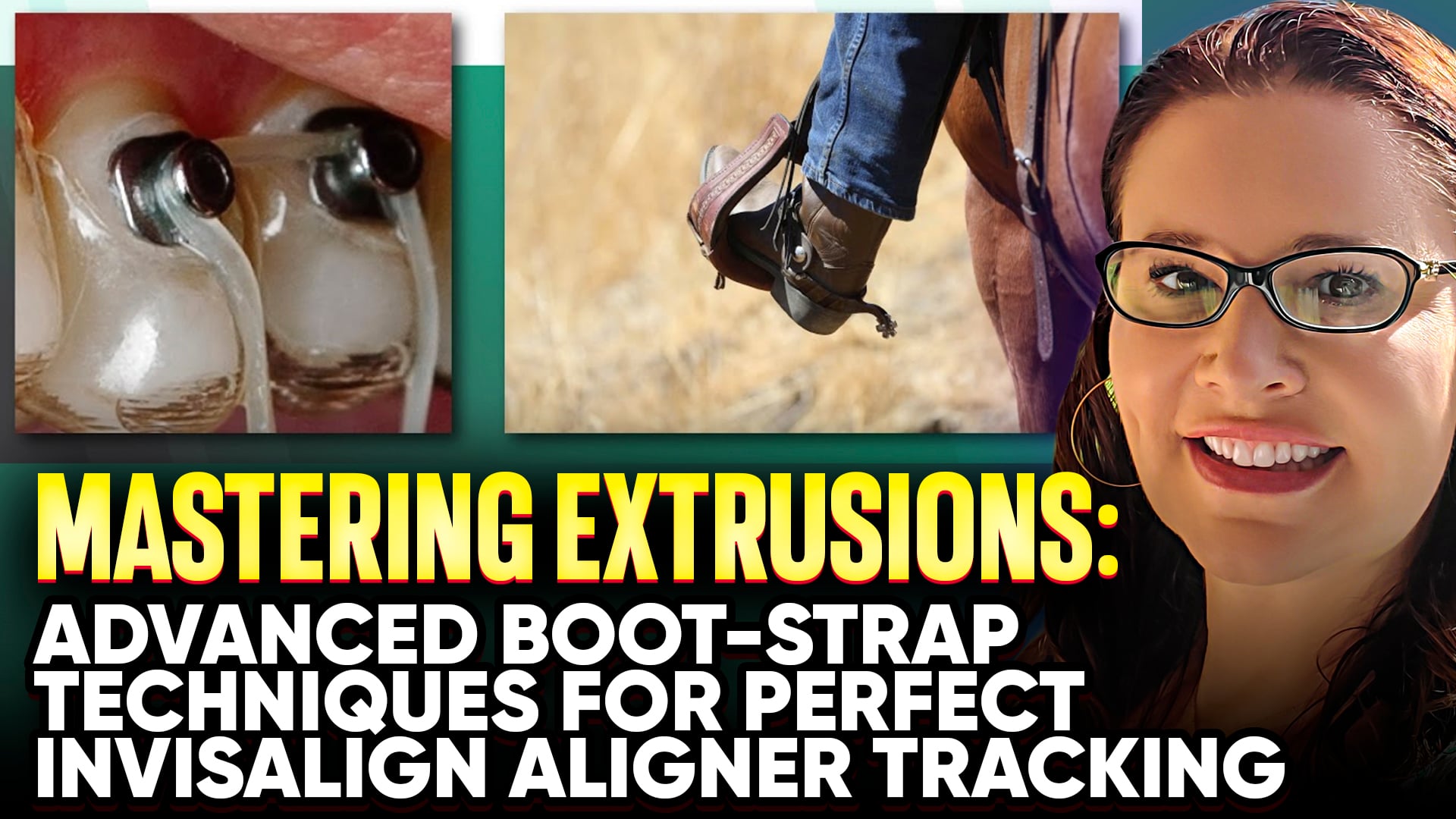
Dr. Amanda breaks down the realities behind using the bootstrap technique for extrusion within Invisalign cases. Although widely discussed, it is far from her preferred method and is useful only in rare, highly specific scenarios. She emphasizes that extrusion is one of the most difficult movements with aligners, and bootstrapping should never be the first solution. Instead, it is a last-resort, stopgap technique reserved for urgent situations or when all other predictable options, especially refinement, are unavailable.
When the Bootstrap Technique Is Actually Appropriate
- Ideal only when one single tooth needs extrusion.
- The rest of the case must be fully finished and stable.
- There must be adequate vertical and proximal space, with no contacts blocking movement.
- A second scenario: the patient is traveling and cannot be rescanned for refinement, and no previous aligners are available for backtracking.
Critical Pre-Checks Before Bootstrapping
- Perio stability must be confirmed; excessive force risks permanent damage.
- Evaluate whether the tooth is conical, rotated, or short-rooted; these respond unpredictably.
- Ensure there is a plan for firm long-term retention, as extruded teeth relapse easily.
Practical Challenges
- Patients struggle with placing elastics; they often need tweezers or specialized tools.
- Elastic selection varies depending on tooth size and orientation; no universal answer.
- Clear buttons are bulky; metal-bonded hooks perform far better.
- Most patients will dislike the appearance and inconvenience. Only highly motivated patients tolerate the process.
Creative Workarounds
- In rare cases, a small piece of power chain can replace an elastic if sized correctly.
- Works best on cooperative family members (“sofa orthodontics”), not typical patients.
Conclusion
Bootstrapping can work, but only in narrow, highly controlled situations involving a single stubborn tooth and no time for refinement. It demands careful diagnostics, patient skill, and cautious force application. Ultimately, it is not a standard technique, but rather a temporary lifesaver when all predictable aligner options are unavailable.
Is Your Invisalign Aligner REALLY Off Track? Refinement Alternatives, Backtracking & Chewies
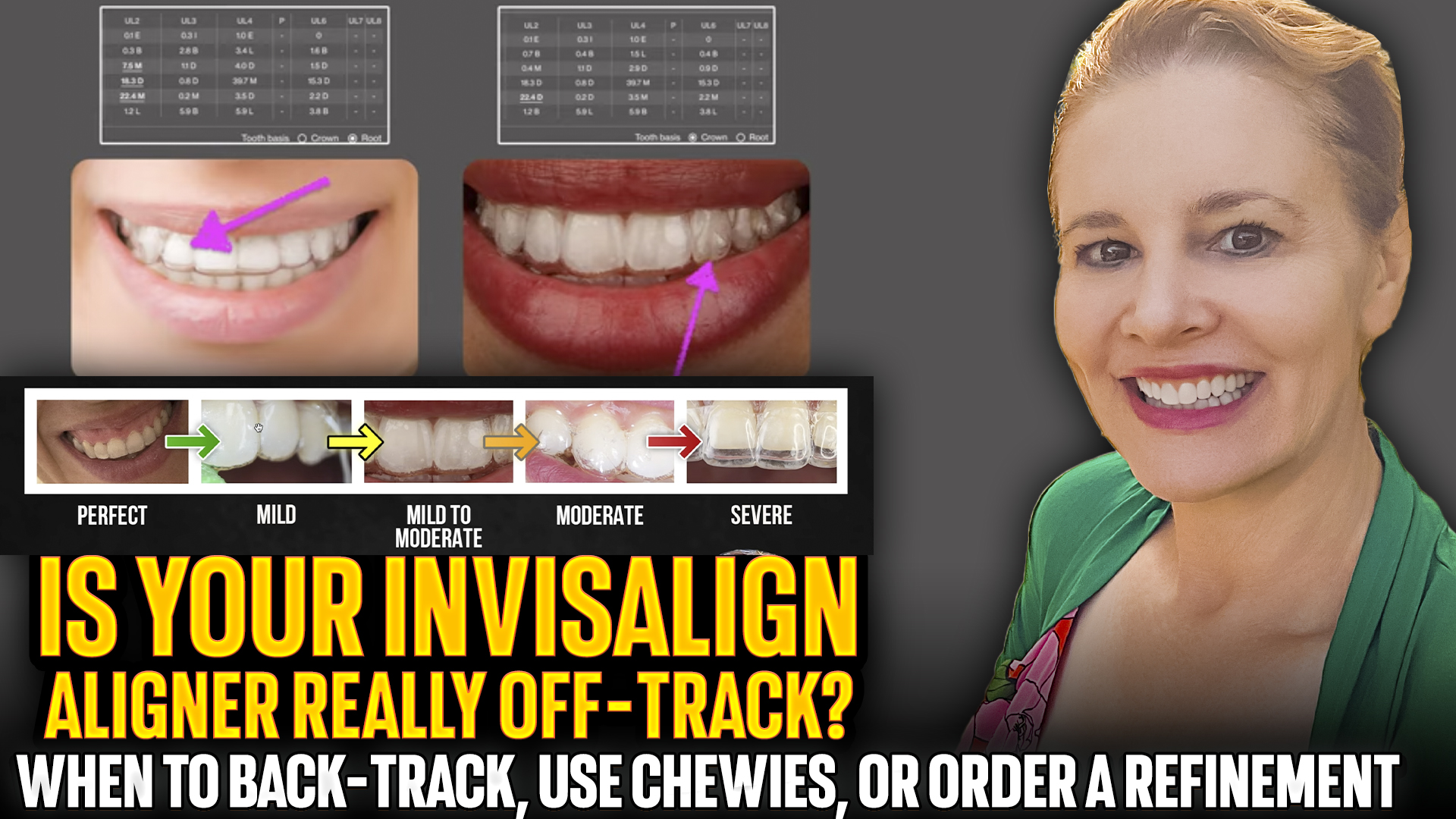
Dr. Amanda breaks down the common confusion surrounding Invisalign tracking, specifically, how to determine whether an aligner is truly “off track,” when to panic, when to stay calm, and what alternatives exist before resorting to a refinement. She stresses that most tracking issues are preventable and fixable if patients understand proper use of chewies, save old aligners, and if clinicians know how to read movement tables (TMT) to understand exactly what each aligner is programmed to do.
Chewies Done Right
Most patients receive chewies with no instruction, leading to poor results.
Dr. Amanda recommends Ortho Munchies for better structure, grooves, and guided technique.
Suggests clinicians create short training videos to increase compliance and build value.
Reinforces that proper chewing technique can resolve many minor gaps without refinements.
Before Assuming an Aligner Tracking Problem
Always review the Treatment Movement Table (TMT) to understand what each aligner is programmed to do.
Essential for determining if the tooth is supposed to:
Intrude
Extrude
Rotate
Torque
Root move
Tracking must be judged based on the planned movement, not appearance alone.
Gap interpretation:
Small gaps: Normal – advise chewies.
Moderate gaps: Consider backtracking or a replacement aligner.
Large gaps: True loss of tracking – refinement likely needed.
Backtracking as a Fast Fix
Works only if patients saved old aligners. Stress this at the start of treatment.
Patients should always bring old trays to appointments.
Staying longer in the same aligner + chewies can help, but the tray may stain – possible need for a replacement.
Often resolves mild to moderate tracking issues without refinement.
When Refinement Is Necessary
Backtracking fails or movement stalls despite chewies.
TMT shows complex biomechanics (e.g., torque, rotation) that the current aligner cannot achieve.
Virtual monitoring helps catch issues early, preventing major tracking failures and reducing refinements.
Conclusion
Not every gap or fit issue is a ” real “loss of tracking.” By reviewing programmed movements, coaching proper chewy use, backtracking when possible, and monitoring consistently, clinicians can resolve most problems without unnecessary refinements, saving time for both patients and providers.
Best Way to Fix an Invisalign MA Posterior Open Bite (POB): Mini Aligners, Sloppy Bonded Retainers, or Do Nothing?
Introduction
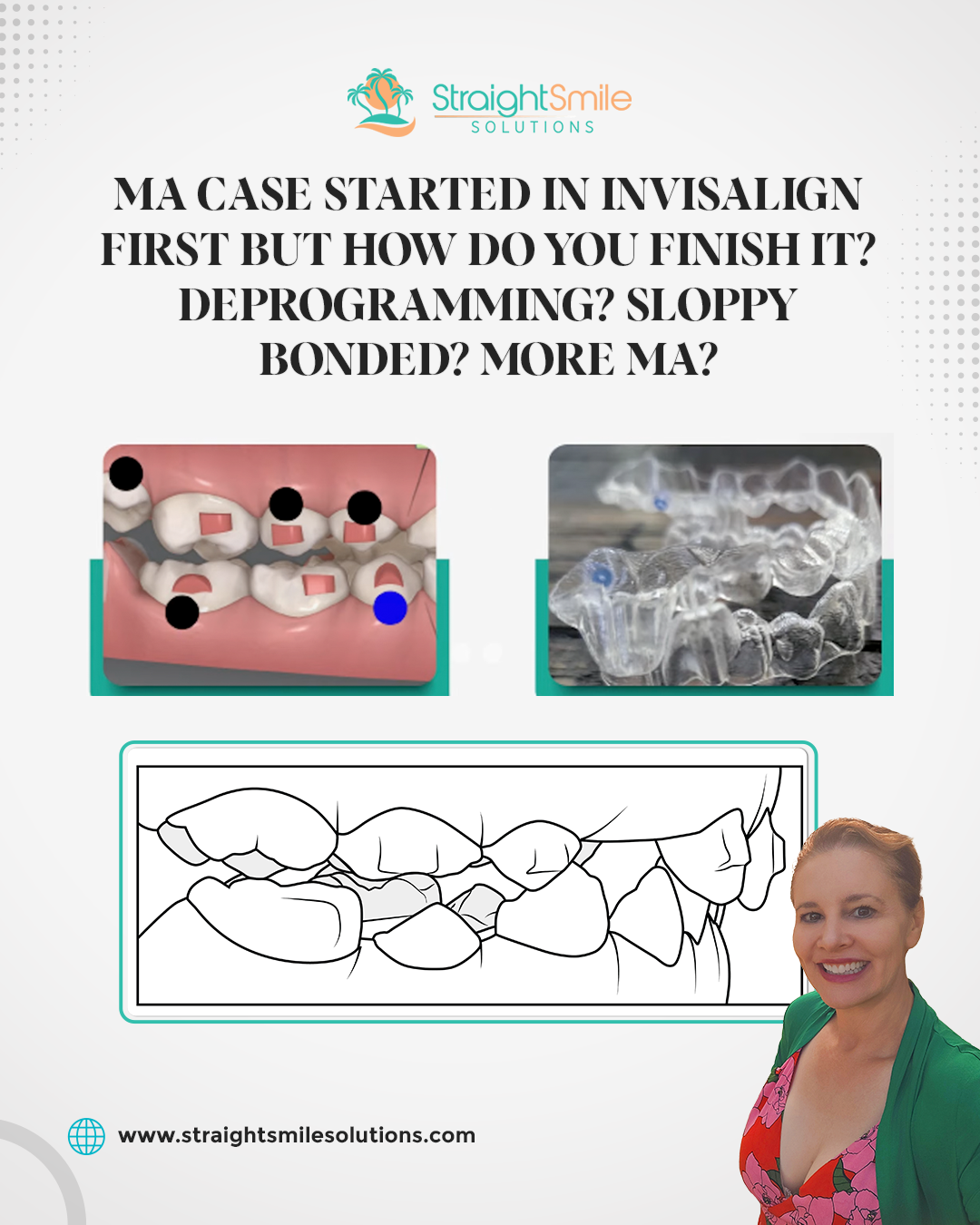
Dr. Amanda reviews why posterior open bites (POBs) are expected and normal after mandibular advancement (MA) with Invisalign. A strong POB is often a positive sign of patient compliance and a successful MA phase. Because POBs vary widely, choosing the right finishing method requires careful, case-specific thinking.
- Why POBs Occur After MA
- POBs are not complications; they are built-in consequences of how MA shifts the jaw and loads forces.
• Severity varies due to anatomy, jaw angulation, bite force, eating habits, wear time, and whether patients chew with aligners in.
• “Full POBs” where all posterior teeth are open are easiest to correct.
• “Messy POBs” with uneven or mixed contacts are more challenging and require thoughtful decision-making.
- Common Options to Resolve MA-Related POBs
- AI-generated orthodontic suggestions highlight standard possibilities:
– Elastics
– Aligner modifications
– Refinement with new attachments
– Bonded retainers
• Dr. Amanda notes these answers are not wrong but oversimplified; MA-related POBs behave differently than standard Invisalign POBs.
• Invisalign’s own teaching recommends a “do nothing” transition (TBTG), though many clinicians find it unreliable.
- Dr. Amanda’s Practical Approach
- Three preferred options:
- Do Nothing – allow natural settling; often the safest and best during busy seasons.
- Sloppy Bonded Retainers – can help settle the bite but break easily, especially around holidays.
- Mini-Aligner Refinements – possible but risky; can overcorrect without strict virtual monitoring.
• Every MA case is a puzzle requiring individualized reasoning based on patient behavior, parent expectations, and office logistics.
• Consider seasonal timing: during holidays, avoid bonded retainers or treatments requiring high accountability tracking.
Conclusion
POBs after MA are predictable, manageable, and often indicators of successful treatment. There is no single best method; instead, clinicians must tailor the finishing approach to the level of compliance, timing, and oversight capacity. When in doubt, especially during busy periods, doing nothing and allowing natural bite settling is often the safest and most reliable strategy.
Arch Expansion in Adults vs. Kids: SARPE, MARPE, RPE, MSE & Schwartz
Arch Expansion in Adults vs. Kids: SARPE, MARPE, RPE, MSE & Schwartz
Introduction
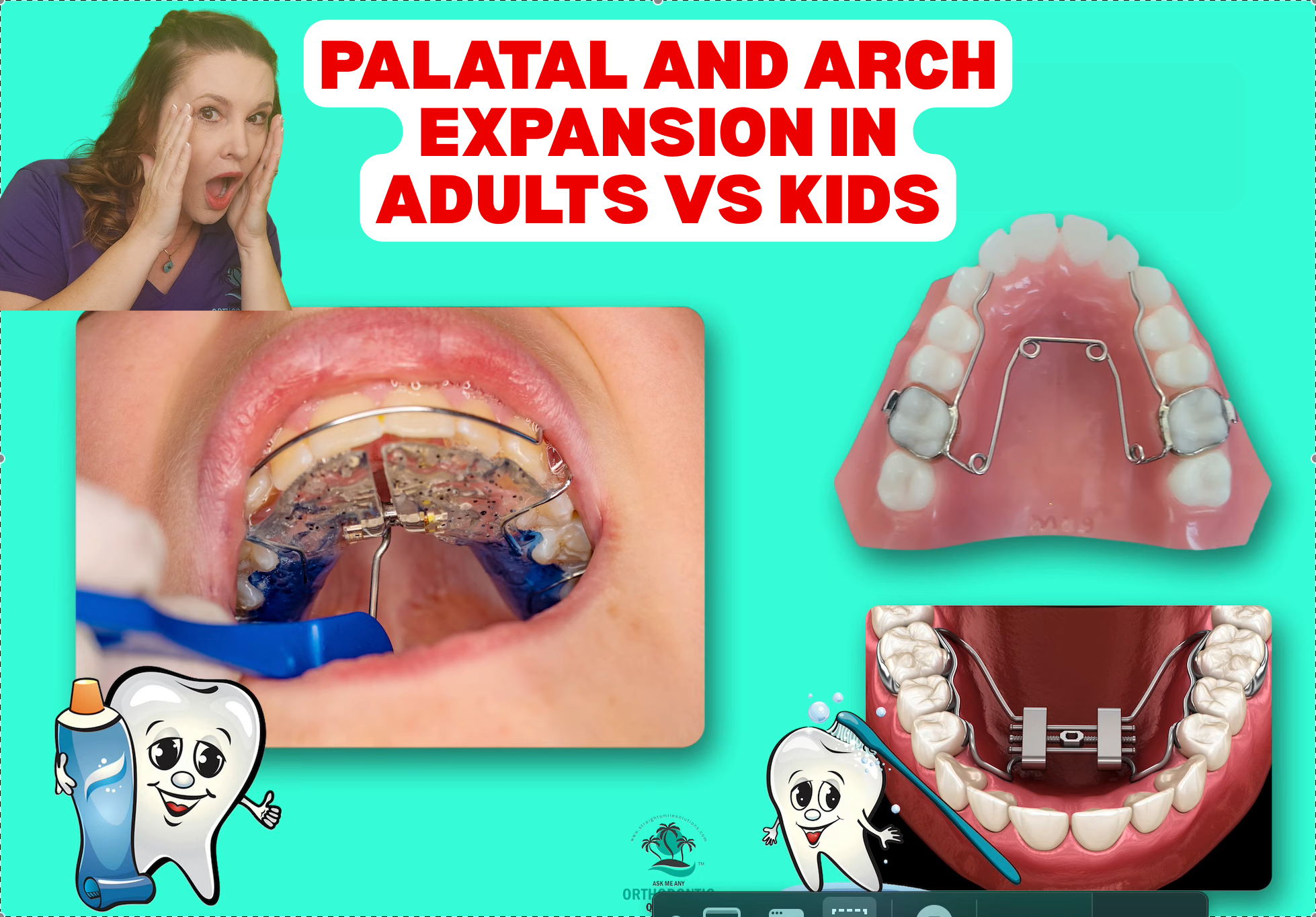
Dr. Amanda explains the key differences between arch expansion in children versus adults and clarifies what is possible with RPE, MARPE, SARPE, MSE, and other expanders. This topic builds on her previous videos on skeletal versus dental expansion, and she emphasizes reviewing those foundations before diving into the limitations of adult versus pediatric expansion. The goal is to provide clinicians with a realistic understanding of when true skeletal expansion is possible, when treatment only results in dental tipping, and when surgery becomes the only predictable option.
- Why Expansion Works Easily in Kids
- In children, the maxilla is formed by two palatal shelves connected by a suture filled with interdigitations.
• This suture has not fused, making it easy to widen using RPEs or similar appliances.
• True skeletal expansion improves tongue posture, airway, and bite stability.
• Earlier is always better: young, growing patients experience more predictable widening with fewer negative side effects.
- Why Expansion Fails in Adults Without Surgery
- By adulthood, the palatal suture is fully fused, preventing natural splitting.
• Expanders, quad-helix appliances, and aligners only produce dental tipping, not skeletal widening.
• Dental tipping may cause bite distortions, such as posterior open bites, making treatment unpredictable and often unstable.
• In many cases, leaving a mild posterior crossbite is safer than attempting incomplete expansion.
- Surgical Routes: MARPE, MSE, and SARPE
- True skeletal expansion in adults requires surgical assistance.
• MARPE/MSE: mini-screw–assisted expanders anchored into the palate with 2–4 screws.
– Dr. Amanda strongly recommends surgeon placement only, citing risks of hemorrhage and even death if placed incorrectly.
• SARPE: Surgically Assisted Rapid Palatal Expansion.
– Performed in the OR where the palate is cut, separated, and expanded in a controlled manner.
– Dr. Amanda has assisted in these cases and confirms they provide predictable skeletal changes when properly executed.
- Practical Guidance for Clinicians
- Adult “expansion” that isn’t surgical = tipping only.
• Use caution when considering appliances for adults; results may be unstable or cosmetically limited.
• Refer surgical cases to qualified oral surgeons or orthodontists experienced in MARPE/MSE or SARPE.
• Consider non-treatment or accepting crossbites when tipping would cause more harm than good.
Conclusion
Children can achieve true skeletal expansion easily, while adults require surgery for predictable widening. Non-surgical appliances in adults produce only tipping and often create bite complications. Proper referrals and realistic expectations ensure safe, stable outcomes in adult expansion cases.
Advanced Torque Techniques: Do You Need Special Torquing Wires, Pliers, or Brackets?
Introduction
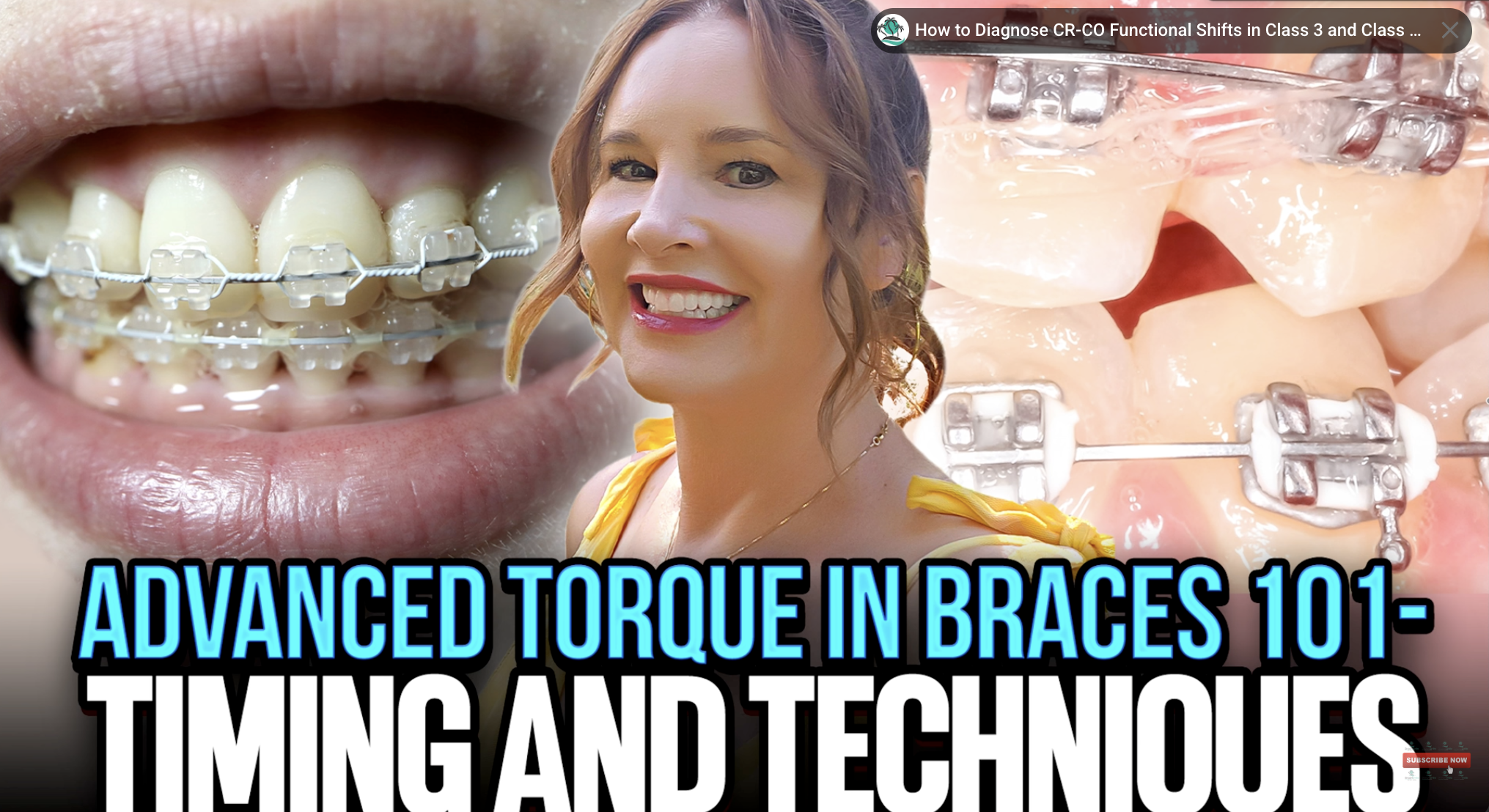
Dr. Amanda explains the fundamentals of achieving proper torque in orthodontic cases. Emphasizes that special wires, pliers, or brackets are rarely necessary if treatment planning and wire sequencing are done correctly. Torque cases are slow movements, typically taking 24–36 months to complete.
- Understanding Torque
- Key distinctions: palatal/root torque vs. labial/root torque; front teeth vs. back teeth terminology (buccal vs. lingual).
• Positive vs. negative torque must be understood for each tooth type; incorrect labeling can confuse.
• Most patients do not care about perfect torque, so extreme measures are often unnecessary.
• Examples: uprighting lateral incisors requires palatal root torque, while others may need labial root torque.
- Timing and Wire Sequence
- Proper torque is achieved only after the slot has been filled and teeth have expressed.
• Wire sequence must be followed in the correct order; skipping steps can result in poor outcomes.
• Torque movement is gradual; spaces may form during active torque, but can be closed later.
• Using smaller bracket slots (e.g., 18 vs. 22) allows faster slot filling with less force, reducing the risk of root resorption.
- Options for Extra Torque
- Optional tools include:
– Torquing pliers
– Special brackets with built-in torque
– pre-torqued wires
• Dr. Amanda rarely uses these options; proper technique and patience usually suffice.
• Heavy initial torque or improper wire engagement can hinder progress and cause poor results.
Conclusion
Correct torque depends primarily on treatment planning, proper wire sequencing, and patience, rather than specialized tools. Extreme torque tools are optional, not required. Most cases can achieve satisfactory outcomes without the need for special wires, brackets, or pliers, thereby keeping treatment simpler, safer, and more predictable.
Monitoring Canines After Phase 1 Treatment with Panoramic X-Rays – Are Bonded LBR Retainers Needed?
Introduction
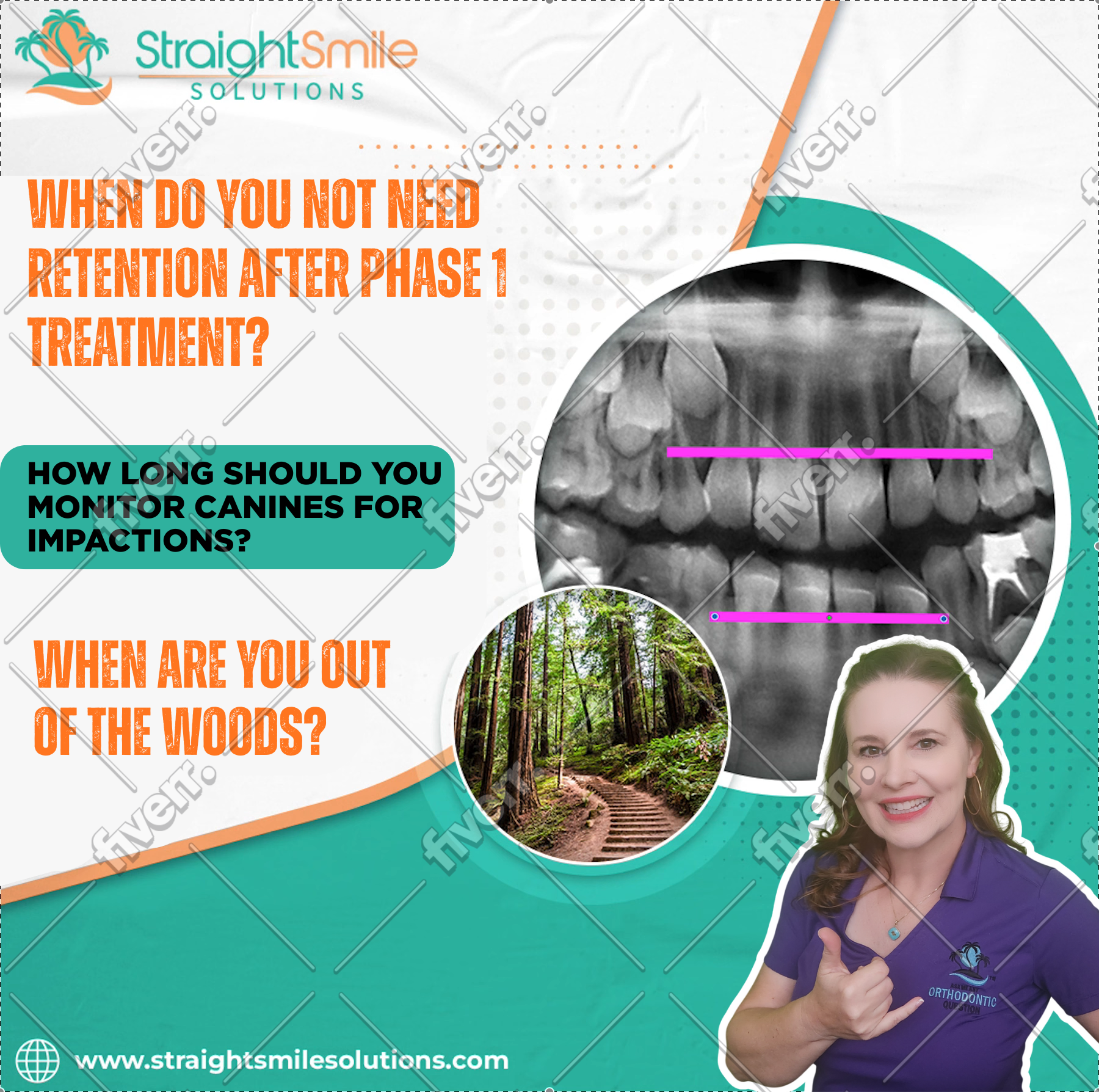
Dr. Amanda explains how to monitor patients transitioning from Phase 1 to Phase 2 orthodontic treatment, with a focus on preventing canine impaction. This guidance also applies to patients placed on observation when Phase 1 is not yet indicated. The goal is to understand monitoring frequency, eruption checkpoints, and how panoramic X-rays guide decision-making as canines navigate their eruptive paths.
- Purpose of Phase 1 Treatment
- Phase 1 exists to get patients out of trouble early using interceptive strategies.
• Primary goals: treat transverse discrepancies, vertical problems, and AP/sagittal issues.
• Examples include open bites, deep bites, anterior/posterior crossbites, overjets, negative overjets, and functional shifts.
• Phase 1 also aims to create the correct arch shape and adequate space for permanent teeth—improving eruptive paths and reducing impaction risks.
• Canines pose the highest impaction risk; creating proper arch form and space helps them self-correct without surgical or extraction intervention.
- Monitoring Canine Eruption with Panoramic X-Rays
- If an initial panoramic at age 7–8 shows concern, monitor at least annually, and every 6 months if the problem is significant.
• Avoid unnecessary radiation: combine palpation of canine bulges with visual monitoring to reduce exposure.
• Key target: ensure canines are progressing past the height of contour of the maxillary incisors (approximately teeth #7–10).
• Before crossing this contour, canines remain at risk of getting hung up; after passing it, eruption is generally predictable and safe.
• Vertical orientation of the canine root and crown indicates a healthy eruptive path.
- Transitioning Safely into Phase 2
- Once canines clear the height-of-contour threshold, the risk of impaction drops sharply.
• A smooth transition into Phase 2 is expected when spacing and arch form are handled correctly in Phase 1.
• Phase 2 should be straightforward, with minimal alignment or bite correction needed.
Conclusion
Consistent monitoring during the Phase 1–Phase 2 period, especially of the maxillary canines, is essential for preventing impaction. Strategic timing of panoramic X-rays, careful palpation, and understanding of eruption landmarks ensure safe and predictable outcomes, as well as easier Phase 2 treatment.
SICK PALATES! Endo & Perio Abscess, Petechiae, Aphthous Ulcers, Canker Sores
SICK PALATES! Endo & Perio Abscess, Petechiae, Aphthous Ulcers, Canker Sores
Introduction
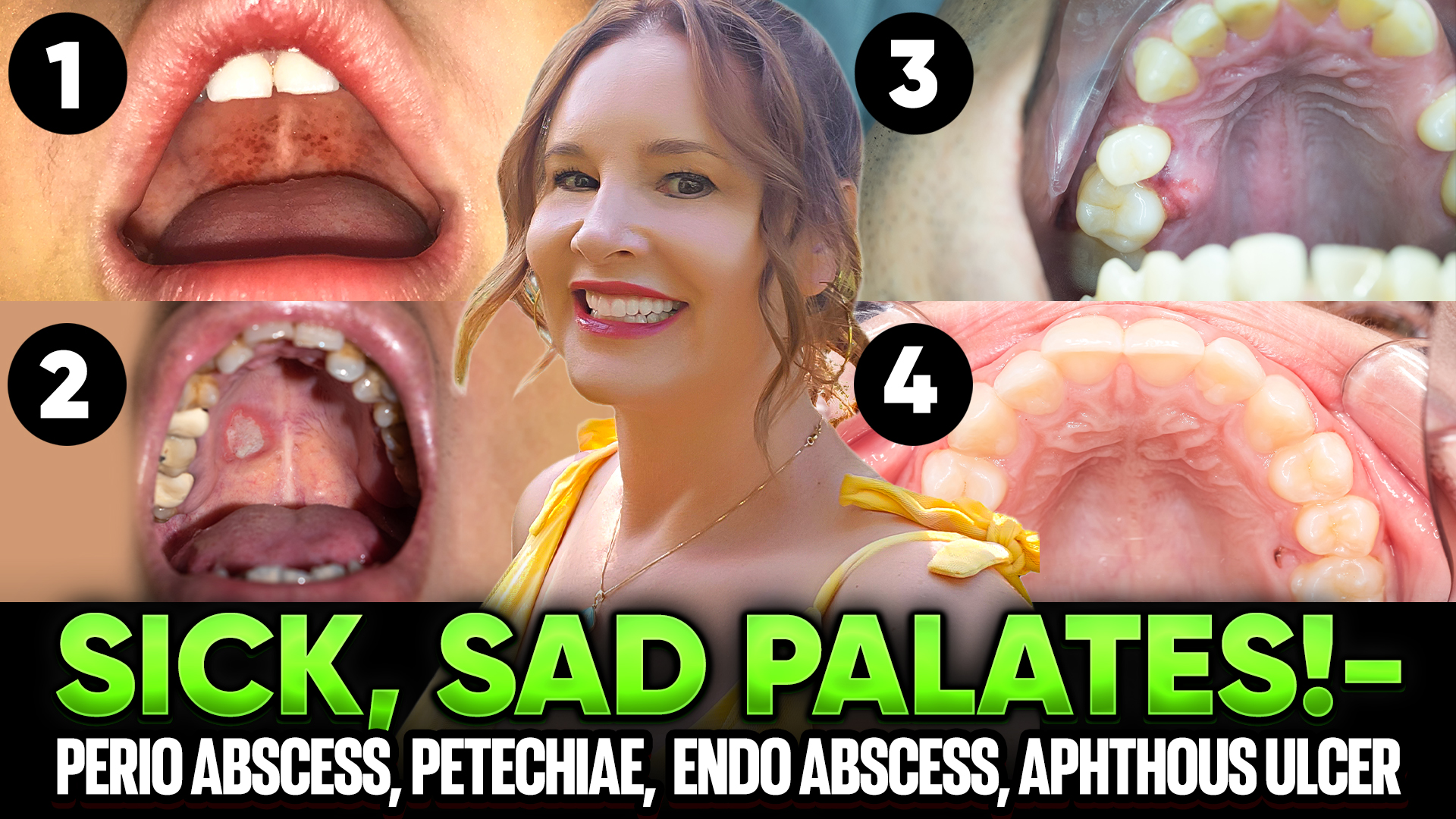
Dr. Amanda reviews four common conditions that can appear on the palate: petechiae, aphthous ulcers/canker sores, endo abscesses, and perio abscesses. She emphasizes the importance of professional evaluation to ensure accurate diagnosis and safe management. The goal is to help clinicians distinguish trauma, immune-related ulcerations, and infections involving the teeth or gums.
- Petechiae (Trauma Bruising)
- Small pinpoint red lesions caused by trauma to the palate.
• A major warning sign of possible abuse.
• In adults, it is typically harmless but reflects recent mechanical force to the tissue.
- Aphthous Ulcers / Canker Sores
- Immune-triggered erosive ulcers appear on the palate, cheeks, or floor of the mouth, never on attached gingiva near teeth.
• Features: white or gray center, red halo, may show sloughing; does not produce pus.
• Symptoms: burning, tingling, significant pain, especially with spicy/salty foods.
• Management: avoid alcohol-based mouthwashes; use warm salt water or prescribed rinses only.
• Usually self-limiting; frequent recurrence may indicate stress or underlying health problems. Medical and psychological assessment recommended.
- Endo Abscess (Infection Inside the Tooth)
- Caused by a dead or dying tooth nerve leading to infection draining toward the palate.
• Diagnosis: vitality testing a dead tooth will not respond to cold.
• Treatment: root canal and crown or extraction if unsalvageable.
- Perio Abscess (Gum Infection)
- Infection within the supporting periodontal tissues holding the tooth in place.
• May mimic an endo abscess visually; differentiation requires X-rays and vitality testing.
• Treatment: deep cleaning, local antibiotics, and sometimes systemic antibiotics.
Conclusion
Palatal abnormalities range from simple trauma to significant infections requiring urgent care. Accurate identification depends on visual signs, symptoms, X-rays, and vitality testing. Prompt evaluation and management are essential for maintaining a healthy palate and preventing long-term complications.
MY “NAUGHTY LIST!” Why Straight Smile Solutions Won’t Consult on Adult Expansion

Introduction
Dr. Amanda explains which appliances and treatment categories Straight Smile Solutions cannot consult on. The purpose is clarity: some devices fall outside her training, liability coverage, or clinical comfort zone. She emphasizes that being on this list does not mean a product is bad; it only means she cannot provide responsible advice on it.
- Why Some Products Can’t Be Supported
- Straight Smile Solutions’ consulting scope is based on direct clinical experience and liability insurance guidance.
• If Dr. Amanda has never used a system on real patients, she cannot ethically provide advice.
• She has tried to obtain experience, often contacting companies, auditing courses, and learning systems when clients ask.
• Many times this leads to adoption; other times she assists when possible. She has never refused a system unless it falls into very specific categories.
- Invitation to Companies
- Manufacturers are encouraged to invite her to audit full clinical training, not marketing events, so that she can understand the product properly.
• Compensation for travel makes participation possible, and historically has allowed her to expand what she can consult on.
- Children’s Expansion Appliances
- Fully supported. She is comfortable with nearly all pediatric expansion systems.
• If the brand is unfamiliar, she can still help align teeth after expansion.
• Prospective clients should always ask her first if unsure whether their device is on the non-supported list.
- Adult Expansion Devices (The Core “Naughty List”)
- Adult expansion for airway or skeletal remodeling is outside the orthodontic scope as she defines it.
• She believes this domain belongs to general dentists, sleep specialists, or an emerging airway specialty, not remote ortho consulting.
• She does not consult on non-surgical adult expansion devices.
• She has only performed adult expansion in the context of surgical jaw procedures, which is not something she can train or supervise remotely.
- Aligning Teeth After Adult Expansion
- Post-expansion alignment in adults is highly complex with significant potential side effects.
• While she has managed these cases clinically, she is not comfortable doing so remotely.
• Best practice: consult directly with the company that manufactured the adult expansion device for case support.
Conclusion
The “naughty list” is not a judgment, just a professional boundary rooted in safety, scope, and liability. Pediatric expansion remains fully supported; adult expansion does not. When in doubt, contact Straight Smile Solutions before starting a case to confirm whether the appliance is covered under your plan.
When to “Call it Quits” on BioTrainer Phase 1 and Switch to Invisalign, RPE, or Braces
 When to “Call it Quits” on BioTrainer Phase 1 and Switch to Invisalign, RPE, or Braces
Introduction
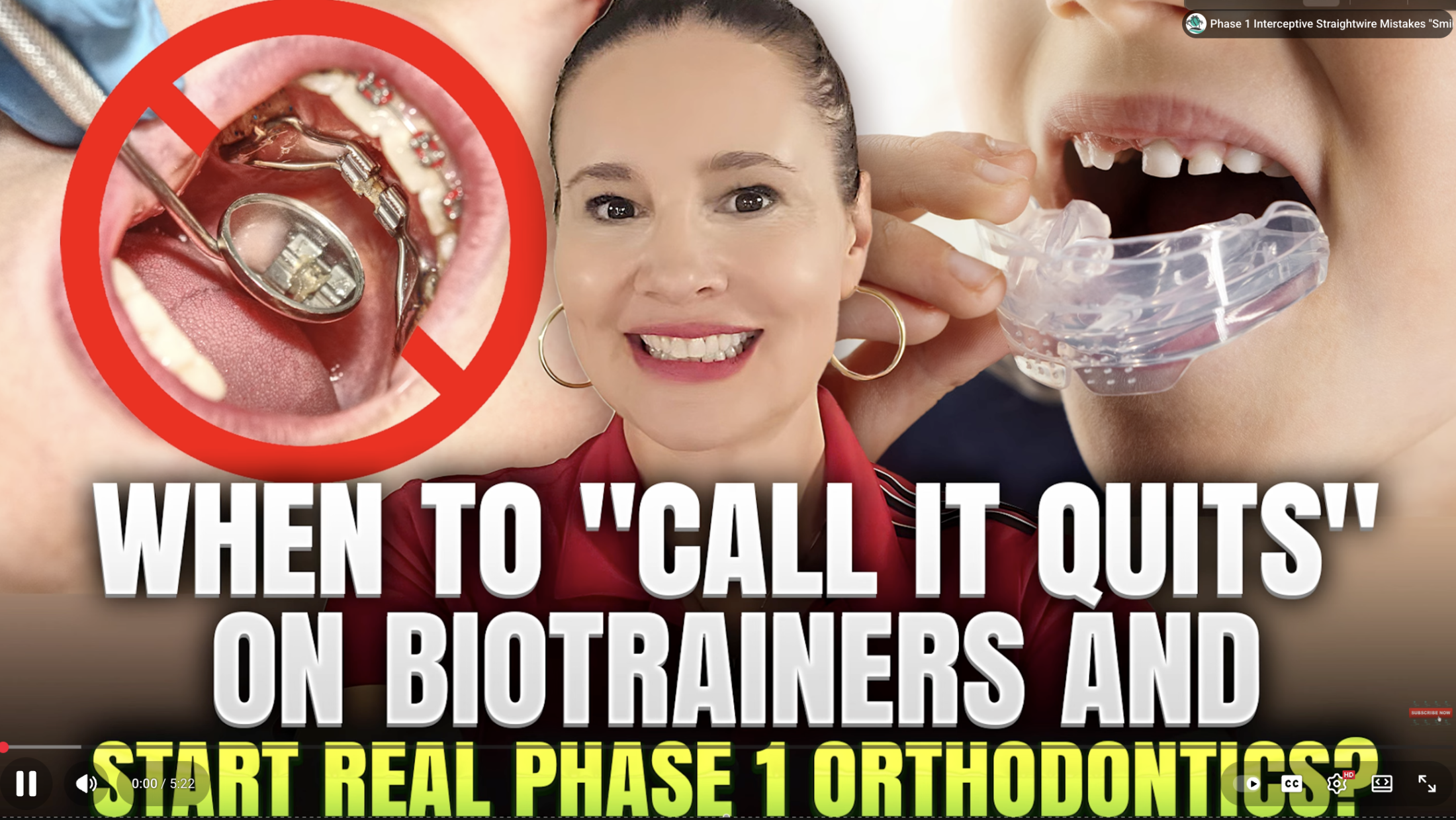
Dr. Amanda reviews when BioTrainer myo-ortho treatment is effective and when clinicians should transition to traditional orthodontic options. BioTrainers have been around for decades and can be effective, but only in the right patient, at the right age, with exceptional compliance. The goal is to help providers decide when to continue BioTrainer therapy and when to pivot to Invisalign, RPE, or braces for predictable outcomes.
1. BioTrainers Work but Only Under Specific Conditions
• BioTrainers are semi-custom appliances; results are not guaranteed.
• Best outcomes occur when treatment starts very early (ages 2–6). Older kids struggle due to speech, gaming, and lifestyle limitations.
• Success requires alignment of four factors: the right patient, parent, doctor, and high-level compliance.
• Homeschool children and neurodivergent kids often achieve the highest success because they tolerate long wear and chewing requirements.
• BioTrainers rarely achieve “Invisalign-level” perfection but can eliminate the need for braces if everything aligns.
2. Compliance Realities and Why Many Cases Fail
• School-age kids and socially interactive gamers often cannot wear the appliance consistently enough.
• Children lose enthusiasm after the first few weeks; compliance drops sharply.
• BioTrainers are suitable for calm, routine-driven, compliant children and not athletes, talkative gamers, or kids engaged in group activities.
• For families wanting predictable change or perfect alignment, BioTrainers alone may not meet expectations.
3. Insurance, Expectations, and Treatment Planning
• Dr. Amanda recommends offering BioTrainers as cash, pay-as-you-go services with clear disclaimers.
• Insurance cases require predictable outcomes, opening the door to complaints if results fall short.
• Providers should remain flexible and prepared to switch to aligners, braces, or expanders based on progress.
4. When to Stop Phase 1 and Switch Modalities
• Switch when:
– The child cannot maintain the required wear time
– Bite or tooth movement plateaus
– Parents want guaranteed results
– The patient reaches an age where speech and social activities limit compliance
• Invisalign, braces, or expansion can finish cases efficiently once foundational myo work is completed.
• Transitioning early can prevent months of frustration and unmet expectations.
Conclusion
BioTrainers are valuable, low-risk, habit-breaking tools especially for very young, compliant children. However, they offer no guarantees, and modern lifestyles make long-term compliance difficult for many kids. Clinicians should monitor progress closely and switch to Invisalign, braces, or RPE when ideal results require predictable, controlled orthodontic forces.
When to STOP Expanding!
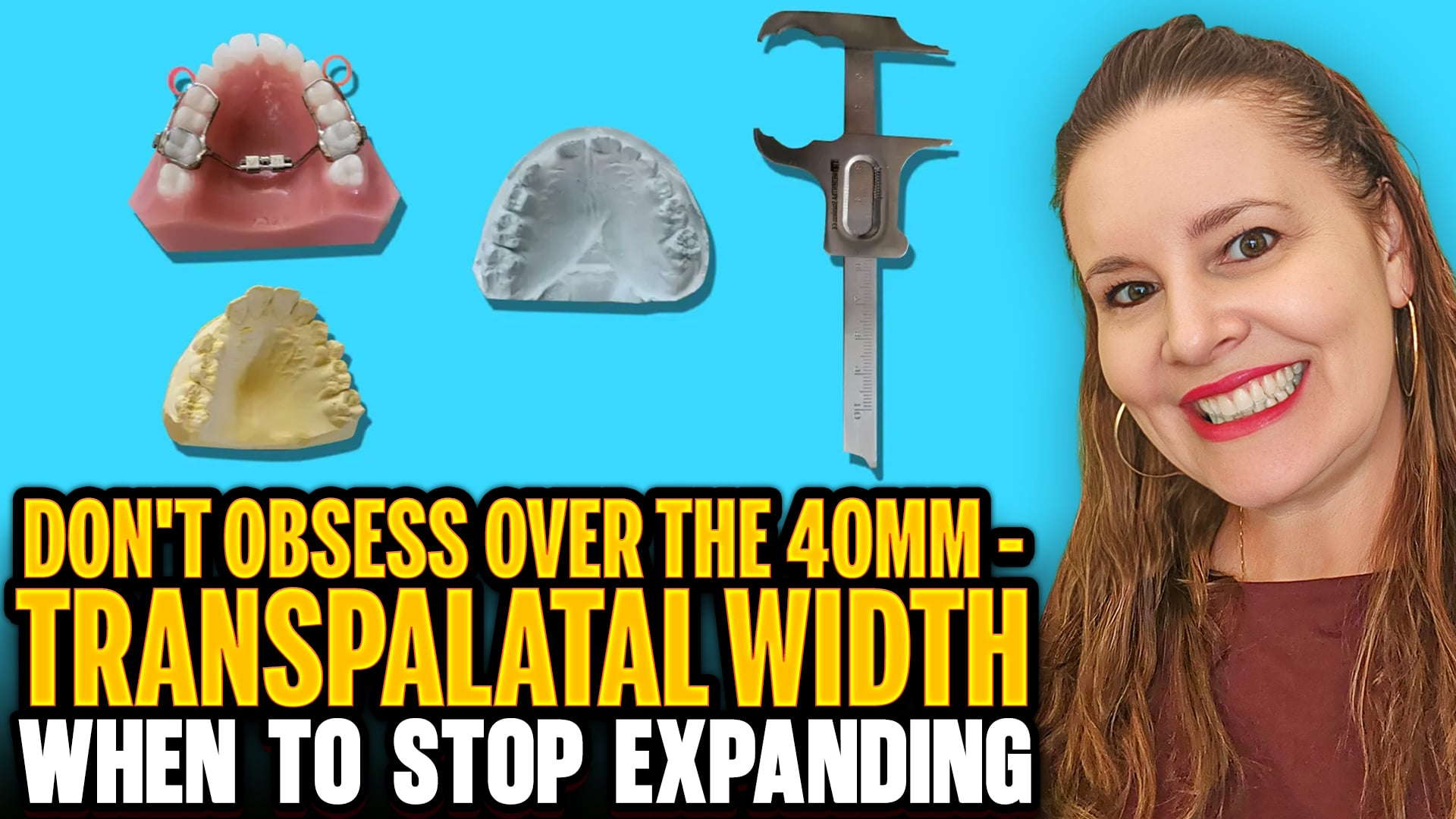
- Introduction
Dr. Amanda continues the discussion on RPE jack-screw selection and proper Phase 1 expansion protocols. This content builds on prior lessons in her Phase 1 playlist, and a course’s foundational knowledge is needed first. The focus here is on understanding correct screw size placement and avoiding poor expansion outcomes.
- Why Jackscrew Position Matters
- The jackscrew must sit close to the palatal suture’s center of mass. This is basic biomechanics.
• In patients with very narrow, vaulted palates, a 7mm jackscrew may be necessary to fit correctly.
• If the screw sits too low near the tongue, problems follow:
– Incorrect tongue posture and swallowing
– Excess tipping in posterior teeth
– Expansion only in the back, not the front
– Poor arch shape and minimal airway or skeletal benefit
• Bottom line: If the jackscrew isn’t centered properly, you lose the whole point of RPE expansion.
III. Communication with the Lab
- Labs should understand this, but sometimes assume a dentist will push back on needing multiple appliances.
• Don’t “cheap out” on the wrong screw size, which gives a junky outcome with compromised function and airway benefits.
• If needed, use serial or sequential expansion, even if that means two appliances.
• Yes, two sets take time: activate, hold, remove, scan, remake, refit… but it’s the correct protocol.
- Cost & Practical Considerations
- Traditional RPE units may cost $150–250, but two sets quickly add up to $500+ anyway.
• The goal is proper skeletal expansion, predictable airway and palate development, and long-term stability.
Conclusion
Correct RPE jackscrew selection isn’t optional; it determines whether the case succeeds or collapses into tipping, poor airway changes, and bad arch form. Work closely with your lab and orthodontic partners, accept when two appliances are necessary, and always prioritize correct biomechanics over convenience or cost.