
 Bimax Protrusive and Bimax Retrusive Cases: What You Need to Know
Have you ever come across a Bimax protrusive or retrusive case while creating orthodontic treatment plans? Knowing how to tackle these isn’t always as straightforward as in some cases, which is why today’s guide has outlined some of the main things you should know to help recognize these cases and determine the most effective or appropriate treatment plan.
Bimax Protrusive vs Bimax Retrusive
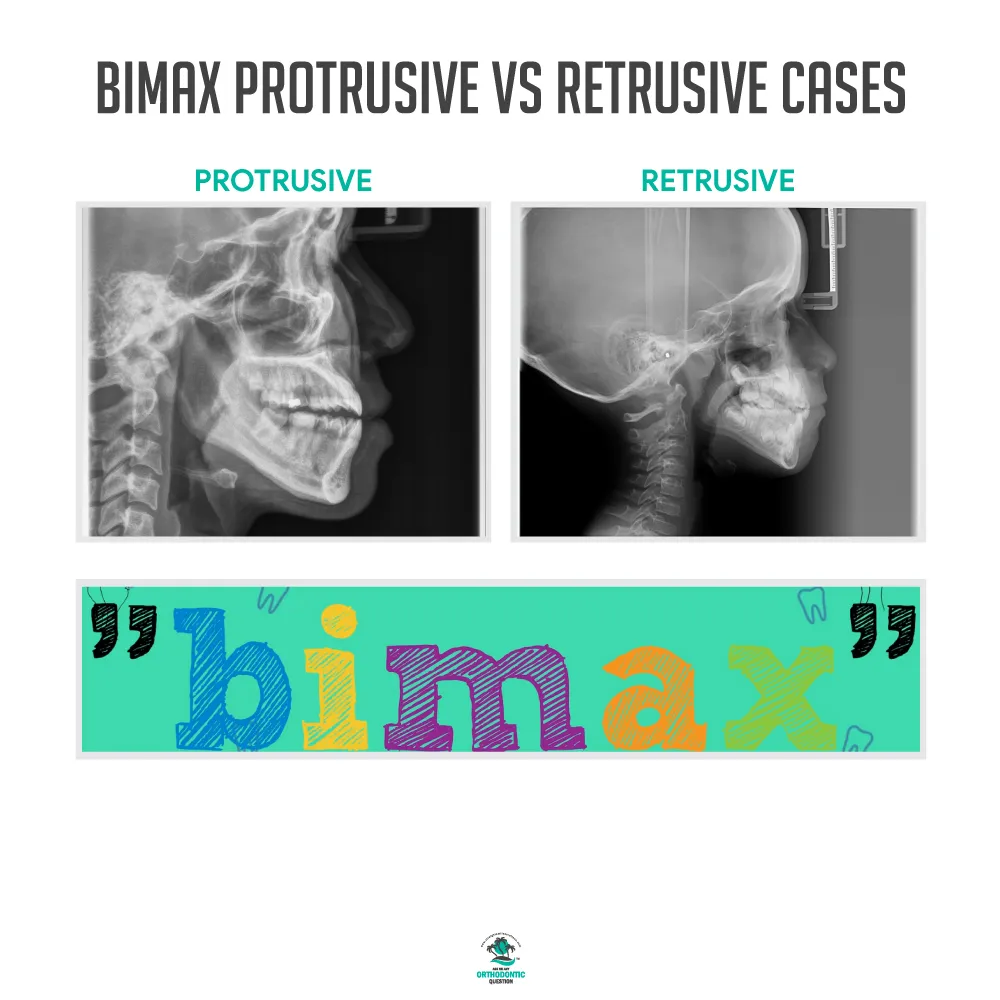
Bimax cases affect both the upper and the lower jaws, although the exact positioning of the jaws relative to the cranial base will vary depending on the type of Bimax that is present. In a retrusive case, the upper and lower jaws are set back from the cranial base; contrastingly, in a protrusive case, the jaws are set forward.
Retrusive cases are sometimes – but not always – associated with smaller airways. Meanwhile, a protrusive case may increase the chances of flared incisors and may impact the facial profile; however, this can create a fuller look to the face.
Bimax protrusive and retrusive cases can be determined by taking a cephalometric x-ray and comparing the results relative to the norms and the patient’s age and ethnicity.
Are Bimax Protrusive and Retrusive Cases Worrying?
Protrusive tendencies are often genetic, and these may be more common in certain ethnicities than others; fortunately, there is generally no major issue with this, provided that the soft tissue and musculature are able to adapt and the jaw shape does not cause mouth breathing, speech issues, or difficulties with closing the mouth/openbites. As such, while the patient may want to request an orthodontic treatment plan to resolve this, it may not be necessary.
However, Bimax retrusive can be more concerning. This is because it can potentially lead to airway issues and crowding. As such, a treatment plan may be needed to tackle the backward jaw. Sequential distalization typically won’t be suitable, nor will pulling out the premolars; a forward-thinking focus will be best, and expanders can potentially be used to help pop the jaw forward, which can help the airway. However, it may not always be fully fixable.