
StraightSmile Solutions®
ClearCorrect Part 3: Velocity, IPR, & Arch Expansion
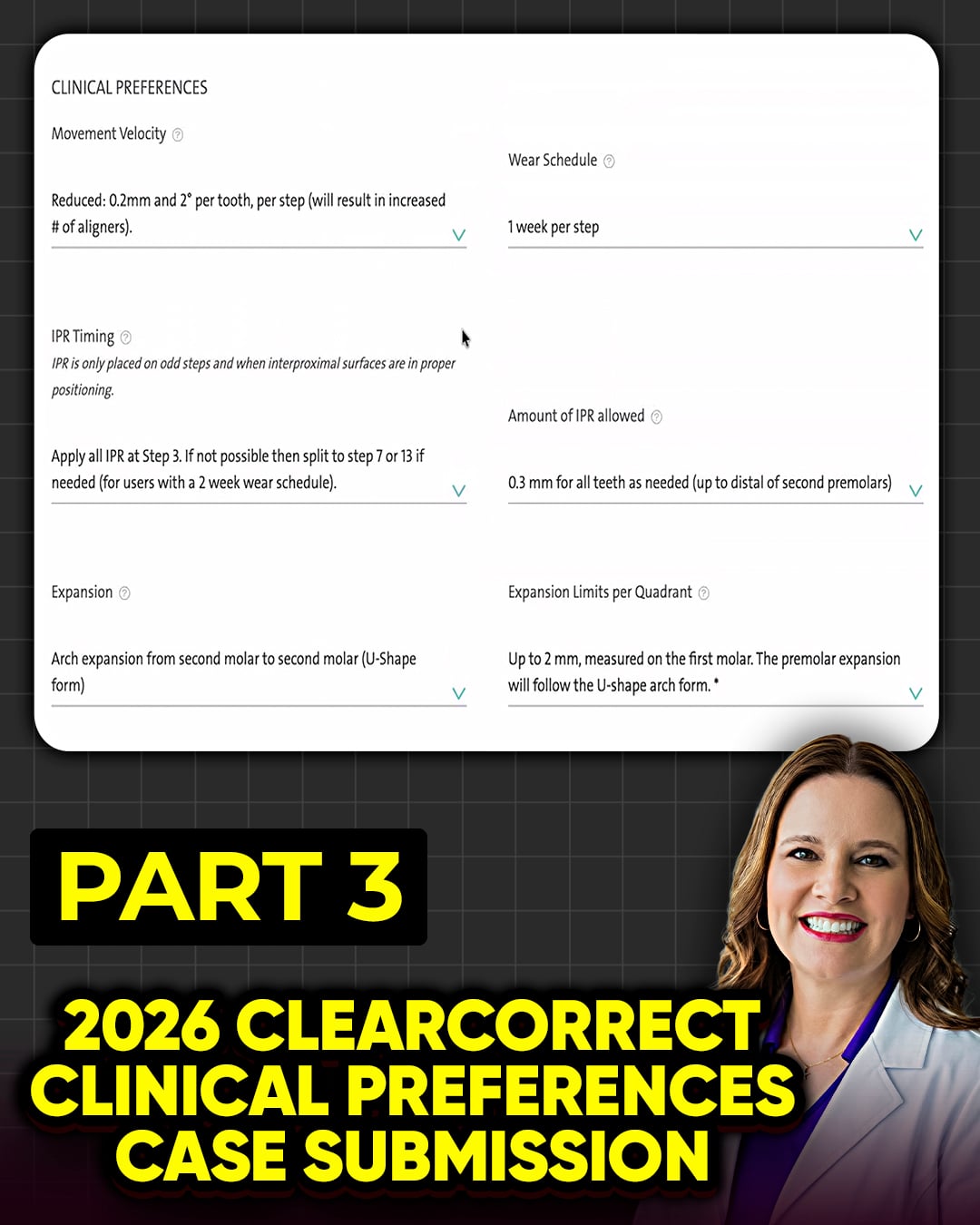
Setting up your ClearCorrect clinical preferences requires balancing default automation with clinical reality. Here is how to optimize your case submissions for predictable results.Movement Velocity and Wear SchedulesFor movement velocity, select the “Reduced” setting (0.2mm and 2 degrees per step). Because ClearCorrect does not allow further reduction, plan to double those aligners once they arrive. Eyeball the tracking closely and consult an orthodontist to ensure safety. Pair this with a standard wear schedule of one week per step.Strategic IPR TimingIPR timing comes down to personal preference and chair time. Unless your team operates at lightning speed, avoid performing IPR on delivery day. Break up the appointments. Schedule IPR for step three or four instead to keep delivery day stress-free. For kids and teens, set the default IPR to “none” because expansion and space creation are the standard of care. For adults, stick to 0.5mm over 0.3mm to accommodate various tooth morphologies, but customize it as needed.Arch Shape and Expansion LimitsWhen configuring arch shape, avoid “first molar to first molar” expansion. It creates an unnatural “Omega” arch form. Instead, choose “second molar to second molar.”Remember, expansion limits depend entirely on whether you are treating a pediatric, adult, or periodontal patient. Adults have limited bone adaptability and may require no expansion at all. In these cases, utilize a “safe plan” to protect the periodontium. Because ClearCorrect lacks CBCT integration, you cannot see the underlying bone. Treat expansion limits on a customized, case-by-case basis rather than relying on a universal default.
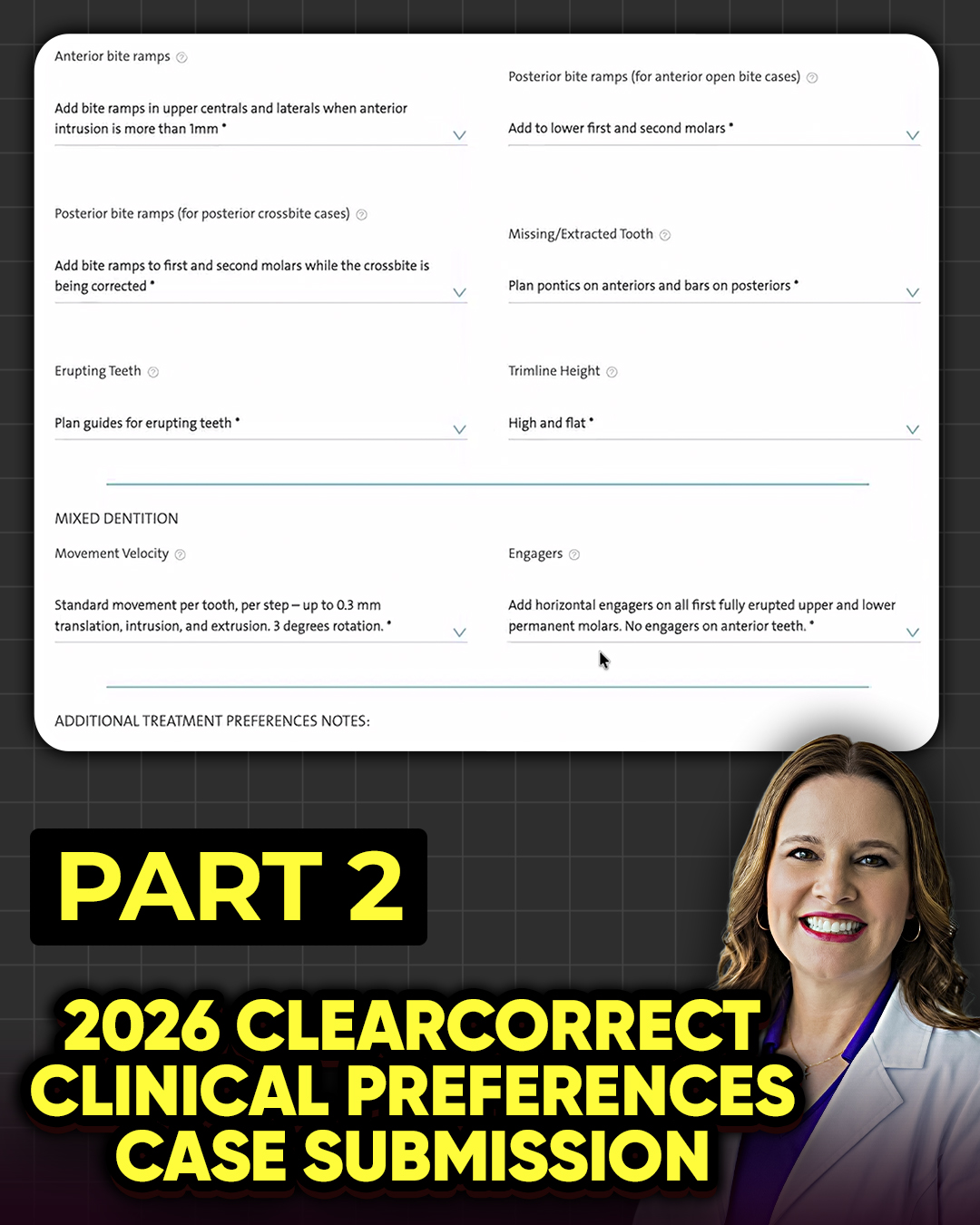
Deep Bites, Open Bites, and Trim Lines: Navigating Vertical Corrections with ClearCorrect
Getting Real with Class II Cases: How to Plan for Success with ClearCorrect
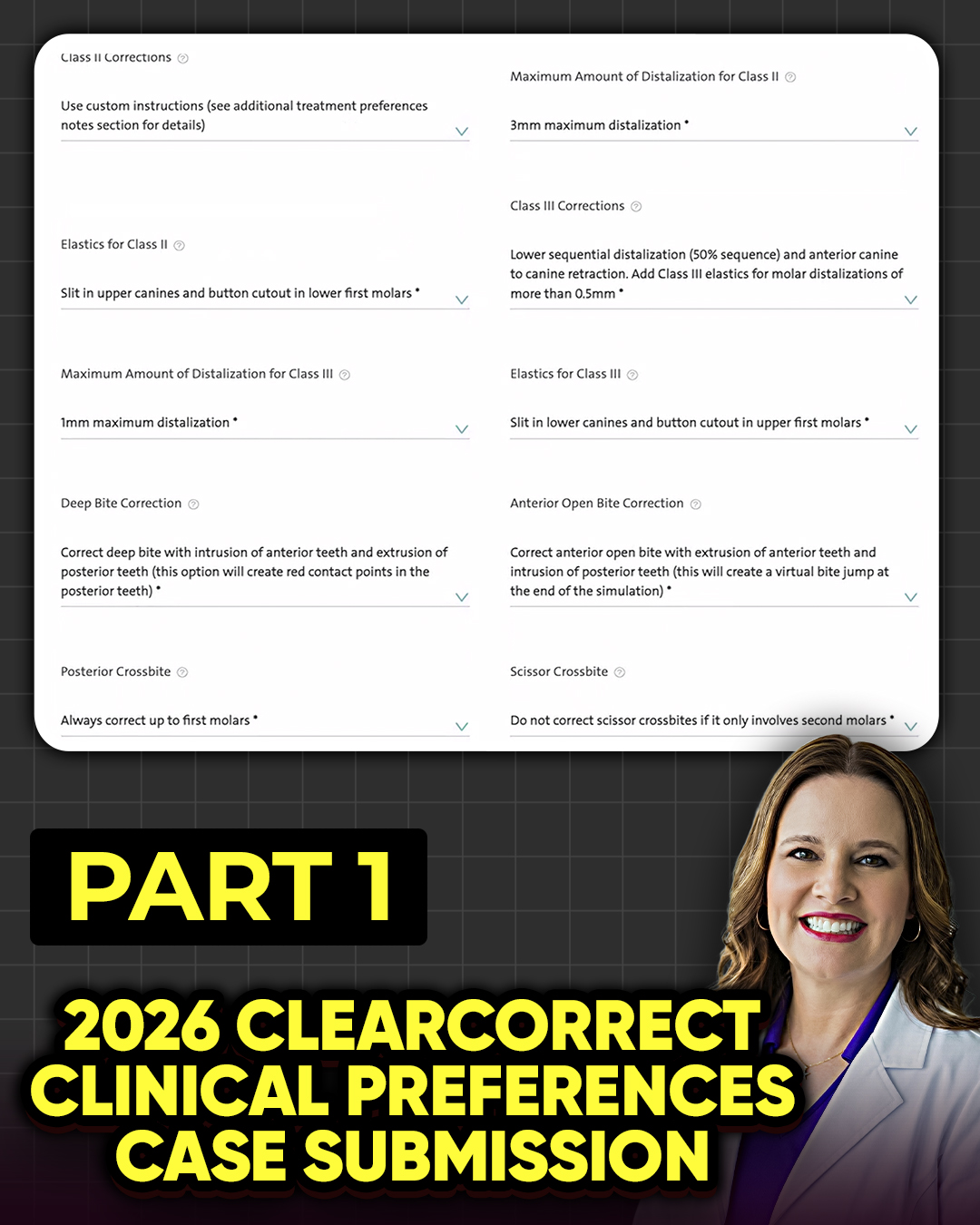 Getting Real with Class II Cases: How to Plan for Success with ClearCorrectWelcome to part one of our 2026 ClearCorrect clinical preferences case submission series! Today, we are breaking down Class II cases and how to fix them. A Class II case usually means a small lower jaw or a large upper jaw, where protruding upper teeth create an overjet.Before jumping in, always take a supplementary X-ray to confirm the specific Class II type. Then, cross-reference this with the patient’s facial anatomy and E-line to ensure your clinical findings match.Next, perform an airway and myofunctional screening. You must evaluate if fixing the overjet is functionally healthy, or if it will make things worse. For instance, if a patient has a large tongue and small mouth volume, shrinking that space further through extractions, IPR, or sequential distalization is a bad idea. If you are unsure how to diagnose this, call on an ENT or an oral myofunctional therapist (OMT) for help.Once you know you can safely proceed, look at your treatment options. Your path depends on whether the patient is mandibular deficient or maxillary protrusive. If you are fixing the upper arch, you can use IPR, sequential distalization (if third molars are absent), or Class II elastics—though elastics are not always highly effective. Extracting bicuspids is another option.However, if you need to stimulate lower jaw growth, ClearCorrect cannot do that alone. Skeletal growth only works if the patient is still young and growing. For these cases, you will need to use Invisalign with Mandibular Advancement (MA) or an auxiliary appliance first, then use ClearCorrect to finish. If you are treating a fully grown adult, those growth options are off the table. Stay tuned for Part 2!
Master CBCT Splicing for Invisalign ClinCheck
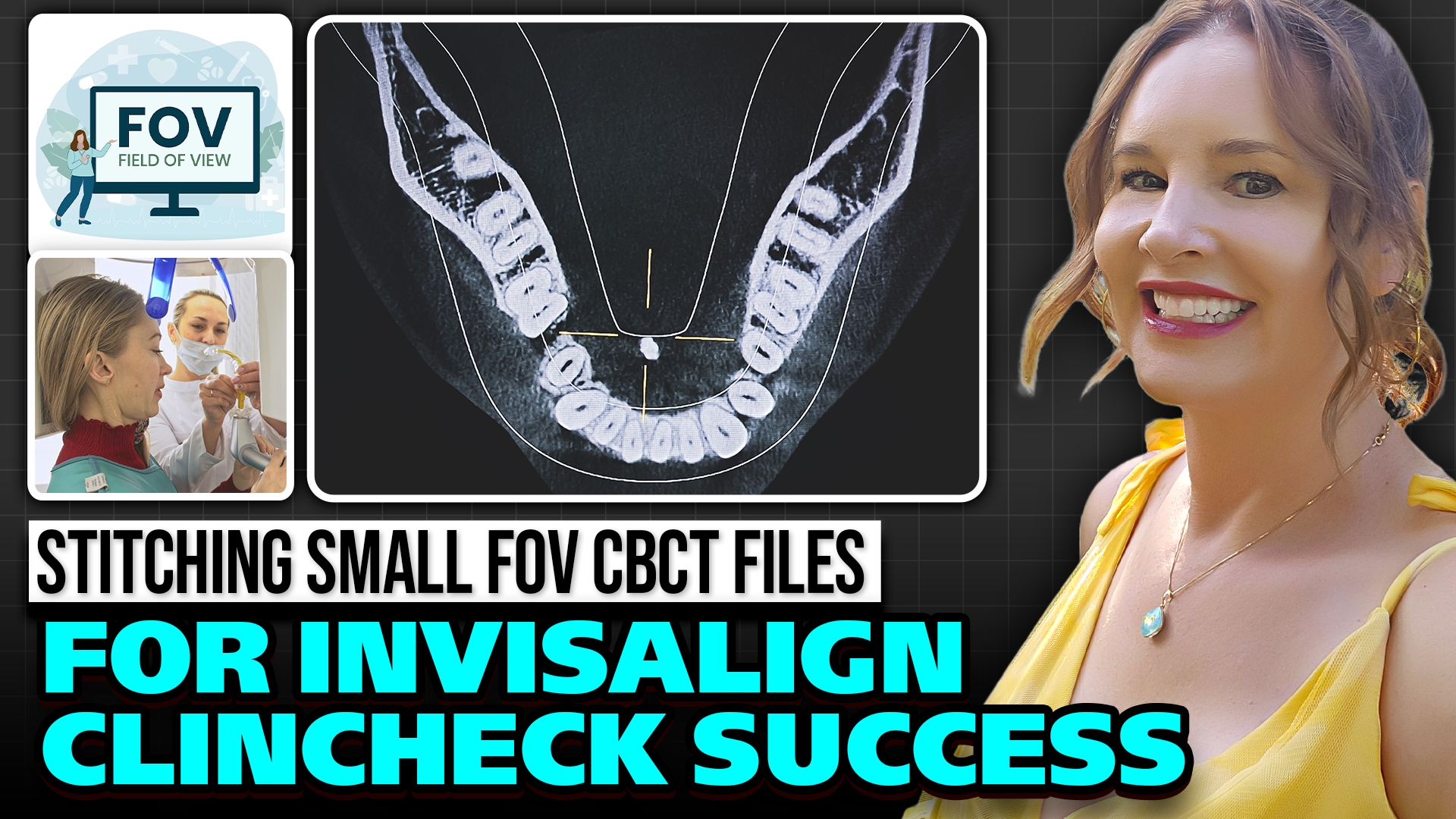 Integrating Cone Beam Computered Tomography (CBCT) scans into orthodontic workflows has rapidly evolved into a necessary diagnostic approach for targeted cases. However, practitioners often face structural or geographic constraints—such as expensive real estate or regulatory variations—that make housing a full-sized, large field of view (FOV) CBCT machine impractical. Fortunately, general dental offices equipped with smaller FOV machines can still successfully leverage advanced visualization tools. By utilizing native imaging software, clinicians can stitch or splice multiple small volumes together. This process matches separate maxilla and mandible scans or adjacent quadrants into a unified dual-arch format before exporting.Once you merge the small fields of view inside your proprietary imaging software, export the combined data set as a standard, multi-file DICOM folder. From there, log into the Invisalign Doctor Site (IDS) dashboard and navigate to the patient’s “Scans and Impressions” tab. Simply check the CBCT integration box located next to the traditional X-ray section to upload your merged file. This maps bone and roots directly into ClinCheck Pro. Because the software setup can feel complex during your first few attempts, Align Technology offers dedicated digital integration specialists at 1-888-225-4446 to guide you through technical compatibility reviews.Mastering this stitching pipeline unlocks the ability to comprehensively evaluate complex conditions. It allows you to confidently visualize periodontal boundaries, attrition, and abfraction before initiating clear aligner therapy. This elevated diagnostic clarity transforms the patient consultation from a standard sales pitch into an educational experience regarding risk, alternatives, and long-term disease progression. Although diagnostic workflows demand patience initially, routinely working up complex cases refines your clinical knowledge. This skillset builds a highly profitable orthodontic or clear aligner division within your general practice over time.
Progressive Orthodontic Seminars vs. StraightSmile Solutions: The Raw Truth About Orthodontic CE
 Progressive Orthodontic Seminars vs. StraightSmile Solutions: The Raw Truth About Orthodontic CEChoosing the right orthodontic continuing education dictates the ultimate trajectory, profitability, and safety of your dental practice. Many corporate clinical seminars use polished marketing to convince general dentists that mastering complex cases takes only a single weekend. True clinical confidence cannot be automated, fast-forwarded, or summarized into a passive checklist. General practitioners do not need hand-holding or corporate spin; they need transparent, unfiltered guidance to protect their patients and their dental licenses.The Realities of Modern Clinical TrainingTraditional institutional programs, such as Progressive Orthodontic Seminars (POS), focus heavily on classroom theory, manual wire-bending mechanics, and rigid educational modules. While these programs build a strong academic foundation, they often require significant upfront tuition, extensive travel, and hundreds of hours away from your chair. For doctors who prefer a structured, school-like environment, this traditional path offers a comprehensive look at growth patterns and manual treatment planning.On the other side of the educational spectrum lies modern digital clinical consulting, pioneered by platforms like StraightSmile Solutions. This agile approach bypasses traditional lecture halls to focus on active, case-by-case evaluation. Instead of practicing on expensive classroom setups, doctors utilize low-cost, self-directed exercises using standard clinical instruments at their own desks. The educational focus shifts away from old-school wire adjustments toward highly predictable clear aligner tracking, efficient biomechanics, and early interceptive therapies.Core Differences in Educational FrameworksProgressive Orthodontic Seminars focuses primarily on deep academic theory, growth prediction, and cephalometric charting. In contrast, StraightSmile Solutions targets scaling case volume, mastering clear aligners, and troubleshooting live cases.The delivery methods also vary wildly. Progressive Orthodontic Seminars relies on fixed multi-day modules, classroom lectures, and mandatory travel. StraightSmile Solutions operates through fully on-demand digital support, extensive video libraries, and remote case vetting.From a financial standpoint, Progressive Orthodontic Seminars requires high upfront institutional fees and fixed tuition packages. StraightSmile Solutions utilizes flexible monthly consulting options or pay-as-you-go models.Finally, patient safety monitoring differs between the two. Progressive Orthodontic Seminars provides generalized grading based on standard course progress. StraightSmile Solutions relies on direct, blunt rejection of unsafe or unpredictable patient cases during live clinical reviews.Why Unfiltered Mentorship Protects Your PracticeTrue clinical mentorship is an ethical obligation, not just a standard customer service transaction. A dedicated consultant refuses to tolerate subpar work or accept risky treatment plans simply to collect a fee. When a mentor gives direct, filterless feedback, it serves as the ultimate shield against clinical anxiety, failing cases, and potential malpractice liabilities.If you are ready to move past sugarcoated seminars and want direct, honest evaluations of your live orthodontic cases, it is time to upgrade your educational strategy. Partnering with a consultant who values clinical integrity over corporate compliance ensures your practice delivers elite, safe results.
What Happens When a Clear Retainer Stops Fitting After a New Filling?
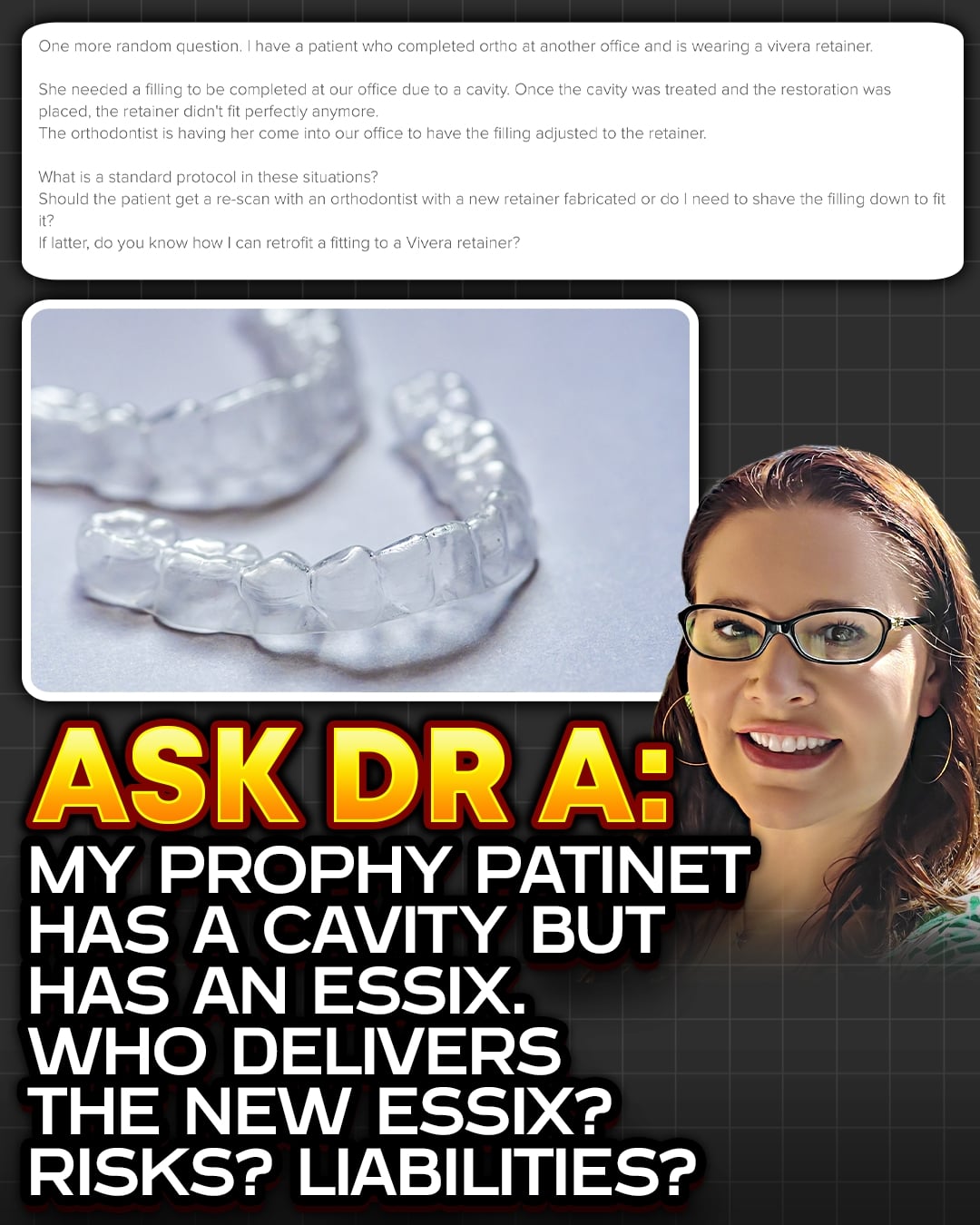 What Happens When a Clear Retainer Stops Fitting After a New Filling?It is an incredibly common scenario in dental and orthodontic clinics. A patient completes their orthodontic treatment, receives a clear retainer like a Vivera or Essix, and later needs a standard dental filling due to a cavity. Once the dentist finishes the restoration, the patient tries to pop their retainer back in, only to find it no longer fits.Who is responsible for fixing this issue, and what is the standard medical protocol? Dr. Amanda from Straight Smile Solutions YouTube Channel breaks down exactly how dental professionals should handle this situation.The Myth of “Shaving Down” a New FillingWhen a clear retainer stops fitting over a fresh restoration, some practitioners suggest sending the patient back to the general dentist to have the new filling shaved down. According to Dr. Amanda, this is not standard protocol. Adjusting a structurally sound, medically necessary filling just to force it into an old plastic appliance can weaken the restoration and compromise the tooth.Furthermore, clear thermoformed retainers cannot be “retrofitted” or altered. Even if the patient’s original digital 3D models (STL files) are securely stored in the cloud, re-ordering a past file will not work. The old file matches the pre-cavity tooth, not the newly restored tooth shape. Anytime a patient undergoes dental work—including fillings, crowns, or veneers—a brand-new retainer is almost always required. Learn more by watching the full breakdown on the Straight Smile Solutions Video.Standard Protocol and Provider WorkflowTo prevent confusion and unexpected costs, dental teams should adopt a proactive communication protocol:Pre-Treatment Warnings: Before initiating any restorative work, general dentists should ask patients if they use an orthodontic retainer. Patients must be explicitly informed beforehand that the dental work will likely alter their tooth contour, meaning their current clear retainer will no longer fit.Obtaining a New Scan: Once the dental restoration is fully complete, the patient needs to get a fresh digital scan or impression.Determining the Provider: If the patient still sees their original orthodontist, returning to that office is often the most cost-effective route. However, if the patient has moved or the previous doctor has retired, the general dentist can choose to become the new provider for the retainer fabrication and ongoing checks.Financial Responsibility: Unless a specialized prior agreement exists, the financial responsibility for purchasing the replacement retainer rests on the patient. For a complete guide on navigating these conversations, check out the Straight Smile Solutions Channel.An Alternative Solution: Hawley RetainersFor dental patients who anticipate needing ongoing restorative care, clear aligner-style retainers might not be the most practical long-term investment. Dr. Amanda highlights the traditional Hawley retainer (an acrylic and wire appliance) as an excellent alternative.While Hawley retainers do not control vertical settling as rigidly as clear options, they offer exceptional longevity. A well-maintained Hawley retainer can easily last from 10 years to a lifetime. Because they do not completely encase the entire crown of every tooth, minor fillings or dental crowns rarely require the entire Hawley appliance to be remade. Offering patients a choice between clear plastic and durable acrylic gives them better control over their long-term oral health investments.To learn more about optimizing orthodontic workflows for general dental practices, visit the Straight Smile Solutions YouTube Channel.
Rethinking Orthodontics: Why Airway Screening Can No Longer Be Ignored
 Rethinking Orthodontics: Why Airway Screening Can No Longer Be IgnoredFor generations, the orthodontic community measured success by the precision of a bite. Clinicians focused heavily on alignment, overjets, and achieving a textbook Class 1 occlusion. However, an essential shift is occurring within the industry. A growing movement of dental professionals argues that prioritizing aesthetic metrics over a patient’s functional health is a major clinical oversight. True dental wellness requires looking past straight teeth to evaluate airway health and Sleep-Disordered Breathing (SDB).The Myth of “Outgrowing” Airway IssuesA common misconception in pediatric dentistry is that children will naturally outgrow early respiratory and airway complications. While some symptoms may seem to disappear, high-quality longitudinal data suggests otherwise. Research tracking individuals from early childhood into adulthood reveals that kids with untreated airway-linked issues develop significantly higher systemic inflammatory issues as they age.The takeaway for modern practitioners is clear: even if local structural symptoms seem to stabilize over a long period, the underlying systemic causes remain active. Leaving an airway restriction unaddressed can predispose a young patient to lifelong health challenges.Shifting to a Functional, Multi-Disciplinary StandardFocusing solely on stabilizing a bite is irrelevant if the patient remains systemically unhealthy or in a chronic inflammatory state. Comprehensive treatment requires a multi-disciplinary philosophy that bridges the gap between orthodontics and ENT perspectives. Early clinical interventions—such as palatal expansion or mandibular advancement—do more than correct crowding; they structurally maximize nasal airway volume to potentially safeguard long-term systemic health.Transitioning your practice to an airway-centered workflow requires specialized training, screening tools, and case evaluation protocols. General and pediatric dentists looking to confidently scale their orthodontic offerings can access tailored mentoring and on-demand digital courses through StraightSmile Solutions. By integrating systematic airway checks into your routine exams with help from StraightSmile Solutions, you can confidently address root causes and provide life-changing preventative care.
What If Your Ortho Office Is Bought by PE? What Rights Might You Have for a Refund?
 What If Your Ortho Office Is Bought by PE? What Rights Might You Have for a Refund?Orthodontic treatment is a major commitment. It often spans 18 to 24 months, creating a long-term relationship between a family and their provider. Historically, when a dentist retired, they smoothly transitioned the business to a trusted junior associate.Today, corporate takeovers by Private Equity (PE) firms are becoming significantly more common in the dental industry. If your orthodontist suddenly sells their practice to a corporate entity, it can disrupt your child’s treatment plan and leave you questioning your consumer rights.The Risks of Corporate Takeovers During Ortho TreatmentWhen a private equity firm buys a dental practice, the focus often shifts from individualized patient care to high-margin, high-volume metrics. This transition introduces several risks for active patients:High Provider Turnover: PE-owned offices frequently see a “musical chairs” rotation of temporary or newly hired dentists.Disrupted Treatment Plans: A new incoming doctor might not agree with your original treatment strategy, or they may lack experience with the specific appliances being used.Deemphasized Progress: To maximize volume, corporate offices sometimes prioritize quick appointment turnarounds—like continuously retying wires without making actual diagnostic progress on the case.Financial Instability: Some corporate entities carry heavy debt loads, creating a structural risk of the business closing entirely.Understanding Your Consumer and Patient RightsLegally, a dentist cannot abruptly abandon your care during a critical stage of active treatment. However, ownership transitions can still result in unexpected changes to your service quality.Depending on your state laws, practices are generally expected to notify patients of ownership changes 30 to 60 days in advance, though corporate acquisitions are occasionally finalized before patients are informed. If the core terms, providers, or treatment qualities diverge significantly from what you agreed to, you maintain the right to exit your contract.How to Pursue an Orthodontic RefundIf you are uncomfortable with the new corporate structure or the incoming provider, you can push for a financial refund or credit to transfer your case elsewhere.Review the Original Contract: Re-read the initial paperwork you signed. Look carefully for a cancellation clause that details how unused portions of your flat fee are calculated.Expect a Pro-Rated Refund: You will rarely receive a full refund because the clinic did render diagnostic records, bracket placements, or initial adjustments. Standard industry formulas value these initial services, meaning you are entitled to a pro-rated refund for the remaining unrendered care.Negotiate with the Office: Schedule a meeting to discuss your transfer. If treatment was extended or delayed strictly because of provider turnover, use that timeline to negotiate a fairer payout.File a Formal Complaint: If the private equity management refuses a reasonable settlement, you can escalate the matter by filing a formal complaint with your state’s dental board or consumer protection agency.Grow and Protect Your Practice with StraightSmile SolutionsAre you a general or pediatric dentist looking to scale your orthodontic services independently? Don’t let corporate management dictate your treatment style or patient relationships. At StraightSmile Solutions, we provide specialized clinical consulting to help you master clear aligners and braces on your own terms.Optimize Your Clinical Workflow: Visit StraightSmile Solutions to explore our customized consulting programs.Scale Your Orthodontic Services: Check out our full menu of support offerings at StraightSmile Solutions Services.Access Free Educational Resources: Dive into our comprehensive library of webinars and tutorials via our StraightSmile Solutions Linktree.Before making a sudden move with your patients or your contract, give the new incoming orthodontist a chance. Meet them, learn about their background, and review their proposed adjustments. It takes a month or two for a transition team to stabilize. If you still feel uncomfortable after a trial period, request your diagnostic records and initiate a pro-rated contract cancellation so you can transfer to a trusted, community-focused practice.
The Cost of a Dental “Oops”: When to Retreat an Orthodontic Case for Free
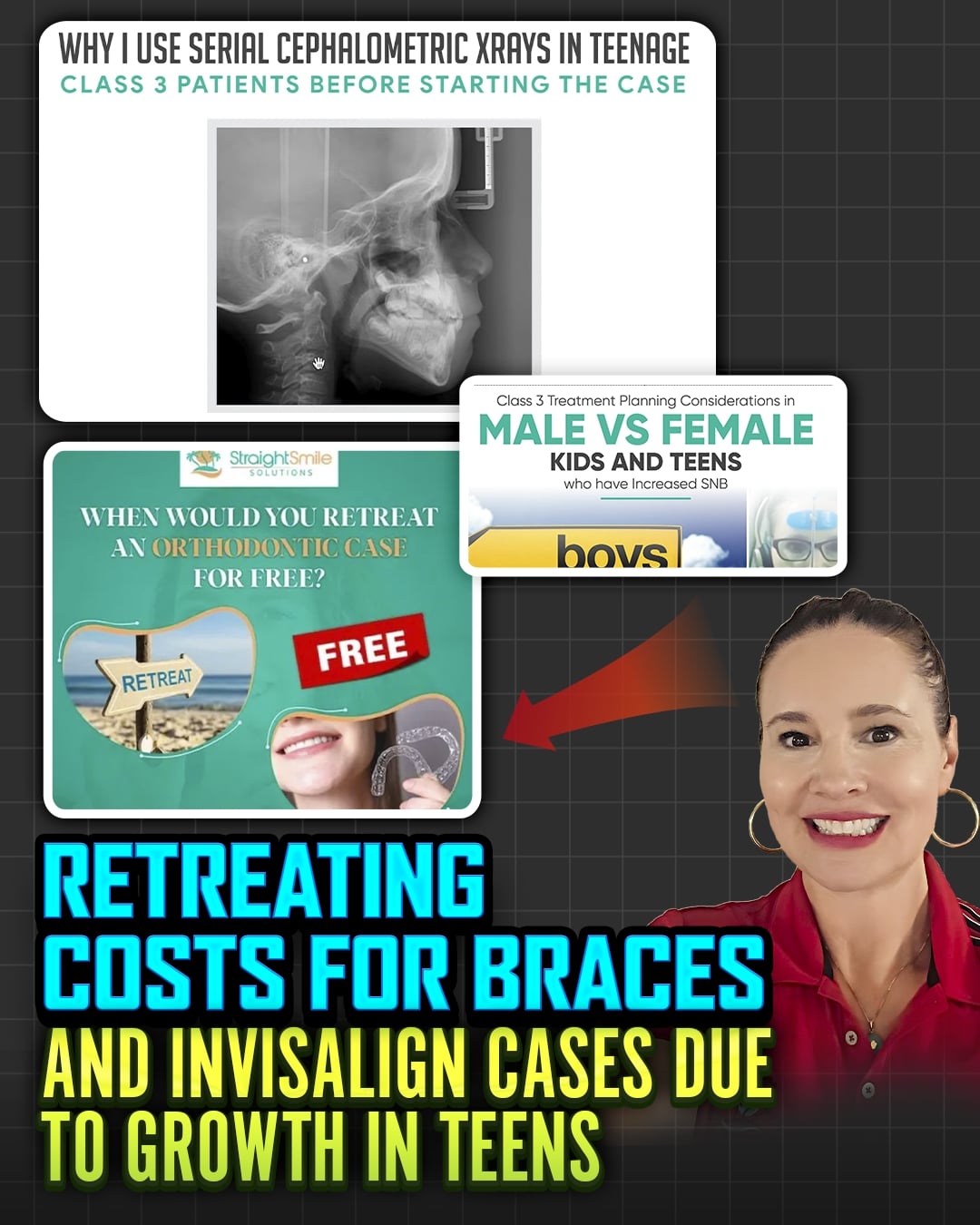 The Cost of a Dental “Oops”: When to Retreat an Orthodontic Case for FreeEvery dental practitioner has experienced that sinking feeling in their stomach. You realize an orthodontic case isn’t tracking, the results are compromised, or the original plan simply fell short. When a case goes wrong, general and pediatric dentists often face a tough dilemma: when should you offer a full retreatment completely free of charge?According to Dr. Amanda of StraightSmile Solutions, the short answer is simple—almost never, unless it is a matter of liability.Protect Your Practice with Proper Standard Operating ProceduresIf your dental office has more than one “free retreatment” active at any given time, it points to a systemic breakdown in your workflow. Routinely giving away free treatments to fix mistakes means your operating procedures need an immediate overhaul.To safeguard your practice, you must implement a bulletproof diagnostic process. Every patient—especially kids and teenagers—needs a comprehensive treatment plan that presents multiple options. A rushed, two-minute planning session is a recipe for clinical failure. You can access expert resources and clinical guidelines directly through StraightSmile Solutions to optimize your office’s operational systems.Never Ignore Your Clinical Gut FeelingA major catalyst for orthodontic errors is bowing to patient or parental pressure. It is incredibly common for parents to rush the process, push to get braces on immediately, or even omit crucial health details on screening forms to save money.If you suspect an underlying issue, such as an airway obstruction, do not skip vital diagnostics like 3D CBCT scans or referrals to an ENT. Relying on a patient’s “word” without physical documentation is a massive risk. Stick to your guns. If a parent refuses to comply with necessary medical steps, it is always safer to politely decline the case altogether.Own the “Oops”Mistakes happen to everyone. If you genuinely botched a diagnosis or treatment plan, but the error is not severe enough to trigger a board complaint or a lawsuit, owning the mistake is your best path forward. Being completely honest with the patient, offering a refund, or providing a complimentary retreatment can protect your professional reputation and keep you out of court. For direct coaching on navigating these tough clinical scenarios, consult the team at StraightSmile Solutions.Disclaimer: This content is summarized from an educational video meant for licensed dental professionals and does not constitute direct medical or legal advice.
Navigating the “Braces Vacation”: A Smart Approach to Orthodontic Risk Management
 Navigating the “Braces Vacation”: A Smart Approach to Orthodontic Risk ManagementOrthodontic treatment is a major investment in your child’s future smile. However, when poor oral hygiene enters the picture, that investment faces serious risks. If plaque buildup leads to swollen gums or early tooth decay, pushing forward with treatment can cause permanent damage. This is where the concept of a “braces vacation” becomes an essential tool for effective clinical risk management.Understanding the Braces VacationA braces vacation is a intentional, temporary pause in active orthodontic treatment. Instead of continually adjusting wires on a patient who struggles to brush and floss, the orthodontist pauses active movement. This shift in focus prioritizes immediate oral health over alignment.During this break, the primary goal is intensive dental hygiene intervention. It gives the patient’s gums and teeth a chance to heal, preventing long-term complications like decalcification (permanent white spots on teeth) or severe gum disease.Mitigating Risks and Setting BoundariesFrom a risk management perspective, a braces vacation establishes clear boundaries while maintaining a high standard of care. Parents appreciate this proactive approach. It demonstrates that the orthodontist values the long-term health of the child’s teeth over simply rushing to the finish line.However, if oral hygiene does not improve despite these interventions, or if a family decides the timing is simply wrong, early termination becomes the next logical step in risk mitigation. To manage this transition smoothly, specific protocols protect both the patient and the practice:Removal Fees: Braces are removed early to prevent further dental damage, often with waived removal fees to ensure patient safety.Transfer Window: Families receive a 30-day window to transfer care to another specialist, ensuring continuous oversight.Record Sharing: Treatment records are transferred to the new provider at no extra cost to facilitate seamless continuity of care.Discontinuance Documentation: Signing an official discontinuance form involves a nominal fee (unless covered by premium concierge memberships) to legally formalize the pause or end of treatment.Protecting the Ultimate GoalUltimately, a braces vacation is not a failure; it is a strategic pivot. By pausing active treatment to fix hygiene issues, orthodontists and parents work together to mitigate risks. This ensures that when the braces finally come off, the smile underneath is both straight and genuinely healthy.