
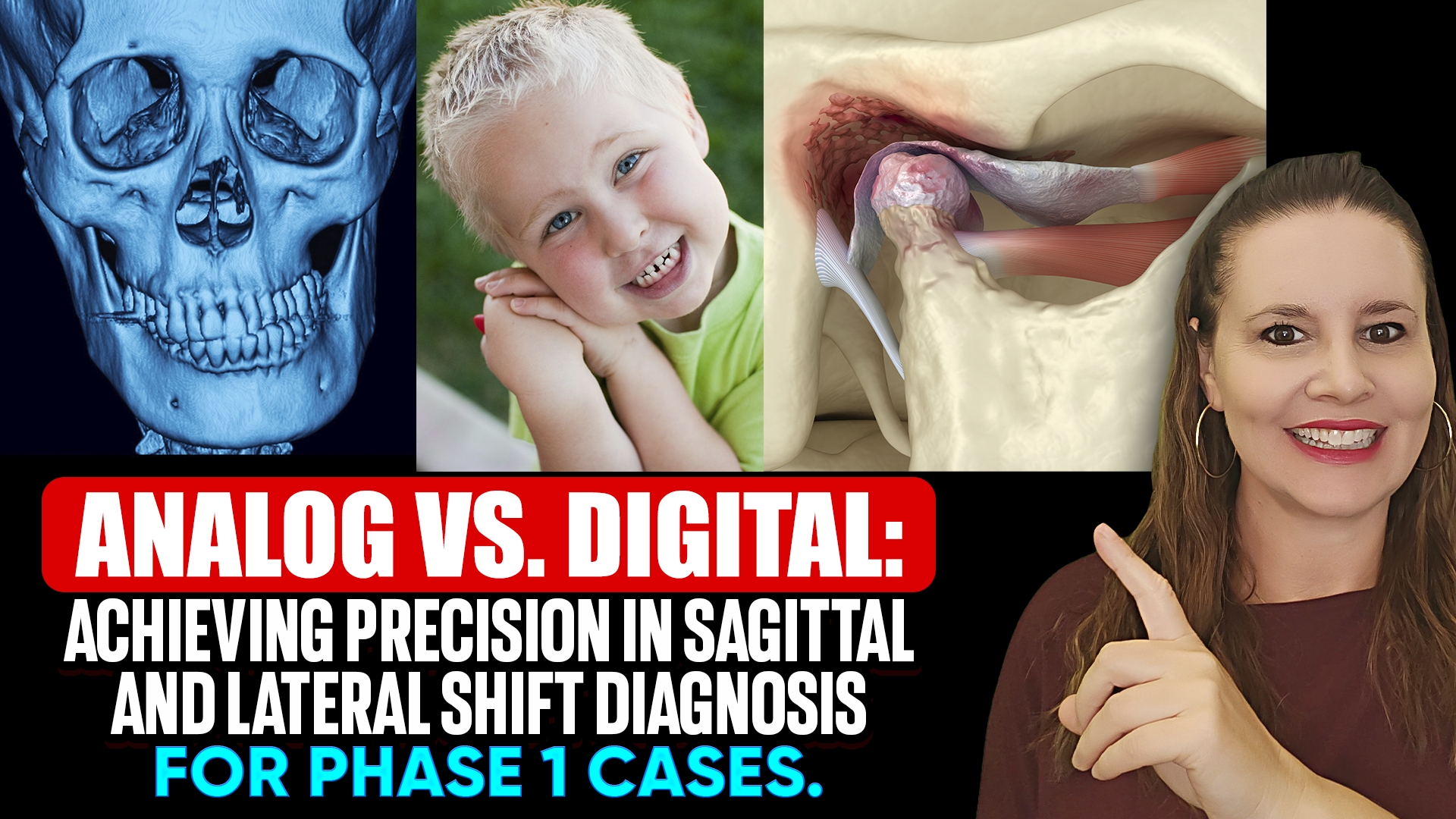
 Analog vs Digital Methods of Diagnosing and Treatment Planning for CRCO Shifts in Phase 1 Interceptive Orthodontics
Introduction
Dr. Amanda of Straight Smile Solutions explores the ongoing divide between analog and digital methods for diagnosing CR–CO shifts in Phase 1 interceptive orthodontics. Having trained in an era before digital diagnostics, she highlights how traditional hands-on techniques and modern CBCT-based evaluations each play a role in accurately identifying shifts. Proper diagnosis is essential, as treatment planning without confirming true centric relation can lead to incorrect classifications and serious downstream complications.
Analog Diagnosis of CR–CO Shifts
Traditional training focuses on manually seating the condyles into centric relation
Requires working through the musculature to “unlock” the jaw
Can be slow, technique-sensitive, and difficult to teach
Particularly challenging in Phase 1 patients due to:
Loose primary teeth
Sharp or uneven baby teeth
Dental interferences
More predictable in adults than in young children
Helpful for identifying whether a shift is forward, lateral, or interference-driven
Challenges of Relying on Analog Methods Alone
Interferences can prevent accurate seating of the mandible
Space maintainers may obscure true occlusion
Difficulty confirming if condyles are fully seated
Risk of misdiagnosing skeletal relationships
Digital Diagnosis Using CBCT
Full CBCT allows visualization of condylar position in the joint
Radiologists can confirm whether condyles are seated in centric relation
Identifies posterior displacement or true mandibular shifts
Adds cost, but provides objective confirmation
Essential when analog methods are inconclusive
Impact on Treatment Planning
Incorrect diagnosis can result in:
Mislabeling Class II or Class III relationships
Improper expansion or alignment strategies
Unexpected bite changes after leveling and alignment
Unlocking the bite later can reveal a dramatically different occlusion
Conclusion
Dr. Amanda emphasizes that accurate shift diagnosis is non-negotiable in Phase 1 interceptive orthodontics. While analog techniques remain valuable, digital CBCT evaluation is often necessary when manual assessment is unreliable. Confirming true centric relation before treatment prevents misdiagnosis, flawed plans, and serious clinical or legal consequences, making a strong “shift game” essential for safe, predictable outcomes.