
I. Introduction
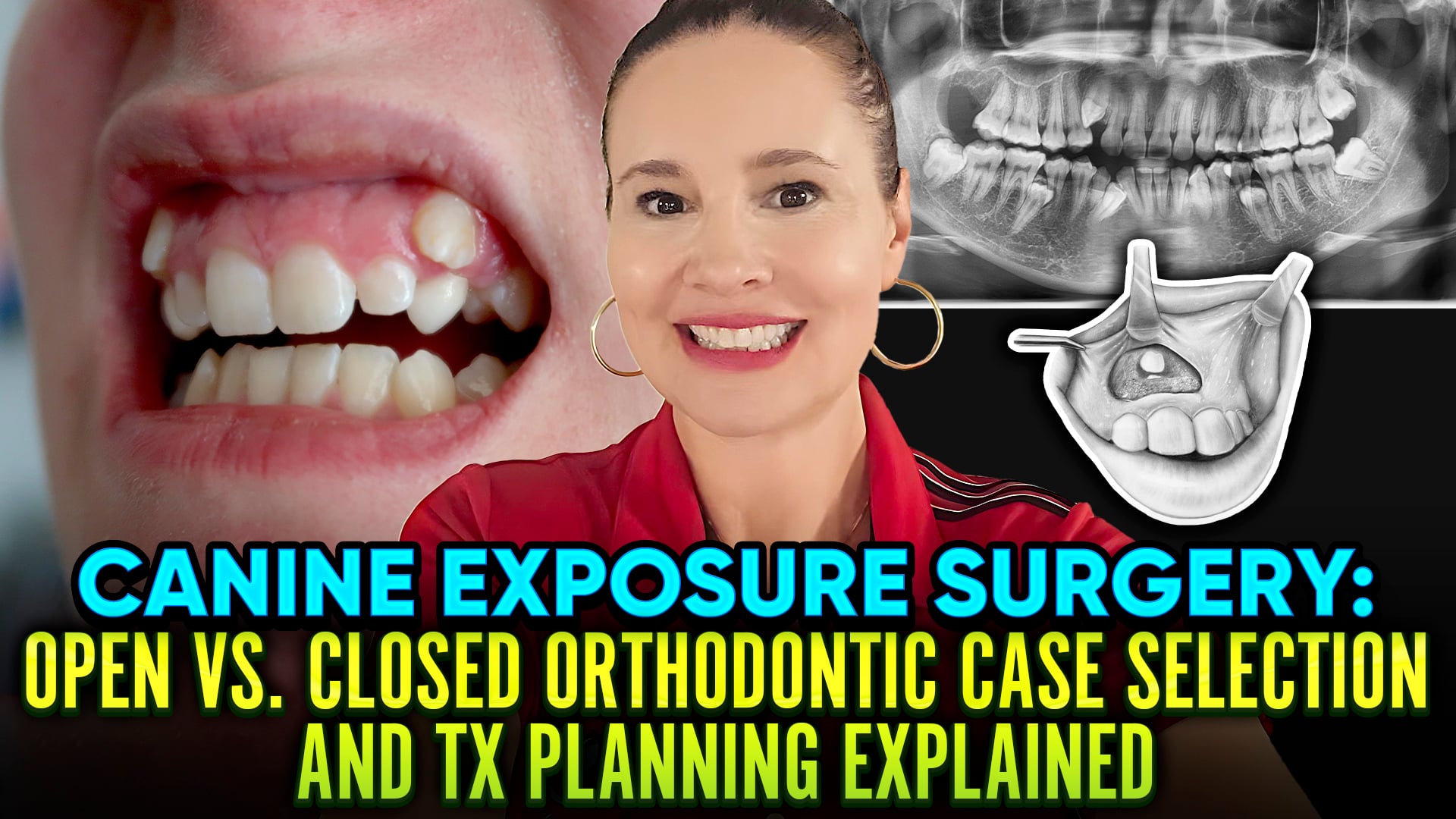
● Dr. Amanda from StraightSmile Solutions breaks down the difference between open and closed canine exposure surgeries.
● This matters because how you prepare and execute treatment depends on which procedure your surgeon chooses.
● Remember: This is a Phase 2 or comprehensive concern—not Phase 1.
II. Open Exposure Explained
● Open exposure is typically for canines that are superficial, just under the attached gingiva.
● You’ll often see a visible bump or bulge on the buccal (or occasionally palatal).
● The surgeon creates a small window, removes a bit of tissue, and places a surgical pack.
● Once healed, you bond a bracket and start moving the tooth.
● These cases are more likely with periodontists than oral surgeons.
III. Closed Exposure Explained
● Closed exposure is for canines buried deeper within bone.
● The surgeon creates a trough, attaches a bracket with a gold chain, and sutures the tissue back closed.
● Only the tiny chain protrudes through the gum.
● This protects the bone from infection and necrosis.
● Most canine exposures are closed procedures.
IV. Who Decides?
● You don’t decide. The surgeon does.
● The position of the tooth—and how much tissue covers it—determines the approach.
● Always communicate with your surgeon beforehand so you know how to prepare and what post-op will look like.
V. Timing and Alternatives
● Before jumping to surgery, try creating space first.
● If the apex is still open and the tooth is blocked, space may allow spontaneous eruption.
● If it’s ankylosed or non-viable, surgery is your only path.
● Modern 3D imaging helps assess this far better than old-school panos.
VI. Implications for Braces vs Invisalign
● Open exposures may allow you to treat with Invisalign alone.
● Closed exposures almost always require braces—at least for the canine itself—due to the need for precise chain activation.
● If you’re a general or pediatric dentist without strong braces skills, a closed exposure case could mean a refund if you have to switch modalities.
● Pick your cases carefully.
VII. The Bottom Line
● Open exposures are windows; closed exposures are chains buried beneath the surface.
● Let the surgeon lead, but know what’s coming so you can plan accordingly.
● And when in doubt, refer out. Some cases are best handled by those who eat, sleep, and breathe impacted canines.