
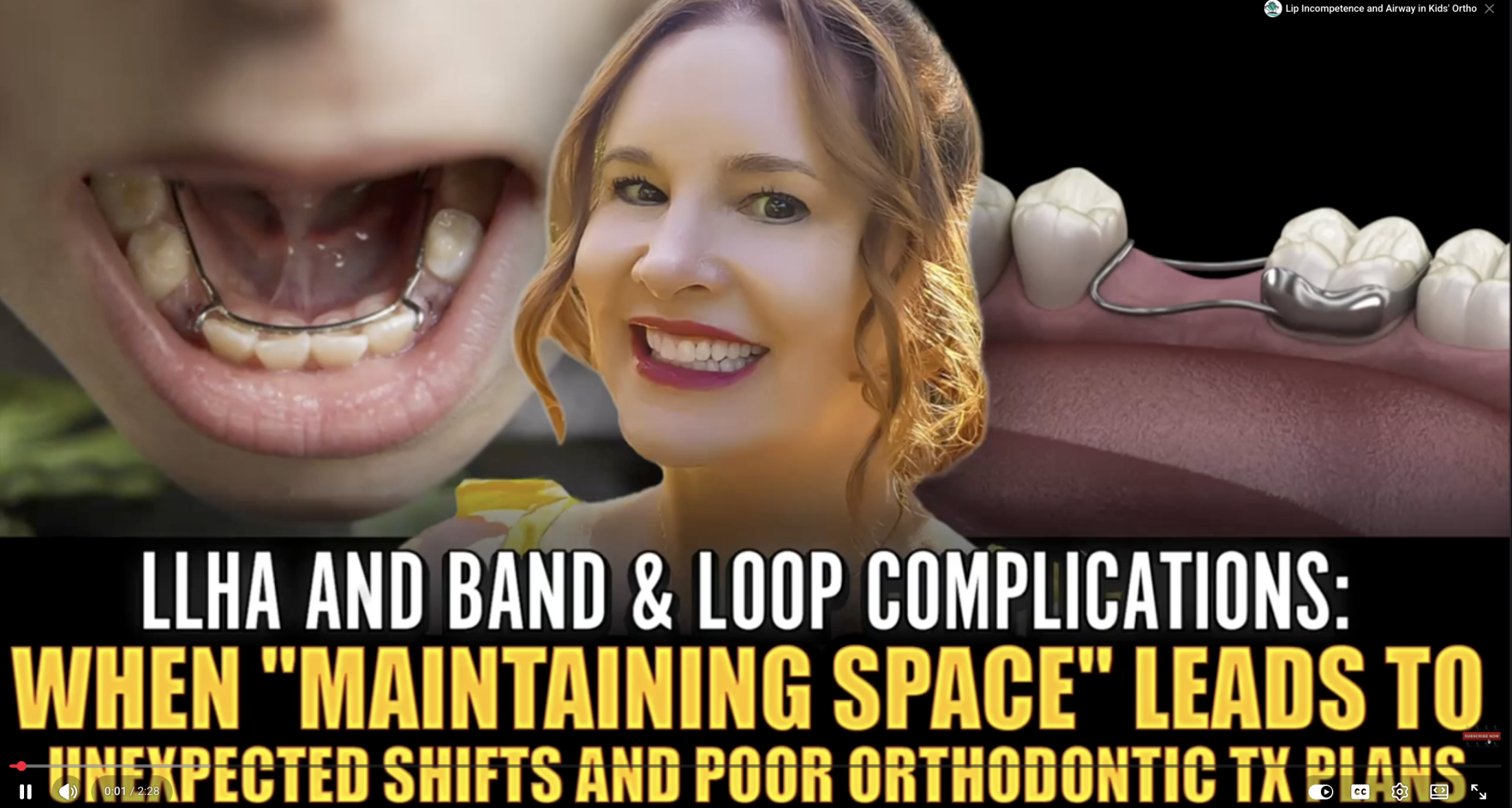
LLHA Band and Loop Complications – When Space Maintainers Cause Shifts and Poor Tx Plans
Introduction
Dr. Amanda of Straight Smile Solutions highlights a recurring concern from an orthodontic perspective: the routine overuse of space maintainers in pediatric dentistry. While these appliances can be appropriate in very young children after early tooth loss, their continued use in older children is often unnecessary. Without careful evaluation of radiographs and eruption timing, space maintainers can create occlusal issues that complicate orthodontic diagnosis and treatment planning.
Overuse of Space Maintainers in Older Children
- Space maintainers are frequently placed in children aged 6 to 8, and even in 11-year-olds, without proper indication
- Primary teeth such as C’s, D’s, and sometimes E’s are maintained even when permanent successors are already developing
- Radiographs often show that space maintenance is not required, yet appliances are still placed
Orthodontic Downsides and Occlusal Impact
- From an orthodontic perspective, space maintainers often cause more damage than benefit
- Common problems include:
- Posterior open bites
- Occlusal discrepancies
- Bite instability
- Unwanted tooth shifting
Design and Fit Issues With Band-and-Loop Appliances
- Ideally, a band-and-loop should sit passively and be well-adapted
- In reality, most appliances are:
- Too thick or positioned too high
- Poorly adapted to the tooth surface
- Impinging on the gingival tissue
- These design flaws make the appliance something the patient bites and pivots on
Midline Shifts and Growth-Related Concerns
- Improperly fitted space maintainers can cause:
- Anterior midline shifts
- Lateral shifts
- Repeated functional pivoting increases the risk of long-term growth and occlusal complications
Interference With Orthodontic Diagnostics
- Space maintainers often need to be removed before accurate diagnostics can be completed
- The appliance frequently causes heavy contacts seen on articulating or occlusion paper
- Leaving them in place can distort bite records and treatment planning
Need for Interdisciplinary Communication
- If the orthodontist is not the primary or general dentist, removal requires coordination
- Dentists must communicate before appliance removal to avoid professional and legal issues
Conclusion
Dr. Amanda stresses that space maintainers should not be placed automatically. Careful case selection, proper appliance design, and radiographic evaluation are essential. When unnecessary or poorly constructed, band-and-loop space maintainers can disrupt occlusal stability, interfere with diagnostic procedures, and lead to flawed treatment plans. Increased awareness helps clinicians prevent avoidable orthodontic complications and deliver better long-term outcomes.