
StraightSmile Solutions®
When Do You Need Anchorage with Class 3 Extraction Patterns?
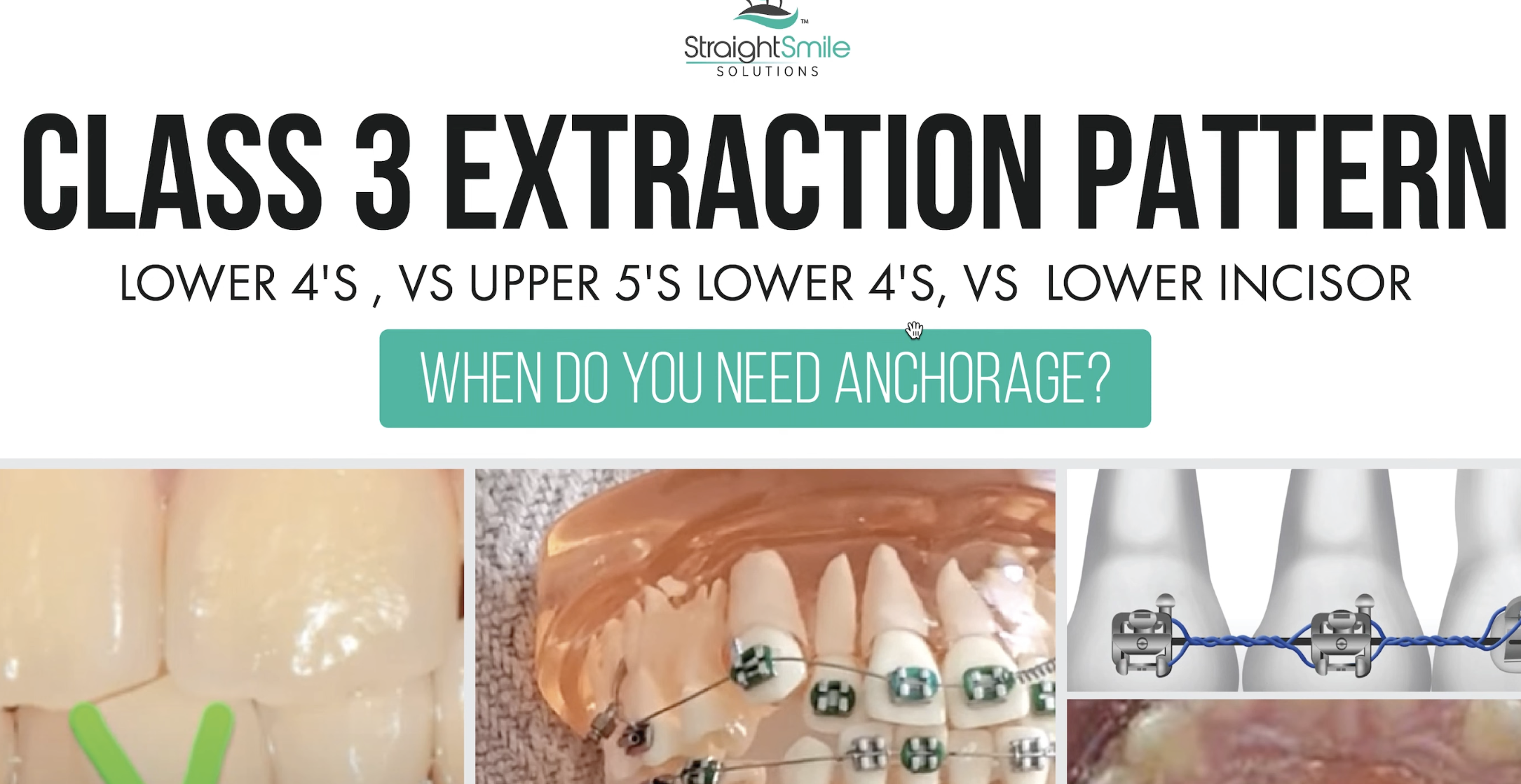
Have you ever wondered about when you need anchorage with class 3 extraction cases? Here at Straight Smile LLC, we understand better than most just how critical it is for dental consultants to have the optimal treatment plan in place before starting with class 3 extractions. As such, we’ve summarized some of the key things you need to know about anchorage in these scenarios as follows to help.
Class 3 Extraction Patterns and Anchorage
If you have got a class 3 extraction case, you’ll need to consider carefully when you need anchorage. This will usually be for adults who have refused surgery and for whom extraction can be done successfully; keep in mind that a severe class 3 case won’t be suitable for extraction. Don’t take on an extraction case if it’s going to complicate matters for the patient.
A lingual arch is generally a good option for many lower 4 cases. Upper 5 lower 4 cases will also benefit from lingual arch anchorage often.
Of course, every case is unique. So, if you need further support, contact our experts here at Straight Smile LLC for help with developing the most effective treatment plan.
Don’t Rush Into Extractions!
By now, we’ve clarified that you might need a lingual arch. However, it’s important to remember that you should never rush into an extraction case. Instead, make sure you’ve done a CEPH before getting started to make sure that an extraction is the right approach.
Final Thoughts
Planning a class 3 extraction comes with several possible caveats. As such, if you have been looking to make a treatment plan for class 3 extractions, make sure you have considered today’s key pointer to help with anchorage.
Aligner Education- Getting Started!

Deciding which system to use can help set you up for success when starting with clear aligners. But how do you choose? Well, you can decide based on information from unbiased experts on aligners. Straight Smile Solutions offers free education on aligner cases and everything you need to know about aligner brands and companies based on experience from an unbiased perspective.
In this article, we will discuss which aligner system is best for beginner providers of clear aligners.
Clear Aligner Education 101: Which System is Best?
First and foremost, when we break down cases into categories, you can more easily decide which aligners to use for certain cases. “Green Light” cases include Class 1 molar and canine, no missing or impacted teeth except 3rd molars, no history of present or past periodontal disease, mild to moderate crowding or spacing, overbite, no open bite, and no crossbite.
You can choose any aligner company you want for these Green Light cases. These cases are simple enough that the aligner system shouldn’t provide you with any issues during treatment and are straightforward.
More advanced or trickier cases should proceed with more caution. However, the more complicated your cases are, the more you will need from an aligner company, which will narrow the aligner companies you want to choose from.
Regarding companies to consider avoiding, we are noticing that the doctors we work with struggle to finish their SureSmile cases. Doctors struggle with navigating the portal and have expressed frustration with the system. This is our opinion based on feedback and what we’ve noticed from interacting with the system and its interface.
For favorites, Invisalign, ClearCorrect, and Spark are solid recommendations from our personal experiences and feedback from the doctors that we work with. They are better options for treatment planning, diversity of cases, and learning for beginners.
Which Retainers to Use for Patients at Risk of Caries
Which Retainers to Use for Patients at Risk of Caries
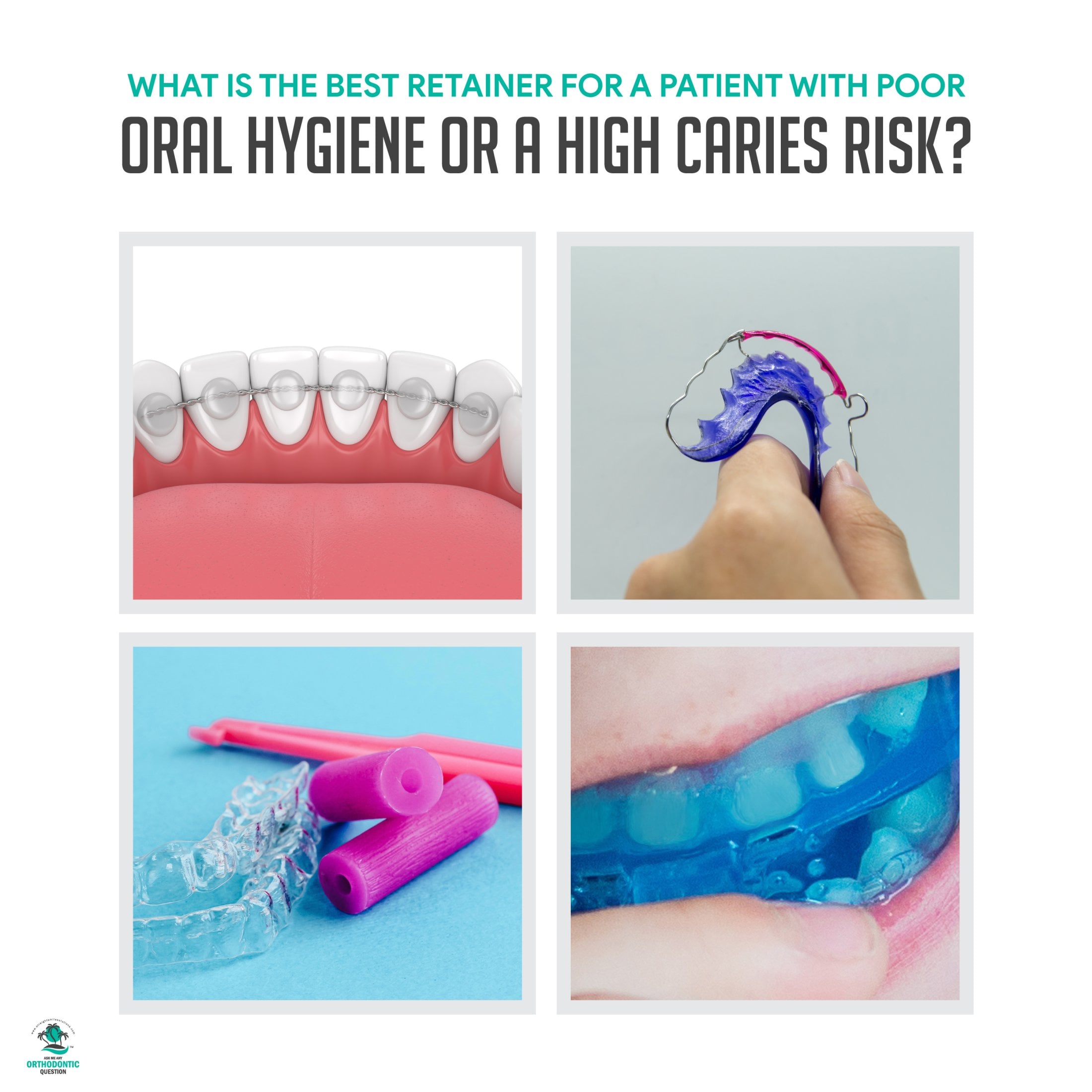
When it comes to your patients, ensuring you’ve chosen the most effective type of retainer is crucial as part of any dentist consultation. Indeed, finishing cases successfully is often difficult if you’ve started with the wrong type – and such can be the case for patients at risk of dental caries. With this thought in mind, we’re looking at some of the key things you should consider when choosing retainers for patients risking dental caries.
What are Caries?
Dental caries is a term that refers to tooth decay, which is becoming increasingly prevalent in our modern society. There are numerous potential reasons for tooth decay to occur, such as consuming a high-sugar diet or eating with retainers on (and not cleaning the teeth and retainers subsequently).
What Retainers to Suggest for Dental Caries Patients
If a patient is at high risk of dental caries, usually due to poor dental hygiene, it’s important to find the right type of retainer. Generally speaking, it’s worth considering that a bonded retainer won’t be suited to a dental caries patient. Similarly, Essex retainers may also be a poor choice.
A traditional Hawley retainer is a good option for a cost-effective retainer that could work with a caries patient. They also allow the bite to fully seat, which can be helpful – though they need to be worn full-time. A custom-made positioner can also be a good option potentially; they’re generally less popular, but they don’t need to be worn all the time.
Always Check a Patient’s Caries Risk During Their Dentist Consultation
Before you begin working with a patient, make sure you’ve considered their dental caries risk during the initial dentist consultation. This simple check can help ensure that your patients have the best chance of finishing cases easily without the hassle or needing multiple revisions.
What You Need to Know About Bolton Discrepancies
What You Need to Know About Bolton Discrepancies
Bolton discrepancies can often seem like funny cases. However, this shouldn’t have to be the case, and we’ve summarized some of the key things you need to know about Bolton discrepancies and how you can resolve them with clear aligners and Invisalign cases.
What are Bolton Discrepancies?
Before we look any further at how Invisalign and clear aligners can help, we first need to clarify what Bolton discrepancies actually are. A Bolton discrepancy is a measure of the alignment of tooth sizes in a patient. These are usually provided as 3:3 (canine to canine) discrepancies and 6:6 (molar to molar) discrepancies.
It’s worth considering that almost all people have very minor tooth discrepancies. However, larger scores may need additional treatment, which is something that you may be able to tackle with Invisalign or clear aligners.
How Aligners Can Help
If you’ve chosen to use clear aligners or Invisalign, you’ll find that space will usually be left on one of the arches in your patient’s plan. It’s worth making sure that you add details for this in your preferences for the patient to get the best possible results from the case.
Generally, we recommend that you go for IPR over spaces to help prevent patients from getting upset. The best way to approach this is to discuss the topic with your patient directly during their initial appointment to help ascertain their preferred approach.
Make sure you’ve taken a deposit before getting started, of course! And, if you find yourself in need of any further ideas for your patient’s discrepancies, don’t be afraid to reach out to our team here at Straight Smile Solutions today.
How to Stop Invisalign and Clear Aligner Breakage
How to Stop Invisalign and Clear Aligner Breakage
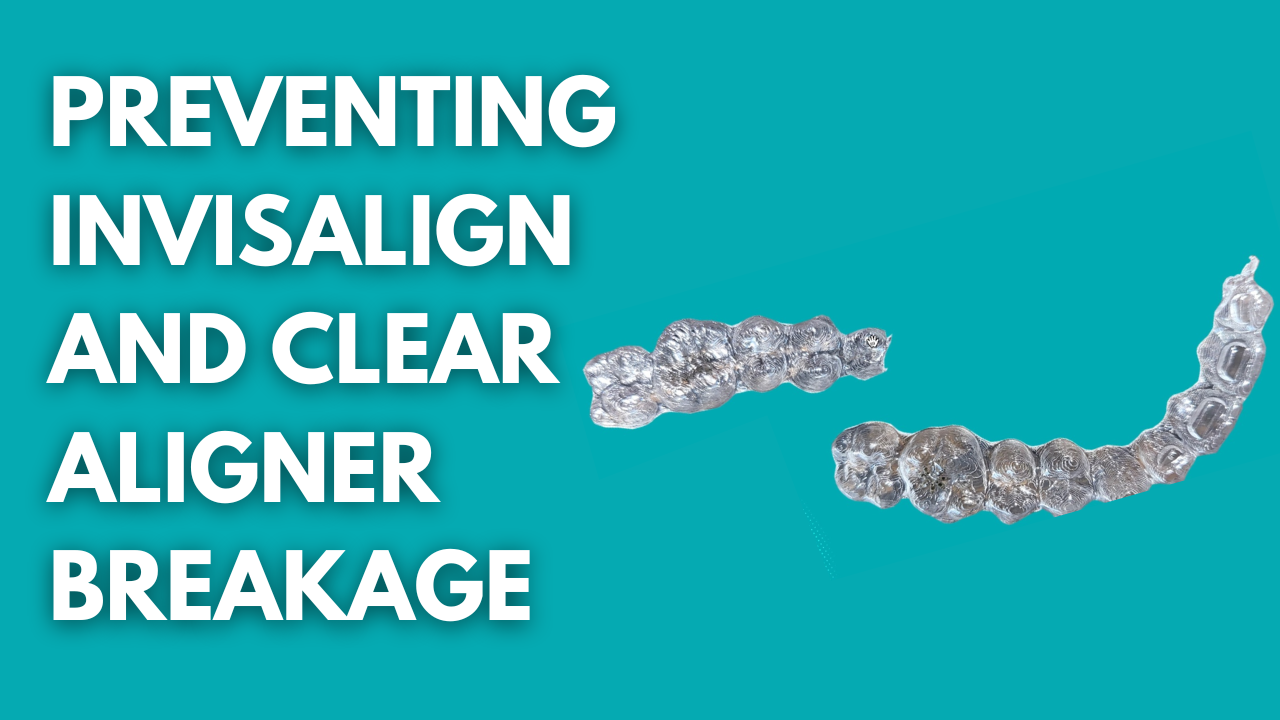
Invisalign and clear aligners have become popular options for orthodontic treatment, especially among adults who want to straighten their teeth discreetly. However, one common problem that patients and dentists encounter is aligner breakage. Aligner breakage can lead to delays in treatment, discomfort, and added expenses. Here are some tips for patients and dentists to prevent aligner breakage and keep treatment on track.
For patients:
1. Handle with care: Invisalign and clear aligners are made from a durable material, but they are not indestructible. Be gentle when removing and inserting aligners. Avoid biting down on the aligners or using excessive force when snapping them into place.
2. Clean properly: Proper hygiene is crucial to keep aligners in good condition. Clean aligners daily with a soft-bristled brush and mild soap or Invisalign cleaning crystals. Avoid using hot water or abrasive cleaners that can damage the aligners.
3. Avoid eating or drinking with aligners: Food particles and drinks can stain aligners and weaken their structure. Always remove aligners before eating or drinking anything other than water. Make sure to clean your teeth thoroughly before reinserting aligners.
4. Store properly: When not used, store aligners in a clean, dry case. Avoid leaving them out in the open, where they can become damaged or contaminated.
For dentists:
1. Evaluate patients carefully: Before prescribing aligners, dentists should evaluate patients carefully to ensure they are good candidates for this treatment. Patients with severe malocclusions or other dental problems may not be suitable for aligner treatment.
2. Monitor patients closely: During treatment, dentists should monitor patients closely to detect any signs of aligner breakage. Regular appointments are essential to check the fit and condition of aligners and make adjustments as needed.
3. Educate patients: Proper aligner care is crucial to prevent breakage. Dentists should provide detailed instructions on handling, cleaning, and storing aligners. They should also emphasize the importance of wearing aligners as directed and avoiding eating or drinking with them.
4. Provide backup aligners: In case of breakage, dentists should provide backup aligners to prevent delays in treatment. They should also be prepared to adjust the treatment plan to ensure that progress is not hindered.
Wrapping Up
The cause of aligner breakage could be due to a patient’s mistake or a doctor’s mistake. The dentist should encourage the patients to bring their old aligners and instruct them to save their last five aligners and bring them to each appointment. Use an Invisalign virtual workflow like the Invisalign Practice app or independent companies such as In-Hand Dental. The virtual workflow requires checking in every aligner through the app, and it can easily complete a full Invisalign case in three to four appointments. Give your patients a nice storage container for their aligners and label them to make it a cool experience.
How to Approach Space Distribution Cases for Peg Laterals and Bolton Discrepancy

How to Approach Space Distribution Cases for Peg Laterals and Bolton Discrepancy
When it comes to correcting space distribution between the teeth, there’s a lot you may need to keep in mind. Nevertheless, in cases of Bolton Discrepancy, things aren’t always that easy to define. And as such, being aware of this is highly important to inform your decision overall.
What is the Bolton Discrepancy?
First, let’s briefly summarize what the Bolton Discrepancy is. The Bolton Discrepancy occurs when there is an overall ratio of 91.3% + in relation to the mandibular teeth. This indicates that the mandibular teeth are outside the normal ratio range, indicating tooth size discrepancies. This is often a genetic condition and may run in families.
Creating a Treatment Plan for Space Distribution Cases with Invisalign
If you need to create space for your patient, it’s important to talk things through clearly at every stage with your patient. This helps reduce the chance of them changing their mind and wasting your time as a professional dentist.
Invisalign works seamlessly alongside other services, such as a virtual wax up. This helps provide seamless and reliable results every time.
But remember, the individual’s job is to determine the most appropriate type of space distribution overall. As such, this is important to recognize as part of any decision to mitigate the risks of starting a contract before it’s fully signed.
Phase 1 Midlines

In your patients in Phase 1 treatment–or ages six through nine–fixing midlines depends on a couple of different circumstances. As always, you should view each case as an individual. Each patient has a different skeleton, different teeth, and different case details.
In this article, we’ll discuss what factors dictate whether or not it is possible to fix midlines in Phase 1 and when to know that you should not attempt it.
Is It Possible to Correct Dental and Skeletal Midlines in Phase 1 Treatment?
The etiology of the midline shift deviation, which midline is off, and why the midline shift has occurred are all major factors in determining when the best time to correct a midline is. For example, if you have a case where the upper midline is off due to the early loss of a baby tooth, the pulling of a tooth early, etc., you could likely fix the midline in Phase 1.
However, if the upper midline shifted due to a skeletal midline deviation, Phase 1 would not be the time to try to correct the midline. It’s possible that this issue could be improved in Phase 2, but these midlines might not ever get properly fixed. So, it’s important to remember that some issues persist due to the skeleton formation.
For lower midline shifts, you should check to see if there is a unilateral or bilateral crossbite, deviations, asymmetries in the face, or a CRCO shift. There could be interferences, such as a baby tooth or a tall filling. Getting rid of the interference could fix the issue.
All in all, knowing the etiology of the midline issue is the key to knowing what can be fixed in Phase 1 versus what is better left for Phase 2. The goal of Phase 1, after all, is to fix the bite, ensure there is enough room for future teeth to come in, and to make sure there is a perfect vertical.
Phase 1 Wire Sequence

Phase 1 Wire Sequence: Why I Do Sectional Wires Sectional Wires and Cynch
As an orthodontist, I have had the opportunity to work with various wire sequences over the years. However, one of my go-to options for Phase 1 treatment is the sectional wire sequence with the addition of Cynch.
The sectional wire sequence
This approach uses wires of different sizes and shapes to target specific mouth areas. Using wires customized to each arch section, you can apply precise forces that facilitate tooth movement and alignment. This approach is useful during Phase 1 treatment, where you are trying to establish a solid foundation for permanent dentition.
One of the advantages of the sectional wire sequence is that it allows you to make adjustments as needed. If a particular tooth is not responding to treatment as expected, you can switch out the wire in that section to a different size or shape. This level of customization is not possible with a traditional wire sequence, where the same wire is used throughout the entire treatment.
Cynch
This small device can be added to the wire to help prevent it from slipping out of the bracket slot. Cynch creates a slight indentation in the wire, which helps anchor it in place. This is useful in cases where the patient has a deep bite or other issues that make it difficult to keep the wire in place. Using Cynch, you can ensure that the wire stays where it needs to be, which can help to speed up treatment and reduce the need for frequent adjustments.
Another advantage of Cynch is that it can help to reduce friction between the wire and bracket. When the wire moves through the bracket slot, there is some resistance, which can slow down treatment progress.
Wrapping Up
When you start Phase 1 orthodontic treatment, it’s important to use sectional wires and cinching initially on light wires. This is because it helps to make the arches the right size to create space, which is crucial for avoiding the need to pull out permanent teeth or cause impactions. By using sectional wires and cinching, you can ensure that the teeth move in the right direction and avoid unnecessary complications.
Remember that the ultimate goal of Phase 1 treatment is to create a healthy foundation for permanent teeth to grow into. The right techniques and tools can set the stage for a successful orthodontic treatment. If you need help with how to get started, there are plenty of resources available online, including my YouTube channel and website, which offer courses on Phase 1 treatment.
Do 3rd Molars or Wisdom Teeth need to come out after Braces or Invisalign?

Do 3rd Molars or Wisdom Teeth need to come out after Braces or Invisalign?
Many people wonder whether their third molars, commonly known as wisdom teeth, need to be removed after undergoing orthodontic treatment such as braces or Invisalign. This is because there is a belief that keeping these teeth could potentially cause relapse or undo the results achieved through the orthodontic treatment.
The decision to remove third molars or wisdom teeth after orthodontic treatment with braces or Invisalign depends on the individual case. In some cases, wisdom teeth can cause crowding, shifting, or misalignment of the teeth after braces or Invisalign treatment. In such cases, it may be recommended to remove the wisdom teeth to prevent any relapse in the alignment of the teeth.
However, wisdom teeth may not cause any issues in some cases, and there may be no need to remove them after orthodontic treatment. Your orthodontist will evaluate your specific case and determine whether or not it is necessary to remove the wisdom teeth.
It’s important to note that the decision to remove wisdom teeth should be made in consultation with your orthodontist and oral surgeon. They can evaluate your case and provide personalized recommendations to help you maintain a healthy and properly aligned smile.
Wrapping Up
It is advisable to extract third molars (wisdom teeth), even if they do not result in an orthodontic relapse, as long as the patient wears their retainer. However, certain cases require an exception, such as impacted teeth that cause damage or disease, non-functional teeth, or teeth without an opposing tooth. Infections in third molars can cause unbearable pain and even life-threatening situations. To avoid more complex procedures in the future, it is suggested to remove these teeth before the age of 25. Although the chance of relapse caused by third molars is low, it is still preferable to remove them to avoid being held liable by patients who experience relapse.
Setting Up Your Invisalign Personalized Plan for ClinCheck
Invisalign has released a new personal plan for dentists and orthodontists to help personalize the experience of setting up and entering cases. The launch is currently available, and you should receive a prompt to sign up. If you haven’t yet received a prompt, we recommend that you reach out to your territory manager or call in order to receive the prompt to sign up and get started.
The process is slightly complicated, but we’ve already explored the new plan, so you don’t have to do it alone! Let’s get right into it.

Set-Up Walkthrough:
Intro
- First, the plan will ask if you are a GP or an orthodontist. We aren’t sure if the setup process is different for orthos, but we chose to set it up as a GP for the purposes of this tutorial. Next, you will enter your email address and Clin ID.
- Invisalign will then ask you if more than one doctor uses your account for Invisalign cases. This could include associates, etc. For our purposes, we selected one doctor. If you have more than one doctor using the account, you may want to reach out to your territory manager to find out what the difference is.
- The next step is to verify your instructions and special instructions on your Invisalign doctor site. You must go into your regular portal and check on ‘Clinical Preferences.’ If you don’t have anything to change, select ‘No.’
Personalization
- Next, there are eight sections to fill out in order to optimize your case submissions. When you fill out these sections, think about what you would typically do for the majority of your cases.
- The first question is about single arch treatment. We are anti-single arch treatment apart from some special situations. Our answer was, “I want a diagnostic arch on the opposing arch.”
- The next question is, “Do you want to correct midline discrepancies in your patients?”. We don’t always want to do midline corrections on the first ClinCheck, but sometimes we do, so this answer is “Yes.”
- Next, “Do you want to improve your midline using IPR?” We answered no to this question, as we would rather use sequential distalization or just alignment in most cases.
Deep Bites
- Deep bites are the next section, and they break it into Adults and Teens. For all of these questions, we stated that we want to see options for personalization.
- Next, they ask, “What do you classify as a deep bite in an adult in millimeters?” to this, we answered 3.5. And for the final overbite in millimeters, we answered 1 to 2.5 millimeters. These have a lot of variety based on the structure of the mouth, skeleton, and face.
- The next question is, “Do you want to do a combination of absolute intrusion and relative extrusion?” In most deep bite cases, you will do a combination, but these cases vary as well.
- For “Do you want to use bite ramps?” We answered ‘Yes’ and added them to all deep bite cases. They also ask if you want bite ramps on centrals, laterals, or canines, which depends on the case, so we marked ‘All.’
- Next, for attachment placement, we answered, ‘Use align defaults for attachments.’
- The next section allows you to give additional instructions for deep bite correction. We added, “If there’s overjet, start with your attachments on upper threes. If no overjet, two to two. If overjet, move the attachments from upper threes to two to two as deep bite improves. Remove the turbos three aligners before the end.” Finally, for deep bites, they will ask the same questions for teens, and we kept our answers the same.
Open Bites
- The next section is for open bites. As most open bites are caused by habits or skeletal issues, we’re going to answer this question as if the habit or other issue has been resolved. These cases are extremely case specific, so because you won’t know until you have your patient, we answered we will use a combination of both for everything.
- For the following questions, “What do you classify as an anterior open bite in millimeters?” we answered 0, and for “How do you want to correct it?” we answered with an overcorrection of 1.5.
- Next, “Do you want to keep the attachments the same?” we also answered yes. They ask next in the additional section to summarize, and we answered, “It’s going to depend on how gummy the smile is, what the ceph numbers are, habits. We will treat the teens the same way.”
Posterior Crossbite Correction
- The next section is posterior crossbite correction for adults. In adults, we won’t correct the crossbite on the molars unless it’s a dental crossbite and not a skeletal crossbite but do fix it on the premolars. In teens, we will correct it. We answered no defaults and fix crossbites in teens.
- They then ask, “How much expansion in millimeters per quadrant do you want to perform on adult patients?” We prefer to keep this minimal, and it depends on their perio. We arbitrarily picked “Two.”
- Then, “Do you want IPR in your initial ClinCheck setup?” We answered, “Sure, for adults.”
Crowding
- The next section is crowding for adults. They will ask, “What is the max amount of crowding that you want on anterior teeth and posterior teeth?” We answered 0.5.
- Next, they ask if you can round trip, and we answered no. You can also customize your IPR staging–when you want your appointments, etc. These are going to be personalized answers based on your processes.
- For kids and crowding, we answered less IPR, more expansion, and no limit for expansion. And we also indicated no IPR. We also answered no round-tripping.
Class 2 Cases
- The next section is Class 2 cases, for adults, these cases are highly variable. We answered, “Correct adults through regular sequential distalization,” but many times, we don’t correct this way. They will ask, “What is the most sequential distalization you want to do?” We’ve done 7 or 8 millimeters, depending on the X-ray, so we answered with that. Next, “Do you want buttons or slots?” We always want buttons for elastics.
- They move on to teens next for Class 2. We don’t really prefer to see sequential distalization for teens, so we answered that we would do elastics for teens. Next, they ask if you want to visualize the bite correction at the beginning, middle, or end of treatment. We answered the end. Again, they ask buttons or slots, and we answered buttons.
Class 3 Cases
- The next section is Class 3 for adults. They first ask you if you take these cases, so answer accordingly. We do, and we would prefer sequential distalization if possible.
- Next, they ask “What’s the most distalization that you want in adults?” we answered 3 millimeters. For slots or buttons, we answered buttons.
- Class 3 for teens is next, we prefer a protraction face mask and expander, but they don’t give you that option. We selected sequential distalization again, and we answered 1.5 millimeters for the most distalization. We also selected buttons.
Premolar Extraction Cases
- The next section is premolar extraction cases, and we selected to use their defaults. Our answers were the same for adults and teens.
Lower Incisor Extraction Cases
- For this next section, we selected no round-tripping and use Align defaults for these cases. Our answers were the same for adults and teens.
What’s Next?
The next step is that we need to schedule a meeting with someone on their team, but as for the setup process, you’re all done! The process is a bit complicated, but this personalization should help speed things up with your future cases.