
StraightSmile Solutions®
What is “Airway Face” and how does it Affect your Invisalign, Phase 1 or Braces Tx Plan
 What is “Airway Face” and how does it Affect your Invisalign, Phase 1 or Braces Tx Plan
Introduction
Dr. Amanda from Straight Smile Solutions, here to discuss a critical topic in orthodontics and overall health: Airway Face. Recognizing and addressing this issue can significantly impact a person’s quality of life, especially if identified early. Let’s dive into what an Airway Face is, how to spot it, and what you can do about it.
What Is an Airway Face?
● Definition: A facial structure that indicates suboptimal airway development.
● Common traits of an airway face:
○ Mouth breathing.
○ Relaxed lips with poor posture.
○ Recessed chin and longer facial profile.
○ Possible nasal obstruction or sleep-related noises.
Why Does Airway Face Develop?
● Potential causes:
○ Genetic factors influencing growth.
○ Environmental factors like diet (soft or processed foods).
○ Nasal obstructions or tethered oral tissues.
○ Behavioral habits such as mouth breathing.
Impact of Airway Face
1. Physical Consequences:
○ Altered facial growth patterns (downward and backward growth).
○ Potential jaw misalignment and recessed chin.
○ Strain in oral and facial muscles.
2. Health Implications:
○ Sleep disturbances or Obstructive Sleep Apnea (OSA).
○ Poor nasal airflow leading to chronic mouth breathing.
○ Possible bedwetting and other developmental delays.
3. Behavioral and Cognitive Effects:
○ Link to ADHD-like symptoms and behavioral issues.
○ Possible learning difficulties and speech impairments.
○ Association with low energy and tired appearance.
Diagnosis and Screening
● Importance of early detection:
○ Screening by dentists, parents, teachers, and pediatricians.
○ Recognizing signs in photos or during daily interactions.
● Tools and methods:
○ Comprehensive health questionnaires.
○ CBCT scans (cone-beam computed tomography) for airway analysis.
○ Referral to specialists: ENT, orthodontists, or myofunctional therapists.
Treatment Options
1. For Children:
○ Early intervention: Corrective orthodontics, myofunctional therapy.
○ Addressing nasal obstructions with ENT specialists.
○ Promoting proper tongue posture and oral habits.
2. For Adults:
○ Limited structural changes, but improvement possible:
■ Orthodontic adjustments.
■ Sleep apnea treatments.
■ Possible surgeries (jaw or ENT-related).
Challenges in Addressing Airway Face
● Resistance from parents or patients:
○ Misunderstanding the urgency of treatment.
○ Perceiving airway screening as unnecessary or intrusive.
● Educating and empowering parents:
○ Presenting evidence-based correlations, not causations.
○ Sharing success stories and professional evaluations.
The Role of Professionals in Airway Screening
● Dentists’ responsibility in orthodontic treatment planning:
○ Prioritizing airway health over aesthetics or alignment goals.
○ Avoiding unpredictable outcomes by addressing airway issues first.
● Collaboration with specialists:
○ ENT consultations, myofunctional evaluations, and comprehensive plans.
○ Utilizing imaging technology and professional insights.
Conclusion
● Key takeaways:
1. Screening for airway issues is not limited to orthodontics; it encompasses ensuring holistic health and well-being.
2. Practitioners should prioritize airway evaluations as part of treatment plans.
3. While addressing airway issues may initially seem challenging, it can lead to:
❖ Improved patient outcomes.
❖ Potential growth for your practice.
4. For parents, teachers, and dentists:
● Early action is crucial in making a difference.
● Consult specialists and order CBCT scans when necessary.
● Always consider the broader implications of airway health in evaluations.
● Call to action:
○ Parents, dentists, and educators should prioritize screening and referrals.
○ Emphasize the long-term benefits for both patients and practices.
● Closing statement from Dr. Amanda:
○ Screening for airway face is not just about fixing the present—it’s about ensuring a healthier future.
To learn more about airway-focused orthodontics and practice tips, visit StraightSmile Solutions.
Anterior/ Attachment-less Aligners / Social Six / STO Treatment
 Anterior/ Attachment-less Aligners / Social Six / STO Treatment
I. Introduction
● A. Welcome and Purpose of StraightSmile Solutions
○ Introduction to Dr. Amanda and StraightSmile Solutions, offering support and training for general dentists.
○ Emphasis on ethically guided orthodontic practices for general practitioners, ensuring patient understanding of treatment options.
● B. Purpose of the Article
○ Clarify the distinctions between aesthetically driven “Social Six” orthodontic treatments and comprehensive orthodontic approaches.
○ It is important to understand both approaches to avoid risks in compromised treatment plans.
II. Aesthetic-Driven Treatment (Social Six) vs. Comprehensive Orthodontics
● A. Definition of Social Six Anterior-Only Treatment
○ Focuses only on aligning the visible front teeth.
○ Often chosen for quick cosmetic results but may leave underlying structural issues untreated.
● B. Comprehensive Orthodontic Treatment
○ Addresses full occlusion and alignment concerns for optimal functional and aesthetic outcomes.
○ Often preferred when patients require extensive bite correction or treatment of complex dental issues.
III. Importance of Patient Communication: Risks, Benefits, and Alternatives
● A. Ensuring Informed Consent
○ Why a comprehensive explanation of all treatment alternatives is crucial for patient trust and compliance.
○ Legal and ethical obligations for practitioners to inform patients of risks, benefits, and all viable treatment options.
● B. Potential Legal Risks for General Dentists
○ The consequences of failing to provide comprehensive options and how they can affect the practice’s reputation.
○ Explanation of patient dissatisfaction that can arise if certain dental issues remain unresolved.
IV. Case Study: When Comprehensive Treatment Isn’t Ideal
● A. Recognizing Situations Where Comprehensive Treatment is Not Feasible
○ Examples include orthognathic surgery, which is costly, time-intensive, and requires specialized skills.
● B. Dr. Amanda’s Experience
○ Example of why some practitioners choose not to offer specific complex procedures despite capability.
○ Advice referring patients when comprehensive treatment isn’t feasible within a general practice.
V. What General Dentists Should Know About Compromised Treatments
● A. Understanding Effects on Patient Oral Health
○ Realistic expectations: addressing which issues might improve, remain unchanged, or worsen with minimal treatment.
○ Explanation of conditions like overjet, crossbite, and posterior crossbite and when they can be safely left untreated.
● B. Critical Considerations Before Offering Compromised Treatment
○ Importance of in-depth training on all possible outcomes, including stability of aesthetic results vs. long-term functional impacts.
○ When to consult with an orthodontist and recommended conditions to avoid in general practice, such as anterior open bites or complex Class III malocclusions.
VI. Procedures to Avoid in Compromised Orthodontics
● A. Situations to Avoid
○ Warnings against complex Class III cases and anterior open bites due to high risk of relapse and instability.
○ Details on why posterior open bites and overcrowded posterior spaces pose risks.
● B. Conditions Acceptable in Compromised Cases
○ Conditions like stable overjet and posterior crossbite that may not require correction if functional and non-progressive.
○ Parameters for patient safety and satisfaction in minimally compromised treatments.
VII. Recommendations for General Dentists Performing Orthodontic Treatments
● A. Training and Education
○ It is important to continue education in orthodontics even for general dentists who focus on anterior-only cases.
○ Value of developing confidence in understanding and explaining comprehensive treatments, even when not provided.
● B. Transparency in Patient Referrals
○ Emphasis on honest communication with patients about the scope of care and when referral is appropriate.
○ Guidance for patients on where to seek comprehensive orthodontic care, such as dental schools or specialized clinics.
VIII. Conclusion
● A. Key Takeaways for General Dentists
○ Summary of the importance of fully understanding and transparently communicating all orthodontic treatment options.
○ Ethical and practical considerations for general dentists incorporating orthodontics into their practice.
● B. Final Thoughts and Encouragement for Responsible Practice
○ Dr. Amanda’s reminder that thorough education in orthodontics and clear communication build patient trust and mitigate risks in dental practice.
To the “Corner-Cutting” Invisalign Treatment Planning Doctors-DO NOT SIGN UP TO WORK WITH ME!!
To the “Corner-Cutting” Invisalign Treatment Planning Doctors-DO NOT SIGN UP TO WORK WITH ME!!
I. Introduction
● Personal Reflection
○ Dr. Amanda, the founder of StraightSmile Solutions, rarely discusses client issues publicly.
○ Anonymity is always maintained to protect client privacy.
○ Recently, an experience led to a bummed-out feeling, prompting a need for transparency.
● Purpose of the Message
○ Advisory for potential clients considering concierge or VIP services.
○ Aim: To clarify expectations and ensure alignment on case management and orthodontic treatment planning.
II. Services and Expectations
● StraightSmile Solutions Services
○ Offers detailed orthodontic treatment planning.
○ Known for thorough and systematic case management.
● Client Expectations
○ Assumption that followers, especially those from the Invisalign playlist, understand Dr. Amanda’s methods.
○ Expectation: Clients should be prepared for complex case management, particularly with yellow and red cases.
III. Case Complexity and Management
● Introduction to Case Selection
○ Cases are categorized as green, yellow, or red.
○ Green cases: Ideal for starting.
○ Yellow cases: Require intermediate knowledge and collaboration with an orthodontist.
○ Red cases: More complex, often interdisciplinary involving implants, bridges, and periodontal issues.
● Systematic Approach Required
○ No shortcuts in treatment planning.
○ Important to understand that orthodontic treatment must align with high standards to avoid future complications.
○ Dr. Amanda emphasizes a methodical approach as practiced in orthodontic residency.
IV. Consequences of Cutting Corners
● Risks Involved in Orthodontic Cases
○ Ignoring risks can lead to audits, dental board reviews, or insurance issues.
○ Client dentists are often held to higher standards, especially if they are primary care providers.
● Importance of Explaining Perfect Treatment
○ Dentists must communicate the ideal treatment to patients, even if it’s not feasible for them to perform.
○ Compromised cases can pose serious ethical and legal risks if not handled properly.
V. Boundaries of Practice
● Setting Clear Boundaries
○ Dr. Amanda does not assist with cases that require jaw surgery or TADs.
○ Encourages referrals for cases beyond primary care dentists’ expertise.
● Ethical Considerations
○ Emphasis on maintaining ethical standards and avoiding involvement in areas that could lead to malpractice.
○ Referrals to orthodontists are essential when certain treatments fall outside the scope of Dr. Amanda’s expertise.
VI. Dealing with Complex Cases
● Managing Cases with Implants and Bridges
○ Aligners may affect implants and bridges.
○ Risks include snapping, damaging the bridge, or implant loss.
○ Proper case selection and clear communication with the patient are vital.
● Documenting and Managing Risks
○ Risks must be disclosed in writing, and patients must understand the potential outcomes.
VII. Strategic Focus on Treating Children
● Children’s Cases are More Predictable
○ Dr. Amanda emphasizes investing in education on treating kids and teens.
○ Children’s cases generally involve fewer complications compared to adults with interdisciplinary issues.
● Growth and Development in Pediatric Orthodontics
○ Early treatment in growing children allows for better outcomes.
○ Understanding growth patterns helps predict and adjust treatment as needed.
VIII. Challenges of Working with Adults
● Complexity of Adult Cases
○ Adults often present more challenges due to existing dental work and periodontal issues.
○ Ethical responsibility requires that dentists avoid cutting corners, even if it leads to more difficult treatment planning.
IX. Final Thoughts and Advisory for Clients
● Dr. Amanda’s Ethical Stance
○ If a client is looking for quick, easy treatment plans, StraightSmile Solutions may not be the right fit.
○ Dr. Amanda is dedicated to comprehensive, holistic treatment planning and ensuring patients receive the best care.
● Public Service Announcement
○ Potential clients should be aware of the level of effort and care involved in working with StraightSmile Solutions.
○ The focus remains on long-term success and protecting the client dentist and their patients.
What Every General and Pediatric Dentist should be Screening on every 2-5-Year-Old Patient
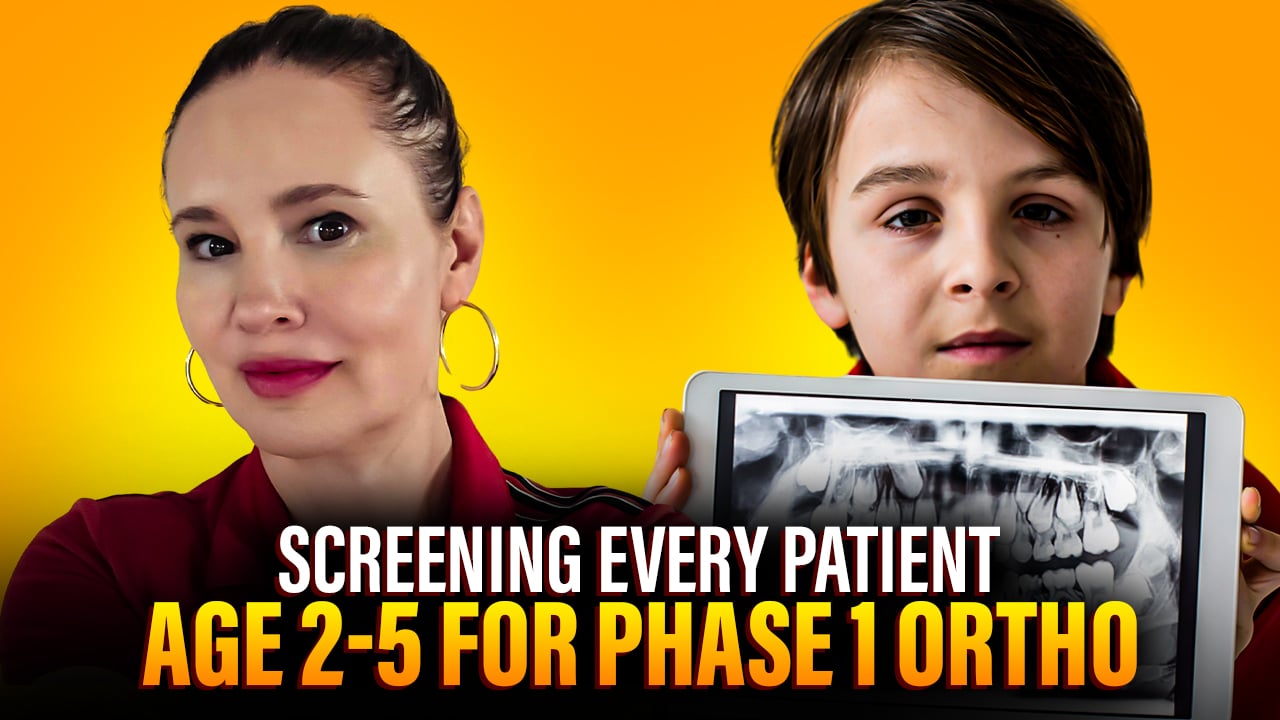 What Every General and Pediatric Dentist should be Screening on every 2-5-Year-Old Patient
I. Introduction to Pediatric Dental Screening
A. Overview of previous discussions
B. Importance of screening children ages 2-5
C. Focus on orthodontics, airway, and pediatric dental health
D. Mention of resources and tools available from StraightSmile Solutions
1. My Phase One Smile Form
2. Sleep Disorder Breathing Screening Form
3. Access to documents for clients and through giveaways
II. Why Pediatric Dental Screening is Essential
A. Early detection of oral development issues
1. Improper growth of the jaw
2. Narrowing of the dental arch
3. Potential airway and breathing issues
B. Common factors affecting oral development in young children
1. Habits like thumb-sucking, pacifier use, and bottle-feeding
2. Soft diet and its effect on jaw growth
3. Nasal congestion and its impact on breathing and jaw development
C. Importance of airway evaluation in young children
1. Sleep-disordered breathing conditions
2. Identifiable signs of airway issues (e.g., steep mandibular plane, open bites)
III. Key Signs of Airway and Orthodontic Issues in Young Children
A. Malocclusion as an indicator of airway problems
1. High-angle mandibular planes
2. Constricted maxilla and vaulted palate
B. Identifying airway issues in 2-year-olds
1. Correlation between malocclusions and airway problems
2. Early intervention to prevent further development issues
C. Addressing potential causes of airway issues
1. Tongue tie (tethered tongue)
2. Impact of tongue function on maxilla and nasal development
3. Connection between restricted airway and improper growth patterns
IV. Importance of Tongue Evaluation and Treatment
A. Personal experience with tongue tie and its effects
1. Discovery of severe tongue tie during OMT evaluation
2. Connection between tongue tie, orthodontics, and symptoms (e.g., jaw pain, sleep)
B. Impact of tongue tie release and potential benefits for adults
1. Anticipated improvements in airway, sleep, and jaw alignment
C. Why addressing tongue ties early in children is crucial
1. Influence on airway development and jaw growth
2. Consequences of untreated tongue ties on overall health
V. The Broader Impact of Airway and Orthodontic Issues
A. Bedwetting and its surprising connection to airway issues
1. Observations in patients after using palatal expanders
2. Personal family experience with bedwetting resolved by orthodontic treatment
B. Importance of early intervention for long-term health
1. Connection between airway, brain development, and overall well-being
2. Emphasizing the life-changing effects of proper screening and treatment
VI. The Role of Dental Practices in Pediatric Screening
A. The dentist’s responsibility to screen children for airway and orthodontic issues
1. Aligning with ADA’s Sleep Disorder Breathing Bill (2017)
2. Standard of care in pediatric dentistry
B. Consequences of neglecting screening
1. Potential future litigation for missed diagnoses
2. Frustration with missed opportunities for early intervention
C. Educating patients and referring when necessary
1. Importance of consumer education
2. Increasing awareness among parents about pediatric orthodontic health
VII. Conclusion
A. Call to action for dental practitioners
1. Importance of starting screening at age two
2. Benefits for both the patient and practice
B. Encouragement to seek support and resources
1. Contact Dr. Amanda for further assistance
How to Pay an Associate for Invisalign
How to Pay an Associate for Invisalign
Introduction
● Brief introduction of Dr. Amanda from StraightSmile Solutions
● Overview of the topic: Paying associate dentists for Invisalign cases
Common Mistakes in Paying Associates
A. Improper Payment Methods
● Many owner doctors and practice owners pay associates incorrectly.
● Focusing on the payment method rather than just the amount is crucial.
● Creative payment solutions can improve practice efficiency and associate satisfaction.
B. Factors to Consider
● Lab fees: Associates should know the lab fees involved in Invisalign cases.
● Quality of treatment plans: Ensuring associates can properly plan treatment.
● Liability and insurance considerations: Understanding the risks and responsibilities involved.
Oversight and Accountability
A. Owner Doctor’s Responsibilities
● Owner doctors should review every treatment plan to ensure it’s appropriately planned.
● Poor treatment planning can lead to irreversible damage to patients.
B. Associate Classification
● Difference between W-2 and 1099 associates: Each classification has distinct responsibilities and financial implications.
● Ensuring associates understand their classification and responsibilities.
Payment Strategies for 1099 Associates
A. Full Lab Fee Payment
● 1099 associates should pay their own lab fees and manage their patients independently.
● This ensures that the patient follows them if they leave, maintaining continuity of care.
B. Benefits for Owner Doctors
● Advantages of higher volume through a single account.
● Eligibility for volume discounts.
● Simplified management with staff logins.
Payment Strategies for W-2 Associates
A. Partial Lab Fee Payment
● Depending on the practice’s policies, W-2 associates might pay up to 50% of lab fees.
● Production-based payment ensures associates are compensated based on the work done.
B. Deferred Payment
● Deferred payment strategy: Pay a portion at the start and the remainder upon treatment completion.
● Ensures associates are motivated to see cases through to a successful conclusion.
Ensuring Treatment Quality and Completion
A. Monitoring and Accountability
● Use a “Congratulations” form for patient and doctor sign-off at treatment completion.
● This ensures both parties agree on the treatment outcome and maintain accountability.
B. Motivating Associates
● Proper incentives encourage associates to plan treatments effectively and maintain patient compliance.
● Long-term benefits of high standards in treatment and patient care.
Legal and Ethical Considerations
A. Adherence to Laws
● Ensuring associates are classified correctly as either W-2 or 1099.
● Misclassification can lead to legal and financial repercussions.
B. Ethical Patient Care
● Prioritizing patient care and treatment continuity.
● Owner doctors must oversee and ensure the quality of associate work.
Long-Term Benefits of Structured Payments
● Encouraging quality treatment planning and patient compliance.
● Avoiding the burden of unfinished cases for owner doctors.
● An example scenario is an associate leaving before finishing cases.
Conclusion
A. Recap of Key Points
● Summary of correct payment methods, oversight, and legal considerations.
B. Final Thoughts
● Associate Motivation: Proper payment methods encourage associates to maintain high-quality treatment and compliance.
● Long-term Success: Invisalign treatments require consistent monitoring and accountability to ensure successful outcomes.
● Owner Responsibility: Proper oversight and payment structures prevent owner doctors from being burdened with poorly managed cases.
Dr. Amanda from StraightSmile Solutions insight aims to help practices optimize their payment strategies for associate dentists, ensuring quality patient care and financial efficiency
Anterior Openbites in Non-Growing Patients
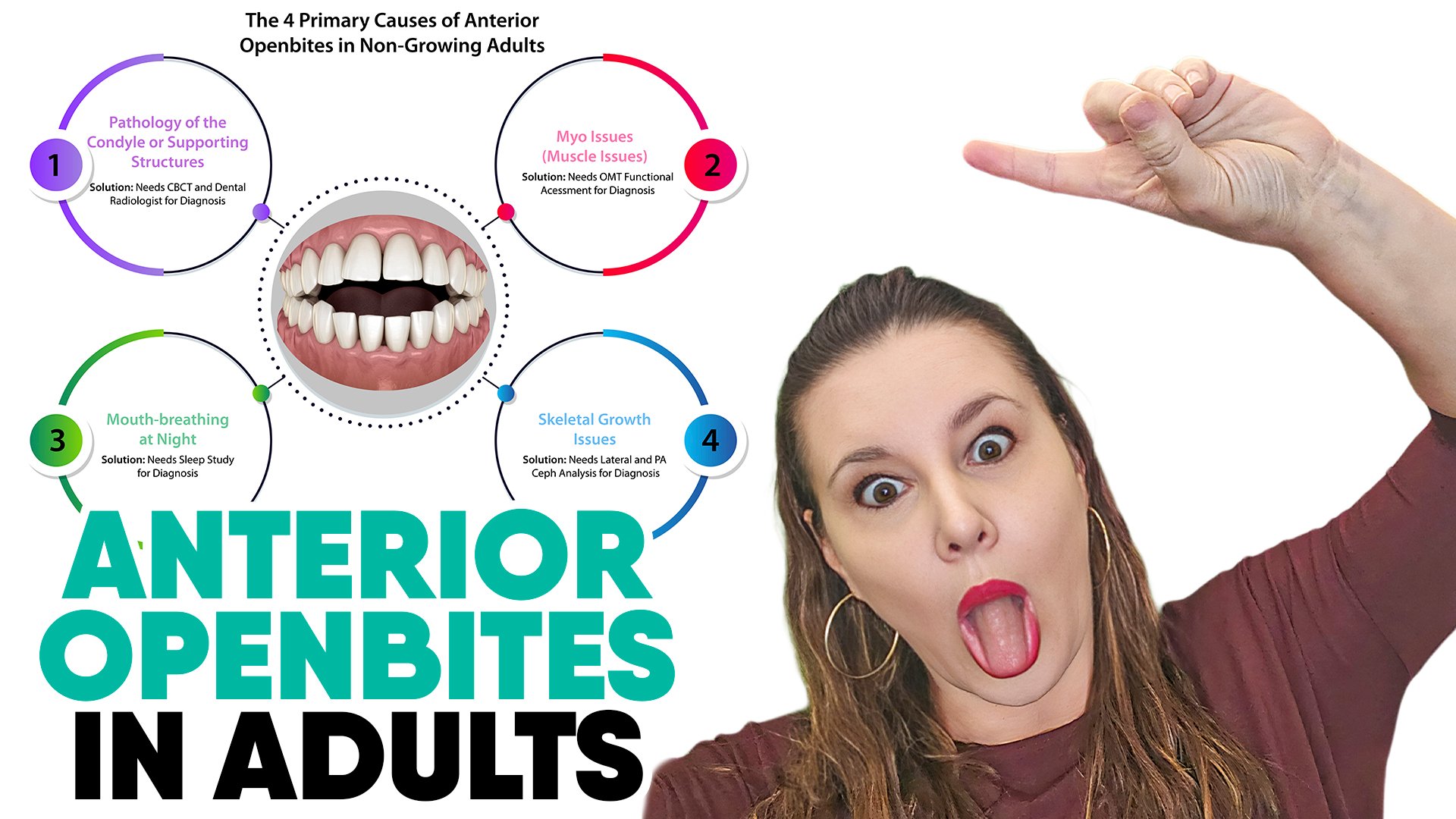
Anterior Openbites in Non-Growing Patients
Dr. Amanda from StraightSmile Solutions provides valuable insights into treating anterior open bite cases in non-growing adults. She emphasizes the importance of identifying the underlying cause of the open bite before attempting treatment.
❖ Dr. Amanda outlines four main factors that can contribute to an anterior open bite and stresses the need for a comprehensive evaluation involving various specialists, such as orthodontists, myofunctional therapists, and ENT professionals. Her approach highlights the interdisciplinary nature of addressing this complex issue effectively. Take the time to do it right for successful, long-lasting results.
Key Considerations for Non-Growing Adults
● Determining whether the patient is still growing or not growing is crucial before treating an anterior open bite case.
● For non-growing adults, identifying the root cause of the open bite is essential before attempting treatment.
● Dr. Amanda categorizes the common causes into four main buckets:
1. Habits (thumb sucking, tongue thrusting, etc.)
2. Myofunctional issues (improper tongue posture, swallowing patterns, etc.)
3. Airway/sleep issues (mouth breathing, sleep apnea, etc.)
4. Skeletal/anatomical issues (jaw discrepancies, pathology, etc.)
Playing Detective: Uncovering the Cause
● Ask detailed questions about the onset, duration, and potential causes of the open bite.
● The patient’s self-reporting may not be accurate, so further investigation is necessary.
● Recommend a comprehensive sleep screening and myofunctional evaluation (in-office or referral).
● Utilize diagnostic tools like CBCT scans, cephalometric analysis, and functional assessments.
Interdisciplinary Collaboration is Key
● Involve a myofunctional therapist (in-house or referral) for habit elimination and muscle retraining.
● Collaborate with an ENT specialist for airway evaluation and treatment if needed.
● Consider cervical chiropractic care for posture and muscle imbalances.
● Orthodontic treatment alone is often ineffective without addressing the underlying causes.
The Importance of Proper Sequencing
● Treat the cause(s) first, or at least concurrently, before attempting orthodontic treatment.
● Myofunctional therapy and habit elimination should precede or occur alongside orthodontics.
● Ensure patient commitment to the full interdisciplinary treatment plan for successful outcomes.
Caution: Informed Consent Isn’t a Fail-Safe
● Having patients sign informed consent forms does not absolve responsibility for relapse.
● Insurance companies and legal proceedings may still penalize relapse, even with signed consent.
● It’s better to decline cases that don’t follow the proper treatment sequence to avoid potential disputes.
Dr. Amanda’s Advice: Do It Right the First Time
● Invest the time and effort to identify and treat the root causes properly.
● Decline cases unwilling to follow the recommended interdisciplinary treatment plan.
● Prioritize long-term stable results over quick orthodontic fixes that are likely to relapse.
● Follow Dr. Amanda’s comprehensive approach for successful anterior open bite treatment in non-growing adults.
Conclusion
❖ Treating anterior open bite cases in non-growing adults requires thoroughly investigating the underlying causes before orthodontic treatment. Ruling out habits, myofunctional issues, sleep disorders, and pathologies are crucial.
❖ Collaborating with specialists like OMTs, ENTs, and periodontists may be necessary for comprehensive treatment. Without addressing the root causes, orthodontic treatment alone is unlikely to achieve stable, long-lasting results.
❖ A multidisciplinary approach is often required to correct anterior open bites successfully and prevent relapse in non-growing patients.
Should You Pull Baby Teeth Before Braces and Invisalign?
Should You Pull Baby Teeth Before Braces and Invisalign?
When it comes to braces and Invisalign in young patients, knowing how to tackle baby teeth is hugely important. Of course, this is something of a controversial topic, and every orthodontic team or provider will have their own preference, and this may change over time. Nonetheless, today, we’ve looked at several key things you should know about whether to pull baby teeth before braces or Invisalign/clear aligner cases as follows.
Should You Pull Baby Teeth Before Braces or Invisalign?
Whether you should pull baby teeth before braces or Invisalign will depend on personal preference. And, from a traditional perspective, it was often common to pull any baby teeth as soon as they came up before doing braces or Invisalign. However, some arch expansion can occur as the baby teeth come through, so taking out these baby teeth can be problematic and traumatic.
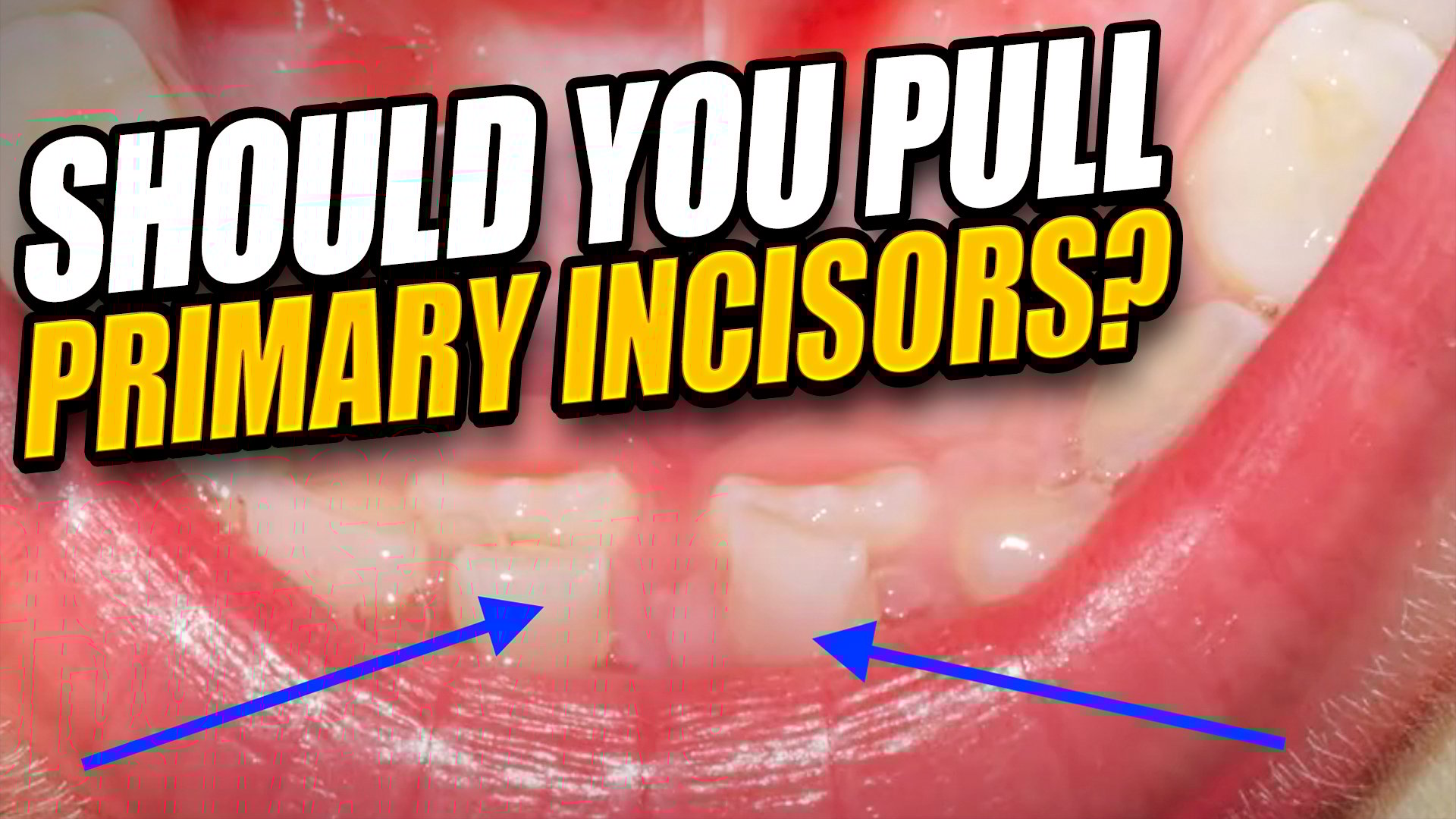
Generally, for baby front teeth, we here at Straight Smile Solutions allow these to come out on their own, potentially by encouraging them to bite into chewy or hard foods such as apples. However, for baby canines, whether they should come out should be based on a panoramic x-ray, looking for signs of impaction; if there is impaction, you may want to remove these baby canines and do arch expansion concurrently
Remember: if you need more space to work with, doing expansion after pulling teeth is essential, as pulling alone will only shift the problem posteriorly down the line. In addition, you should always consider the health of the baby tooth; if there is an infection, abscess, or any topic eruption of the permanent tooth, pulling will likely be necessary.
Synchronous and Asynchronous Ortho Virtual Consults and Aligner or RPE Check-In Appointments

Synchronous and Asynchronous Ortho Virtual Consults and Aligner or RPE Check-In Appointments
I. Introduction
A. Dr. Amanda’s expertise with virtual consults
B. Emphasis on synchronous vs. asynchronous approaches
C. Extensive content on YouTube and other platforms
II. Understanding Virtual Orthodontic Consults
A. Importance of choosing the right approach for your practice
B. Varied options available for implementing virtual consults
C. Tailoring strategies based on the nature of your dental practice
III. Insights from the Invisalign Orthodontics Summit
A. Dr. Amanda’s attendance and key takeaways
B. Advantages of virtual components in dental conferences
C. Emphasis on virtual consult strategies by industry leaders
IV. Exploring Synchronous and Asynchronous Consults
A. Advantages and considerations of asynchronous approach
1. Utilizing HIPAA-compliant communication channels
2. Streamlining the process for both patients and practitioners
3. Flexibility in responding to patient inquiries within 24 hours
B. Incorporating synchronous consults for real-time interaction
1. Coordination required for Zoom-based consultations
2. Capturing patient interest and engagement effectively
3. Combination strategies for optimal results
V. Leveraging Technology for Virtual Consults
A. Utilizing platforms like GPU Ortho Tracking for asynchronous consults
1. Benefits of embedding the widget on practice websites
2. Simplifying patient image submissions and follow-ups
3. Ensuring HIPAA compliance throughout the process
B. Empowering patients with easy-to-use tools for image capture
1. Providing guidance on capturing relevant images
2. Enhancing patient experience through user-friendly interfaces
3. Streamlining administrative tasks for staff members
VI. Maximizing Conversion and Revenue
A. Real-world examples of successful virtual consult implementations
1. Demonstrating significant revenue potential from virtual consults
2. Case studies highlighting successful patient conversions
3. Importance of strategic follow-up and patient engagement
VII. Conclusion and Resources
A. Dr. Amanda’s commitment to supporting dental practitioners
B. Offerings of scripting, verbiage, and resources for consults
C. Encouragement to explore virtual consults for practice growth and patient convenience
Stone Age Orthodontics: How To Tell If Your Provider Offers Progressive Ortho
Stone Age Orthodontics: How To Tell If Your Provider Offers Progressive Ortho
When it comes to orthodontics, making sure you have chosen a provider who offers progressive ortho – or optimized, modern solutions – is highly important. In line with this thought, we’ve outlined some of the key things you should know about modern vs progressive ortho to help you choose which category your orthodontist falls into.
Questions to Ask Your Orthodontist
Before you begin working with a new orthodontist, there are several key things to check. This can help you ensure your chosen orthodontist is progressive, rather than a traditional ortho provider (which may provide less effective solutions).
First, always check the orthodontist is willing to see young patients. Progressive orthodontists will often see a patient at a very young age, even before starting ortho work, to help identify the need for early interventions when they are needed. This can help improve the patient’s orthodontics results accordingly.
In addition, ask about the orthodontist’s goals for the treatment plan. A progressive ortho provider will usually focus on improving the airways and facial aesthetic after treatment; in contrast, traditional ortho may simply focus on matching the bite.
Finally, always ask the orthodontist about the different options available. They should be able to explain clearly the different options, which can allow you to choose the method that will best match your needs and lifestyle.
Keeping these points in mind can help you decide whether your chosen orthodontics provider is practicing progressive, modern ortho. In turn, this should allow you to choose a more appropriate orthodontist for your (or your patients’) cases.
The Downside of 7-Up Orthodontic Referrals

Have you ever wondered about whether you should take on 7-up orthodontics referral cases? Often, it can seem a little difficult to know whether 7-up orthodontic cases will be appropriate for your practice. However, our experts are on hand to help you learn more, and today, we’re looking at whether you should take on 7-up orthodontics referrals.
What are 7-Up Orthodontics Referral Cases?
7-up orthodontics cases are generally those referrals for children aged 7 and over. It’s often common practice for general dentists and the like to use a 7-up policy for orthodontics referrals. However, it’s not always straightforward to take on 7-up cases.
When Ortho Starts with Another Provider for Young Patients
With 7-up cases, it’s important to consider that the patient will be seven years old when ortho starts with the other orthodontist or dentist. However, by the time that all of the paperwork has been completed, ortho may not start with you until the child has gotten to eight or nine years old, potentially. Unfortunately, depending on the problem being faced, this could be too late to be just starting treatment. After all, by the age of six, 60% of a patient’s facial growth has already finished, meaning that you’ll have a much harder time tackling certain cases. This can leave you in a difficult orthodontics position where you are only able to prevent an issue from getting worse (as opposed to actively fixing it).
Some important considerations to keep in mind are that, as a child grows up, their skeletal age will also increase (and, notably, there’s nothing to prevent even an eight year old of having a skeletal age far older than their chronological age). This can further limit the amount of change you can achieve. Additionally, it’s also worth noting that children often get busier as they get older, making it harder for them to come in for appointments.