
StraightSmile Solutions®
Dr. Amanda SPILLS the Tea on Bonded Retainers- The good, bad, and ugly!
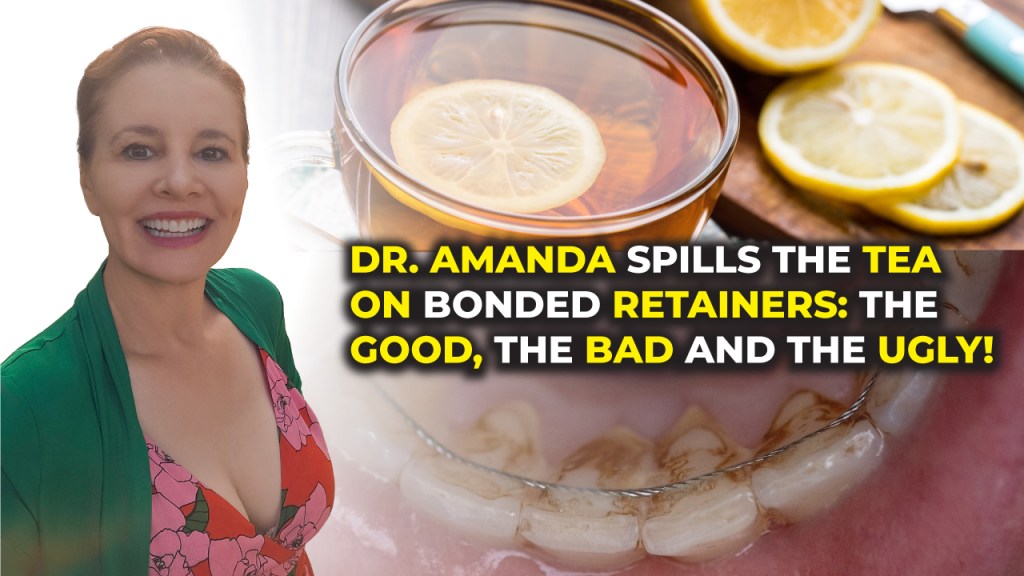 Dr. Amanda SPILLS the Tea on Bonded Retainers- The good, bad, and ugly!
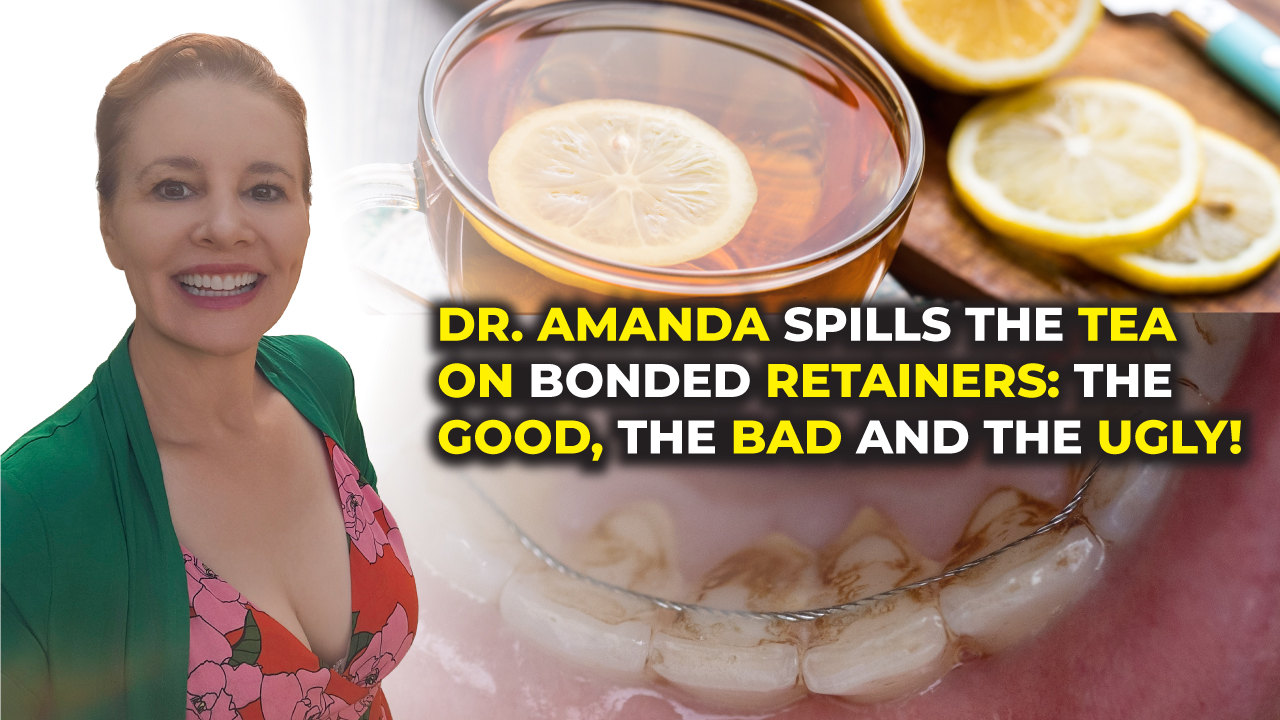
I. Introduction
- Introduction by Dr. Amanda from StraightSmile Solutions
B. Purpose of the discussion – an opinionated take on bonded retainers
C. Previous content covered when and why to use bonded retainers
D. The polarizing nature of bonded retainers among doctors
II. What Sparked This Discussion?
- Inspiration from an orthodontic podcast
B. Reference to the Orthodontic Pearls podcast episode
C. The evolving landscape of orthodontics and competition from GPs and direct-to-consumer options
D. The importance of adapting to industry changes
III. Controversial Take on Bonded Retainers
- Introduction to different perspectives on bonded retainers
B. Reference to a YouTube video discussing chiropractic dysfunction caused by bonded retainers
C. Arguments against bonded retainers – potential health concerns
D. The existence of adults who swear by their bonded retainers
E. The need for individualized patient assessment before recommending them
IV. The Chiropractic Perspective on Bonded Retainers
- Claims that bonded retainers cause systemic issues
B. The importance of critically evaluating such claims
C. Dr. Amanda’s attempt to engage with anti-bonded retainer advocates
D. The dismissive response and the $5,000 course requirement
E. The need for open discussions and evidence-based orthodontic decisions
V. The Envelope of Motion & Occlusion Concerns
- A new perspective from the podcast – occlusion and envelope of function
B. The potential harm of improperly placed bonded retainers
C. Issues with anterior occlusion and its effects on jaw pain, mobility, and TMD
D. The connection between improper retainers and body alignment issues
E. Why proper fitting, monitoring, and bite evaluation are crucial
VI. The Right Way to Use Bonded Retainers
- Key considerations when using bonded retainers:
1. Proper placement
2. Ongoing monitoring
3. Regular cleaning and maintenance
4. Correcting bite alignment before placing them
B. The benefits of bonded retainers when done correctly
C. The risk of complications if any of these factors are ignored
VII. Financial & Practical Considerations
- The financial implications of offering bonded retainers
B. Why lifetime free monitoring is not sustainable for orthodontic practices
C. Importance of setting up a clear warranty and pricing policy
D. Transparency with patients regarding maintenance costs
E. The need for a written contract outlining:
1. Fees for repairs and replacements
2. Required maintenance visits and costs
3. Expected longevity and potential issues
VIII. Alternative Approaches to Bonded Retainers
- When bonded retainers are essential
B. Using them for bite settling but not as a long-term solution
C. Cases where a perio split approach makes more sense
D. The role of periodontists in placing and maintaining bonded retainers
E. The necessity of educating patients about long-term care
IX. Setting a Policy for a New Orthodontic Practice
- Deciding on a clear stance regarding bonded retainers
B. Factors to consider in practice policies
1. Whether to offer them as a standard option
2. Cost implications for the practice
3. Responsibility for long-term maintenance
C. The importance of informed consent and patient expectations
X. Final Thoughts & Takeaways
- The key to successful bonded retainer use – proper placement and maintenance
B. The necessity of setting clear financial and care policies
C. The importance of patient education on bonded retainers
D. Encouragement to check out other StraightSmile Solutions content for best practices
E. Closing remarks and invitation for further discussion
Can this Gummy Smile Be Fixed with Braces or Aligners?
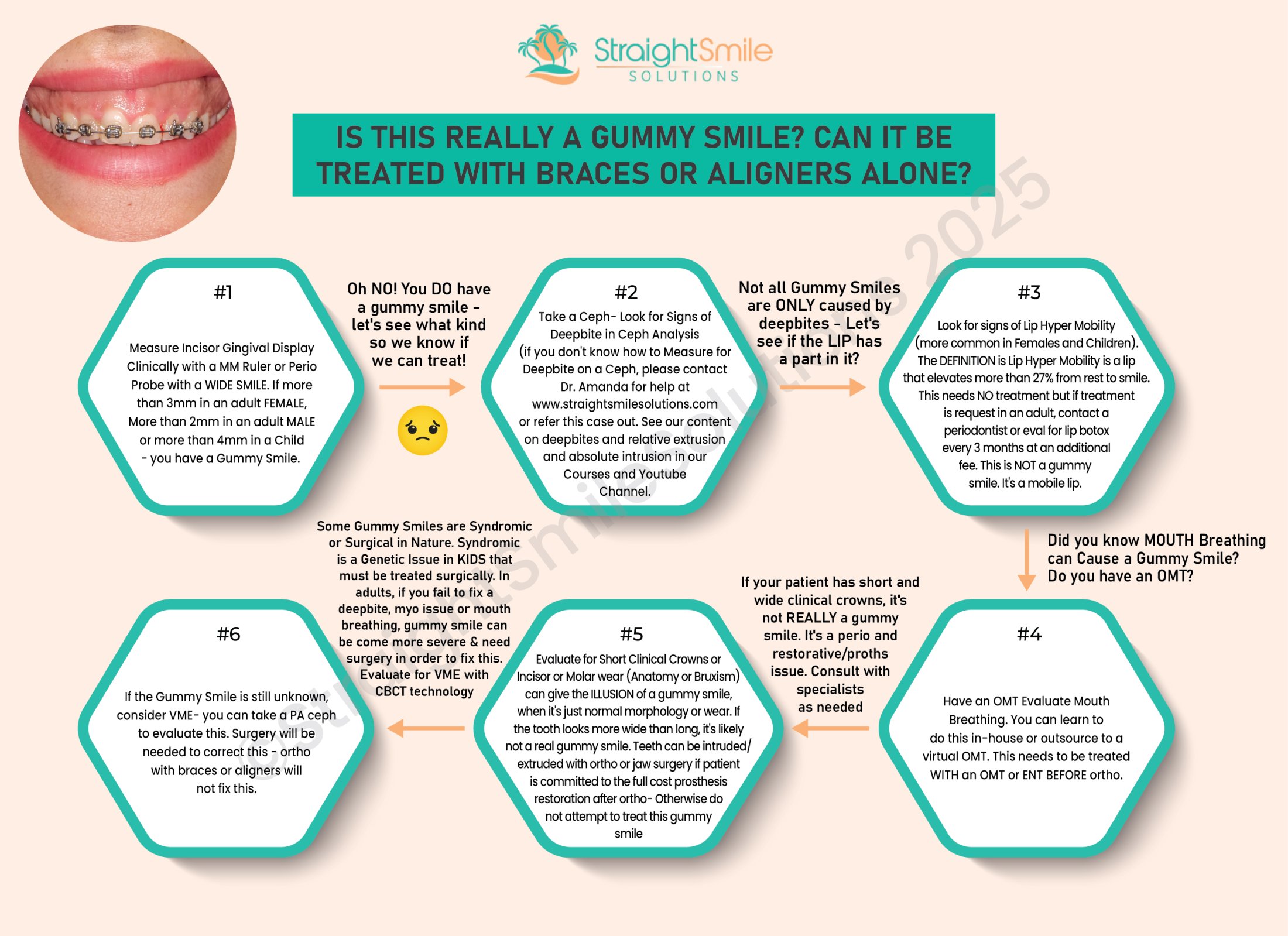
- Introduction to Gummy Smiles
- Definition: A gummy smile refers to a smile that reveals excessive gum tissue.
- Common misconception: Many people think a gummy smile is abnormal, especially in children and teens.
- Amanda’s perspective: Not all gummy smiles require treatment; understanding the underlying cause is crucial before opting for any corrective measures.
- Dr. Amanda’s 6-Step Approach to Evaluating Gummy Smiles
- Step 1: Measure Gingival Display
- Clinically measure with a millimeter ruler, intraoral probe, or pero probe.
- A WID smile is important to note (see Dr. Amanda’s YouTube channel for more on WID smiles).
- Typical gum display:
- Females: 2–3 mm of gum show.
- Males: 2 mm or less.
- Kids: 3–4 mm of gum is normal.
- Excessive gum exposure in children is generally not an issue, but more than 4 mm may indicate a true gummy smile.
- Step 2: X-ray or CBCT for Deep Bite Evaluation
- A deep bite is one of the most common causes of gummy smiles.
- CBCT or an x-ray can reveal if a deep bite is present.
- A deep bite may result in over-eruption of the teeth and cause gum exposure.
- Step 3: Assess Lip Mobility
- A hypermobile lip is when the upper lip moves excessively when smiling.
- This may cause the appearance of a gummy smile even without any dental or orthodontic issues.
- Botox injections in the lip can help control excessive movement, but this is often not necessary unless it bothers the patient.
- Note: It’s important to differentiate between orthodontic problems and lip issues.
- Step 4: Investigate Mouth Breathing or OMT Issues
- Mouth breathing can contribute to a gummy smile and can affect facial development.
- OMT (orofacial myofunctional therapy) can help address mouth breathing and other issues.
- A thorough evaluation by an OMT specialist is recommended if mouth breathing is suspected.
- Step 5: Examine Teeth Size and Shape
- Small, worn, or “stumpy” clinical crowns may contribute to the appearance of a gummy smile.
- Some individuals naturally have shorter teeth, which can make the gums appear more prominent.
- If this is the case, crown lengthening or gingivectomy may be necessary, often in combination with veneers.
- This issue is a periodontal one, not orthodontic, and should be referred to a periodontist.
- Step 6: Consider Genetic Factors or Syndromes
- If none of the previous steps identify the cause, the gummy smile could be due to a genetic issue or a syndromic condition.
- Vertical Maxillary Excess (VME), which involves excess bone growth in the upper jaw, maybe a contributing factor.
- VME is typically treated with jaw surgery, which may involve repositioning the maxilla to reduce gum exposure.
- TADs (Temporary Anchorage Devices) are less effective for VME, and surgery may be necessary for a permanent solution.
III. Additional Considerations
- Gummy Smile Treatment is Not a One-Size-Fits-All
- Not all gummy smiles need intervention. Sometimes, the issue may be aesthetic, and treatment is unnecessary.
- Only in specific cases, such as deep bites or VME, should more invasive treatments like surgery or orthodontics be pursued.
- Misdiagnosis can lead to improper treatments, potentially resulting in poor outcomes for the patient.
- Age and Growth Factors
- In children, a gummy smile is often a normal part of development.
- As children grow, their gums and teeth may naturally align, reducing the appearance of a gummy smile.
- Intervention may not be needed unless there are signs of underlying issues like VME or deep bites.
- Conclusion
- Do Not Rush to Treat Gummy Smiles
- Not all gummy smiles are problematic; many are simply a normal part of facial development.
- Before considering treatments like orthodontics or surgery, Amanda emphasizes the importance of understanding the cause.
- If necessary, referrals to periodontists, orthodontists, or OMT specialists may be required, depending on the underlying issue.
- Amanda’s guidance encourages a thoughtful and measured approach to gummy smile treatment, ensuring the best outcomes for patients.
The SDC Bankruptcy Opportunity- Single Arch Mistakes for Aligners
I. Introduction
- Overview of Smile Direct Club (SDC) as a direct-to-consumer orthodontic service.
- The company’s rise, fall, and lasting impact on the industry.
- The growing trend of patient demand for affordable, convenient orthodontics.
- The challenge for orthodontists to adapt to new patient expectations and the competition posed by companies like SDC.
II. Orthodontists’ Initial Reaction to Direct-to-Consumer Models
- Skepticism and criticism from the orthodontic community regarding SDC’s practices.
- Major concerns:
- Lack of professional oversight and in-person consultations.
- Risk of improper aligner usage leading to long-term complications.
- Potential for unsatisfactory results due to lack of customized treatment.
- Public debates and industry discussions on the safety and efficacy of direct-to-consumer models.
- Early rejection of these models by traditional orthodontists who preferred the established, in-person treatment approach.
III. A Shift in Perspective: Learning from Smile Direct Club
- How some orthodontists are adapting to consumer-driven trends.
- Recognizing the value in convenience, affordability, and efficiency for patients.
- Importance of blending traditional orthodontics with modern technologies to meet patient demand.
- The rise of hybrid models where orthodontists offer a mix of in-person visits and virtual monitoring, similar to SDC’s original concept.
- The changing attitude toward direct-to-consumer aligners, from resistance to incorporation into traditional practice.
IV. The Opportunity in Smile Direct Club’s Failed Cases
- A growing number of SDC patients now seeking treatment for incomplete or unsatisfactory results.
- Common issues seen in SDC patients:
- Bite imbalances: Caused by treating single-arch cases, leading to misalignment and discomfort.
- Jaw pain, TMD, and headaches: Resulting from unbalanced bite and poor treatment planning.
- Unfinished cases: Patients unable to complete their treatment due to complications or incorrect alignments.
- The opportunity for orthodontists to offer corrective treatments for these patients.
- Benefits for orthodontists:
- Providing solutions to these issues.
- Increasing patient trust and loyalty by helping fix previous mistakes.
- General dentists’ hesitation in treating these complex cases, further opening the market for orthodontists.
V. The Dangers of Single-Arch Treatment
- Single-arch treatments: One of SDC’s biggest mistakes was offering treatments for just the top or bottom teeth.
- Risks of single-arch treatment:
- Premature contact points: Can lead to bite issues and misalignment of the jaw.
- Jaw discomfort and TMD: Imbalanced bite can result in headaches and long-term pain.
- Unfinished treatment outcomes: Leads to additional costs and effort for patients to get back on track.
- The importance of proper case selection to avoid issues like unbalanced bites and unnecessary pain.
- The need for comprehensive diagnostic work, including full bite analysis, to ensure effective treatment plans.
VI. The Future of Direct-to-Consumer Orthodontics
- Rebranding of SDC: Rumors suggest a rebrand under a new name with a greater focus on retainers rather than full treatments.
- Possible future trends:
- More structured oversight: Direct-to-consumer aligner services may start working more closely with licensed professionals to ensure better outcomes.
- Hybrid models: Increased integration of virtual consultations with traditional in-office visits.
- Innovation in aligner treatment technology: Making treatments more efficient and effective while maintaining patient safety.
- The continuing rise of patient demand for more affordable, convenient orthodontics.
- Orthodontists must find ways to integrate technology into their practices without sacrificing the quality of care.
VII. Conclusion
- Smile Direct Club, despite its flaws, forced the orthodontic industry to evolve and adapt.
- The lessons learned from SDC’s mistakes—such as the dangers of single-arch treatments and the importance of bite balance—can help traditional orthodontists better serve their patients.
- Rather than resisting change, orthodontists should embrace innovation, offering more convenient treatment options while ensuring high standards of care.
- Amanda with StraightSmile Solutions emphasizes that orthodontists must continue evolving to meet patient expectations while maintaining high clinical standards. By learning from past industry shifts, providers can ensure both business success and better patient outcomes.
Overbite/ Overjet/ Gummy Smile and “The Wedge Effect” with Braces and Invisalign
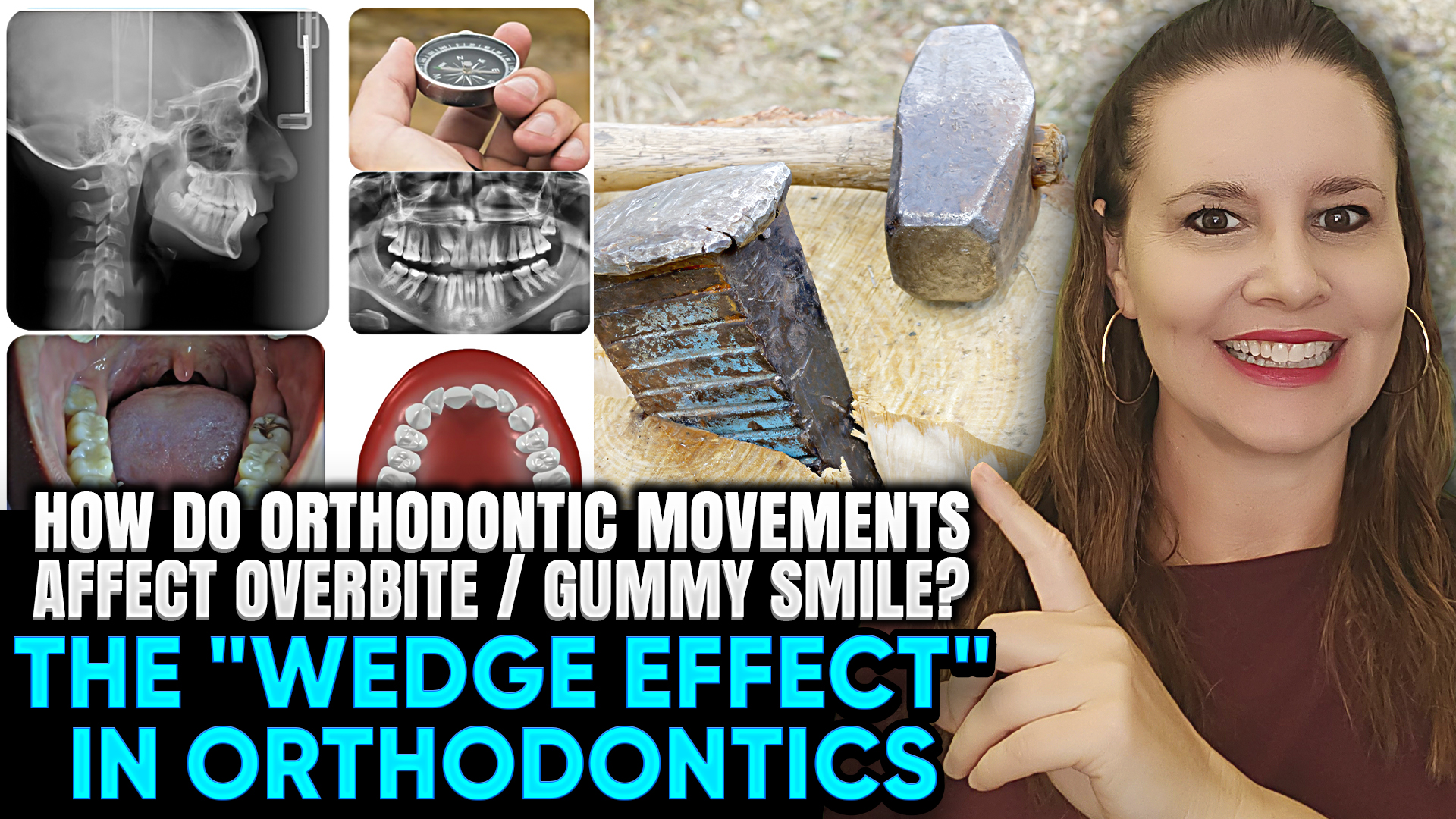 Overbite/ Overjet/ Gummy Smile and “The Wedge Effect” with Braces and Invisalign
I. Introduction
● Physics plays a vital role in orthodontic treatment and tooth movement.
● The wedge effect explains how moving teeth forward or backward affects vertical bite depth.
● Proper understanding of biomechanics helps orthodontists make informed treatment decisions.
● This concept is key to achieving stable, functional, and aesthetic outcomes.
II. The Role of Physics in Orthodontics
A. Why Physics Matters
● Tooth movement follows laws of motion.
● Controlled force application prevents unwanted movements.
● The direction of force application affects bite depth and smile display.
B. Key Biomechanical Concepts
● Equilibrium & Force Distribution: Proper application ensures stable tooth movement.
● Vertical, Sagittal, and Transverse Movements: Affect bite correction and stability.
● The Wedge Effect: Determines whether a bite opens or deepens based on AP tooth movement.
III. What is the Wedge Effect?
A. Definition
● The wedge effect describes how anterior-posterior (AP) tooth movement impacts vertical bite alignment.
● Forward movement of incisors opens the bite, while backward movement deepens it.
B. The Physics Behind It
● Moving incisors forward changes the occlusal plane, increasing bite opening.
● Retracting teeth closes the bite, leading to deepening.
● The wedge effect must be considered to maintain ideal incisor positioning and bite function.
IV. How the Wedge Effect Influences Orthodontic Treatment
A. Proclination vs. Retraction
1. Proclination (Moving Teeth Forward):
○ Expands the arch, creating more space.
○ Opens the bite, beneficial for deep bite correction.
○ Risks: Excessive incisor flaring, potential open bite formation.
2. Retraction (Moving Teeth Backward):
○ Reduces overjet and resolves crowding.
○ Deepens the bite, which may worsen existing deep bites.
○ Risks: Reduced incisor display, affecting smile aesthetics.
B. Sequential Distalization & Interproximal Reduction (IPR)
● Sequential Distalization: Moves molars backward to create space, influencing vertical alignment.
● IPR: Removes small amounts of enamel, affecting bite closure and tooth angulation.
C. The Role of Extractions
● Premolar Extractions: Can deepen the bite if not managed correctly.
● Lower Incisor Extractions: May affect bite depth and long-term stability.
V. The Wedge Effect & Smile Aesthetics
A. Open Bite vs. Deep Bite & Smile Display
● Open Bite: Reduces incisor display, making the smile less visible.
● Deep Bite: Increases tooth display, sometimes creating a “gummy smile.”
● The wedge effect plays a crucial role in determining how much tooth is visible when smiling.
B. Managing Gummy Smiles with the Wedge Effect
● Adjusting tooth movement direction to control smile height.
● Intrusion techniques can help reduce excessive gingival display.
● Proper bite planning ensures an aesthetic and balanced smile.
VI. Treatment Planning with the Wedge Effect
A. Evaluating Patient Needs
● Assess bite depth, crowding, and incisor angulation before treatment.
● Plan AP movement carefully to prevent unintended vertical changes.
B. Tools for Analyzing the Wedge Effect
● Cephalometric Analysis (Ceph X-rays): Helps evaluate incisor positioning and bite depth.
● 3D Digital Scans & Aligners: Provide precise movement control and help prevent bite misalignment.
C. Continuing Education for Orthodontists
● Staying updated on biomechanics ensures better treatment planning.
● Courses for expert training.
VII. Conclusion
● The wedge effect is a crucial biomechanical principle in orthodontics.
● Understanding physics helps improve bite correction and smile aesthetics.
● Orthodontists should apply these principles for better treatment outcomes.
● Learn more about Straight Wire and Phase One courses at StraightSmile Solutions to enhance your knowledge and skills.
So you have a Stubborn Tooth that’s Not Moving in Invisalign or Clear Aligners?
So you have a Stubborn Tooth that’s Not Moving in Invisalign or Clear Aligners?
Introduction
Dr. Amanda from StraightSmile Solutions introduces the ORC chart, simplifying orthodontic case analysis. It helps general, pediatric dentists and consumers, better understand clear aligner treatment by identifying and solving common issues:
What is the ORC Chart?
The ORC chart systematically diagnoses and troubleshoots clear aligner cases where a single tooth isn’t moving as expected. Unlike the Aligner Debond Chart, which assesses retention readiness, the ORC chart identifies root causes rather than increasing force.
Step 1: Assess the Treatment Plan
Before making any adjustments, it is crucial to review the initial treatment plan. This involves:
- Running a ClinCheck or similar digital setup to assess whether the case was planned correctly.
- Consulting an experienced orthodontist who is independent of aligner companies.
- Slowing down the treatment pace, as many plans are set to move teeth too quickly.
- Reviewing resources such as Dr. Amanda’s YouTube videos, specifically the “Double It Philosophy,” which explains the importance of slowing treatment progression.
Step 2: Check for Tracking Issues
Clear aligners depend on patient compliance. If a tooth is not moving as expected:
- Use virtual tracking tools such as Invisalign Virtual Care, Dental Monitoring, or InFace.
- Ensure patients are wearing aligners as instructed.
- Provide patients with proper take-home instructions, such as those outlined in the “2023 Clear Aligner Instructions” video.
- If compliance is an issue, address it before making other changes.
Step 3: Evaluate Bite Clearance
A tooth may fail to move if it is hitting another tooth or is impeded by occlusal interference. To check for this:
- Use articulating paper to identify any premature contacts.
- Consider minor adjustments, such as selective equilibration.
- If interference is confirmed, treatment planning may need to be revised.
Step 4: Assess Contact Points
Tight interproximal contacts can prevent movement. To resolve this:
- Check for tightness between teeth, especially in cases requiring rotation or extrusion.
- Use an IPR (Interproximal Reduction) strip or disc to create space.
- Continue monitoring contact tightness throughout treatment.
Step 5: Review Medications and Supplements
Certain medications and supplements can impact bone metabolism, affecting tooth movement. These include:
- Hormones (e.g., GLP-1 agonists)
- Bisphosphonates (used for osteoporosis)
- Herbal supplements with unknown effects on bone turnover
To determine if a patient’s medications might be affecting treatment:
- Cross-reference their medication list with orthodontic research.
- Use Google Scholar to find studies on specific drugs and their impact on orthodontic movement.
Step 6: Consider CBCT Imaging for Ankylosis
If all previous steps fail to identify the issue:
- Take a CBCT (Cone Beam Computed Tomography) scan of the affected area.
- Look for signs of partial or full ankylosis, where the tooth is fused to the bone.
- If ankylosis is present, alternative treatment strategies, such as moving adjacent teeth or restorative options, may be required.
Final Thoughts
If the issue persists after following all six steps, an expert consultation, like a session with Dr. Amanda, may help. The ORC chart provides a structured approach to resolving clear aligner cases for more predictable outcomes. For more details, case studies, and resources, visit Dr. Amanda’s coaching services at StraightSmile Solutions.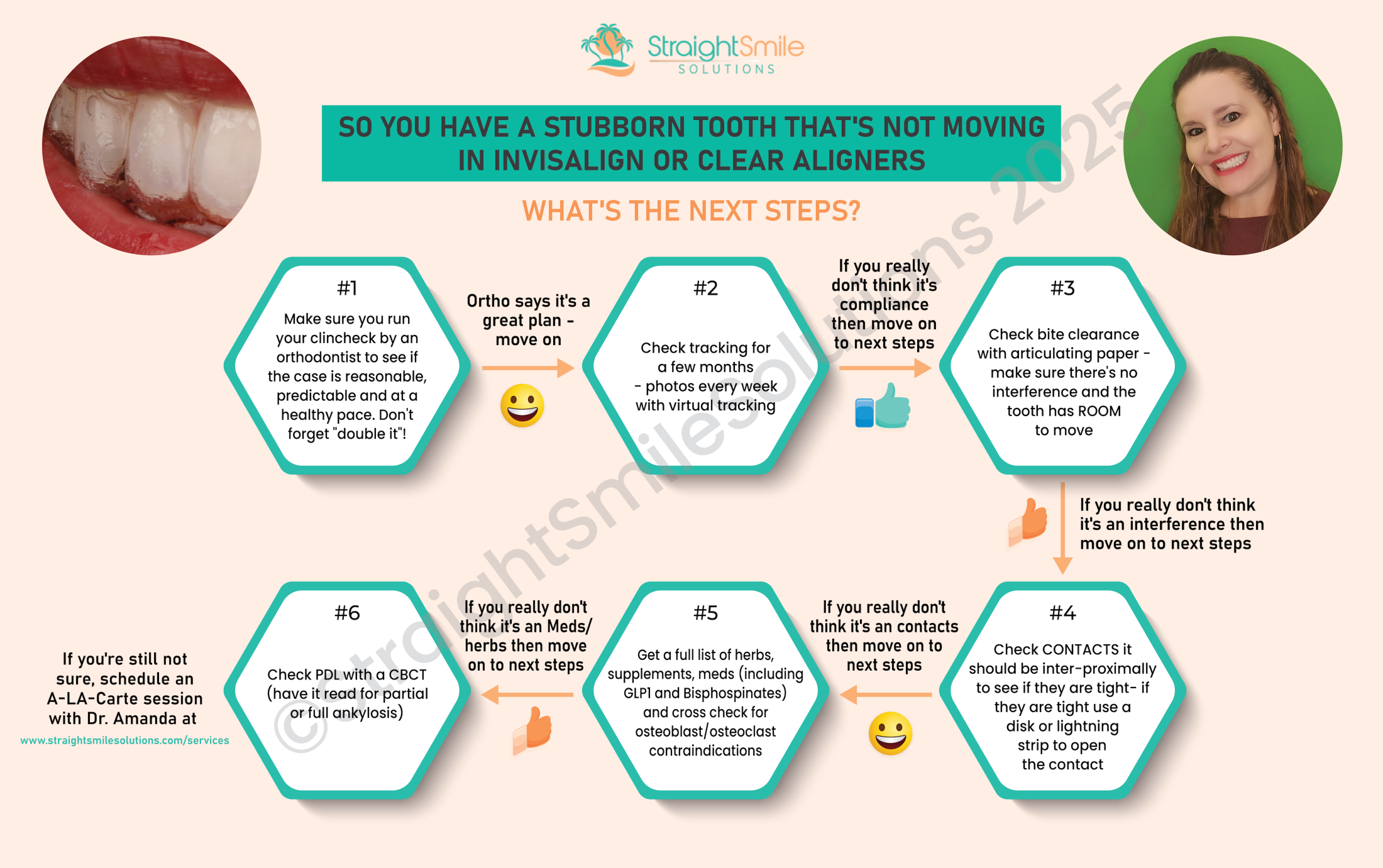
Tips for Low-Budget Social Media/Internal Marketing Hacks for Dentists
 Tips for Low-Budget Social Media/Internal Marketing Hacks for Dentists
Introduction
● Who is Dr. Amanda?
Dr. Amanda from StraightSmile Solutions offers insights on dental marketing, emphasizing that effective marketing doesn’t require formal training in marketing.
● Internal Marketing vs. External Marketing
Focus on internal marketing using existing resources (patients, office materials) rather than relying on external ads or agencies. This approach is affordable, more personalized, and sustainable.
1. Why You Don’t Need Professional Marketing Training
● No Need for a Marketing Degree:
You don’t need professional marketing training to create effective strategies for your dental practice. Dental marketing is simple if you understand your patients and their needs.
● DIY or Outsource Smartly:
Dr. Amanda recommends creating content yourself to save money unless you’re short on time or skill. Outsource only the tasks you don’t enjoy, instead of hiring a full-service agency.
2. Leveraging Your Team
● Involve Your Team Members:
Consider hiring someone from your team, like an assistant, to manage social media. If they’re passionate about it, this could become a side business or full-time role.
● Incentivizing Your Team:
Offering extra pay or rewards for marketing tasks can boost engagement. Set key performance indicators (KPIs) to measure success and ensure accountability.
3. Top 4 Internal Marketing Tips for Your Dental Practice
● Selfie Wall:
Create a selfie wall with your practice’s logo and website for easy social media sharing, helping promote your practice organically.
○ How to Create It:
Use fun props, frames, or themed backgrounds to encourage patient photos. DIY options are cost-effective, or you can outsource the design.
○ Cost Considerations:
A selfie wall can be built for under $1,000, depending on how creative or complex the design is.
● Encourage Reviews:
Reviews are a powerful way to build credibility. Use a review generator like SMiRL or a simple QR code to encourage reviews from patients.
○ Incentives:
Having a physical display that highlights recent positive reviews can encourage others to leave their own.
○ Tip:
Place QR codes that lead directly to your Google reviews page in your waiting room, exam rooms, and other visible areas to make it easy for patients to leave feedback.
● Before-and-After Showcases:
Dr. Amanda recommends creating content yourself to save money unless you’re short on time or skill. Outsource only the tasks you don’t enjoy, instead of hiring a full-service agency.
○ Creating the Gallery:
If you lack original before-and-after content, curate or find inspiration from industry sources and watermark the photos with your logo to protect them.
● Office Tours for New and Referring Patients:
Ensure that every new or referring patient gets a tour of your office. Show them the selfie wall, review areas, and any other key marketing features of your practice.
○ Patient Engagement:
Personalize the tour by pointing out testimonials, fun facts, and patient successes to make them feel connected to your practice.
4. The Benefits of Internal Marketing
● Cost-Effective:
Internal marketing leverages existing resources, making it more affordable than ads or agencies.
● Stronger Connection with Patients:
Engaging personally with patients builds trust and loyalty.
● Sustainable Growth:
Internal marketing grows a loyal patient base, attracting new patients through referrals and social media.
Whether it’s a selfie wall, reviews, or before-and-after showcases, these strategies are designed to bring results without breaking the bank.
A Consumer’s Guide to Pick the Right Dentist for Braces
Introduction
● Brief introduction to Dr. Amanda and her company, StraightSmile Solutions.
● Overview of the purpose of the article: to explain the benefits of the support group and guide patients in choosing the right orthodontist.
● Mention the growing need for reliable orthodontic information and support in an online community.
1. The Dentist Moderated Braces and Orthodontic Support Group
● Overview of the Group:
○ A supportive online space for patients before, during, and after their orthodontic journey.
○ Sponsored by StraightSmile Solutions and managed by carefully selected orthodontists and dentists.
● Key Features:
○ Exclusive Membership: Rigorous screening process to ensure no spammers or scammers.
○ Expert Moderators: Only invited dentists and orthodontists can join as contributors after thorough vetting.
○ Reliable Advice: Members receive solid, trustworthy guidance tailored to their needs.
● How to Join:
○ Simple joining process for patients.
○ Dentists must contact the group administrators and demonstrate alignment with the group’s principles.
2. How to Choose the Right Orthodontist
● Importance of Making an Informed Decision:
1. Common mistakes patients make, such as selecting based on proximity, convenience, or cost.
2. Why these factors alone are insufficient for a successful orthodontic experience.
● Key Questions to Ask When Choosing an Orthodontist:
1. What is their stance on phase one treatment?
■ Importance of early intervention in orthodontics.
■ Differences between phase one and phase two treatments.
■ What a preference for phase one treatment says about the orthodontist’s approach to airway and total body health.
2. What is their ratio of plastic to metal appliance usage?
■ Explanation of “plastic” (aligners like Invisalign) vs. “metal” (traditional braces).
■ Importance of finding a balance between the two.
■ How a higher focus on plastic appliances may indicate a modern, patient-centered approach.
3. Do they offer virtual consultations and check-ins?
■ Role of technology and AI in streamlining orthodontic care.
■ Benefits of reduced in-office visits and remote monitoring for patients.
4. What is their approach to extractions and surgeries?
■ Understanding whether the orthodontist focuses on non-extraction and non-surgical methods.
■ Why a non-invasive approach might be preferable for certain patients.
3. Factors to Consider Beyond the Questions
● Experience vs. Modern Training:
○ How both older, experienced orthodontists and younger, tech-savvy ones bring value to the table.
○ Importance of continuous education and keeping up with the latest technologies.
● Personalized Care:
○ Finding an orthodontist who aligns with your specific goals, whether you prefer braces or aligners.
○ The significance of building a comfortable relationship with your provider.
4. Why Support Groups Matter
● Emotional Support:
○ How being part of a community can ease the orthodontic journey.
○ Sharing experiences and learning from others in similar situations.
● Access to Expert Insights:
○ Unique value of moderated groups with professional oversight.
○ Examples of advice shared, from picking providers to understanding treatments.
5. Join Our Support Group!
● Invitation to join the Facebook group by StraightSmile Solutions.
● Access to valuable information, moderated discussions, and expert advice.
● A great way to connect with like-minded patients and orthodontic professionals
Conclusion
● Recap of the benefits of the Dentist Moderated Braces and Orthodontic Support Group.
● Final tips on choosing the right orthodontist.
● Call-to-action: “Join our Facebook group today and take the first step toward a straighter, healthier smile!”
How to Remove a Negative Google Patient Review Can You Remove a Negative Google Review?
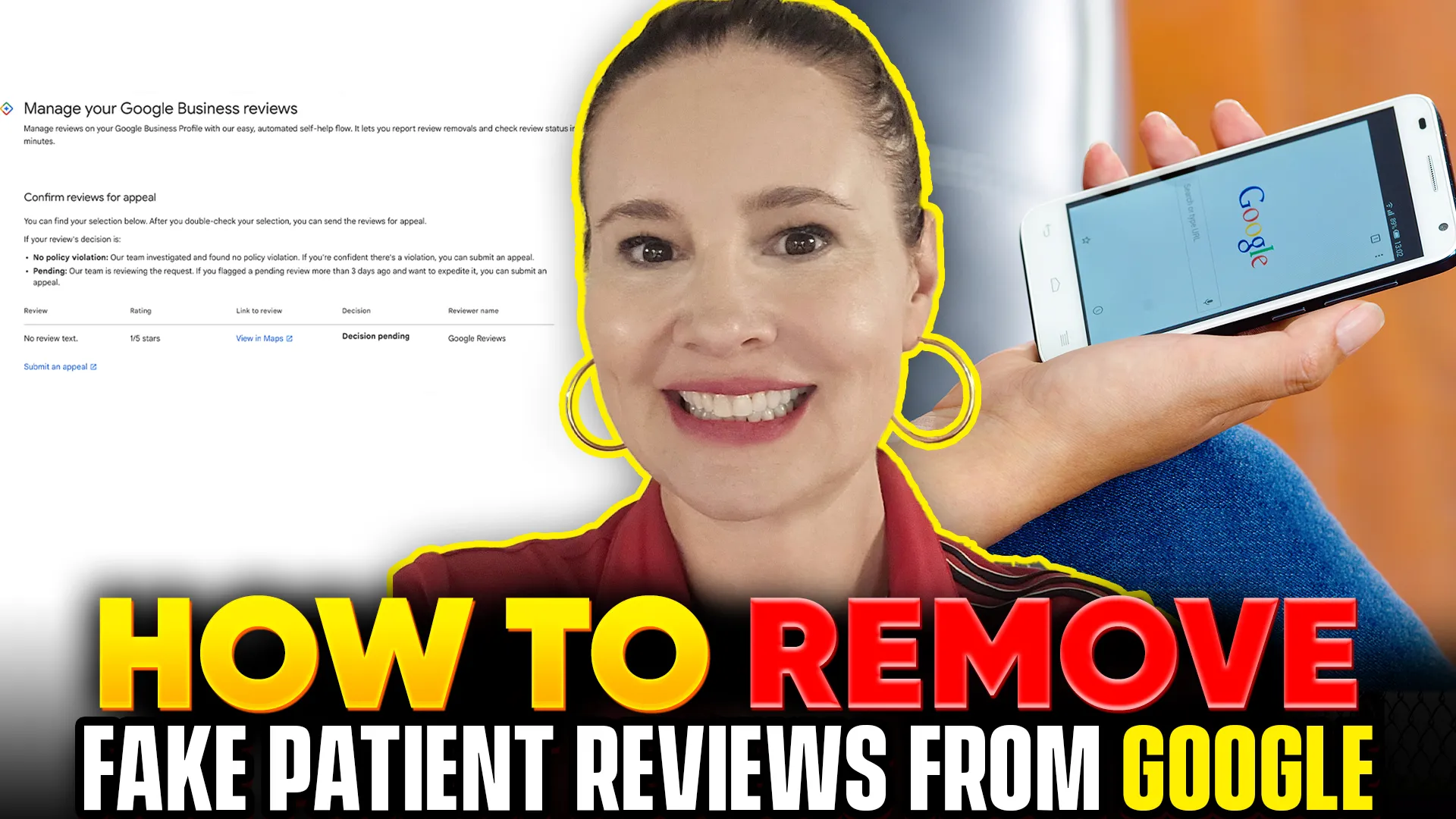 How to Remove a Negative Google Patient Review
Can You Remove a Negative Google Review?
It is important to understand that removing a negative Google review is not guaranteed. Only certain reviews that violate specific guidelines from Google’s strict policies can be removed. There are many misconceptions about removing reviews, and businesses can be misled by services that guarantee results.
The most straightforward method to address a negative review is to reach out directly to the reviewer and ask them to remove or revise the review. The reviewer might be open to modifying their feedback if their issue can be resolved.
When contacting a reviewer, remember to maintain a polite and professional tone. Acknowledge their concerns, show empathy, and offer to address the issue further if necessary. This method can help resolve the issue and demonstrate your commitment to customer service.
Three Ways to Address a Negative Google Review
1. Respond Professionally to Their Review
Many reviewers might not be open to erasing a negative review, and asking them directly might only worsen the situation. Instead of asking to erase or modify their review, you can respond professionally and with empathy.
It is important to recognize their concerns but avoid getting into specifics about their case to stay HIPAA compliant. Show that you understand by thanking them for feedback and discussing their experience privately. This will demonstrate your commitment to customer service and genuine value from patient feedback.
2. Flag the Review as Inappropriate or Fake
If the review violates Google’s strict policies, such as being inappropriate, fake, or even containing hate speech, you can flag it for removal. Google allows business owners to report reviews that break its policies.
Here’s how to flag a review:
1. Click the three vertical dots next to the review.
2. Select “Flag as inappropriate.”
3. Follow the prompts to submit your request.
Certain types of reviews that qualify for removal are those that contain offensive language, fake reviews, or anything that violates Google’s content guidelines. Remember that the review process may take time, and removal is not guaranteed. Here is the list of prohibited and restricted content:
1. Spam and Fake Content
○ Reviews that are fabricated or intended to manipulate ratings.
○ Duplicated content or irrelevant reviews.
2. Offensive Language and Hate Speech
○ Use of profanity, vulgarity, or hate speech.
○ Content targeting individuals or groups based on race, religion, gender, or other attributes.
3. Personal and Confidential Information
○ Sharing sensitive information such as addresses, phone numbers, or medical records without consent.
4. Illegal Content
○ Posts that promote illegal activities or content that violates the law.
5. Sexually Explicit Content
○ Pornography or inappropriate sexual content.
6. Violence and Threats
○ Threatening or inciting violence.
○ Graphic descriptions or promotion of violent acts.
7. Conflict of Interest
○ Reviews from individuals with a financial or personal stake in the business.
3. Encourage Positive Reviews from Satisfied Customers
One effective way to offset the impact of a negative Google review is by increasing the number of positive reviews from happy customers. A strong overall rating can help minimize the effect of an occasional negative review and improve your practice’s online reputation.
Here’s how to encourage positive feedback:
1. Ask for Reviews: Politely request satisfied patients to leave a review. This can be done in person, through follow-up emails, or via text messages.
2. Make It Easy: Provide a direct link to your Google review page to simplify the process for your customers.
3. Offer Incentives Responsibly: While offering incentives for reviews can be tempting, ensure they comply with Google’s policies, as providing incentives in exchange for reviews can lead to penalties.
Consistently encouraging feedback from happy patients will create a more balanced and authentic online reputation, showcasing the quality of your services and your commitment to customer satisfaction.
Appeal the Decision if Necessary
If Google doesn’t initially remove the review, you can escalate the matter by filing an appeal.
● Steps to Appeal:
○ Wait for Google’s initial decision (can take several weeks).
○ If denied, submit additional evidence to support your claim.
💡 Pro Tip: Provide as much factual evidence as possible, like proof the reviewer was not a patient or screenshots of violations.
Use Non-Disparagement Agreements (If Applicable)
If the negative review involves a real patient and you’ve resolved their concerns, you may request they remove or update their review.
● For refunds or settlements, have them sign a Non-Disparagement Agreement (NDA).
○ Consult with legal professionals to ensure the agreement complies with your local laws.
Long-Term Reputation Management Tips
● Monitor Regularly: Check reviews frequently to address issues promptly.
● Craft Thoughtful Responses: Thank patients for positive reviews and address concerns respectfully in negative ones.
● Enhance Your Service: Feedback, even negative, can highlight areas for improvement.
Final Thoughts
Handling fake or malicious reviews on Google requires patience, professionalism, and persistence. While it’s tempting to feel disheartened by negative reviews, remember that your responses and actions can significantly influence public perception. Demonstrating a commitment to resolving issues builds trust and strengthens your practice’s reputation in the long run.
For more guidance on managing reviews or improving your practice, visit StraightSmile Solutions.
How to STOP a Wire in Braces from Sliding out the Terminal Buccal Tube/Band
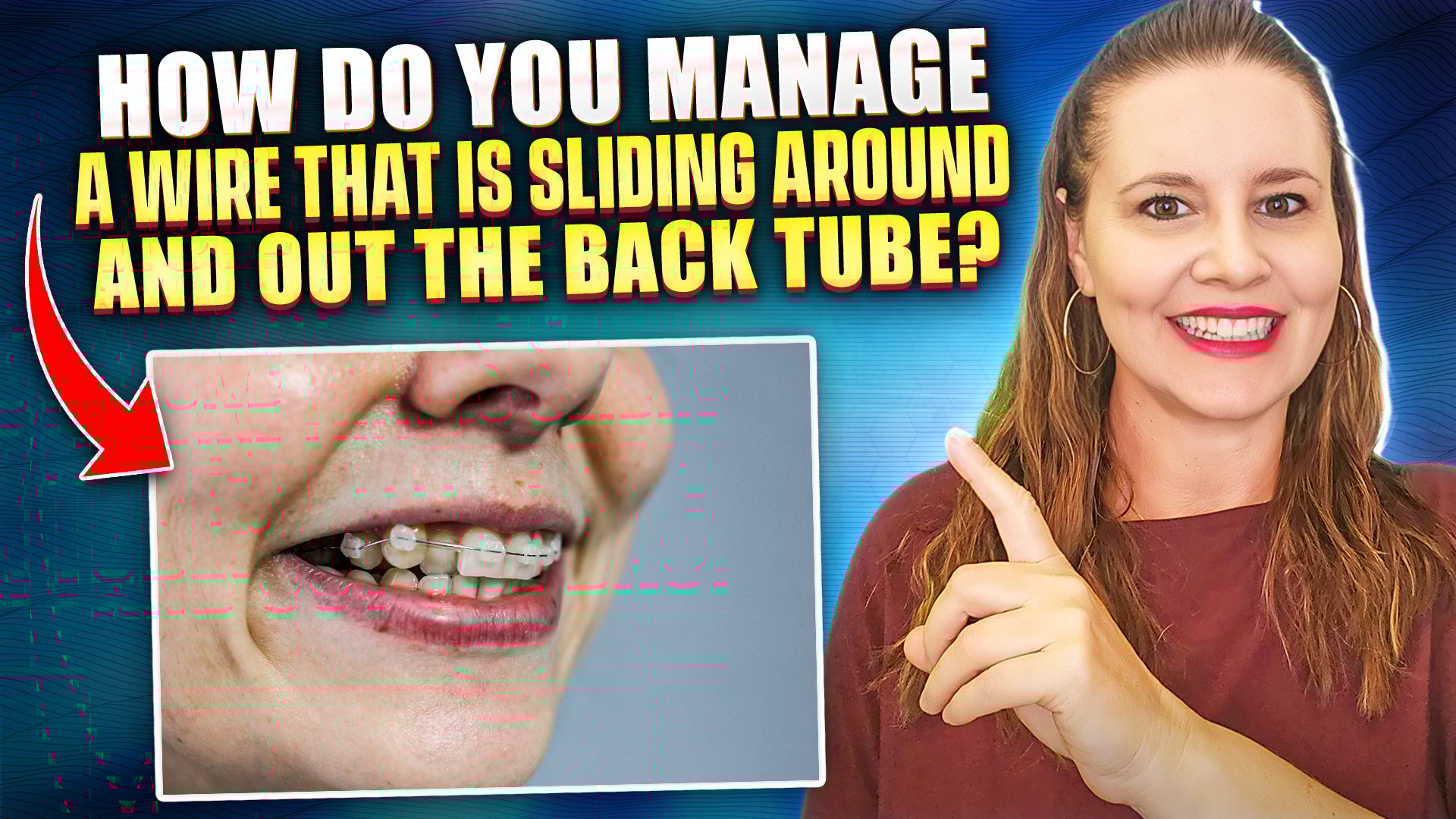 How to STOP a Wire in Braces from Sliding out the Terminal Buccal Tube/Band
Introduction
● Topic Overview: Exploring the causes and solutions for wire shifting in straight-wire orthodontic cases.
● Relevance: Addressing common concerns in orthodontics for improved treatment outcomes.
1. What Is Wire Shifting?
● Definition: Wire shifting occurs when the orthodontic wire moves excessively, protruding on one side and shortening on the other.
● Common Signs: Patients report discomfort, or the orthodontist observes the wire protruding or flexing unexpectedly.
2. Causes of Wire Shifting
1. Inappropriate Wire Selection
○ Using a wire that is too light for the case.
○ Importance of choosing the largest possible wire that fits comfortably and fully engages the brackets.
2. Initial Tooth Position
○ Very straight teeth may require a heavier wire at the start.
○ Using overly light wires (e.g., 12s, 14s, or 16s) in cases where heavier wires are appropriate can result in shifting.
3. Uneven Engagement
○ Situations where certain teeth cannot be fully engaged due to blockages or severe misalignment.
○ Gaps in engagement act as fulcrum points for external forces (e.g., tongue or food).
4. Patient Habits
○ Tongue or lip activity: Patients may unintentionally play with the wire.
○ Direct manipulation: Some patients habitually tug on exposed wire ends.
5. External Forces
○ Chewing or eating habits can cause continuous flexing, leading to shifting.
3. Solutions for Wire Shifting
1. Proper Wire Selection
○ Start with the largest wire that fits comfortably and fully engages all brackets.
○ Avoid overly light wires in cases with minimal initial alignment needs.
2. Adding Tubing or Springs
○ Use closed coil springs or tubing on long spans to prevent flexing and reduce external force impact.
3. Cinch the Wire
○ Use cinching techniques to secure the wire ends and limit movement.
○ Resources: Tutorials and courses on cinching techniques (e.g., StraightSmile Solutions courses).
4. Figure Eight Ties
○ Create tighter ligature ties using a figure-eight pattern for added stability.
○ Limitations: This method may not work with clear braces.
5. Adjust Appointment Intervals
○ Monitor wire stability more frequently in the initial phases.
○ Suggested intervals:
■ Mini Twin Brackets: 8 weeks.
■ Self-Ligating Brackets: 10–12 weeks.
4. Preventive Measures
1. Educating Patients
○ Teach patients the importance of avoiding unnecessary manipulation of their wires.
○ Encourage mindfulness of habits that could lead to wire movement.
2. Learning Braces Fundamentals First
○ For clinicians: Building a solid understanding of braces and phase-one orthodontic principles aids in mastering aligner systems later.
○ Recommended Resource: StraightSmile Solutions’ affordable, CE-accredited courses.
3. Monitoring Compliance
○ Identify patterns in patients who may habitually manipulate their wires and address them directly.
5. Summary and Recommendations
● Key Takeaways:
○ Proper wire selection and engagement are crucial to prevent wire shifting.
○ Patient habits and treatment intervals significantly influence outcomes.
● Final Note: Orthodontists can enhance their skills by mastering braces fundamentals and utilizing resources like online courses and tutorials.
● Call to Action: Explore comprehensive orthodontic training at StraightSmile Solutions to build confidence in managing wire-based systems.
Conclusion
Effective orthodontic treatment requires attention to detail and proactive solutions. By understanding the causes and remedies for wire shifting, orthodontists can ensure better results and improved patient satisfaction.
If you’re interested in learning more about these techniques and improving your orthodontic practice, check out StraightSmile Solutions’ comprehensive courses, which include valuable tips and strategies for handling common orthodontic issues like wire shifting.
30 Day Non Compliant Letters for Ortho- Discontinuing Patients
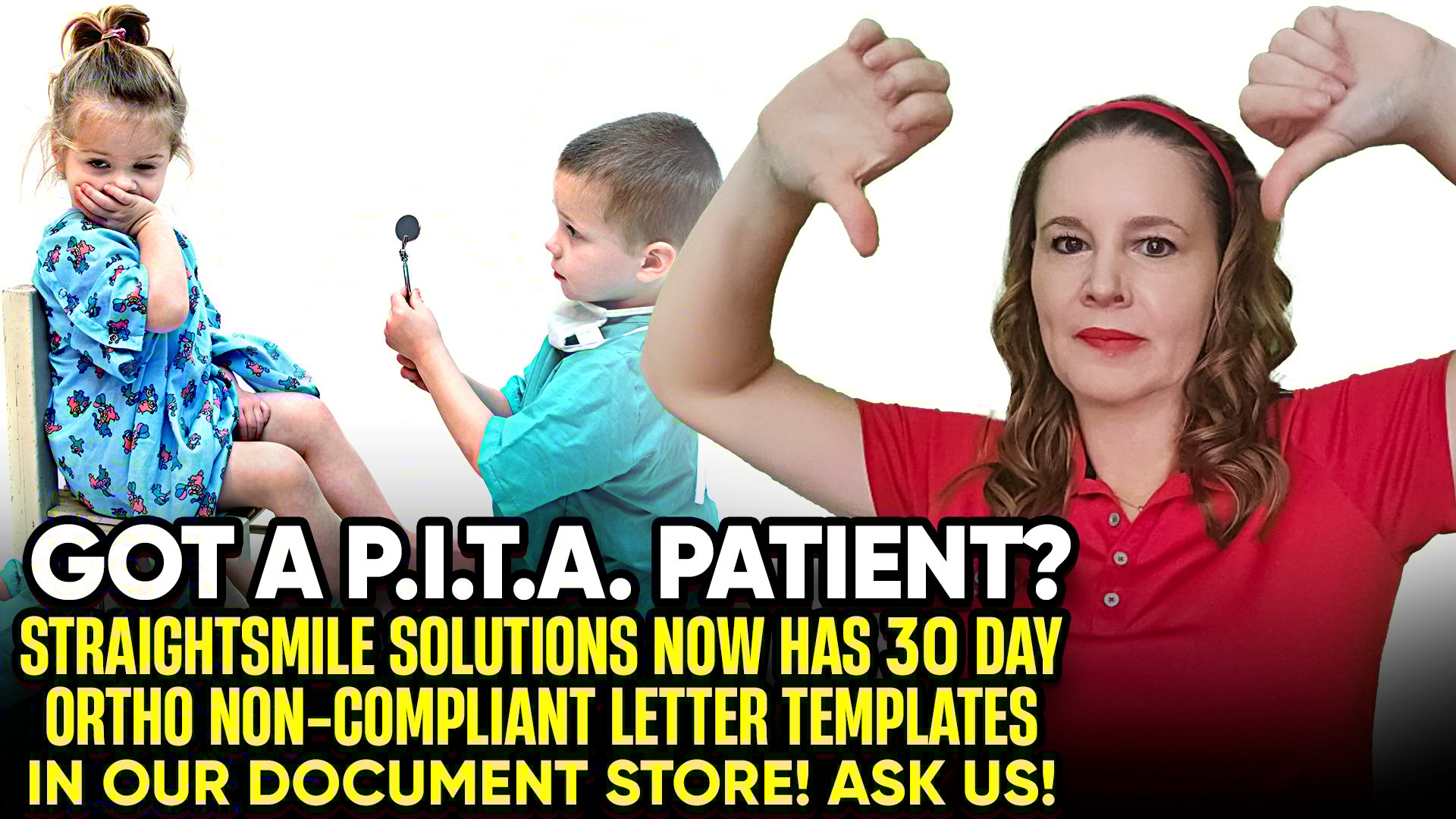 30 Day Non Compliant Letters for Ortho- Discontinuing Patients
I. Introduction
● Brief introduction to Dr. Amanda and StraightSmile Solutions.
● Purpose of the article: Understanding non-compliant patients (PITA patients) and strategies to manage them effectively in orthodontic practice.
● Importance of compliance in patient care and legal protection for the practice.
II. What is a PITA Patient?
● Definition and explanation:
○ Acronym for “Pain in the A**” patient, a term often found in the Urban Dictionary.
○ Refers to patients who are non-compliant with treatment protocols.
● Examples of non-compliance:
○ Missed appointments or poor attendance.
○ Not wearing aligners, braces, or retainers as prescribed.
○ Poor oral hygiene leading to decay or caries.
● Impact of non-compliance on treatment outcomes and practice management.
III. Strategies for Managing Non-Compliant Patients
1. Proactive Communication
○ Importance of clear instructions for patients at the start of treatment.
○ Setting expectations for appointment frequency and hygiene standards.
○ Use of multiple channels for reminders: phone calls, emails, texts.
2. Regular Monitoring
○ Leveraging practice management systems to track patient compliance.
○ Running monthly reports for active orthodontic cases (codes like D8090, D8080, etc.).
○ Identifying and addressing lapses in attendance or treatment adherence promptly.
3. Documentation and Follow-Up
○ Keeping detailed records of all communications and attempts to reach the patient.
○ Initiating follow-ups through calls, emails, and texts.
○ Escalating to written notices after repeated non-responsiveness.
IV. The Importance of a Strong Patient Contract
● Key elements of a robust patient contract:
○ Clear terms on compliance and consequences of non-adherence.
○ Financial policies for treatment discontinuation or additional lab fees.
● Role of templates:
○ Dr. Amanda’s document store offers templates for managing non-compliance.
○ Alternatives include free resources online or creating custom documents.
V. Steps to Discontinue Non-Compliant Patients
1. Warning Letters
○ Sending initial and follow-up letters detailing non-compliance issues.
○ Importance of certified mail with return receipt to ensure delivery.
2. 30-Day Notice
○ Giving patients a 30-day window to seek a new provider.
○ Offering to transfer records at no cost.
3. Legal Considerations
○ Reviewing state-specific Dental Practice Acts for compliance.
○ Consulting with liability insurance providers for guidance on templates and processes.
VI. Case Study: Lessons from a Non-Compliant Invisalign Patient
● Scenario:
○ Patient failed to attend appointments for 3–4 years, leading to case expiration.
○ Patient expected continuation without additional charges, claiming abandonment.
● Resolution:
○ Doctor obligated to complete treatment due to lack of proper documentation and recall attempts.
○ Lessons learned:
■ Importance of proactive recall systems and certified communication.
■ Legal and financial risks of not managing non-compliance effectively.
VII. Resources and Support from StreetM Solutions
● Dr. Amanda’s templates and resources:
○ Discontinuance for non-compliance letter template.
○ Access through membership plans or course purchases.
● Benefits of leveraging external tools:
○ Saves time and ensures compliance with legal standards.
○ Avoids costly errors and misunderstandings with patients.
VIII. Conclusion
● Emphasizing the need for a structured approach to manage non-compliant patients.
● Balancing patient care with legal and financial protections for the practice.
● Encouraging orthodontic professionals to invest in resources and systems for better management.
Tools and Resources
Dr. Amanda offers practical tools for managing Pita patients:
● Templates for Communication: Discontinuation letters and other essential documents.
● Training and Support: Courses and consulting sessions to improve practice management.
● Free Resources for Members: Premium and VIP members receive free document templates and additional perks.
Practices should also leverage their practice management systems to run monthly reports on active patients and identify potential issues early.