
StraightSmile Solutions®
My Position on Overcorrection Aligners

Overcorrection Aligners – Why They’re Not Necessarily A Good Idea
Have you ever considered doing an overcorrection with your aligners cases? It’s not always easy to work out a suitable treatment plan for your patients, especially if you’re trying to avoid revisions and relapse cases. However, here at Straight Smile Solutions, we generally recommend against doing overcorrections for your aligner cases – and today, we’ll be covering why this is.
Why Overcorrection Usually Isn’t a Good Option to Avoid Revisions
Some people assume that doing an overcorrection can help prevent issues such as relapses with patients. However, this may not actually be the case, and there’s generally no real need to actually do overcorrection on a case.
First, make sure you start by doing a thorough ClinCheck with your patients if using Invisalign. Make sure you’ve also put plenty of time into the case – don’t rush! – and try to complete every treatment plan as accurately as possible to reduce the risk of issues and revisions cropping up down the line.
It’s also important to make sure your patient knows about the core factors they’ll need to do to see progress with their case. Create an accountability loop (potentially virtually if they aren’t local) to ensure that your patients follow their treatment plan accurately and see good progress.
The Exception
Overcorrections can very occasionally be useful – namely in VPC cases (virtual power chain). Make sure to consider this carefully if you need to do a VPC case to minimize revisions and get good results.
Find Your Patient’s Optimal Treatment Plan with Us
We’ve clarified the importance of avoiding overcorrection – but how can you develop a treatment plan that (hopefully) won’t leave you needing to do revisions?
Well, if you’re unsure about this, don’t be afraid to contact our experts at Straight Smile Solutions for a one-on-one consultation regarding your case. We’re here to help!
Invisalign and ClearCorrect Refinements with StraightSmile Solutions
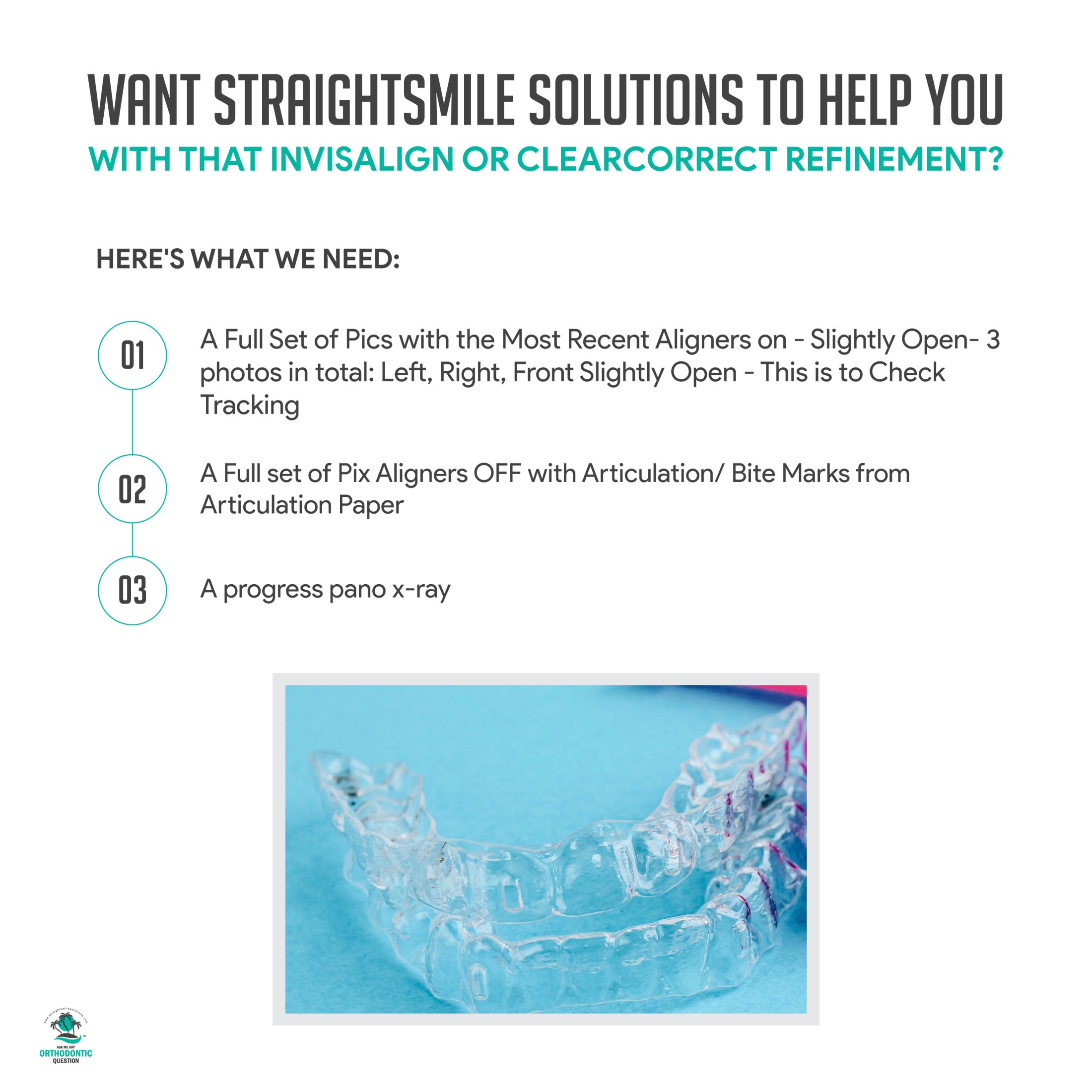
This article aims to assist dental providers with orthodontic refinements and aligner treatments. Dr. Amanda from Straightsmile Solutions acknowledges that many individuals request personalized guidance for their refinements through à la carte sessions or signing up for a concierge membership. However, it’s important to identify the root cause of refinement needs, as orthodontic treatment is not typical. The goal is to rectify the underlying issues to prevent perpetuating the same problems.
This post provides valuable information and guidance for different types of aligners, particularly Invisalign and other clear aligner options. While efforts have been made to categorize and organize resources and videos, aligner companies continuously evolve, and some older training videos may not remain relevant. However, Dr. Amanda does not delete outdated videos, allowing viewers to access a wide range of resources.
To effectively help dental providers, Dr. Amanda requests a full set of photos with the most recent aligners, including slightly open front and left teeth positions. These photos aid in assessing the tracking of the aligners. Additionally, all original photos and potentially a CBCT should be included to evaluate any deviations from the treatment plan. It is suggested that taking cone-beam computed tomography scans or utilizing intraoral scanners with clear aligners can provide more comprehensive information for analysis.
Dr. Amanda advises using articulating paper to check the occlusion and requests a full set of regular intraoral photos with articulation marks. These photos, taken after using the articulating paper, help visualize the occlusal relationships, including the molars and front biting. Several photos, including the ones with aligners slightly open, are necessary for a thorough assessment.
Furthermore, a progress panoramic X-ray and initial records are required. Examining the root positions can provide insights into potential issues. For accountability, Dr. Amanda recommends using virtual monitoring software, such as Invisalign Virtual, In-Hand Dental, or Dental Monitoring. Regular check-in photos should be captured throughout the treatment process to track progress. The absence of a monitoring system can lead to treatment tracking issues.
Conclusion
Dr. Amanda from Straightsmile Solutions aims to assist dental providers seeking guidance for orthodontic refinements and aligner treatments. By providing the necessary information, including photos, records, and monitoring data, she can analyze cases and identify potential problems.
How to Get a Bonded Retainer for Under $100

How to Get a Bonded Retainer for Under $100
Have you been looking for a reliable and afforded choice of bonded retainer? In many cases, finding the optimal bonded retainer can seem a little difficult, but if the patient has requested a bonded retainer or if you’re trying to correct a bite (among a handful of other cases), using a quality bonded retainer is crucial.
Fortunately, we’ve outlined some key things about one of the best orthodontics bonded retainers currently on the market for $100 or less.
How to Get an Orthodontics Bonded Retainer for Under $100
If you’re looking to find a high-quality orthodontics bonded retainer for under $100, there are countless different options you could consider. However, we strongly recommend a custom braided ribbon retainer. Specifically, a flat stainless steel braided wire with a transfer tray jig and troughs.
You can add your own composite to these to help create the best results for your patient. You’ll likely be looking at a cost of around $100. As such, this is well worth considering as part of your decision on which retainers would be best suited to your needs.
Find Out More
If you’d like to learn more about the different types of aligners on the market and how these might work for your unique cases, make sure to contact our experts at Straight Smile Solutions today. We’re proud to be your leading provider of premium orthodontics guidance and consulting, offering a simple solution for your cases.
Ordering Vivara Retainers From Invisalign: What You Need to Know
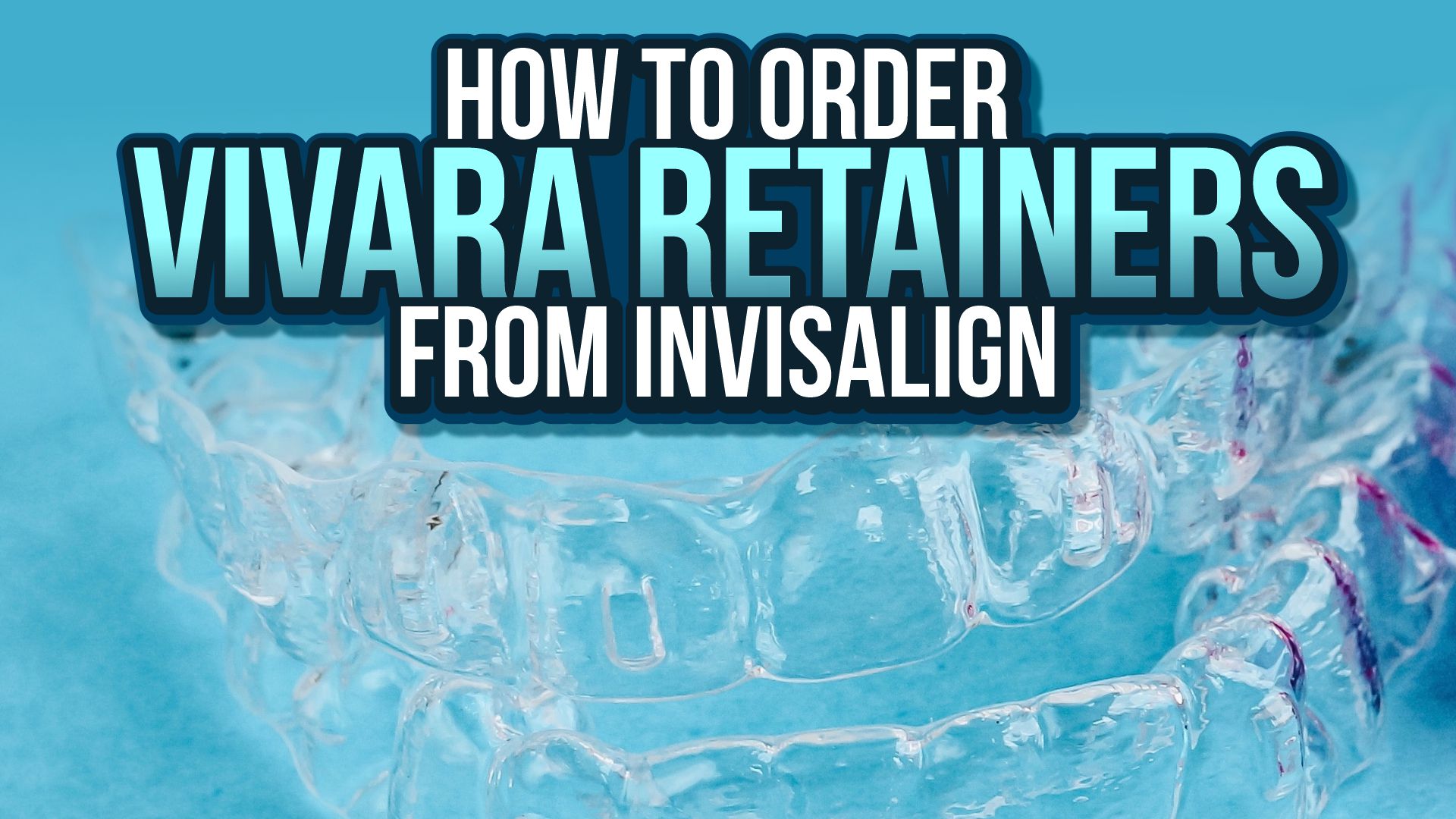
Have you ever wondered how to order Vivara retainers from Invisalign? In many cases, knowing about the different options to order the optimal retainers for your orthodontics treatment plan can seem tricky. Luckily, we’ve summarized the key things you need to know about ordering your Vivara retainers from Invisalign for orthodontics cases as follows to help.
How To Order Vivara Retainers Through Invisalign
Knowing where to start can seem a little tricky if you need to order new retainers, but this is relatively straightforward through the Invisalign platform.
Once you have completed your Invisalign treatment plan, you’ll likely then want to look at ordering retainers. Invisalign will give you two different options: their own Invisalign retainers or branded Vivera retainers. It’s advisable to always complete a rescan before ordering aligners after the treatment to make sure that they offer a snug fit.
Invisalign vs. Vivera
The main difference between Invisalign and Vivera retainers is the time frame. Invisalign’s retainers are substantially cheaper to buy, but these are usually designed for temporary use. However, Vivera retainers are designed for longer-term use.
Invisalign retainers are great in cases where you need to complete further treatments before the patient’s smile is back to normal. Alternatively, they can be great as an interim option – for example, while waiting to polish and deep clean the teeth before progressing. They’re also a great option if the patient wants a short term break (for example, for a wedding).
Get Professional Support for your Vivara Retainer Cases
If you need to learn more about using Vivara retainers in your cases, don’t hesitate to contact our experts here at Straight Smile Solutions today. Indeed, both Invisalign and Vivera retainers can offer an excellent solution for many patients. So, make sure you’ve considered this as part of your decision, too!
Picking the Optimal Aligner Company Based on Case Complexity

Every patient’s case is different, and with this thought in mind, knowing about the different features of each aligner company’s services can be incredibly helpful. Fortunately, we’ve outlined some of the key things you need to know about when you should be using each different aligner company or product type to help inform your decision.
How to Pick the Optimal Aligner Company for Your Case Complexity
If you have been struggling to find the optimal aligner company for your case, it may be worth keeping the following tips in mind.
Simple Green-Level Cases
If you have a relatively simple case, you have a huge amount of freedom when it comes to the type of aligner you’ll want to use. It’s worth considering that these cases can usually be completed by any orthodontic professional or even – in some cases – GPs.
Brands such as Invisalign, ClearCorrect, White Label, Spark, and Reveal are all popular options here, and pretty much any aligner type will suit these very simple and straightforward cases. Green level cases are among the most simple cases you’ll likely see.
Moderate Cases
If you’ve got a case that’s not too tricky but certainly more involved than a simple case, you’ll want to give a more comprehensive option a try. An orthodontist should always carry out these to avoid making mistakes that could compromise the results.
Invisalign Comprehensive, First, and Second can potentially work here; alternatively, options such as ClearCorrect Unlimited or Three are also popular. Some brands may also offer white label products that could meet your requirements here.
Complex Cases
Occasionally, you’ll see an incredibly difficult case – and this is where you’ll have to invest in the best possible aligners to see the results you want.
Options such as Invisalign Comprehensive are among the most popular for this type of case, although ClearCorrect Unlimited may also be effective for certain situations. You’ll absolutely want to get support from a professional orthodontist to address these challenges.
Final Thoughts
If you have been looking for the optimal type of aligner for your case, it’s worth considering carefully the strengths and limitations of each product. Indeed, brands often offer a range of products, varying in terms of how you use them; if you have a difficult case to deal with, you may need to go with a more thorough or comprehensive plan overall.
How Often Do You Change Power Chains?
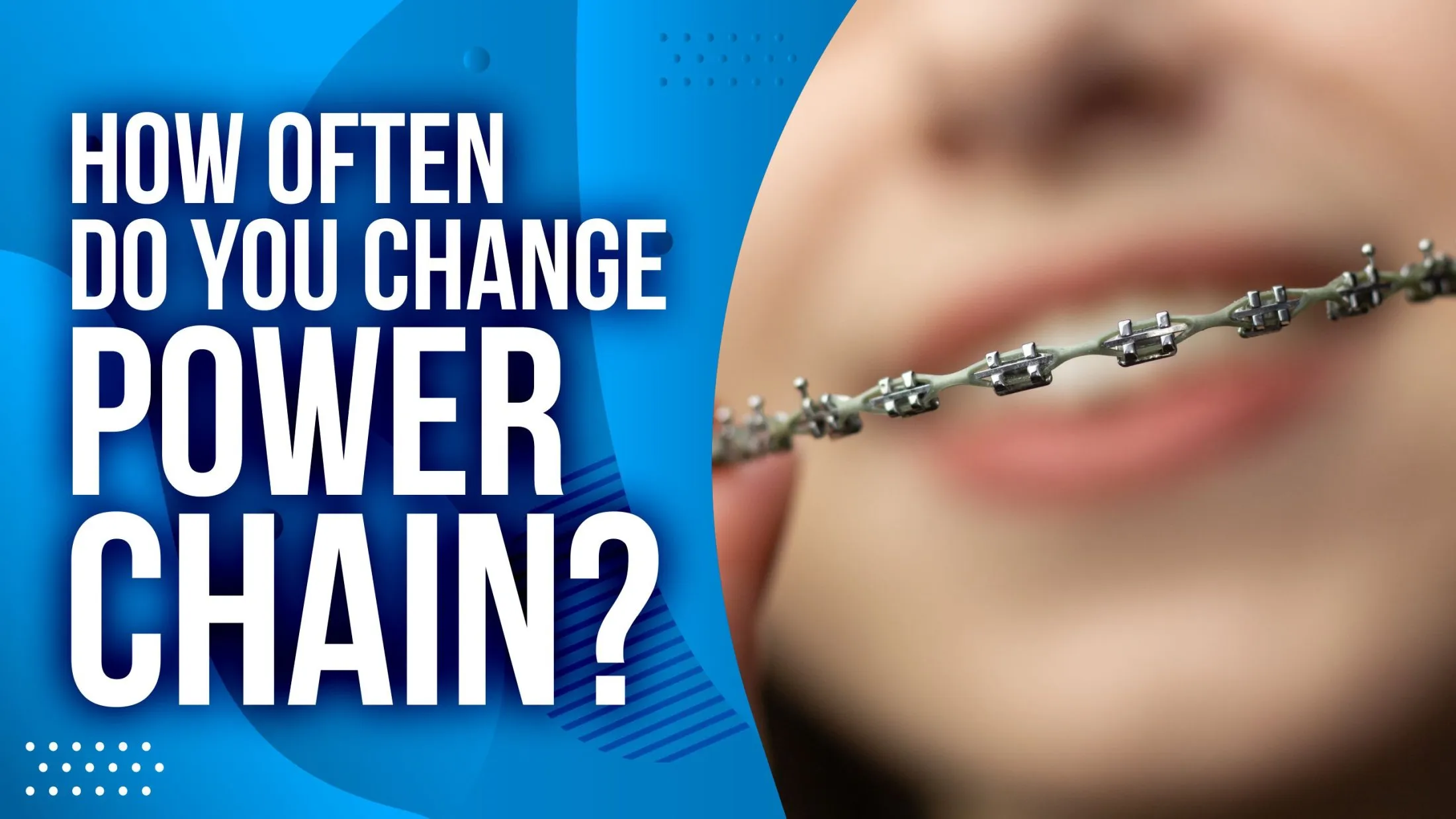
Power chains work with the goal in mind of closing gaps and speeding up the alignment of teeth. For patients with braces, power chains are typically involved toward the end of treatment. In this article, we will discuss how often you should change a power chain when you’re in the level and align stage.
When you are in the level and align stage of braces, such as when you are in NiTi wires (12s, 14s, 16s, or 18s), changing power chains at six to ten-week intervals is ideal. The sweet spot for power chain changes would be an eight-week appointment to switch out the power chains of your client. As a general rule, if rubbery ties or power chains are involved, these ties need to be changed every eight weeks, if possible, during the level and align period.
If you are using self-lighting braces, the frequency at which you need to change power chains can be much longer. For these cases, you can go three to four months in between changes. This is because there are no rubbery ties, which are what get gross and degrade over time in the mouth. For closing spaces, power chains should be changed every three to four weeks to keep the forces adequate on the teeth and close gaps.
Keep in mind that putting a power chain on light wires can cause risks, including uncontrolled tipping. Because of this, closing gaps should not be attempted with power chains until you get to a thicker wire. Also, remember that power chains do expire, and you should discard and replace all power chains that are a year old. Doing so will help to make sure that your power chains are still working for your clients.
Selecting Power Chain, Short, Continuous, Long
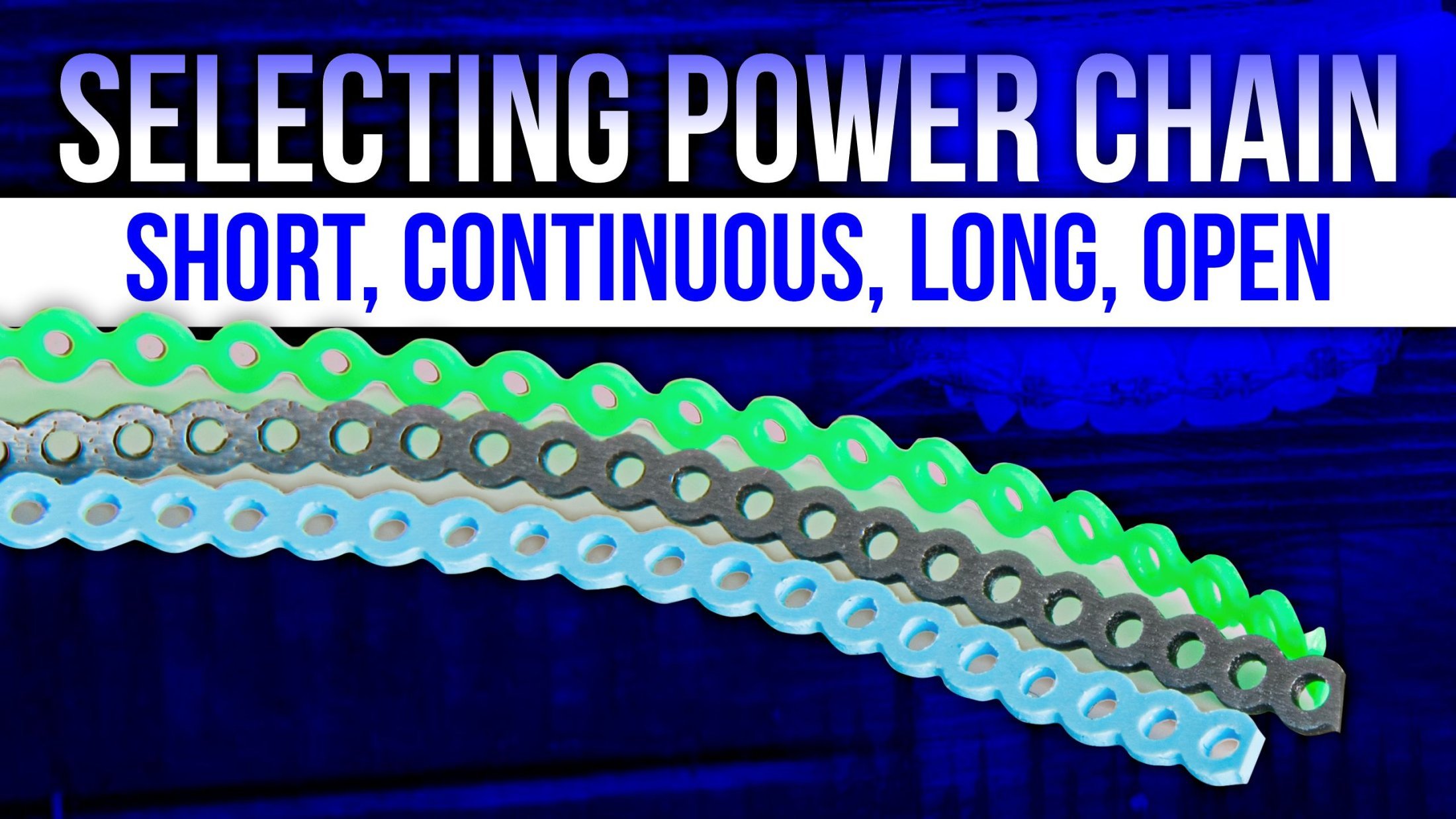
When it comes to orthodontic treatment, selecting a dental power chain is crucial in achieving desired results. A power chain is an orthodontic accessory to close gaps between teeth, maintain space, or align teeth. It consists of a series of elastic links connected together in a continuous chain. Power chains come in different types, including short, long, and continuous.
Let’s explore the characteristics of these power chains to understand how to select the most suitable one for your orthodontic needs.
Short power chains are ideal for closing gaps between teeth. They consist of shorter modules that apply concentrated pressure to specific areas. Short power chains can be an effective option if small spaces between your teeth need to be closed.
As the name suggests, continuous power chains provide a continuous force along the archwire. These chains are commonly used for overall tooth alignment and maintaining consistent pressure on all teeth. They are versatile and can be used in various orthodontic cases.
Long power chains are designed to cover a larger distance between brackets. They are useful for cases where multiple teeth need to be moved simultaneously. Long power chains distribute force evenly across multiple teeth, facilitating coordinated movement.
When selecting the right type of power chain, choosing a continuous power chain is recommended as it eliminates the need for short and long power chain variations. This saves costs and simplifies the purchasing process. Continuous power chain is available in various colors, but it is not necessary to stock every color. Selecting a few colors based on preference is sufficient.
To apply a power chain, the orthodontist estimates the length required and cuts a piece of chain. The chain is then stretched and placed around the teeth, starting from one side and progressing to the other. The chain should be stretched gently without excessive force. Ensure the power chain is centered and properly positioned on the teeth. Single ties may secure the power chain on specific teeth, particularly if not extended to the molars.
Regular check-ups are necessary for power chain patients, as the chain may lose its strength over time and require replacement. The power chain should be replaced every one to two years. Monitoring the patient’s progress and adjusting the force is important to achieving the desired orthodontic outcomes.
Summary
Power chain is a versatile orthodontic accessory used for various purposes in orthodontic treatment. Appropriately selecting and using a continuous power chain can simplify the process, save costs, and help achieve the desired tooth alignment. Regular monitoring and replacement of power chains are essential for effective treatment.
Hybrid Treatments: Switching to Aligners or Invisalign Mid-Treatment
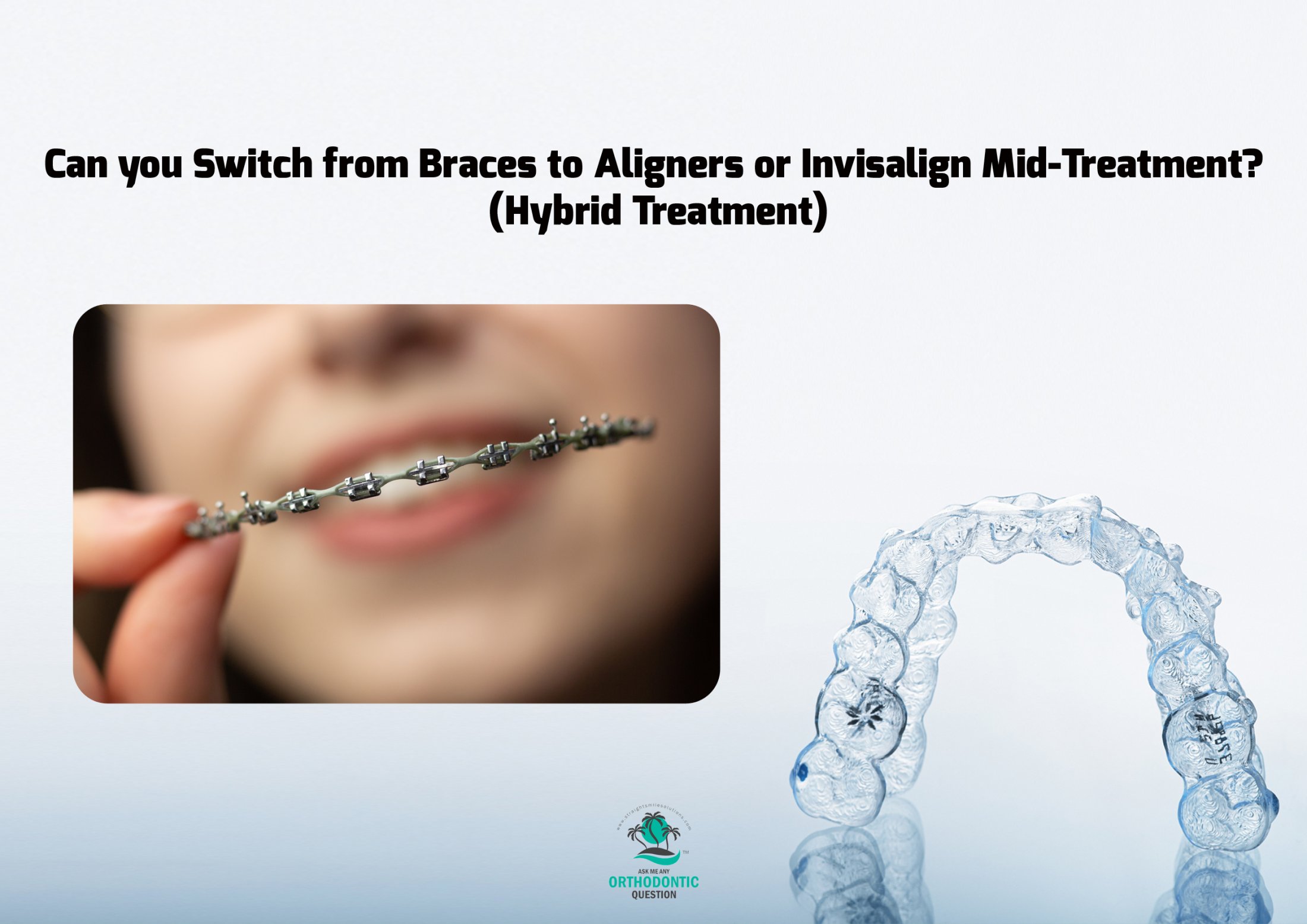
Have you ever wondered about switching to an Invisalign treatment plan in the middle of your patient’s current approach? Many people start off with brackets or other solutions, but they may find that switching to aligners or Invisalign could work better. But is this possible?
Can You Switch to Invisalign in the Middle of the Treatment Plan?
If you need to switch to Invisalign in the middle of your patient’s treatment plan, there’s some good news: this is absolutely possible!
Indeed, it’s not unheard of for patients to want to get most of the heavy lifting down with braces before switching to aligners or Invisalign to finish the treatment. In this scenario, aligners offer an ideal solution for finishing cases. Plus, this approach could even save money with one of the more cost-effective Invisalign plans too – although make sure to check this on a case by case basis to see if this will work for your patient.
Final Thoughts
If you’re unsure that the current approach is right for your patient, please don’t hesitate to contact our experts here at Straight Smile Solutions. As your orthodontics consulting team, we can help you find the right way to tackle tricky cases – even if that means implementing a hybrid approach.
Why Straight Smile Solutions Doesn’t Cover Wire Bending
Why Straight Smile Solutions Doesn’t Cover Wire Bending
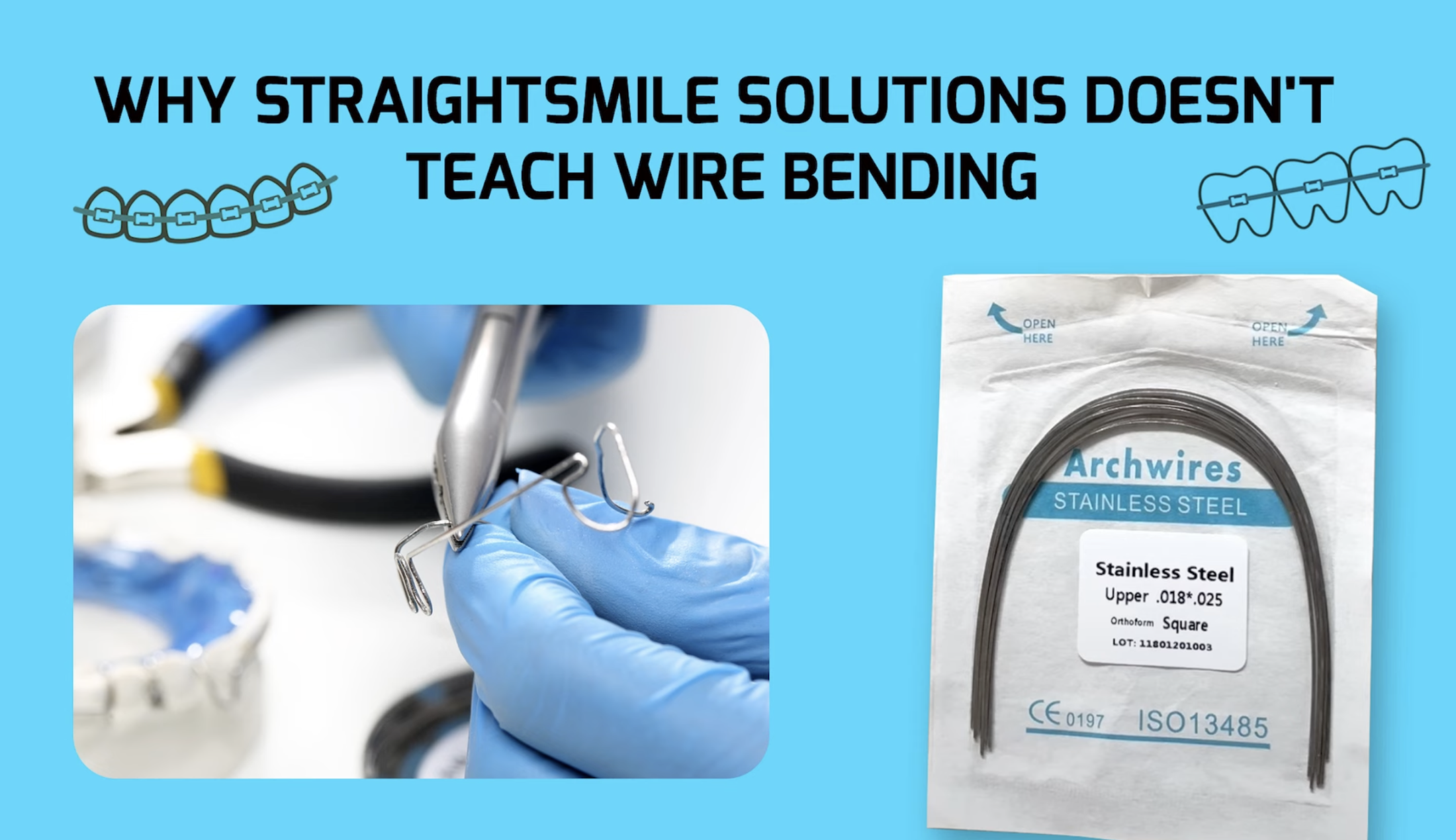
Have you ever noticed that Straight Smile Solutions doesn’t usually cover wire bending topics? While we do have a single video on wire bending, it’s not something we cover regularly – and the simple reason behind this is that it’s just not a necessary skill. Indeed, you can complete incredibly easy orthodontics cases with relative ease simply by using alternative methods. In short: wire bending is old school ortho, and brackets often offer a superior solution overall.
Why Straight Smile Solutions Doesn’t Cover Wire Bending
We’ve been asked about wire bending before, and it’s a topic we’ve touched on briefly – but if you’re looking to provide orthodontics services, wire bending shouldn’t really be a skill you need much these days.
Indeed, while wire bending was a quintessential skill for orthodontists back in the day, it’s fallen out of fashion lately in favor of specialist brackets instead. Indirect bonded brackets often provide a much more reliable and simple solution for most patients, which is perhaps why so many ortho providers now focus on this approach instead.
So long as you get your brackets right, in the first place, wire bending is a pretty redundant skill. So, while it may not hurt to know how to do it, it’s not really a skill most orthodontists will need to use in practice so long as they have the right approach to brackets.
Find Out More About Switching to Brackets
If you’d like to learn more about switching to brackets, please don’t hesitate to contact our experts here at Straight Smile Solutions or check out our YouTube channel to find all of our braces and brackets content. Indeed, wire bending is often considered an outdated technique – so, why not modernize your approach instead?
White and Brown Spots on Teeth: Fluorosis, Decalcification, and Hypoplasia
White and Brown Spots on Teeth: Fluorosis, Decalcification, and Hypoplasia
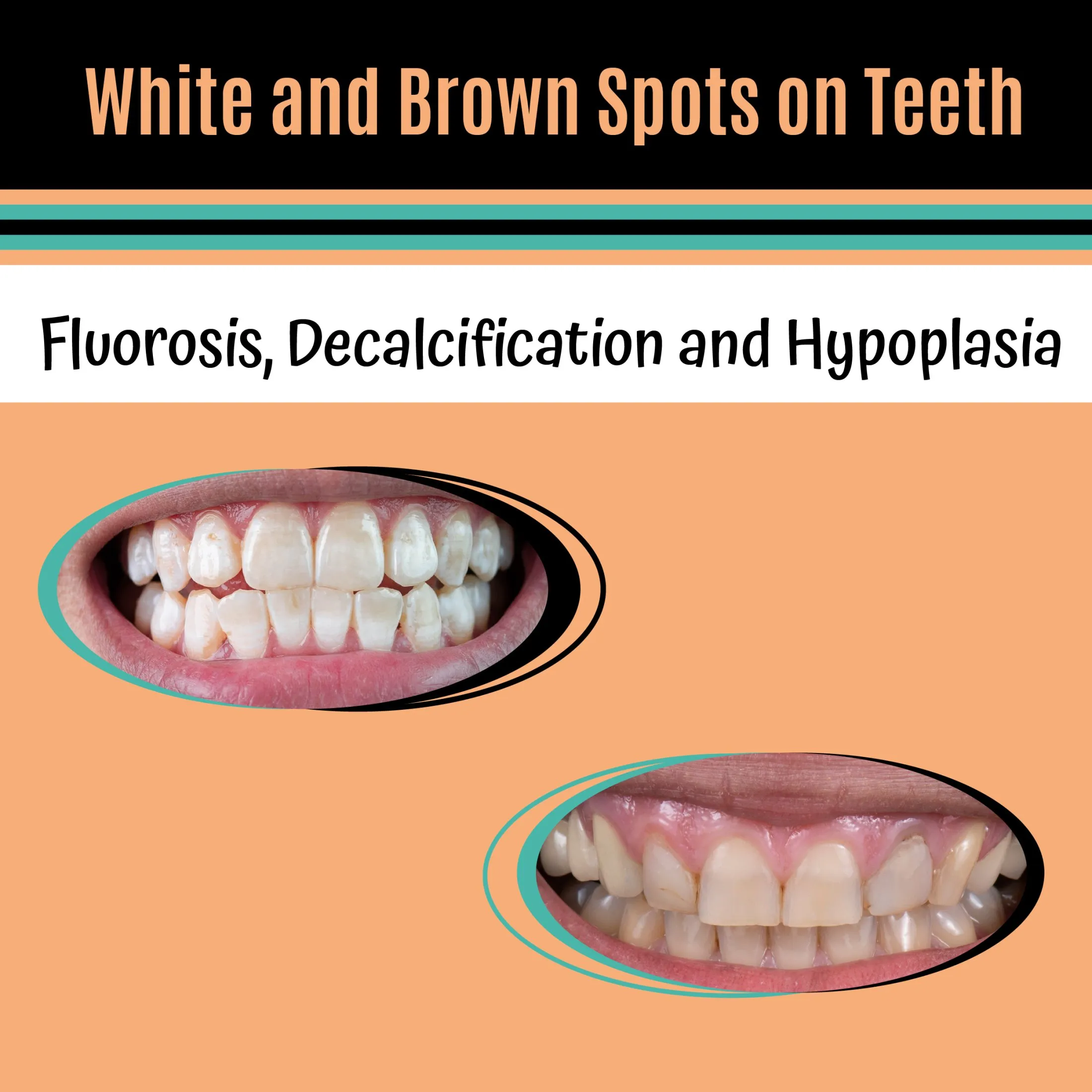
A radiant smile is often associated with good oral health, but sometimes, unsightly white or brown spots can flaw the appearance of your teeth. These spots indicate various dental conditions, including fluorosis, decalcification, and hypoplasia. Understanding these conditions’ causes and treatment options is crucial for maintaining optimal dental health.
Fluorosis
This condition occurs due to excessive fluoride intake during tooth development. Although fluoride is essential for preventing tooth decay, an excessive amount can lead to fluorosis. Mild fluorosis results in barely visible white spots, while severe cases may cause brown stains and even pitting of the tooth enamel. To prevent fluorosis, it is important to use fluoridated dental products in moderation and monitor fluoride levels in drinking water.
Decalcification
This is the loss of calcium from the tooth enamel, leading to white spots. It is often caused by poor oral hygiene, excessive consumption of sugary and acidic foods, or improper brushing technique. The white spots are early signs of tooth decay and can progress to cavities if left untreated. Regular brushing, flossing, and dental check-ups are essential for preventing decalcification. Professional dental treatments like fluoride varnish or dental sealants may be recommended in some cases.
Hypoplasia
This is the incomplete development of tooth enamel, resulting in white or yellowish spots on the teeth. It can occur due to various factors, including genetics, trauma, illness, or malnutrition during tooth development. Hypoplastic spots are more prone to tooth decay and sensitivity. Treatment options may include dental bonding, veneers, or dental crowns to improve the appearance and protect the affected teeth.
Conclusion
White spots or discoloration on teeth can be caused by various factors, such as illnesses, infections, vitamin deficiencies, excess fluoride, and tooth trauma. While these spots are usually not harmful to dental health, they can affect self-confidence. Demineralization or decalcification occurs when bacteria build up in the mouth, attacking the enamel and weakening areas appearing as white or brown spots. Enamel hypoplasia, which can manifest in childhood or adulthood, is caused by factors like nutrient deficiencies, high fevers, and trauma. Treatment options for both conditions include fluoride treatment and filling replacement. Fluorosis, commonly seen in children, can also cause white spots if excessive fluoride exposure occurs. Treatment involves microabrasion, bleaching, or veneers to address the discoloration. When dealing with white or brown spots on teeth, consult a dental professional for an accurate diagnosis and appropriate treatment plan.