
StraightSmile Solutions®
Dr. Amanda’s Opinion on Wisdom Teeth / 3rd Molar Extractions – Can Early Ortho Prevent the Need?
Dr. Amanda’s Opinion on Wisdom Teeth / 3rd Molar Extractions – Can Early Ortho Prevent the Need?
Introduction
- Dr. Amanda shares her personal, research-informed opinion on wisdom teeth removal, emphasizing this is not universal medical advice.
- Discussion sparked by a layperson’s question on whether routine wisdom teeth extraction is necessary or a profit-driven practice.
When Wisdom Teeth Must Be Removed
- Necessary if they cause problems: impaction, interference with tooth movement, decay, periodontal issues, or inability to maintain hygiene.
- Fully erupted, upright, functional teeth that are easy to clean may not need removal.
Preventive Extraction Debate
- Common U.S. practice to remove wisdom teeth at ages 16–18 regardless of symptoms.
- In many other countries, preventative removal is rare; most people manage without extraction.
- For some, choosing not to remove may result in no issues.
Role of Early Orthotropics
- Reference to the film Open Wide and the teachings of Mike & John Mew on jaw growth, oral posture, nasal breathing, and tongue positioning.
- Proper early oral habits can help jaws develop enough space for wisdom teeth.
- Faces “melting” (growth downward/backward) due to poor oral posture or mouth breathing reduces available space.
Risks of Retaining Problematic Wisdom Teeth
- Misaligned wisdom teeth can damage adjacent molars through resorption or decay.
- Later-life removal is harder, may not be covered by insurance, and often occurs at inconvenient times.
- Military removes them preemptively to avoid emergencies during service.
Sedation and Extraction
- Sedation is optional, not mandatory.
- Dr. Amanda discourages unnecessary anesthesia due to cost and risks; nitrous oxide is an alternative.
- Acknowledges sedation benefits for surgical efficiency and patient management.
Conclusion
- Wisdom teeth removal is not inherently a scam but can feed on patient anxiety.
- Decision should be individualized based on jaw development, tooth positioning, hygiene capability, and patient preference.
How to Fix an Anterior Crossbite in Early Mixed Dentition for Free
How to Fix an Anterior Crossbite in Early Mixed Dentition for Free
Introduction
Anterior crossbites in early mixed dentition can be a significant concern if not addressed promptly. This dental issue, where upper front teeth are trapped behind lower front teeth, can hinder upper jaw growth if left untreated. The key to success lies in early detection before most permanent teeth have erupted, making treatment simpler, faster, and often cost-free.
Importance of Early Intervention
- Treatment is most effective when only primary teeth are present or when a single permanent tooth is less than 30% erupted.
- Once multiple permanent teeth have fully erupted, simpler methods no longer work, and more advanced appliances become necessary.
Identifying the Cause
- Often, crossbite occurs because upper incisors are retroclined and trapped behind lower teeth.
- This mechanical blockage can prevent proper forward development of the maxilla (upper jaw).
Treatment Approaches
- Early-Stage Solutions:
- Popsicle Stick Method: A simple wedging technique to encourage forward bite correction.
- Bite Bumps: Composite material applied to molars or incisors to open the bite, allowing trapped teeth to move freely.
- Advanced Stage Solutions:
- If jaw growth is already restricted, cephalometric X-rays are needed to determine the degree of underdevelopment.
- Treatment may require palatal expansion and a facemask to stimulate forward jaw growth.
Professional Guidance
- A dentist or orthodontist should supervise the popsicle stick and bite bump methods, which are safe for use on a dentist’s own family but not recommended for unsupervised DIY.
- Demonstration videos can be found on YouTube by searching “anterior crossbite popsicle stick orthodontics.”
- Further training and detailed instructions are available on Dr. Amanda’s Phase One Course and her YouTube channel.
Conclusion
Anterior crossbites, when caught early, are among the simplest orthodontic problems to fix, often without expensive appliances. Using cost-effective techniques like the popsicle stick method and bite bumps, dental professionals can correct the issue before it causes lasting jaw growth problems. The message is clear: early detection, professional supervision, and timely action are the keys to success.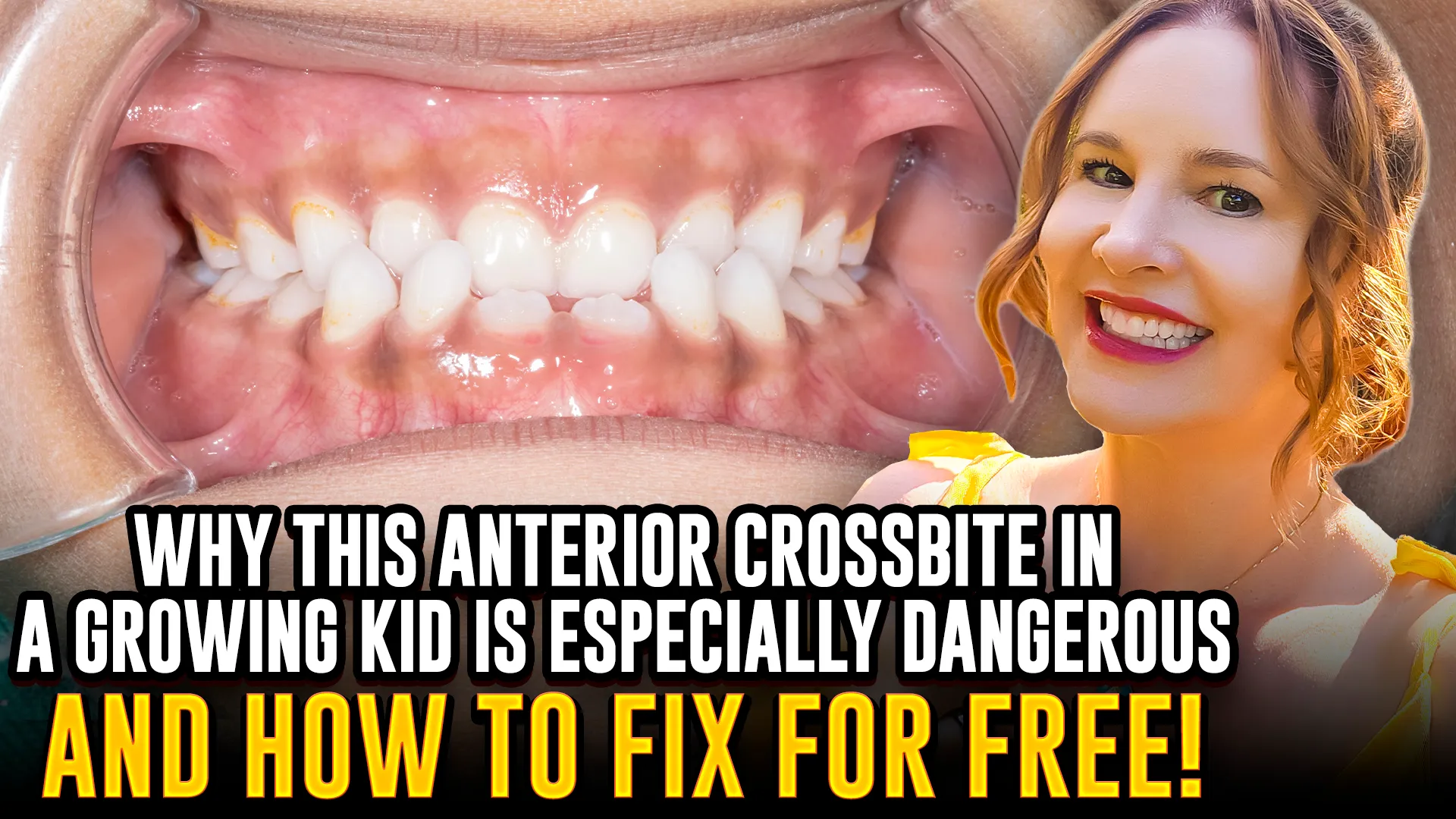
Herpes vs Canker Sores in Orthodontics
 Herpes vs Canker Sores in Orthodontics
Introduction
Dr. Amanda explains the difference between oral herpes (herpes simplex virus) and canker sores (aphthous ulcers) in a dental/orthodontic context. She clarifies terminology to avoid confusion, using both medical and common terms.
Herpes Simplex Virus (Cold Sores)
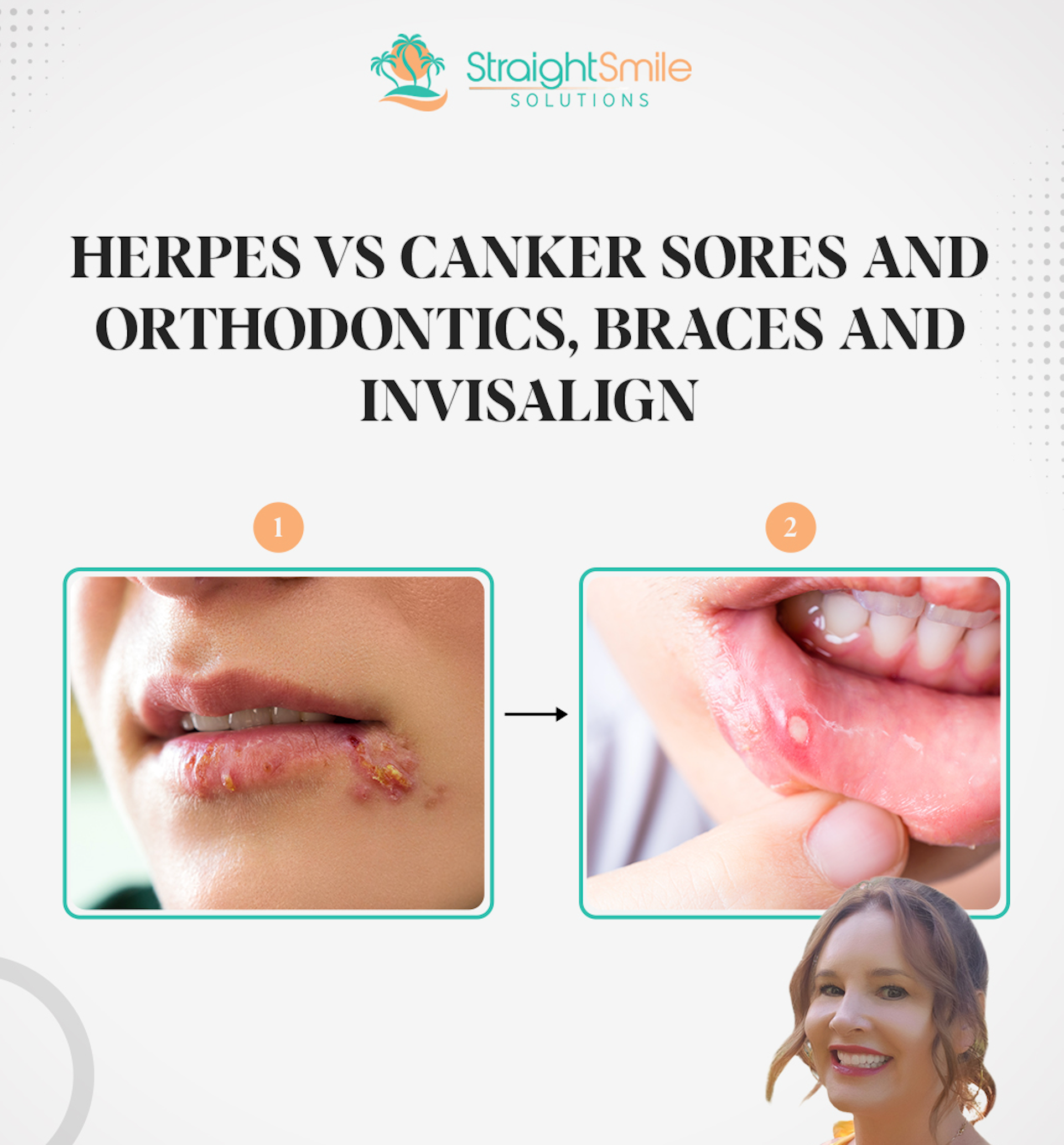
• Caused by the herpes simplex virus; contagious.
• Transmission: kissing, oral sex, or close contact (e.g., kissing a baby, potentially infecting their eye).
• Always located on the vermilion border edges or corners of the lips.
• It contains viral fluids in pustules; stretching or rubbing can rupture them, spreading the virus.
• In orthodontics, patients with active herpes are rescheduled to avoid cross-contamination and self-inoculation (especially to the eyes).
• Once contracted, herpes remains in the body for life, flaring during stress.
Canker Sores (Aphthous Ulcers)
• Not contagious; often related to autoimmune responses, friction, spicy foods, or trauma from orthodontic appliances.
• Located inside the mouth—on the mucosa of the lips, free gums, or cheeks, but not on attached gums.
• Can be caused or worsened by orthodontic irritation; treatment includes wax application, analgesics, and anti-inflammatories.
• Typically, harmless and self-limiting.
Orthodontic Considerations
• Cold sores require appointment rescheduling until lesions heal (about a week or with antiviral treatment).
• Infection control: avoid saying “herpes” publicly in the office; use “cold sore” when speaking to patients/parents discreetly.
• Universal precautions are followed, but the main concern is preventing eye infections and facial spread in the patient.
Key Differences
• Herpes: Contagious, viral, on lip border, lifelong condition.
• Canker sore: Non-contagious, autoimmune/trauma-related, inside mouth, temporary.
Conclusion
Recognizing and distinguishing the two conditions helps orthodontic staff manage infection control, patient comfort, and appointment timing appropriately.
Making Orthodontics More Accessible for Neurodivergent Patients
Making Orthodontics More Accessible for Neurodivergent Patients
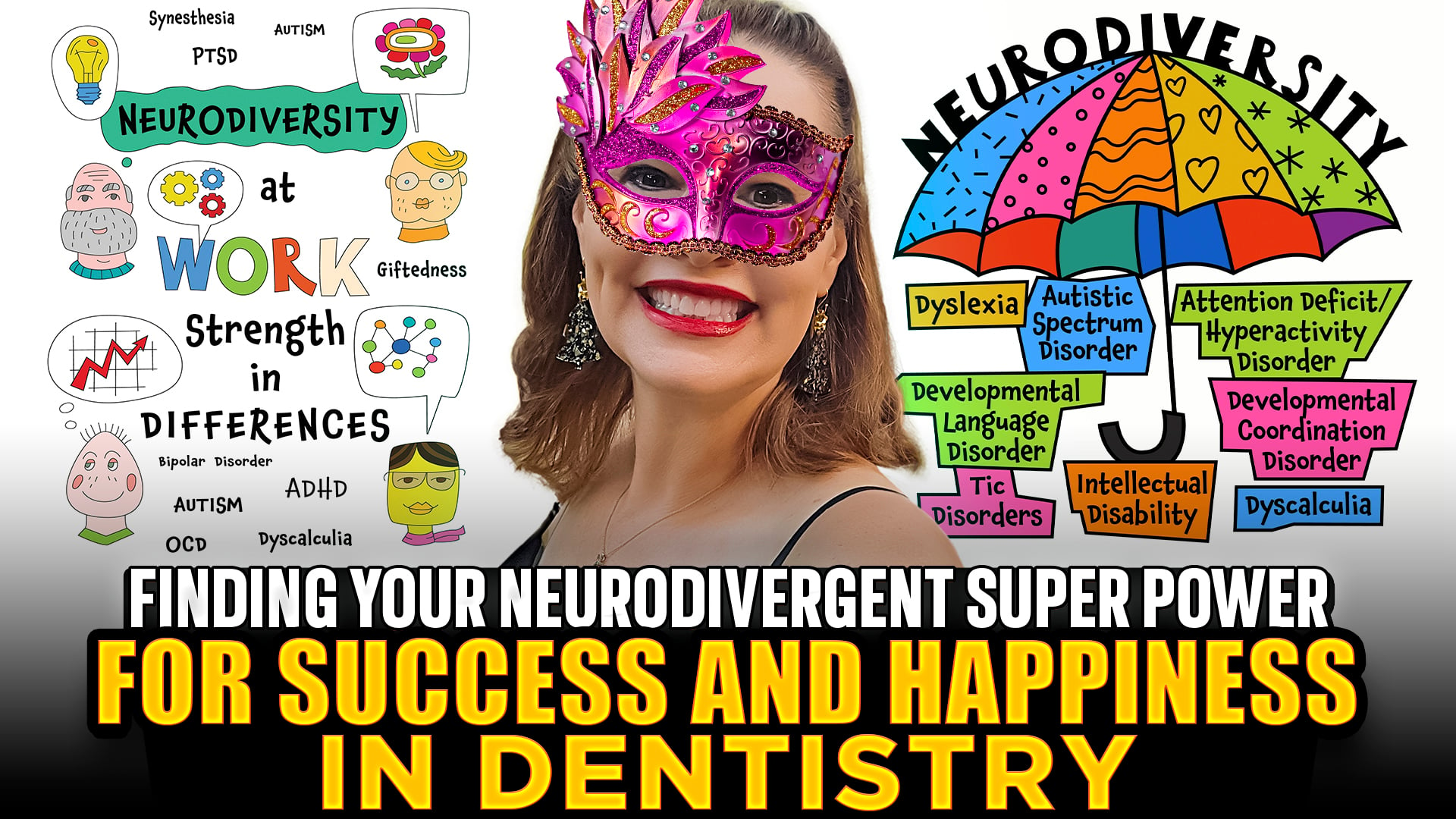
In recent years, there has been a growing awareness around neurodivergence—an umbrella term encompassing conditions such as autism spectrum disorder (ASD), attention deficit hyperactivity disorder (ADHD), sensory processing challenges, and other developmental or cognitive differences. As orthodontic professionals, embracing neurodiversity isn’t just good practice; it’s essential for creating a truly inclusive environment for all patients.
The Value of Inclusion in Orthodontics
Neurodivergent patients deserve the same high standard of orthodontic care as anyone else. When we welcome these patients into our practices with understanding, flexibility, and proactive planning, we create not only successful treatment outcomes but also long-term trust with families and communities.
Too often, myths persist, suggesting that neurodivergent individuals can’t tolerate orthodontics or that only traditional braces are suitable for special needs. The reality is quite the opposite. With a patient-centered, adaptive approach, clear aligners, phased treatment, and sensory-aware scheduling, many neurodivergent patients thrive during orthodontic care.
Best Practices for Supporting Neurodivergent Patients
Here are a few practical strategies that can make a real difference in treatment outcomes and patient satisfaction:
- Pre-Visit Preparation: Provide visual aids, introductory videos, or office tours before the first visit to reduce anxiety and improve familiarity.
- Sensory-Smart Scheduling: Book appointments during quieter times, such as early mornings, and keep visits consistent with the same team members whenever possible.
- Comfort-Centered Tools: Dim lights, reduce noise, and allow comfort items like fidget toys or stuffed animals during treatment. Digital scanners can help avoid triggering gag reflexes.
- Flexible Treatment Planning: Consider starting with passive aligners or short sessions to build tolerance gradually. Customizing aligner plans or breaking up longer procedures can foster a sense of control and comfort.
- Collaborative Communication: Actively involve caregivers. Understanding the patient’s communication style, routines, and triggers can guide smoother appointments and at-home care.
These accommodations are not burdens—they’re opportunities to connect and serve with empathy. Neurodivergent patients often become some of the most loyal and appreciative members of your patient community.
Building a Practice that Stands Out
Orthodontic offices that train their staff and invest in making treatment more accessible aren’t just being compassionate, they’re also future-proofing their practices. In a world increasingly focused on inclusivity, offering neurodivergence-informed care is a powerful differentiator.
We specialize in helping pediatric dentists, general dentists, and new orthodontic graduates launch and scale successful orthodontic programs, including those focused on neurodivergent care. If you’re ready to build a practice that’s not just effective but inclusive, schedule a consultation with our team today.
How Musical Instruments Can Affect Your Invisalign Outcomes
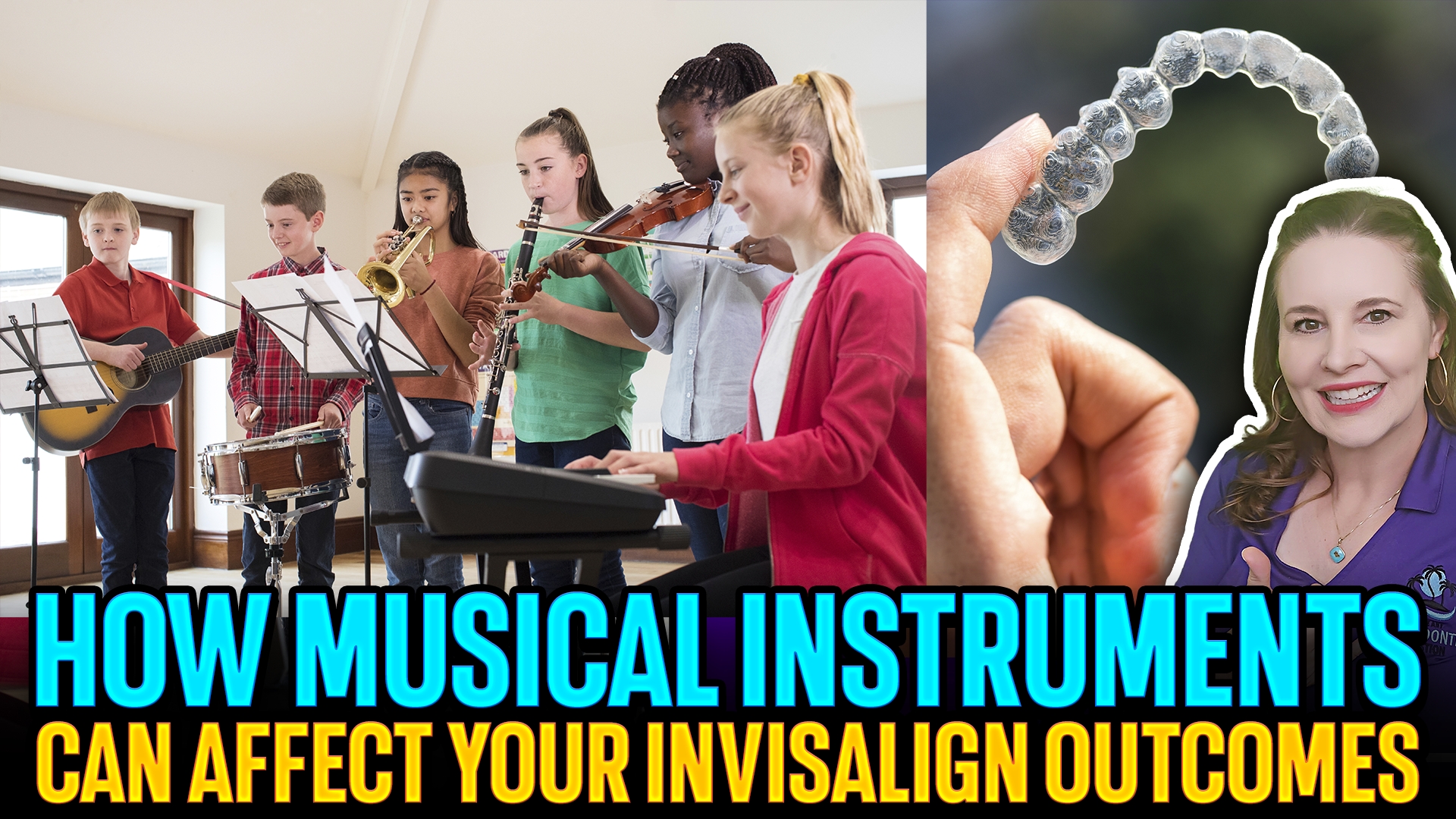
Get to Know Your Patients Beyond the Dental Chair
• It’s essential to understand a patient’s lifestyle, especially junior high or high school students.
• Asking questions about extracurricular activities (like music) builds rapport, strengthens case acceptance, and leads to more customized care.
• Many providers only use basic health questionnaires, but neglect to ask what instruments a student plays, which can be a big oversight.
The Role of Musical Instruments in Orthodontic Treatment
• Specific instruments, especially brass (e.g. trumpet, trombone, French horn, tuba) and woodwinds (e.g. clarinet, saxophone, flute, oboe, bassoon) require unique mouth positioning (embouchure) that exerts counterforces on the teeth.
• These counterforces can influence the direction of tooth movement, making it more unpredictable or resistant to treatment.
• Malocclusion and bite issues may be exacerbated if the instrument is played intensely or frequently.
Adjusting Treatment Plans Accordingly
• Knowing what instrument, the patient plays helps guide:
o Appliance selection (clear aligners may be better for comfort and precision).
o Treatment design, including ClinCheck setup.
o Expectations for treatment time and movement patterns.
• Personal story: Dr. Amanda shares that as a clarinet and oboe player with braces, the experience was painful and discouraging, eventually leading her to give up music.
Action Steps for Providers
• Implement a patient lifestyle questionnaire that includes musical activities.
• Educate parents and patients on why you’re asking these questions, which builds trust and shows care.
• Consider clear aligners like Invisalign over fixed braces for students in band programs to avoid discomfort and complications.
The BIG BEAUTIFUL BILL and Its Impact on Dental Students & Loans
The BIG BEAUTIFUL BILL and Its Impact on Dental Students & Loans
Overview of the Big Beautiful Bill (Triple B)
- The “Big Beautiful Bill” (BBB) brings significant reforms in how dental and graduate education is financed.
- It introduces loan limits—now capped at $50,000/year and $200,000 total for professional programs, including dental school.
- This is much lower than what many dental schools currently cost, especially private institutions like USC, when you include tuition, room, board, and supplies.
Personal Loans & Repayment Stories
- Dr. Amanda shares her personal journey: graduated from UCSF dental school in-state with no undergrad loans and lived very frugally.
- Total loans: under $280K (including residency), repaid responsibly—she even refinanced at 1.41% interest due to strong credit and strict financial discipline.
- Emphasizes how student loans can become a “noose”—limiting personal choices, career paths, and family dynamics later in life.
Real-Life Impacts Beyond Finances
- Life is unpredictable—marriage, divorce, illness, and kids with health needs can affect your ability to work or repay loans.
- Disability insurance is critical, but difficult to qualify for if flagged by any note in your medical records. One wrong comment can block you from life.
- Dental school doesn’t prepare students for real-life financial stress or unforeseen circumstances that can derail career plans.
Advice for Future Dentists
- Avoid huge loans—pick the cheapest school possible, not the “best” one or one near a partner.
- Be ready to pivot in your career and life path.
- General dentistry and pediatric dentistry remain great choices; pairing pedo with ortho can be very smart financially.
- Specialties like oral surgery (OMFS-MD) remain solid; others like ortho and radiology may shrink due to AI disruption.
Final Takeaway
- Don’t go into dental school lightly. Triple B might force changes in school operations, potentially reducing access or changing repayment models.
- If you’re locked into big debt, you may have to take jobs you hate just to survive.
- Stay flexible, keep loans low, and stay educated on policy shifts like the BBB.
Could MEWING Be the Solution for 3rd Molar Extractions?

Could MEWING Be the Solution for 3rd Molar Extractions?
A Tribute to Dr. John Mew and His Legacy
Panoramic X-rays: The First Clue
- Dr. Amanda emphasizes the importance of reading panos (panoramic X-rays) before seeing the patient whenever possible.
- Start by counting the teeth—many clinicians overlook missing lower incisors or impactions.
- Evaluate for pathology, impacted third molars (wisdom teeth), or anomalies such as odontomas or supernumeraries.
- If something appears unusual, don’t ignore it—take additional PAs or CBCT scans for accurate diagnosis.
Risks with Impacted Third Molars
- In adults with fully formed third molars and no space (ramus/tuberosity limitations), extraction is usually recommended.
- Leaving them in can create vertical occlusion issues, risk damage to second molars, and cause root blunting.
- Attempting ortho without addressing these risks could result in clinical liability, even with informed consent.
The Role of Early Growth in Preventing Extractions
- Jaw growth, breathing patterns, sleep posture, and diet from as early as age 1–2 impact future space for third molars.
- Encouraging proper nasal breathing and facial development early may reduce the need for extractions later.
- However, it’s not guaranteed—even with ideal growth and habits.
Tribute to Dr. John Mew and “Open Wide”
- Dr. Amanda honors Dr. John Mew, creator of the “Mewing” philosophy promoting forward facial growth through tongue posture and nasal breathing.
- Recommends watching Open Wide (formerly on Netflix) for a visual understanding of Mew’s ideas.
- Advocates for questioning orthodontic norms like unnecessary premolar extractions.
- Dr. Simon Wong’s airway-focused orthodontic courses are also recommended to align with Mew’s vision.
Class 3 Advanced Protraction Facemask Training
- Early Treatment Philosophy for Class III Cases
• Dr. Amanda emphasizes early intervention for Class III malocclusions, especially those with a retrusive maxilla (bimaxillary retronathia).
• Ideal treatment begins once the first molars erupt—typically before age 10.
• The goal is to expand the arches, loosen craniofacial sutures, and protract the maxilla to improve airway and facial balance. - Rationale for Protraction Facemask Use
• The protraction facemask is Dr. Amanda’s preferred appliance for addressing skeletal Class III growth patterns.
• Works especially well when combined with expansion to stimulate sutural flexibility and bone remodeling.
• Can help grow the maxilla forward in cases with airway concerns, assuming ENT clearance is given.
III. Key Cautions and Success Factors
• If there’s a deep bite or lower incisors blocking forward movement, protraction won’t be effective.
• A proper anterior open bite must be created first—either through bite blocks, anterior bite plates, or occlusal acrylics.
• Customization depends on the patient’s cephalometric x-ray findings, which should guide appliance design.
- Airway & Growth Considerations
• Successful treatment assumes no major myofunctional or breathing issues—nasal breathing must be patent.
• This method can redirect unfavorable growth patterns to achieve better aesthetics and airway function.
• Combining early maxillary advancement with lower mandibular advancement later (e.g., using MA appliances) can produce excellent outcomes in growing patients. - Resources & Learning Support
• Additional training on facemask design, timing, and protocols is available through Straight Smile Solutions’ YouTube playlists and Phase I education courses.
• One-on-one support is also available via their consulting platform.

What is Guided Orthodontics & How Can It Help You Save Overhead?
Defining Guided Orthodontics
- Dr. Amanda opens by admitting she had to ask ChatGPT what “guided orthodontics” even means—highlighting it as a buzzword.
- Defined as a personalized treatment approach using digital tools where final aesthetic and functional outcomes are simulated before treatment.
- Examples include:
- Working backward from a final restorative or aesthetic goal (like implant space or veneer placement).
- Using ClinCheck or working with a consultant for case planning.
- Prosthetically Guided Orthodontics (PGO), where ortho is coordinated around prosthodontic needs.
The Big Mistake: Lack of Collaboration
- Many dentists and orthodontists “wing it” without setting clear restorative, aesthetic, or functional goals first.
- Especially problematic in multi-disciplinary cases (e.g., making space for implants or bridges).
- Guided orthodontics requires coordinated planning with all involved providers—restorative dentists, implant specialists, orthodontists, etc.
- Solo planning without collaboration = not guided ortho, “guess ortho.”
Strategic Planning = Reduced Risk + Predictable Results
- General dentists can do more if they’re educated and work with ortho mentors.
- Starting with a clear goal allows you to reduce risks, avoid treatment failures, and achieve more predictable outcomes.
- Essential to document informed consent thoroughly: risks, benefits, and alternatives to each proposed plan.
Business Tips: Funnel, Labs, and Avoiding Bankrupt Systems
- General dentists have more income potential if they handle both ortho and restorative “double-dipping.”
- Some guided ortho companies have gone bankrupt. Amanda advises not to rely too heavily on one system or lab.
- Recommendation: work with flexible ortho mentors and have multiple lab options to reduce vulnerability.
Final Words: Don’t Wing It
- Straight Smile Solutions offers a unique service: synchronous case planning + multiple treatment pathways explained.
- If clients ignore offered Zooms or choose to “wing it,” the failure isn’t on Amanda.
- Guided ortho means strategic, documented, collaborative planning, not mindlessly following AI or outsourcing without understanding.
5 Sports Where Invisalign or Clear Aligners Are Always Better Than Braces
 5 Sports Where Invisalign or Clear Aligners Are Always Better Than Braces
Why Braces Can Be Dangerous in High-Impact Sports
• Dr. Amanda strongly advises against braces for athletes in certain sports due to safety concerns.
• Fixed metal appliances (brackets, bands, wires) can cause serious mouth injuries if there’s facial impact.
• Braces also create unpredictable movements and frequent breakages in these contexts.
• No mouthguard fully protects the mouth from braces-related trauma in high-contact sports.
Top 5 Sports Where the Only Safe Option Is Invisalign
1. Skateboarding (with tricks) – The Risk of falls or facial impact makes metal braces too dangerous.
2. Rugby – High-contact sport where facial injuries are common.
3. Martial Arts (beyond white/green belt) – Especially Muay Thai, MMA, and boxing—any hits to the mouth could cause major damage with braces.
4. Ice Hockey – Puck or stick injuries to the face are a serious risk.
5. Football – While common, brace wearers face complications with mouthguard fit and potential wire damage during collisions.
Why Invisalign Is Safer and More Functional
• Aligners sit flat against teeth with no protruding parts, making custom mouthguards easier to fit and refit.
• Clear aligners don’t interfere with normal oral movements or protective gear.
• Aligners can be temporarily removed if needed and replaced afterward, giving flexibility that braces don’t.
Don’t Forget Music & Lifestyle Factors
• Dr. Amanda also references past videos on how musical instruments can be impacted by braces.
• For example, brass or woodwind instrument players may struggle with lip pressure over brackets.
• Key message: Get to know the patient’s lifestyle—not just their dental concerns, but how their daily activities could affect (or be affected by) orthodontic appliances.
Final Thought: It’s Not About Preference—It’s About Safety
• Parents and kids often come in with a preference for braces or aligners.
• However, in these high-risk sports, aligners are not optional; they are necessary.
• Choosing incorrectly leads to broken brackets, damaged teeth, bone trauma, and longer treatment times.