
StraightSmile Solutions®
Black Triangles Aren’t Always Bad!
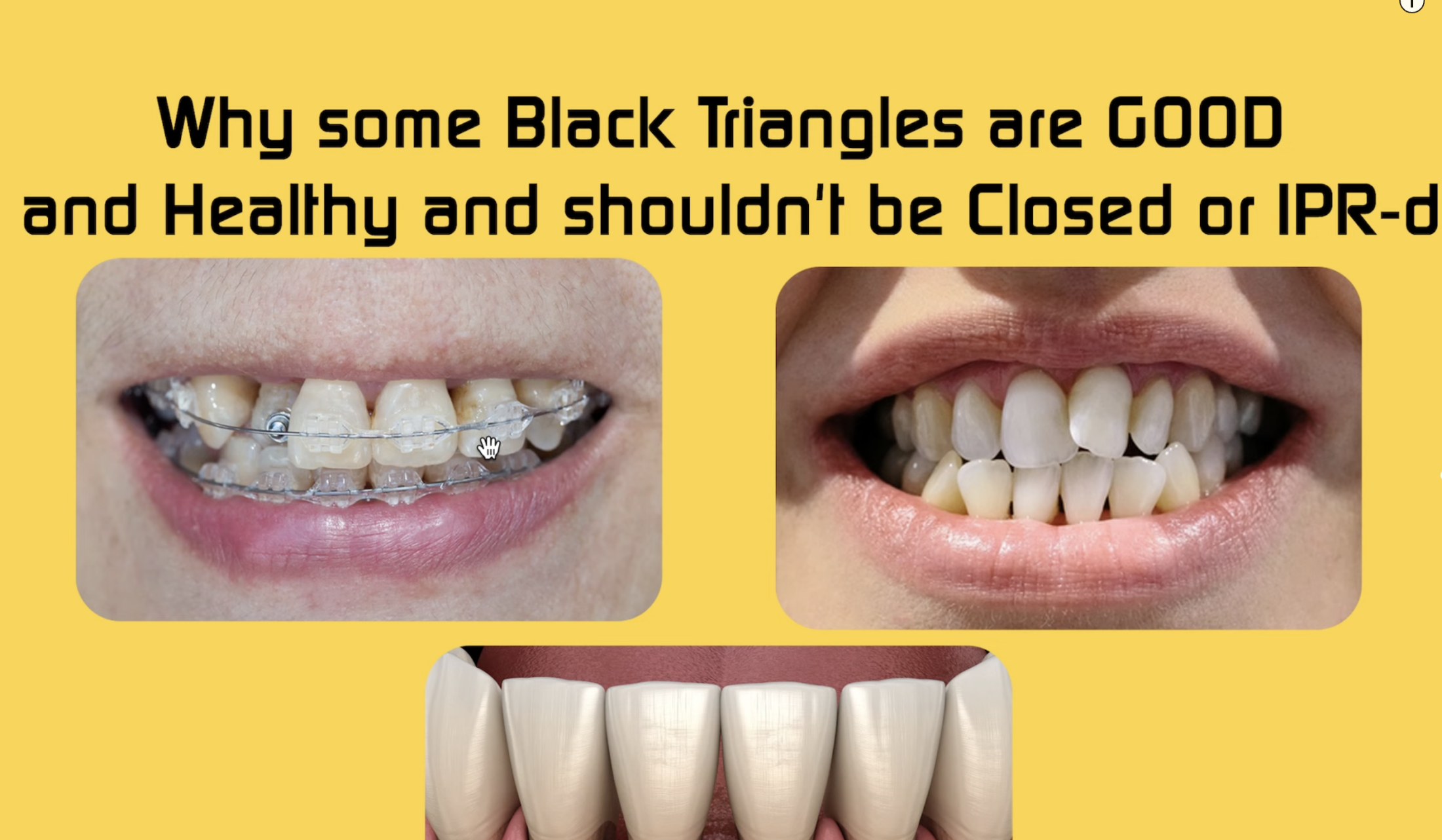
Black Triangles Aren’t Always Bad!
Let’s face it – black triangles aren’t always a major issue, but many people assume that they’ll always need an orthodontics treatment plan. With this thought in mind, we’re looking at some of the key things you need to know about why some black triangles are good in an orthodontics case.
Not All Black Triangles are Bad
Black triangles are often considered to be problematic, but this isn’t necessarily the case. Indeed, black triangles can be problematic in some cases, but fixing them isn’t necessarily a good option. Remember: IPR especially involves a lot of direct invasive treatments and requires you to remove healthy tooth matter, so it’s not necessarily a good option to do it just to resolve black triangles.
It’s also worth noting that you can only do IPR or close the gap if you have the suitable clearance to do so. In some cases, trying to fix black triangles when doing so risks bringing things too close together could leave you in a difficult situation where the top and bottom teeth end up touching – a real source of frustration for many people.
In short: if you do massive IPR to fix black triangles that don’t need it, you’ll also have a lot of revisions and refinements to do to finalize the case. And, of course, you also predispose the patient to sensitivities or cavities more so than in regular teeth.
Don’t Close Black Triangles Without Developing a Full Treatment Plan First
Black triangles aren’t always a problem. As such, you should never close or do IPR on black triangles if they are healthy in their own right. Always make sure you’ve looked closely at the case in detail to help you determine whether the black triangles will need to be fixed after all.
2023 Clear Aligner, Invisalign, ClearCorrect Delivery Instructions
2023 Clear Aligner, Invisalign, ClearCorrect Delivery Instructions
Welcome to the future of orthodontic treatment! In 2023, the field of clear aligners has witnessed remarkable advancements, revolutionizing how we achieve a straighter smile. Brands like Invisalign and ClearCorrect have introduced groundbreaking delivery instructions that enhance the patient experience. These innovative instructions ensure a seamless journey for individuals seeking orthodontic correction. Patients can optimize their treatment progress by providing clear, concise guidelines for wearing and maintaining aligners while enjoying the benefits of discreet, removable orthodontic solutions.
My name is Dr. Amanda from www.straightsmilesolutions.com. As an experienced orthodontist, I share my clinical experience and opinions to provide better, more predictable patient outcomes using clear aligners. This article serves as an updated clear aligner delivery instruction guide. While my views may differ slightly from aligner companies, it is based on my expertise.
Case Treatment Approach
All cases should be approached as unlimited or comprehensive, regardless of the patient’s preferences. Even if a patient requests limited movement or specific tooth adjustments, educating them about ideal treatment options and documenting their understanding is crucial. Referring patients to an orthodontist for further evaluation can help ensure proper treatment planning.
Taking Control of Treatment Planning
It is essential to take control of the treatment planning process and not solely rely on technicians’ recommendations. As a dentist, you must understand the goals and reasons behind each treatment plan and make informed decisions. Addressing crowding may involve various techniques, such as:
● Expansion
● Proclination
● Round-tripping
● IPR (interproximal reduction)
● Extractions
Work with an independent orthodontist during the initial stages to optimize treatment planning.
Instructions After Case Submission
If you are using clear aligners, it is recommended to use a scanner instead of traditional impressions for accuracy and convenience. Once the case returns from the aligner company, ensure you identify the attachment template or aligner zero. Additionally, check if there are any instructions for IPR and when it should be performed. Proper scheduling is crucial, especially if attachments and IPR are required during the first visit.
Initial Aligner Seating
Instead of immediately placing attachments and performing IPR, start by trying on an aligner one. Show the patient the aligner and check for imperfections, such as jagged edges. Teach them how to use chewies, which aid in aligner seating. The aligner should fit snugly against the teeth without gaps or air bubbles. If there are issues with seating, check for interferences or tissue blanching. Any compression on the gingiva or discomfort warrants a remake of the aligners.
Troubleshooting Aligner Fit
If the aligner does not fully seat due to minor issues and no tissue concerns, instruct the patient to go home and use chewies regularly. Ask them to return in a week or two to reassess the aligner fit without attaching the attachments or performing IPR. This allows the aligners to gradually seat properly. If the problem persists, contact the aligner company for a warranty fit and avoid compromising the patient’s comfort or causing soft tissue damage.
Conclusion
Dr. Amanda, an orthodontist, dental consultant, and dental advisor by profession, has established herself as an expert in the field after a successful decade of private practice in the bustling San Francisco Bay Area. Recognizing the distinctive requirements of dentists, dental specialists, and dental labs, she took the initiative to found StraightSmile Solutions, an orthodontic consulting company.
She provides valuable insights and recommendations for clear aligner treatment. Her extensive experience in the orthodontic industry and as an Invisalign provider brings credibility to her clinical opinions. Amanda emphasizes the importance of comprehensive treatment planning, avoiding limitations, and striving for perfect results. She highlights the significance of using scanners instead of traditional impressions and the proper timing of attachments and interproximal reduction. Following Amanda’s guidance, practitioners can achieve better outcomes and enhance patient experiences with clear aligners.
Addressing Tapered Teeth in ClinChecks
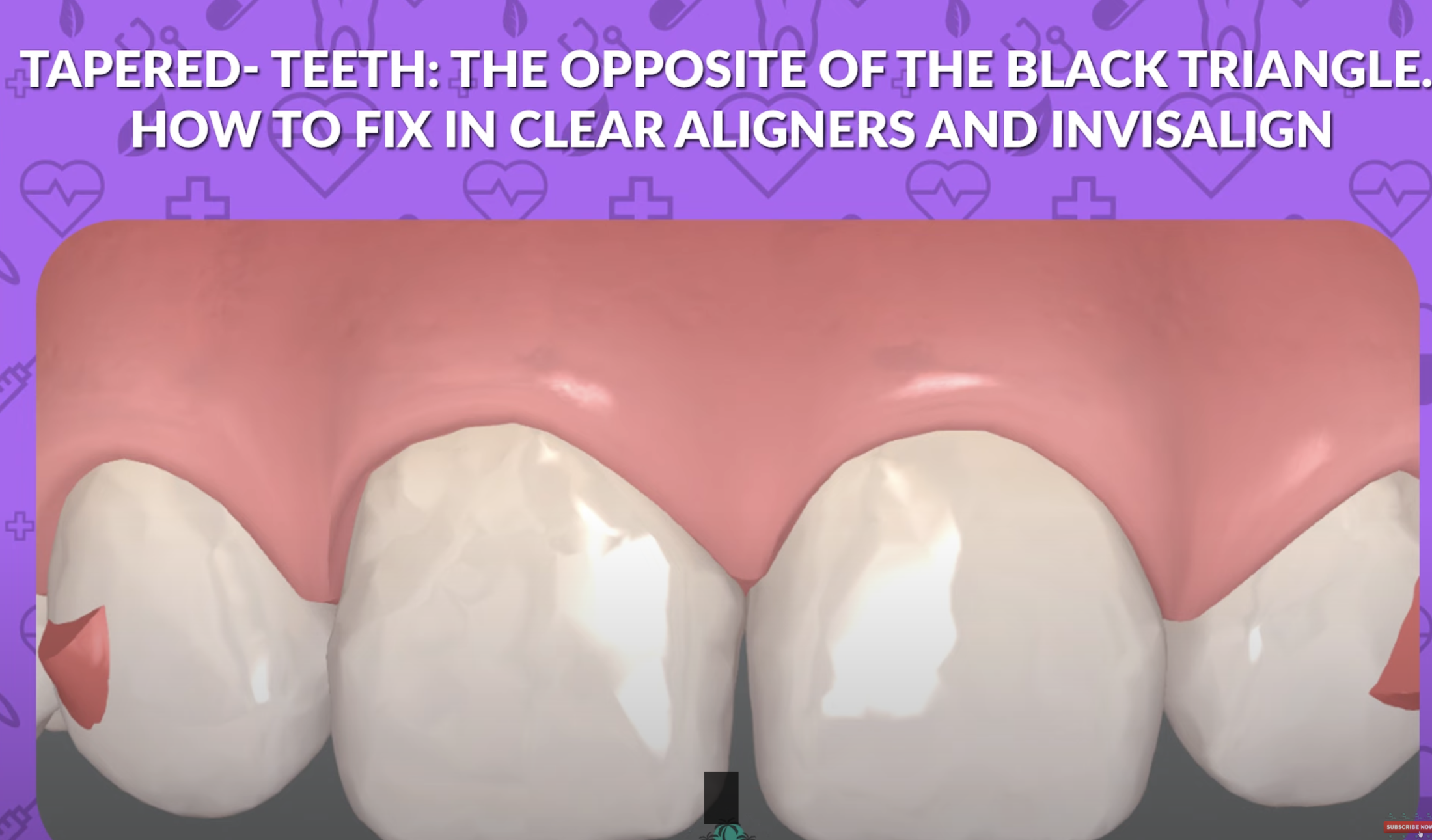
Addressing Tapered Teeth in ClinChecks
Have you ever wondered about how to address tapered teeth as part of your Invisalign ClinCheck? There are numerous potential options you could potentially consider, but if you’ve noticed an issue and it’s not a black triangle, the following tips may help inform your Invisalign treatment plan.
Addressing Odd-Shaped Teeth in ClinChecks
Teeth can come in all shapes and sizes. In many cases, odd-shaped teeth or tapered teeth may be addressed by swinging the roots distally, but this can also cause problems with the surrounding tooth roots as well.
So, what alternatives are there? Well, the easiest way to tackle this issue is simply to do some easy composites, such as a veneer, composite laminate, or a four-service composite. You can potentially also bundle that into the full price of your patient’s ortho quote.
You can also use the Invisalign export feature to help with this, which allows you to export the final STL. If the treatment plan doesn’t go ahead after this, though, you may still be billed, so it’s potentially worth getting a deposit arranged first.
Get Personalized Support for your Case
Let’s face It – every case is different. So, while we’ve outlined some of the general rules in today’s guide, if you need more specific guidance on interpreting your patient’s ClinCheck, please don’t hesitate to contact our team of orthodontic experts for further support.
Tackling Invisalign Transfer Cases in Orthodontics
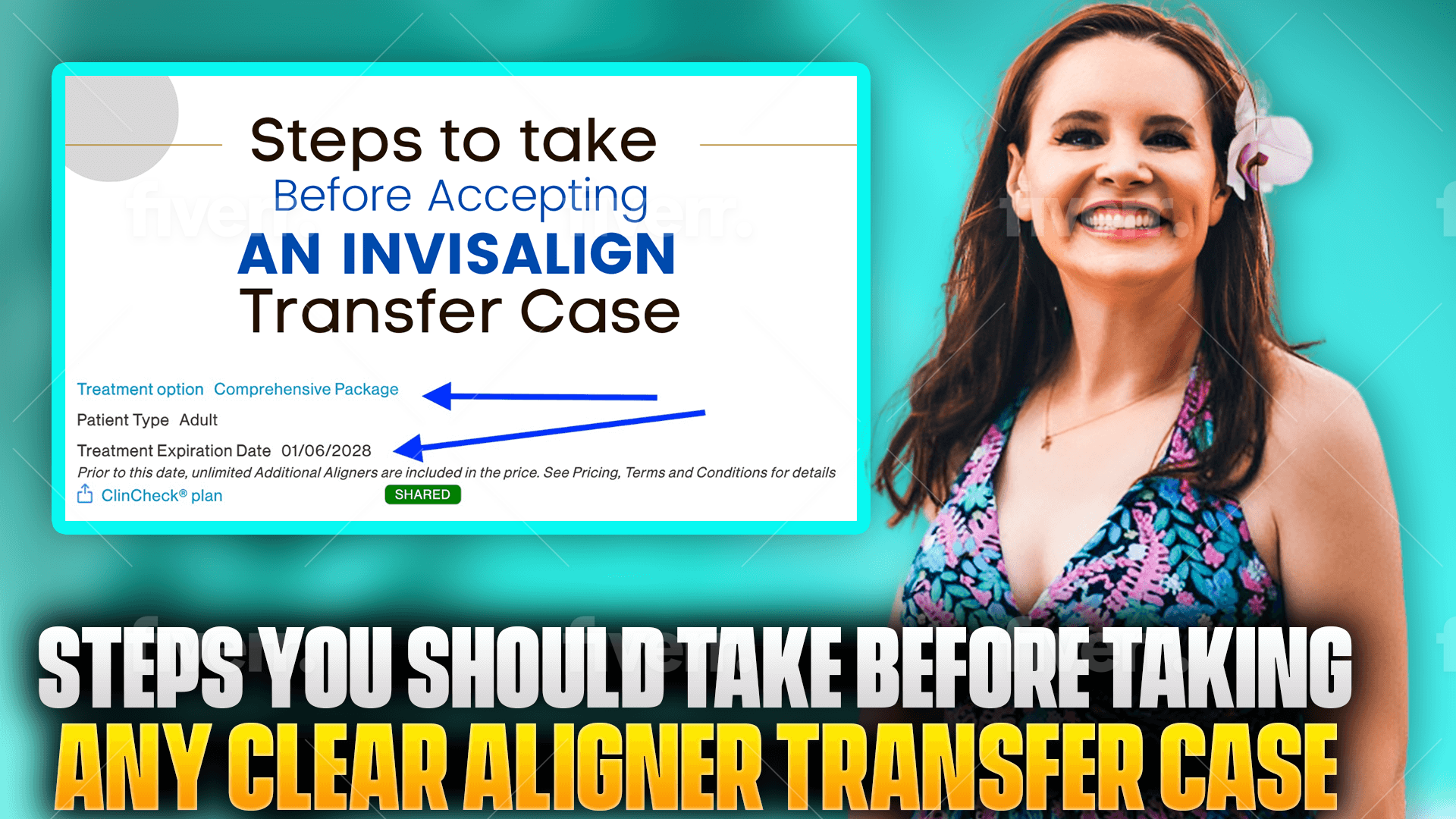 Things to Consider Before Accepting an Invisalign Transfer Case?
Have you ever thought about taking on an Invisalign transfer case? As part of your orthodontics work, whether it’s Invisalign or another clear aligner company, there’s always the potential for a transfer case to arise. But how should you tackle these?
Tackling Invisalign Transfer Cases in Orthodontics
It’s easy to fall into the trap of making several big mistakes when it comes to your Invisalign transfer cases. With this thought in mind, we here at Straight Smile Solutions have outlined a few key things you should consider as follows to help.
Why Do They Want to Move?
Firstly, always ensure that a valid, genuine explanation accompanies any Invisalign transfer case. In other words, why does the patient want to transfer to you rather than their previous orthodontics provider?
The most obvious reason will be that they moved to a new region. Transferring will often be the more expensive treatment plan; so it may be worth dissuading them from transferring to prevent them from paying above the odds (and being dissatisfied, in turn).
Another reason is that they’re not happy with the progress. Check whether they saw the ClinCheck at the start and if they understand the progression of a normal orthodontics case, as it may just be that the previous provider didn’t explain this. However, if the previous orthodontics has got the treatment plan wrong, you may not want to get involved.
Always Ask to See the ClinCheck and Previous Case Information
If you want to take on an Invisalign transfer orthodontics case, request copies of the ClinCheck and case information to help. The previous orthodontics provider should be able to export this data, allowing you to check on the case more easily and see whether it’s a safe bet.
Don’t Take Non-Comprehensive Cases
If you want to make your Invisalign transfers a little more straightforward, try to adopt a policy of only taking on Invisalign Comprehensive cases. This helps reduce the risk of the case being poorly handled or rushed.
Create an Invisalign Mock-Up Patient
At this point, before taking on the case, creating an Invisalign mock-up patient can help inform your decision on whether the case is a good one to take on.
Don’t Promise Insurance!
As a final tip, don’t promise the patient the chance of paying through insurance for their case since this will often have been used up already with the previous orthodontics provider. Many transfer cases will need to be paid outright instead.
When to Start Phase 1 Interceptive Treatment

Have you ever wondered about when to start your phase 1 interceptive treatment plan for a patient? It’s not always easy to work out how to develop the right treatment plan for your patients, especially for Phase 1 interceptive cases. Nonetheless, the following tips could help you determine the right approach for your patients.
When Should I Start a Phase 1 Interceptive Treatment Plan?
Starting a new Phase 1 interceptive treatment plan is highly time-dependent in many cases. If you’re looking to tackle a 2 by 4, braces case, Phase 1 aligners, or expansion, you will likely want to wait until the six-year-old molars fully come in (sixes). Ideally, waiting until the 2 to 2 anteriors come fully in may also help with the case.
It’s also worth noting that a child’s emotional maturity may also impact the right option for their needs. Not all children will necessarily be emotionally prepared for the treatment plan; often, you’ll want to wait until they’re around nine years old before you begin their Phase 1 interceptive treatment plan.
Remember: more major changes will likely be less effective once the child has finished puberty. So, try to plan around this time to ensure your patient gets the best possible results.
Final Thoughts
Knowing when to start is vital if you’ve been looking to develop a new treatment plan for a Phase 1 interceptive patient. Luckily, if you need further help with your own Phase 1 interceptive patients, our team here at Straight Smile Solutions will be on hand to help. Don’t compromise!
Why You Should Never Pull Baby Teeth with Invisalign MA
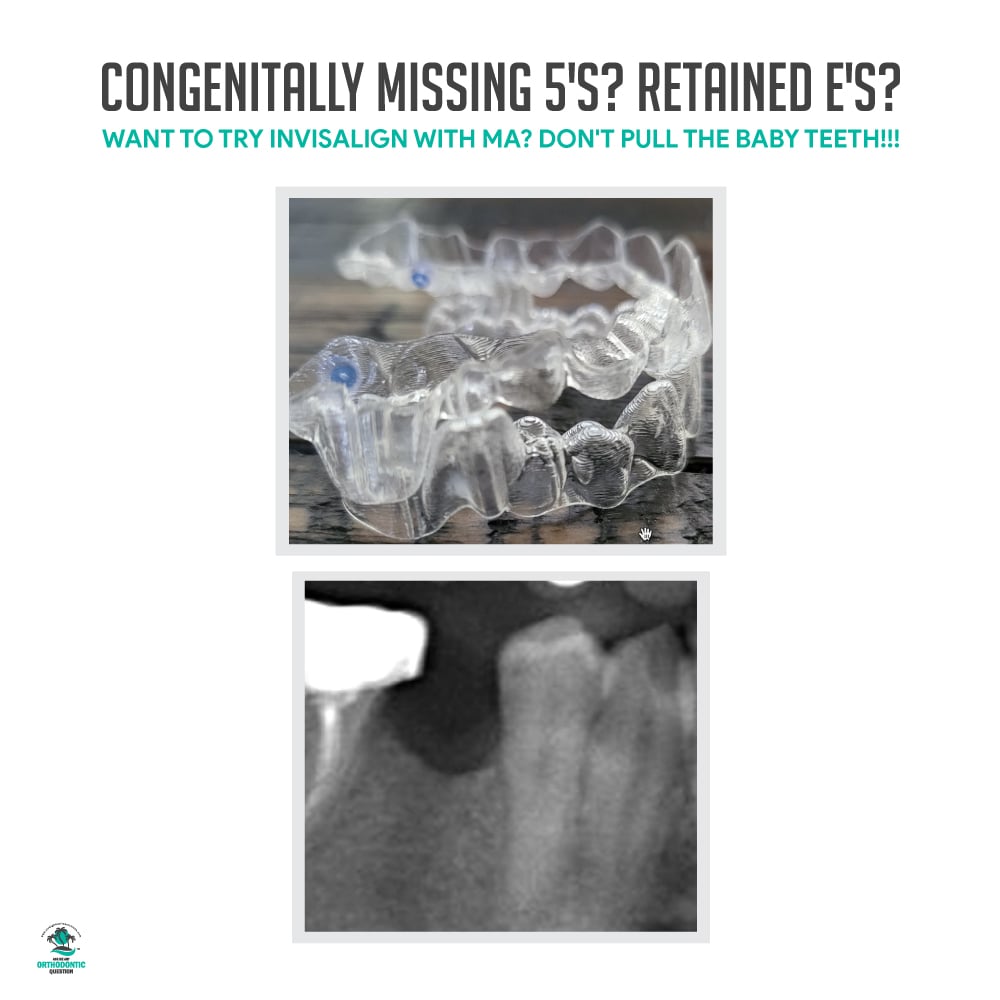
Have you been looking to do an Invisalign case for a mixed dentition patient? In many scenarios, it can be difficult to work out how to approach a mixed dentition case, but this shouldn’t stop you from tackling patients with Invisalign MA. However, one important factor to keep in mind is that you must never pull baby teeth for these cases.
Don’t Pull Baby Teeth for Invisalign MA Cases!
In some scenarios, a patient may come in for an Invisalign MA case with baby teeth still posing a problem. These could be ankylosed baby teeth without a premolar underneath; alternatively, they may have a retained baby tooth.
Whatever the case might be, it’s integral not to pull these baby teeth when attempting Invisalign MA since you’ll only be able to get a retainer if the patient has a full set of teeth for anchorage. So, don’t fall into this trap, as it could prevent the patient from ever having Invisalign MA.
Final Thoughts
If you’ve been looking to learn more about developing a reliable Invisalign MA treatment plan, don’t worry; our team has countless amazing dentist videos available that can help guide your treatment planning. Alternatively, if you have any specific questions to your case, don’t hesitate to book a consultation with us for more support.
How to Tackle Invisalign and Clear Aligner Cases for Anterior Implants
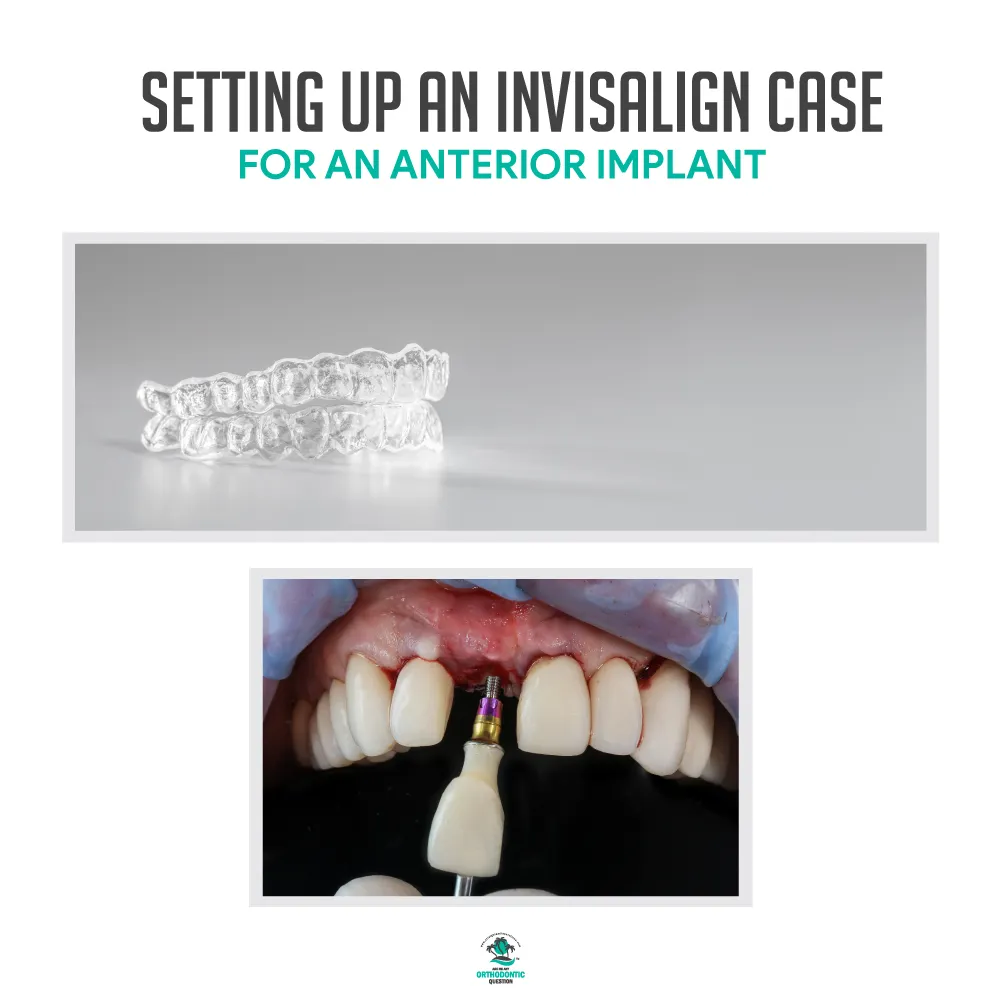
Have you ever wondered about how to tackle an Invisalign or clear aligner case for patients with anterior implants? While there’s a lot to consider here, finding the right solution doesn’t have to be impossible – and so, in line with this, we’ve outlined some of the main things you should consider when treatment planning for your patients.
How to Tackle Invisalign and Clear Aligner Cases for Anterior Implants
When tackling a treatment plan with anterior implants, it’s important to remember that things may not be quite as easy as they normally seem. So, be sure to plan ahead.
Initially, the most important thing to do is to work out who is involved in the patient’s case. Indeed, you won’t be the only professional working for the patient in many cases, as not all general dentists will be equipped to take on anterior implant cases. As such, a periodontist will likely be involved too.
You’ll also want to take a few precautions, too. Make sure the adjacent roots are all parallel and that the size is big enough; if there’s not enough room, you may need to do some lower IPR first to get the best results for the patient.
Final Thoughts
If you have been looking to start an Invisalign or clear aligner case for a patient with anterior implants, you’ll need to take a more specific approach than regular cases.
Addressing Maryland Bridges with Invisalign and Clear Aligners
 Addressing Maryland Bridges with Invisalign and Clear Aligners
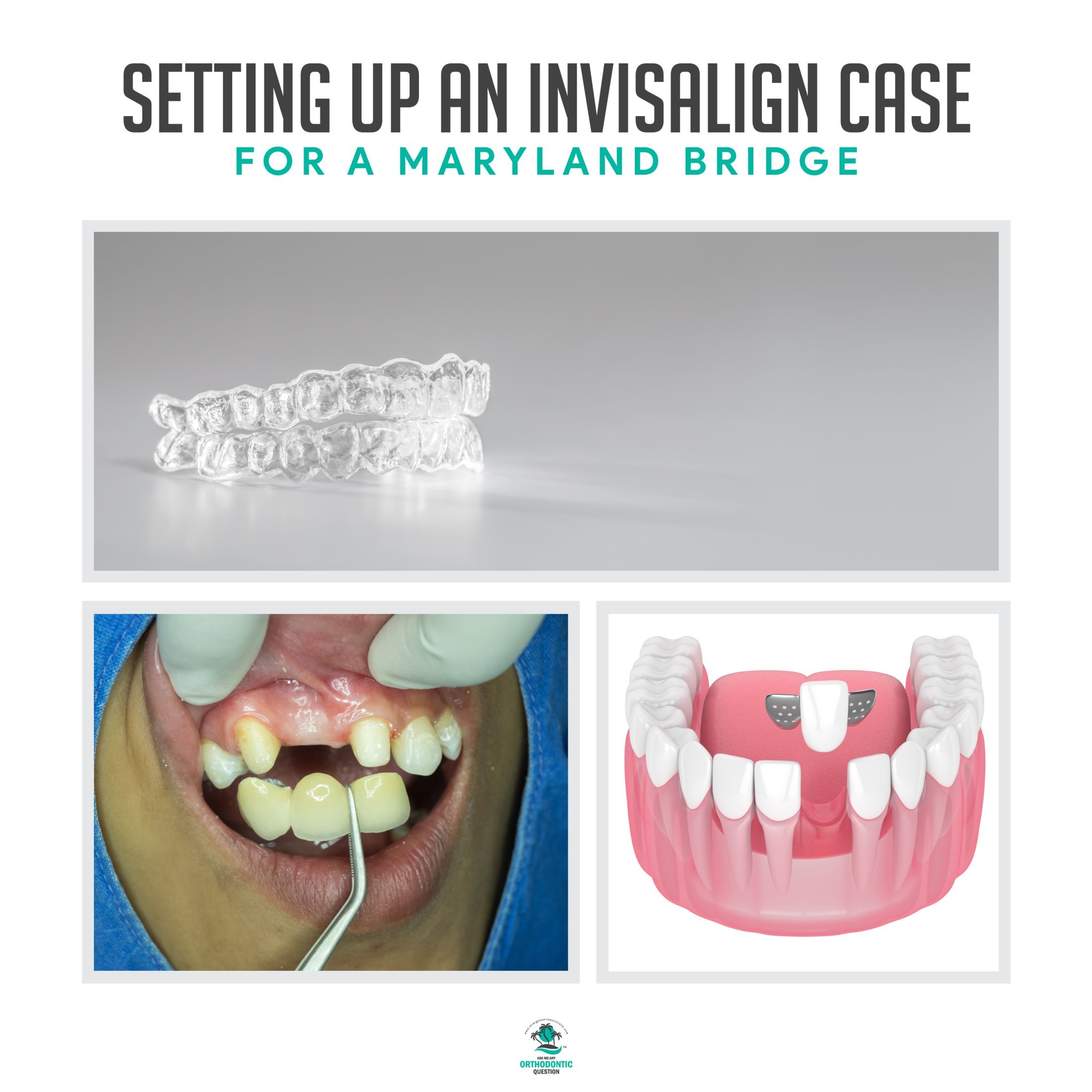
Have you been looking for a way to address Maryland bridge cases? Maryland bridges are often used for anterior bridges and can potentially be addressed using clear aligners and/or Invisalign, but this isn’t necessarily a quick fix – so it’s important to know how to address Maryland bridge cases using Invisalign.
How to Set Up an Invisalign or Clear Aligners Case for a Maryland Bridge
If your patient has a Maryland bridge, you may need to take extra care with your Invisalign or clear aligners plan. As such, while taking the ClinCheck is vitally important, it’s also worthwhile to recognize that these cases can potentially change the ClinCheck depending on the features of the case.
It’s also important to recognize that the case may take a little longer than it normally would if you need to overcorrect for overbite or overjet. This is also important to consider when explaining things to your patient to ensure the bite is fixed properly.
Getting your lab involved with the Maryland bridges case closely is hugely important in these cases to ensure that a suitable treatment plan is found.
Final Thoughts
If you’ve been looking to do Invisalign on a Maryland bridge case, you’ll need to be very careful to ensure that you don’t accidentally knock the wings off of the Maryland bridge. Fortunately, with the right approach and by considering the features of the bridge carefully, you should be able to carry on with an Invisalign or clear aligners case without too much difficulty.
How Much Should I Charge for Invisalign and ClearCorrect Cases?
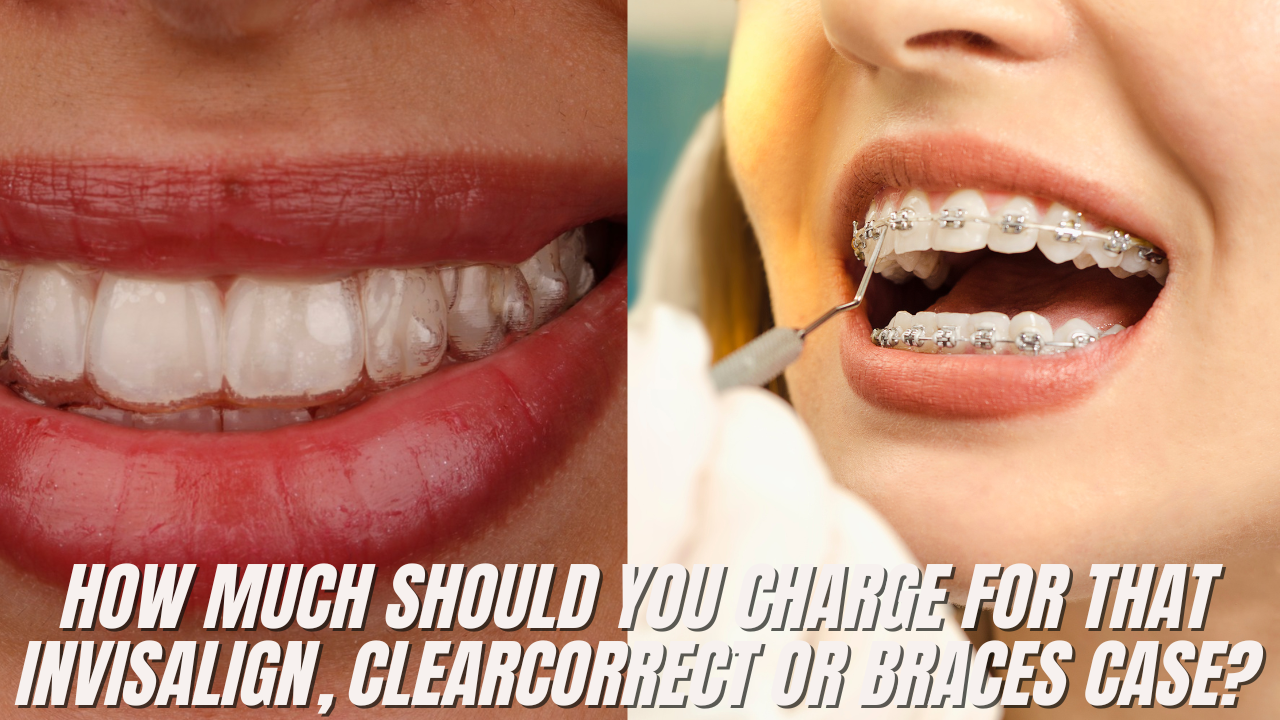
Have you ever wondered how much you should charge for an Invisalign, ClearCorrect, or clear aligners treatment plan? This isn’t always easy to understand, in many cases, since there’s a lot that goes into pricing an orthodontics case. Nevertheless, we’ve outlined some of the key things you should know as follows to give you a little more insight into pricing your own cases.
How Much Should I Charge for Invisalign and ClearCorrect Aligner Cases?
Orthodontics pricing comes with numerous different questions and challenges. Indeed, there’s no quick way to choose a pricing plan – but the following factors will play into this decision.
What’s Your Downpayment?
One of the first things to check is the downpayment. It’s crucial that you be careful during this step, though, to make sure that the downpayment isn’t too high (which could scare off potential customers).
What Are You Offering?
Many general dentists are accustomed to doing a short-term case, but orthodontics is a lot more complex than this. As such, make sure you consider what you’re offering for the money to help inform your choice.
Needless to say, a plan covering 30+ aligners will be a lot more expensive generally than a quick fix. Still, Invisalign and ClearCorrect’s comprehensive plans will often offer better value. It’s worth also considering here what your approach to retainers will be.
It’s important to also consider what’s included in terms of your time and the number of check-ins for patients. You should also define the terms regarding bills for services rendered. Checking this helps you make sure that you’re asking a fair rate.
What Are Your Competitors Offering?
You know what you’re offering; in addition, make sure you use secret shopping to check the rates your competitors are asking, too. This allows you to price your service competitively rather than guessing.
Appointment Type
Virtual appointments are a much more cost-effective solution. These can help you price your service more competitively.
Experience
Without a doubt, experience can play a massive role in your choice of pricing structure. Indeed, as an experienced orthodontics professional, you’ll be able to tackle a wide range of cases, which should undoubtedly influence the price. Alternatively, make sure you partner with an experienced orthodontics team (such as ours here at Straight Smile Solutions) to boost your service.
Relapse Correction Package and Warranties
It’s also important to keep in mind that your patients may occasionally need relapse correction. In line with this, you should factor this into your pricing strategy – and if you’re including free or subsidized appointments, make sure the original rate covers this. Additionally, be sure to check the nature of any warranties being offered up, too.
Financing Method
As a further point of note when pricing your Invisalign or ClearCorrect cases, it’s worth considering how the patient will be paying – e.g., cash or card.
Final Thoughts
Knowing how much to charge for your Invisalign and ClearCorrect cases shouldn’t be an art. Indeed, while there’s no doubt a lot to consider, it’s always worth looking at your own situation to help you decide which price to ask. But remember: what you offer will often impact the price you can (and should) ask significantly.
Global White Label Aligners by Argen

Global White Label Aligners by Argen
Dr. Amanda from Straight Smile Solutions. I want to discuss White-label aligners and how they can offer a more affordable option for providing aligner treatment to your patients.
Using white label aligners is similar to working with major aligner companies like Invisalign, ClearCorrect, SureSmile, or Spark.
The main difference lies in the vertical integration of these companies. They handle everything from treatment planning to manufacturing, packaging, and shipping. While this convenience is great, it also means that you pay for all these services upfront. With White label aligners, you only pay for what you need, which is a significant advantage. This model is suitable for simple cases, patients without insurance, or those who prefer to pay in smaller increments.
How the White-label process works
Global White-Label is an aligner treatment planning company focusing solely on digital design. Many companies offer digital aligner design services, but the Global White Label has consistent predictability over the years.
To get started, you upload your records, including photos and STL files, to the Global White Label portal. They accept scans from any scanner, ensuring flexibility. While you can provide feedback on how you want the teeth to move, I recommend involving an orthodontist in your first few cases to ensure proper guidance.
Global White Label will create a predictable aligner setup based on your instructions. They offer various features and widgets comparable to those other aligner companies provide. Although they may not have all the patented features of Align Technology, they offer a wide range of options that can meet your requirements.
Once you approve the treatment plan, manufacturing begins. Global White Label collaborates with different manufacturing partners and can provide recommendations based on your needs. One commonly used manufacturing partner is Bioclear, known for producing high-quality aligners. You can print the aligners in-house if you have your 3D printer, but I recommend starting with export manufacturing.
Regarding cost, manufacturing aligners in-house can be expensive and complicated unless you have top-of-the-line equipment and experienced staff. You must consider the cost of resin, time, manpower, and material quality. Therefore, exporting the aligners for manufacturing is often the more cost-effective option, especially considering the affordable price range of White-label aligners.
The aligner kit you receive is similar to those from other aligner companies. It includes a patient guide, instructions, and a small care kit with a case and an aligner removal tool. However, you need to ensure you have additional items like chewies (orthodontic chewable tools) to aid in aligner seating. These can be easily purchased from Amazon or orthodontic suppliers.
It’s essential to have informed consent forms for your patients. If you offer White label aligners, have informed consent forms outlining the risks and benefits of orthodontic treatment. These forms ensure that your patients understand the limitations and potential outcomes. You can create your consent forms or find templates online. Having an attorney review them to ensure compliance with local regulations and best practices is always a good idea.
You can market this service as a more affordable option for straightening teeth, which can be particularly attractive to patients looking for a budget-friendly alternative.
Remember that even though White-label aligners offer cost savings, proper diagnosis, and treatment planning for your patients is still crucial. In complex cases or those requiring significant tooth movement, it’s advisable to involve an orthodontist for consultation and guidance.
Monitoring your patient’s progress throughout the treatment is important. Regular check-ups allow you to assess the alignment progress, address any concerns, and make necessary adjustments to the treatment plan. This ongoing supervision ensures that your patients achieve the desired results and have a positive experience with their aligner treatment.
Summary
White-label aligners provide a more affordable option for offering aligner treatment to your patients. Proper diagnosis, treatment planning, and patient monitoring are provided to ensure optimal outcomes.
Remember to familiarize yourself with your area’s legal and regulatory requirements and consult with professionals, such as attorneys or orthodontists. Offering White-label aligners can be a great addition to your dental practice, providing more accessibility and affordability to your patients seeking orthodontic treatment.