
Introduction
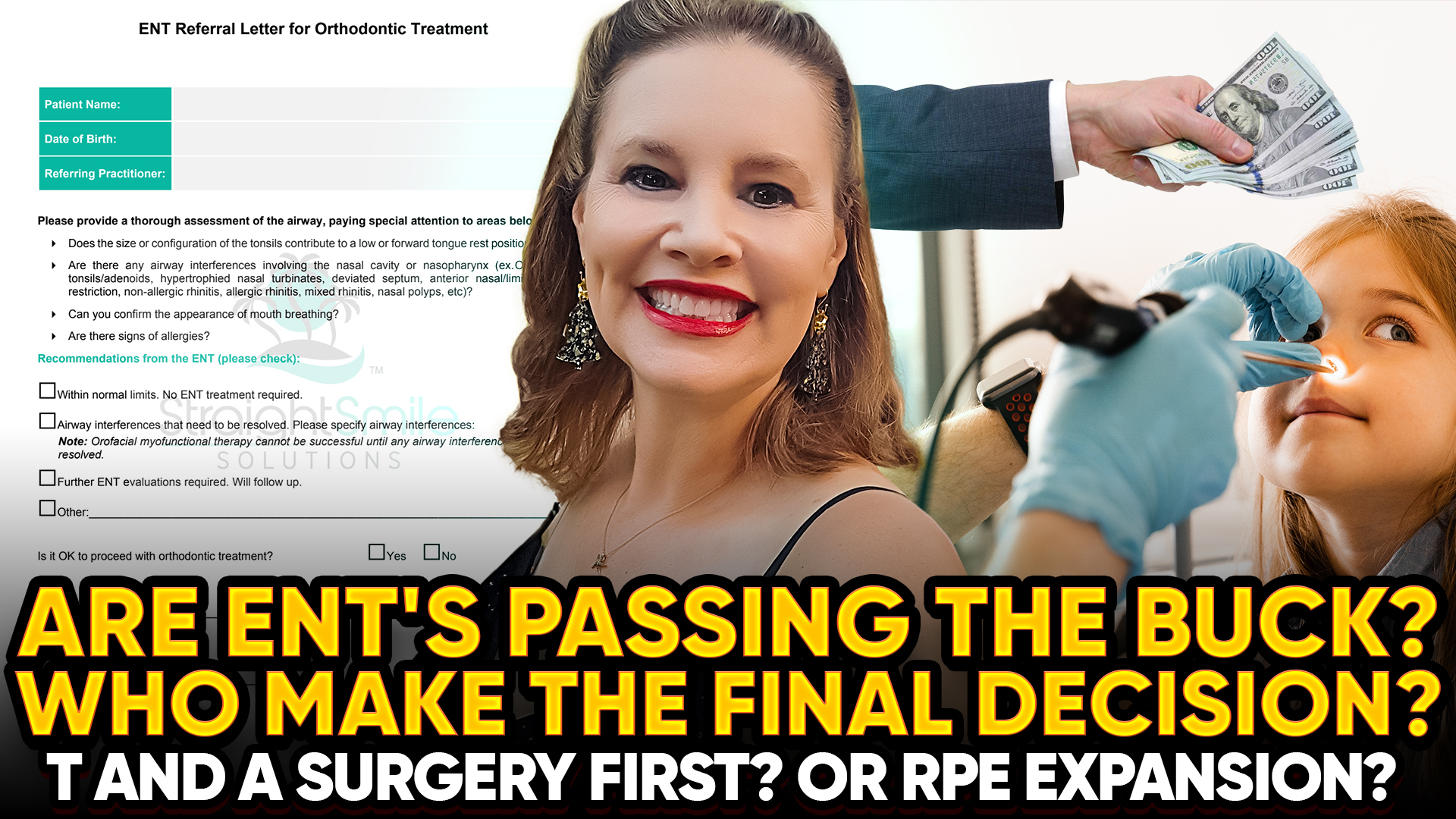
Dr. Amanda addresses a critical and increasingly common challenge in early orthodontic and Phase I cases: managing potential airway concerns while collaborating appropriately with ENT physicians. As awareness around airway health grows, orthodontists and dentists must balance orthodontic treatment, medical responsibility, and legal risk. Clear communication, proper referrals, and thorough documentation are essential, not optional.
Key Considerations When Collaborating with ENTs
Orthodontics vs. Medical Responsibility
• Orthodontists treat orthodontic problems, not medical airway conditions
• Suspected airway pathology requires physician (ENT) involvement
• Orthodontic treatment may incidentally improve the airway, but this cannot be promised
When to Delay Orthodontic Treatment
• Do not start expansion if a severe airway issue is suspected
• Fixed appliances can temporarily worsen the airway by reducing oral volume
• ENT diagnostics and treatment planning should come first
Hierarchy of Care
• ENTs determine medical and surgical necessity
• Medical and surgical decisions take precedence over orthodontics
• Orthodontic treatment may proceed only after ENT clearance
Get Everything in Writing
• Never rely on the patient’s verbal report
• Use a written ENT communication form or referral letter
• If the ENT defers or declines intervention, document that decision
Documentation Protects You
• Written confirmation reduces liability and risk exposure
• Document orthodontic indications separately and clearly
• Monitor orthodontic progress while the ENT monitors airway health
Removable Appliances and Airway Awareness
• Removable expanders (e.g., IP) may be safer during evaluation
• Inability to tolerate appliances, especially at night, may signal airway issues
• Do not force compliance when red flags appear
Professional Collaboration Matters
• Bulldozing ENTs damages trust and professional credibility
• Build referral relationships through education and communication
• Younger ENTs may be more open to collaboration and current research
Conclusion
Managing airway adjacent orthodontic cases requires humility, teamwork, and meticulous documentation. Dr. Amanda emphasizes that ethical care means collaborating, not competing with ENTs, respecting the medical hierarchy, and protecting patients through clear and accurate records. When in doubt: document, communicate, and prioritize patient safety above all else.