
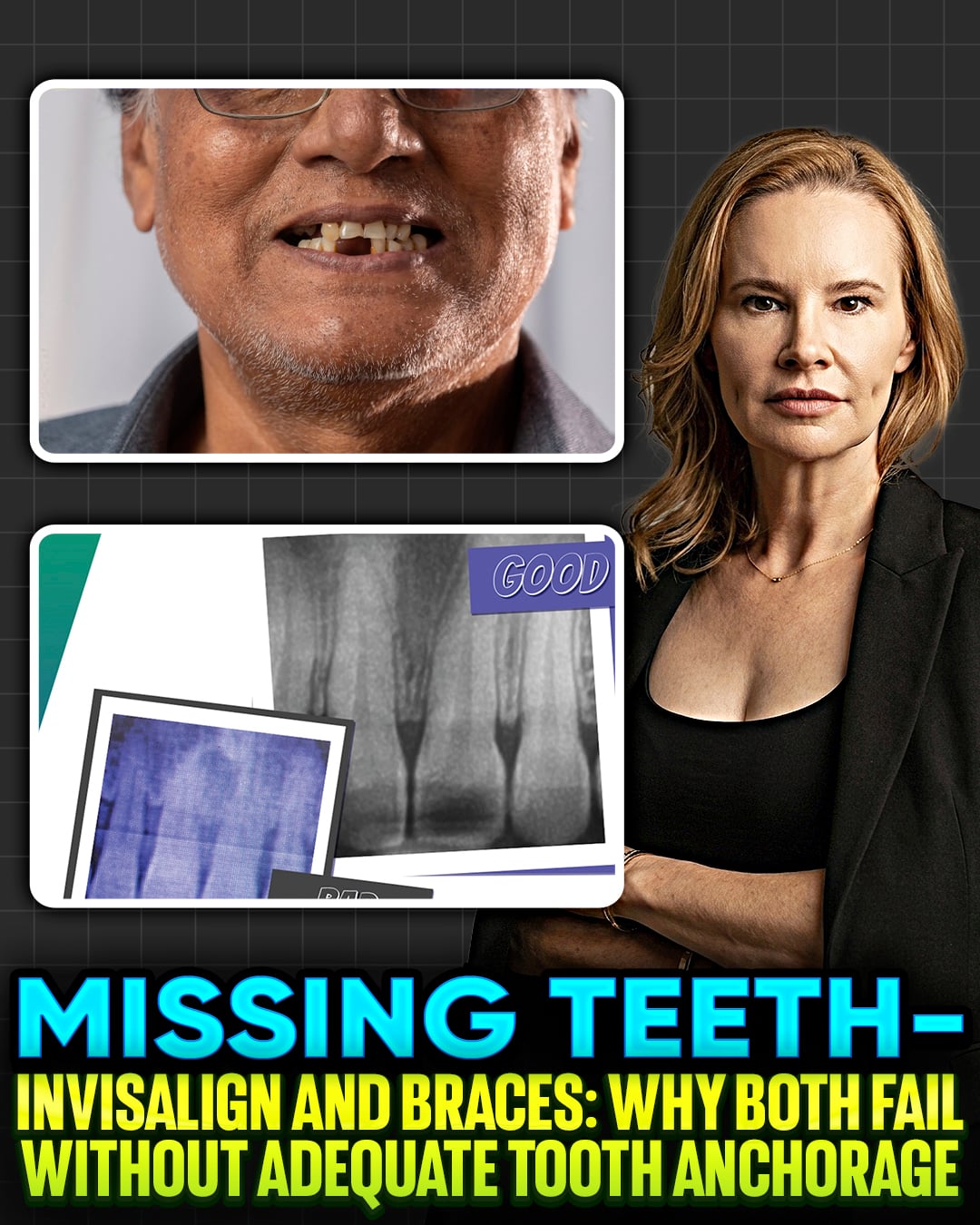
 Orthodontic technology like clear aligners and modern braces makes expanding a dental practice easier than ever. However, certain clinical boundaries should not be crossed in general dentistry. One of the most dangerous combinations a practitioner can face is a prospective patient with both active periodontal disease and multiple missing teeth.While it is tempting to try and help these patients achieve a straighter smile, taking on these high-risk cases without a specialized, multidisciplinary workflow is a recipe for clinical failure. This article breaks down why these cases are structurally unstable and why standard orthodontic mechanics will fail.The Double Whammy: Loss of Bone and Loss of Anchor PointsOrthodontic movement relies entirely on predictable bone remodeling—the controlled breakdown and rebuilding of bone tissue as a tooth moves through the jaw. For this process to work safely, a patient needs a healthy periodontium to serve as a baseline. Combining gum disease and missing teeth destroys the essential biomechanics needed for tracking.1. Compromised Bone SupportPeriodontal disease attacks and destroys the underlying bone structure anchoring the teeth. When you apply orthodontic forces to teeth sitting in compromised bone, you are no longer safely moving them. Instead, you risk accelerating bone loss, causing extreme tooth mobility, or accidentally extracting the teeth entirely.2. Missing Anchorage LoopsTo move specific teeth, an orthodontic system requires stable teeth to act as anchors. When multiple teeth are missing, those critical anchor points vanish. The remaining teeth are forced to bear a higher load. Because their bone support is already weakened by periodontitis, these anchor teeth will tip or migrate unpredictably rather than remaining stationary.3. Unpredictable Digital TrackingModern clear aligner software creates an idealized digital setup based on healthy dental anatomy. However, the software cannot accurately simulate how a tooth will behave when moving through a severely degraded, low-density bone envelope. The tracking will fall off almost immediately, leaving you with an unmanageable clinical mess.The Required Safe Treatment ProtocolIf a patient presenting with these dual conditions walks into your clinic, a standard clear aligner or braces setup should be completely off the table. The case must follow a strict, phased multidisciplinary approach:Periodontal Stabilization: The patient must first see a specialist to eliminate active infection and achieve absolute periodontal clearance. Orthodontic force must never be applied to actively inflamed tissues.Restorative Mapping: A definitive plan for replacing the missing teeth via implants, bridges, or partials must be established prior to moving any teeth.Specialist Referral: Because the biomechanics require advanced tools like temporary anchorage devices (TADs) or highly specific segmented force systems, these cases should be managed exclusively by an experienced orthodontist working alongside a periodontist.Protect your practice and your patients’ oral health by learning to recognize these anatomical red flags early. When bone support is compromised and anchor teeth are missing, saying “no” to a standard clear aligner setup is the highest standard of care.