
Why Traditional Pontics Complicate Braces Treatments
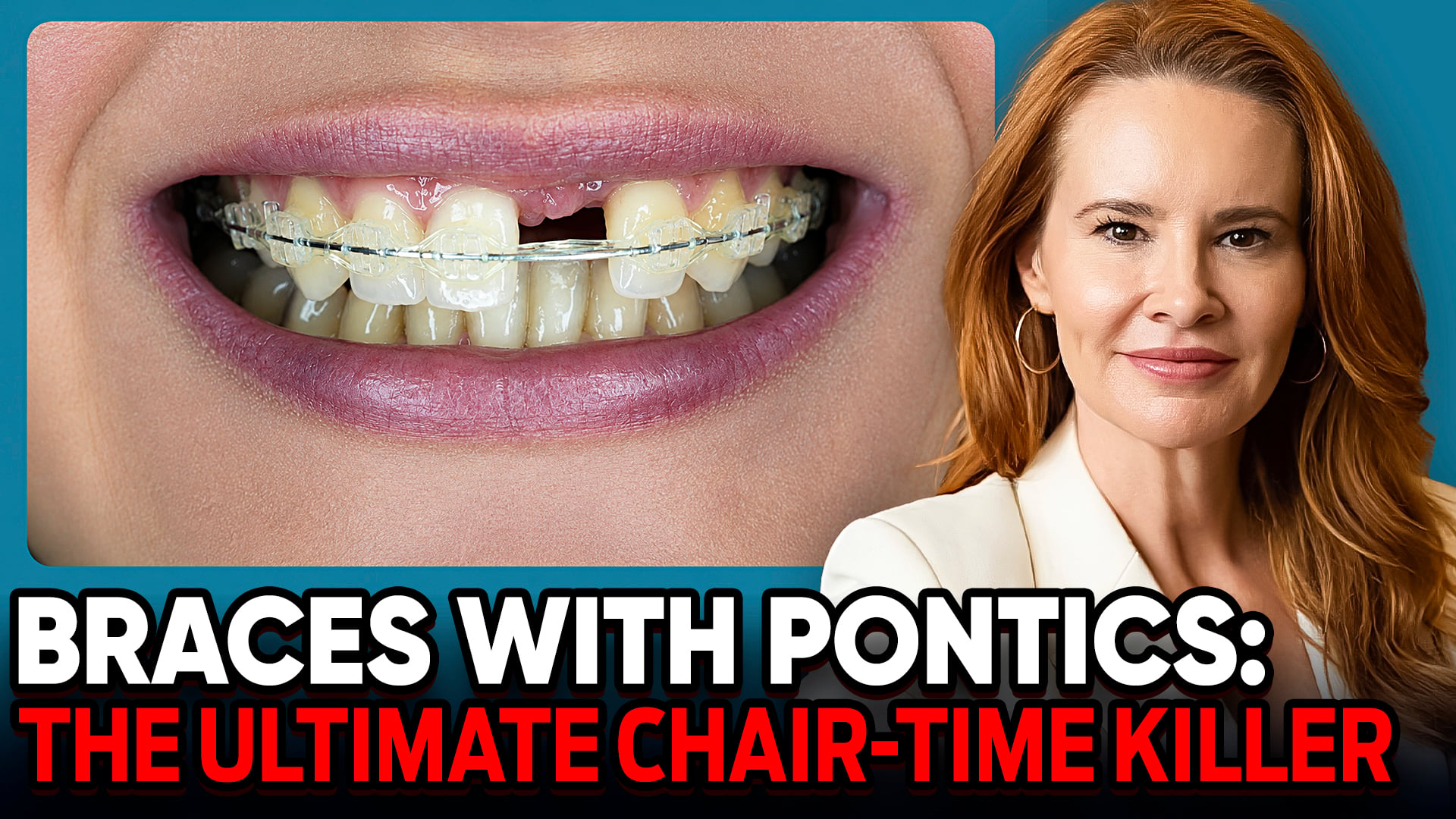
Managing missing anterior teeth during orthodontic treatment requires careful biomechanical planning. Historically, placing a temporary plastic tooth, or pontic, directly onto fixed braces was the standard method for maintaining aesthetics. However, modern clinical experience reveals that traditional pontics on braces introduce significant structural and logistical complications that can compromise practice efficiency and patient satisfaction.
The Technical Challenges of Fixed Brackets
Bonding a standard orthodontic bracket to a plastic denture tooth is a highly delicate and unstable process. Traditional composite materials are designed to adhere to natural enamel, not dental plastics, creating a weak interface prone to frequent debonding. To counteract this structural weakness, clinicians must create manual undercuts or mechanical retention points within the plastic tooth structure. Even with meticulous mechanical preparation, these assemblies experience high fracture rates during active treatment.
Furthermore, during the initial leveling and aligning stages, thin archwires lack the rigidity required to stabilize an unanchored plastic tooth. Because the pontic is not rooted in bone, the lightweight wires allow it to rotate, flip, or flex under normal chewing forces. This mobility frequently prompts patients to play with the appliance, accelerating structural failure and resulting in repetitive, unscheduled emergency appointments.
Operational Inefficiencies and Safety Risks
From a practice management standpoint, fixed pontics demand substantial chair time that cannot easily be billed to insurance. Every routine wire change requires the clinician to carefully untie, stabilize, and re-ligate the loose plastic tooth. This delicate process can easily result in the pontic dropping into the oral cavity or flying across the operatory.
Due to these severe technical limitations, clear aligner therapy serves as a far superior alternative for patients missing front teeth. Systems like Invisalign feature built-in, precisely contoured aesthetic spaces that remain highly stable throughout treatment. Transitioning these specific cases to clear aligner frameworks eliminates emergency bonding failures and significantly optimizes overall chairside productivity.
To learn more about tailored orthodontic treatment planning or to submit a specific clinical inquiry, visit StraightSmile Solutions.