
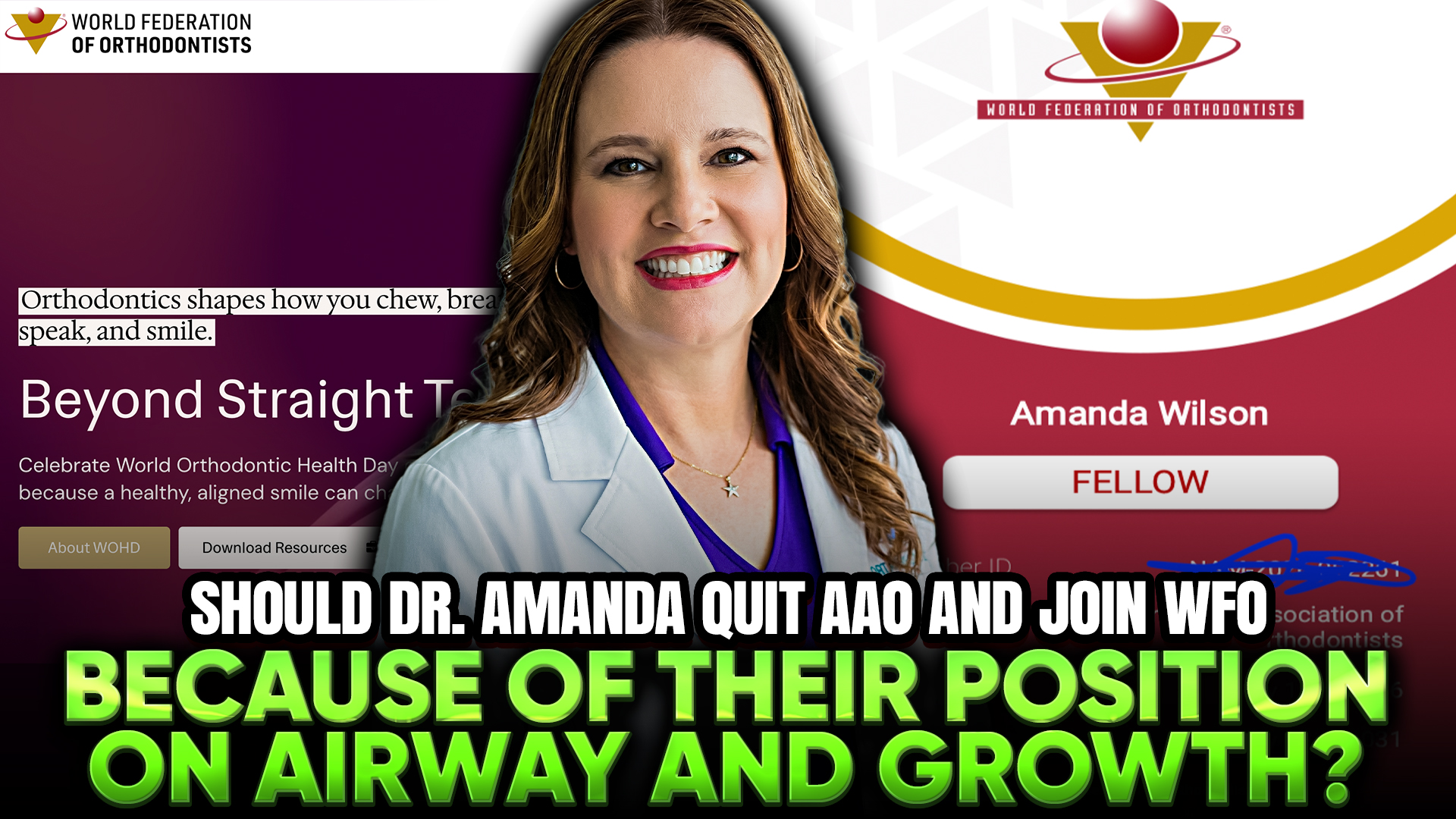
 The world of orthodontics is evolving, and with it, my professional alignment. I have decided to officially step away from the American Association of Orthodontists (AAO) and join the World Federation of Orthodontists (WFO). This decision stems directly from a fundamental difference in how we view early, interceptive childhood treatment.Rethinking the “Seven Up” RuleThe AAO heavily promotes the “seven up” rule, stating that every child should see an orthodontist by age seven. While I agree early evaluation is critical, the practical execution often misses the mark. In reality, when parents hear “by age seven,” many wait until the child is ten. True interceptive care needs to begin earlier—closer to age six—before the child actually turns seven.Restrictive vs. Comprehensive CareThe biggest bottleneck is the AAO’s narrow scope for Phase 1 treatment. They limit its primary importance to just three issues:Crossbite correctionThumb-sucking habitsGuiding impacted teethHowever, childhood development involves so much more than a three-item checklist.In contrast, the WFO treats early orthodontics as an all-encompassing skeletal and systemic health issue. They prioritize total skeletal development and overall pediatric health. Orthodontics is not just about straightening teeth; it is about guiding proper facial growth, airway health, and jaw development from the very beginning.Looking ForwardShifting to the WFO allows me to embrace a more holistic, comprehensive philosophy. I am incredibly excited to dive into their educational courses and collaborate with global professionals who share this vision. If you are looking to elevate your pediatric practice beyond the standard guidelines, I highly encourage you to explore what they have to offer.