
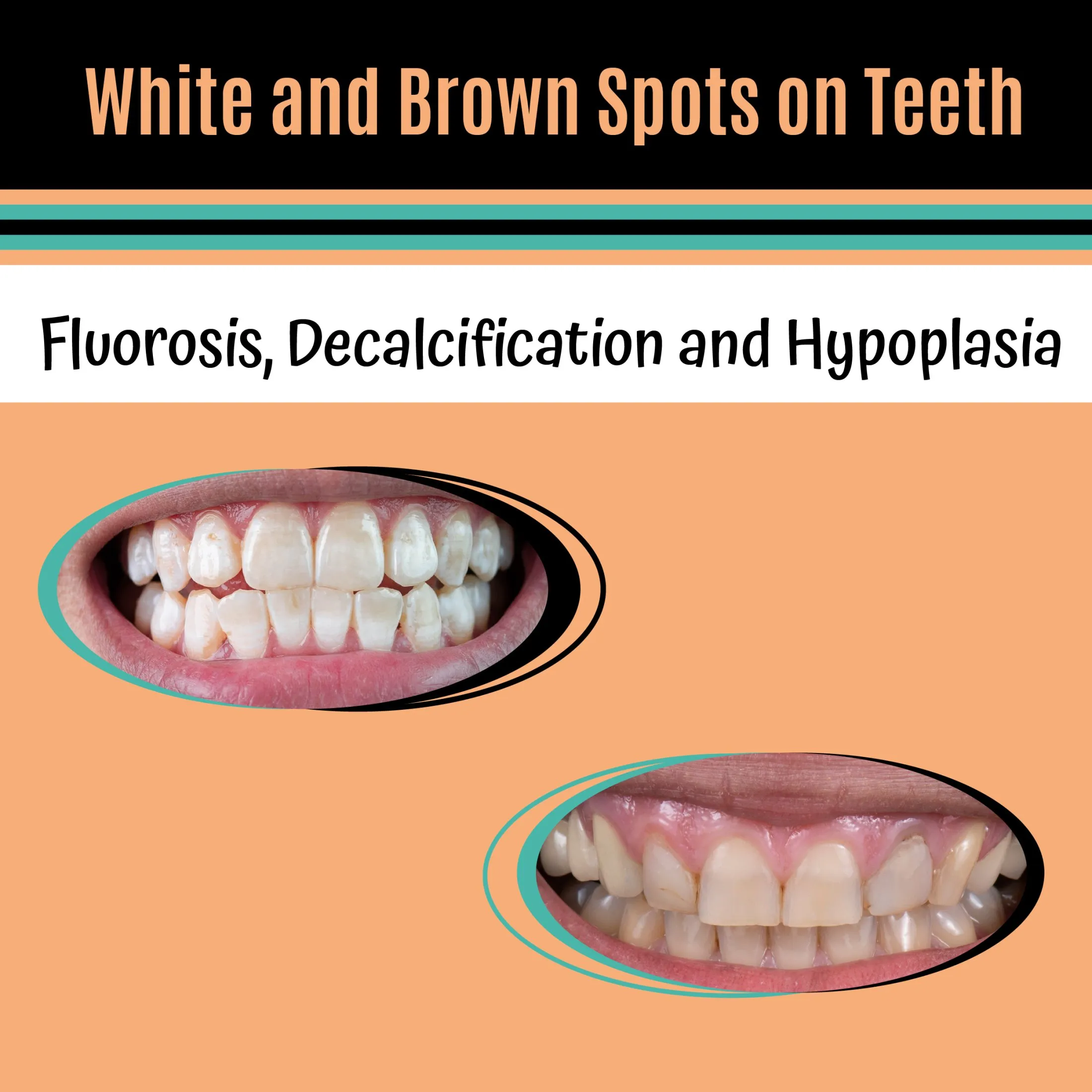
White and Brown Spots on Teeth: Fluorosis, Decalcification, and Hypoplasia
A radiant smile is often associated with good oral health, but sometimes, unsightly white or brown spots can flaw the appearance of your teeth. These spots indicate various dental conditions, including fluorosis, decalcification, and hypoplasia. Understanding these conditions’ causes and treatment options is crucial for maintaining optimal dental health.
Fluorosis
This condition occurs due to excessive fluoride intake during tooth development. Although fluoride is essential for preventing tooth decay, an excessive amount can lead to fluorosis. Mild fluorosis results in barely visible white spots, while severe cases may cause brown stains and even pitting of the tooth enamel. To prevent fluorosis, it is important to use fluoridated dental products in moderation and monitor fluoride levels in drinking water.
Decalcification
This is the loss of calcium from the tooth enamel, leading to white spots. It is often caused by poor oral hygiene, excessive consumption of sugary and acidic foods, or improper brushing technique. The white spots are early signs of tooth decay and can progress to cavities if left untreated. Regular brushing, flossing, and dental check-ups are essential for preventing decalcification. Professional dental treatments like fluoride varnish or dental sealants may be recommended in some cases.
Hypoplasia
This is the incomplete development of tooth enamel, resulting in white or yellowish spots on the teeth. It can occur due to various factors, including genetics, trauma, illness, or malnutrition during tooth development. Hypoplastic spots are more prone to tooth decay and sensitivity. Treatment options may include dental bonding, veneers, or dental crowns to improve the appearance and protect the affected teeth.
Conclusion
White spots or discoloration on teeth can be caused by various factors, such as illnesses, infections, vitamin deficiencies, excess fluoride, and tooth trauma. While these spots are usually not harmful to dental health, they can affect self-confidence. Demineralization or decalcification occurs when bacteria build up in the mouth, attacking the enamel and weakening areas appearing as white or brown spots. Enamel hypoplasia, which can manifest in childhood or adulthood, is caused by factors like nutrient deficiencies, high fevers, and trauma. Treatment options for both conditions include fluoride treatment and filling replacement. Fluorosis, commonly seen in children, can also cause white spots if excessive fluoride exposure occurs. Treatment involves microabrasion, bleaching, or veneers to address the discoloration. When dealing with white or brown spots on teeth, consult a dental professional for an accurate diagnosis and appropriate treatment plan.