
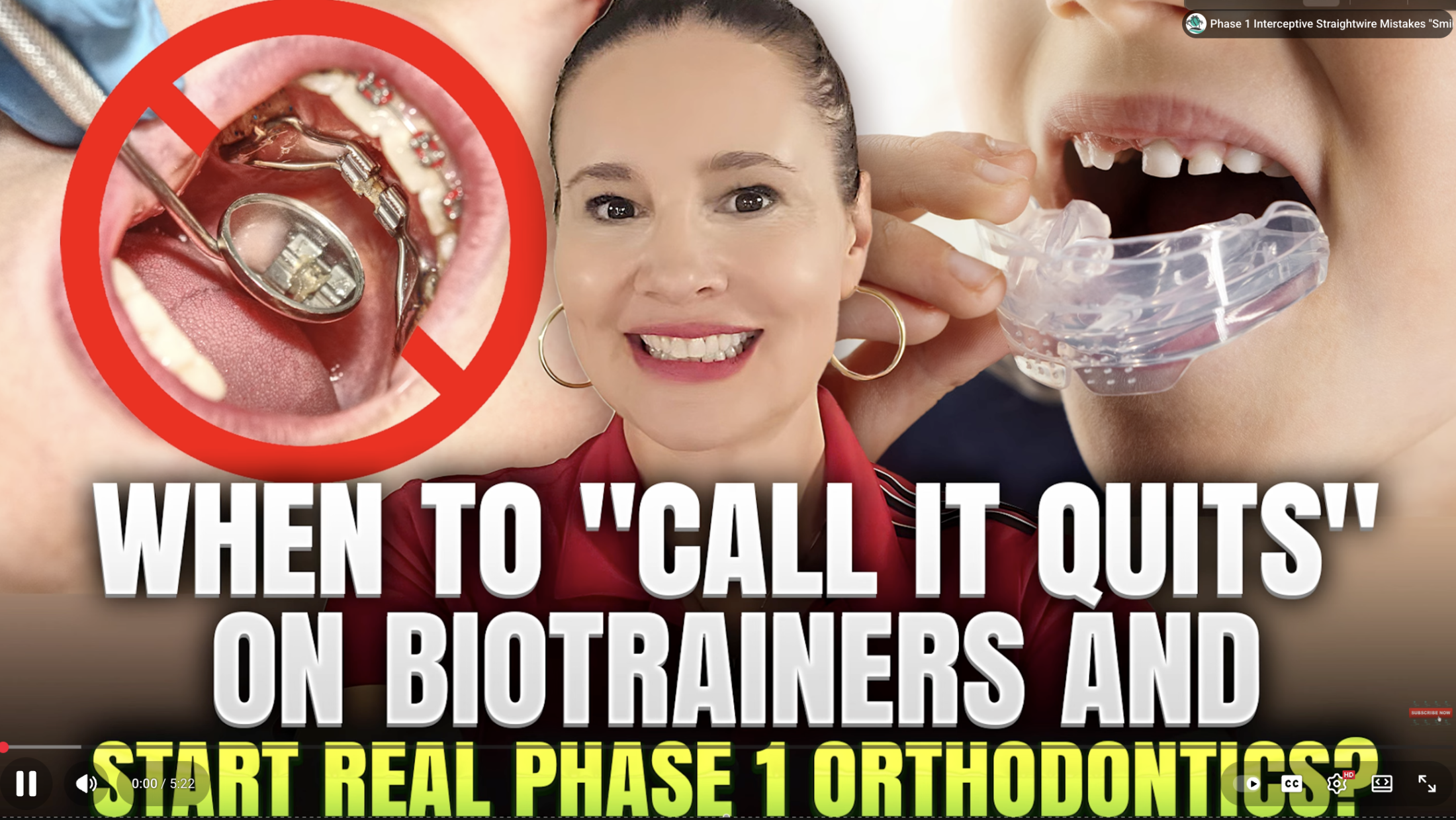
 When to “Call it Quits” on BioTrainer Phase 1 and Switch to Invisalign, RPE, or Braces
Introduction
Dr. Amanda reviews when BioTrainer myo-ortho treatment is effective and when clinicians should transition to traditional orthodontic options. BioTrainers have been around for decades and can be effective, but only in the right patient, at the right age, with exceptional compliance. The goal is to help providers decide when to continue BioTrainer therapy and when to pivot to Invisalign, RPE, or braces for predictable outcomes.
1. BioTrainers Work but Only Under Specific Conditions
• BioTrainers are semi-custom appliances; results are not guaranteed.
• Best outcomes occur when treatment starts very early (ages 2–6). Older kids struggle due to speech, gaming, and lifestyle limitations.
• Success requires alignment of four factors: the right patient, parent, doctor, and high-level compliance.
• Homeschool children and neurodivergent kids often achieve the highest success because they tolerate long wear and chewing requirements.
• BioTrainers rarely achieve “Invisalign-level” perfection but can eliminate the need for braces if everything aligns.
2. Compliance Realities and Why Many Cases Fail
• School-age kids and socially interactive gamers often cannot wear the appliance consistently enough.
• Children lose enthusiasm after the first few weeks; compliance drops sharply.
• BioTrainers are suitable for calm, routine-driven, compliant children and not athletes, talkative gamers, or kids engaged in group activities.
• For families wanting predictable change or perfect alignment, BioTrainers alone may not meet expectations.
3. Insurance, Expectations, and Treatment Planning
• Dr. Amanda recommends offering BioTrainers as cash, pay-as-you-go services with clear disclaimers.
• Insurance cases require predictable outcomes, opening the door to complaints if results fall short.
• Providers should remain flexible and prepared to switch to aligners, braces, or expanders based on progress.
4. When to Stop Phase 1 and Switch Modalities
• Switch when:
– The child cannot maintain the required wear time
– Bite or tooth movement plateaus
– Parents want guaranteed results
– The patient reaches an age where speech and social activities limit compliance
• Invisalign, braces, or expansion can finish cases efficiently once foundational myo work is completed.
• Transitioning early can prevent months of frustration and unmet expectations.
Conclusion
BioTrainers are valuable, low-risk, habit-breaking tools especially for very young, compliant children. However, they offer no guarantees, and modern lifestyles make long-term compliance difficult for many kids. Clinicians should monitor progress closely and switch to Invisalign, braces, or RPE when ideal results require predictable, controlled orthodontic forces.