
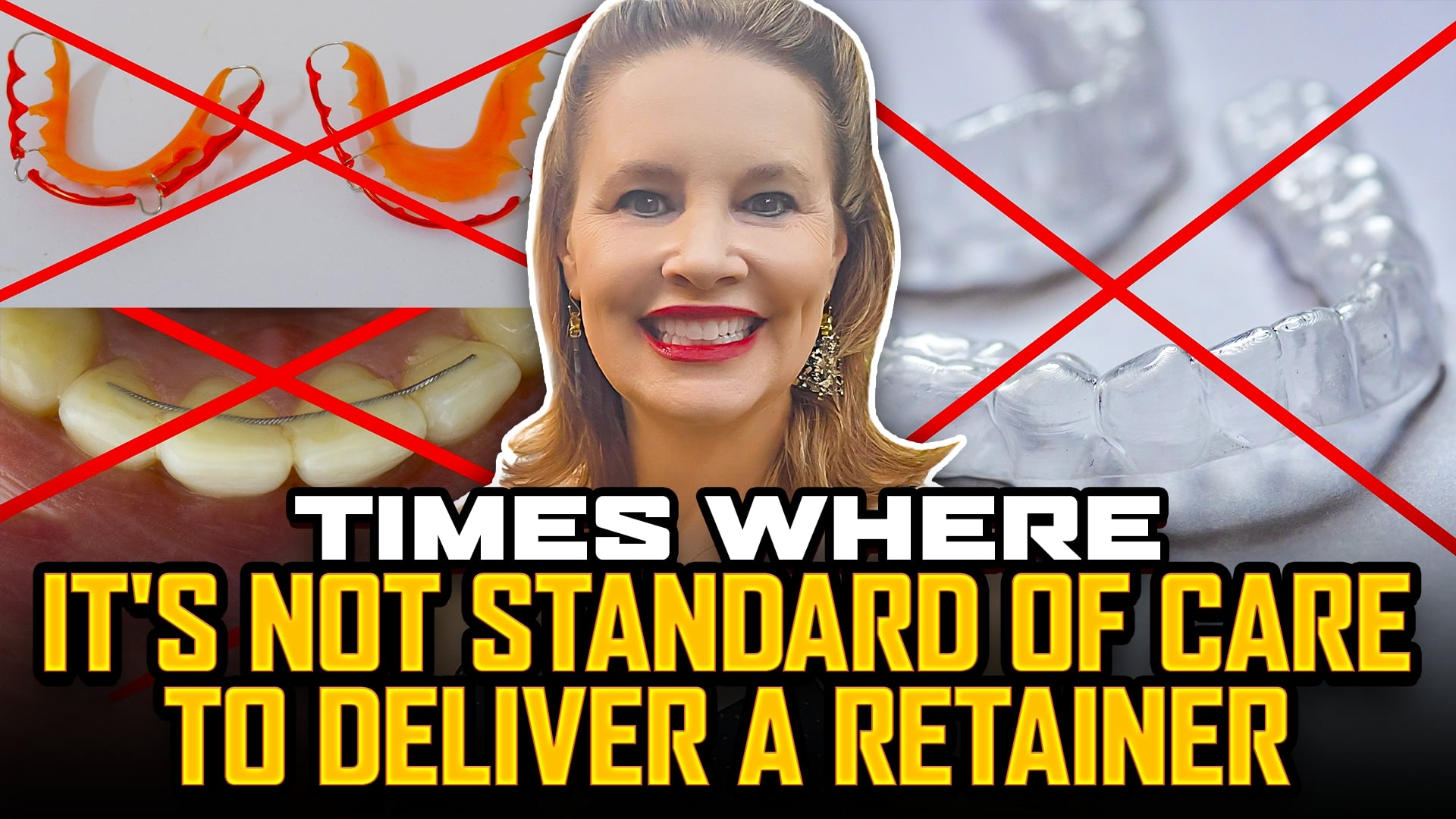
 When “Standard of Care” Means NO Retainer: Navigating Complex Orthodontic Decisions
The common orthodontic advice is to “wear your retainers for life.” However, there are critical instances where providing a retainer may actually contradict the standard of care. Dr. Amanda of StraightSmile Solutions delves into these rare scenarios where delivering a retainer might do more harm than good.
Understanding the Rule Behind Retention
Teeth are held in place by the periodontal ligament (PDL), which acts like tiny “bungee cords” with memory. When teeth are moved, these cords naturally want to pull them back to their original positions. While bone growth is generally stable, tooth movement always carries a risk of relapse.
Dr. Amanda outlines several situations where the risks of a retainer may outweigh the benefits:
– **Hygiene & Pathogen Breeding Grounds**: If a patient struggles with maintaining proper hygiene, clear aligner-style retainers can become breeding grounds for bacteria, potentially leading to severe dental issues. In such cases, a Hawley retainer, which allows for better cleaning, may be a safer option, or in extreme situations, no retainer until hygiene improves.
– **Periodontal Issues**: For patients with active periodontal disease, certain retainers can trap plaque and worsen bone loss. While “perio splints” are an alternative, the primary focus should always be on health rather than alignment.
– **Unfinished Treatment**: If treatment is prematurely terminated due to health concerns, root resorption, or patient non-compliance, providing a retainer for a sub-optimal result can lead to legal complications.
Communication: Your Best Defense
Documentation is crucial. If a decision is made not to provide a retainer, thorough charting must explain why the standard of care led to that conclusion. Patients should never be caught off guard regarding their retention needs; discussions should begin on day one and continue throughout treatment. Transparency in conversations