
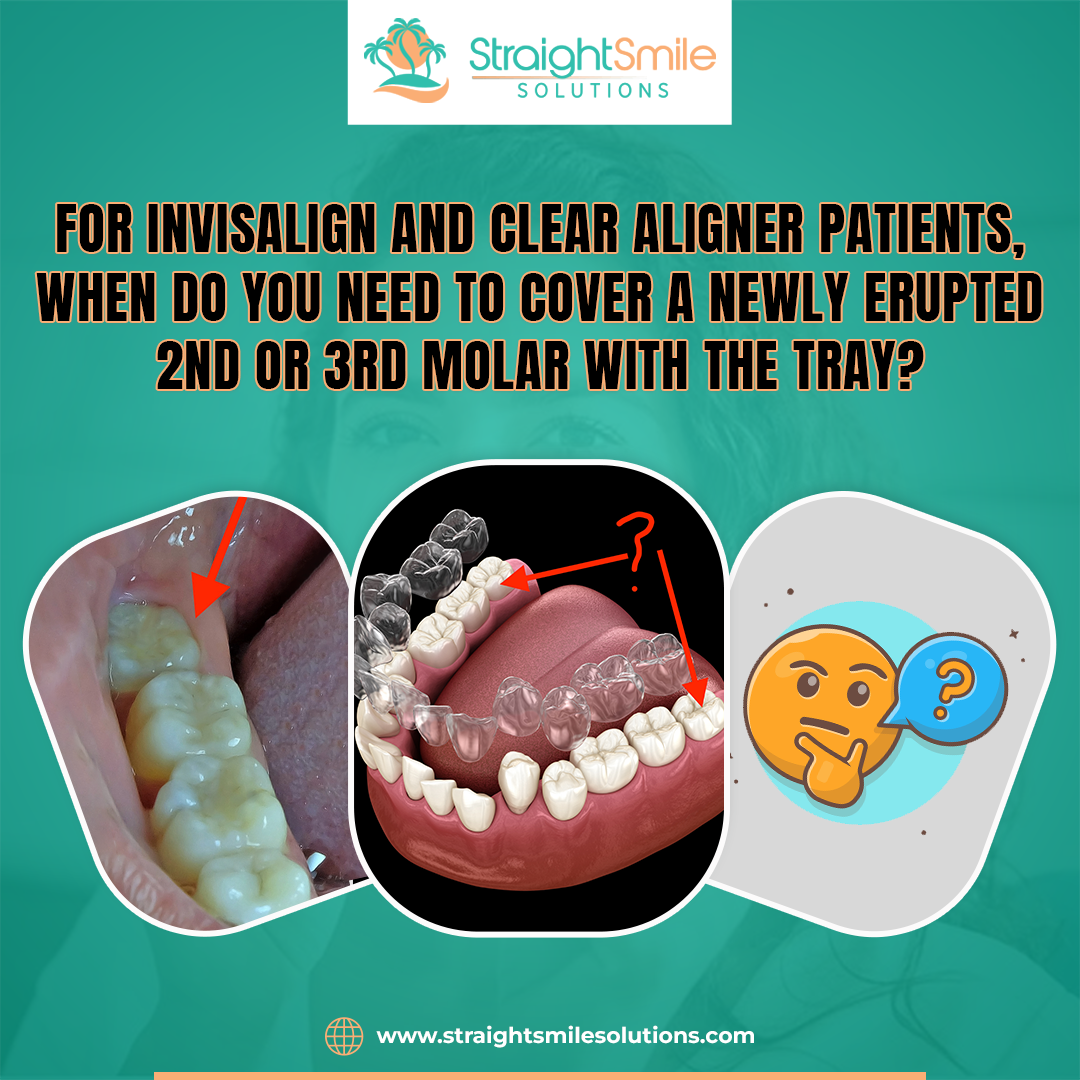
When do you need to cover erupting 2nd or 3rd molars with an invisible or clear aligner tray?
I. Introduction
Dr. Amanda from StraightSmile Solutions delves into the intricacies of erupting molars, whether in a 12-year-old or an 18 to 19-year-old patient. Whether it’s the emergence of second molars or the arrival of wisdom teeth, vigilance during aligner treatments is crucial. Failing to cover these erupting teeth can lead to complications, affecting the alignment’s thickness and causing unforeseen challenges. This is particularly relevant when molars haven’t fully erupted, necessitating refinements. The importance of a comprehensive approach becomes evident, emphasizing the need to address wisdom teeth mysteries before initiating treatments.
II. Why Erupting Molars Matter
A. Alignment Thickness
1. Two fractions of a millimeter impact
2. Cumulative effect with multiple erupting teeth
B. Mouth Propagation
1. Open mouth effect on erupting teeth
2. Continuous eruption until contact is made
III. Risks of Uncovered Erupting Teeth
A. Super Eruption
1. Increased difficulty in intrusion later
2. Prevention is easier than correction
B. Overlooking Eruption
1. Common oversight in treatment planning
2. Impact on the alignment process
IV. Considerations in Treatment Planning
A. Mixed Dentition Cases
1. Incomplete eruption of second molars
2. Need for coverage even if straightening in aligners
B. Wisdom Teeth
1. Ensure they are either fully erupted or impacted
2. Risks of mid-treatment eruption
V. Refinement and Rescan
A. Wisdom Teeth Mystery
1. Suggest solving before starting treatment
2. Unforeseen refinements may increase costs
B. Comprehensive Cases
1. Advocacy for unlimited or comprehensive cases
2. Avoid limitations on refinements
VI. Wisdom Teeth Management
A. Importance of Early Assessment
1. Wisdom teeth status before treatment initiation
2. Addressing potential complications in advance
B. Refinement Challenges
1. Uneven eruption timing
2. Planning for multiple refinements if needed
VII. Monitoring Eruption Progress
A. Articulating Paper Check
1. Assessing contact with adjacent teeth
2. Ensuring proper alignment during eruption
B. Accusal Plane Level
1. Trigger for coverage initiation
2. Guidelines for covering erupting molars
VIII. Coverage Guidelines
A. Minimum Coverage
1. A bare minimum of one-half
2. Recommended coverage of at least 2/3
B. Tipping Concerns
1. Risks associated with minimal coverage
2. Aim for 100% coverage when planning movement
IX. Contrasting with Braces
A. Brackets Usage
1. Limited use unless necessary
2. Application at the 18 NTI stage
B. Straight Wire Course
1. Different approach to braces
2. Specific circumstances for bracket application
X. Clinical Considerations
A. Reminder to consider all molars, including wisdom teeth
B. Caution against starting treatment without accounting for all erupting teeth
C. Recommendation for comprehensive cases with many refinements
D. Highlighting the need for planning before treatment initiation
XI. Conclusion
It is crucial to closely monitor erupting molars during orthodontic treatment, whether dealing with second molars or wisdom teeth. Neglecting to cover them may lead to complications, such as super eruption, making future adjustments more challenging. Considering the entire dentition, including wisdom teeth, is essential before initiating treatment, preventing the need for multiple refinements. The key is timely intervention when molars are at the occlusal plane, aiming to cover at least two-thirds to ensure effective results. This approach differs from traditional braces, emphasizing a strategic and customized orthodontic plan.