
 What is the “Rule of Thirds” in Orthodontics and Facial Harmony for Treatment Planning (Vertical)
Introduction
• Topic Overview: Explanation of the “Rule of Thirds” as a simple screening tool for evaluating vertical facial harmony.
• Relevance: Used not only in orthodontics but also in aesthetics, plastic surgery, and facial symmetry analysis.
1. Defining the Rule of Thirds
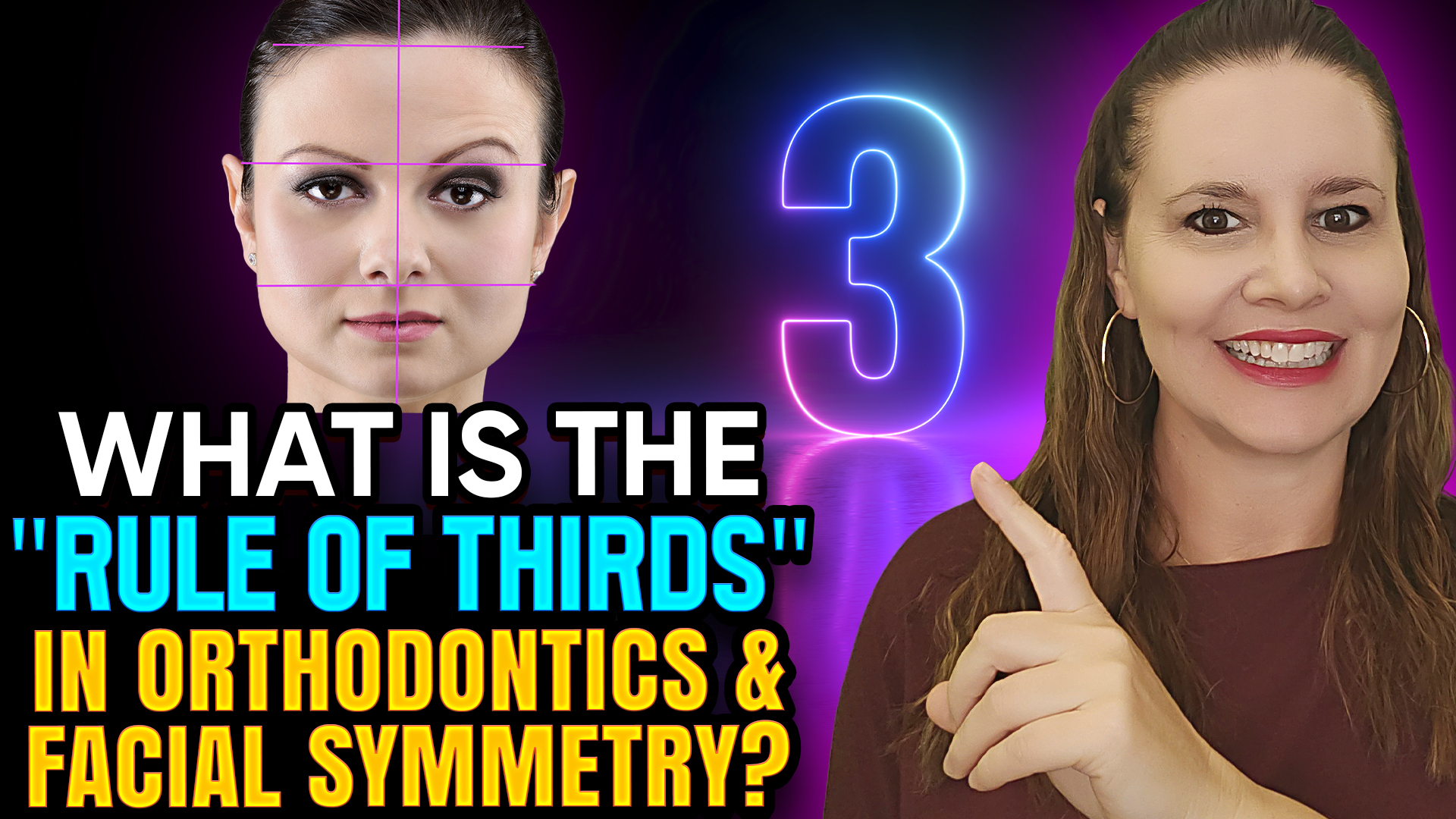
• Upper Third: Distance from the hairline to the eyebrows (commonly inner corner/top due to eyebrow shape variations).
• Middle Third: From eyebrows to base of the nose.
• Lower Third: From base of the nose to the base of the chin.
• Goal: Ideally, all three vertical sections should be relatively equal in length.
2. Applications in Orthodontics & Aesthetics
• Screening Tool: Quick way to assess harmony without software.
• Communication Aid: Helps explain findings to patients in simple terms.
• Cross-Disciplinary Use: Applied in orthodontics, dermatology, plastic surgery, and cosmetic practices.
3. Common Findings
• Balanced Thirds: Indicates good vertical facial harmony.
• Asymmetry: Eyebrows, eyes, or other features may reveal discrepancies.
• Most Frequent Issue: Lower third too long or too short.
• Within the Lower Third:
o Assess proportion of upper lip vs. lower lip/chin.
o Abnormally long or short upper lip signals disharmony.
4. Clinical Implications
• Treatment Planning: Identifies vertical discrepancies that may influence orthodontic or aesthetic goals.
• Holistic View: Complements dental analysis by considering facial proportions.
• Patient Education: Builds trust by explaining harmony in a way patients can visualize easily.
Conclusion
The Rule of Thirds provides a quick, accessible framework for assessing vertical facial balance. By integrating this tool into orthodontic evaluation, clinicians can identify disproportionate areas, explain them clearly to patients, and guide more harmonious treatment planning.