
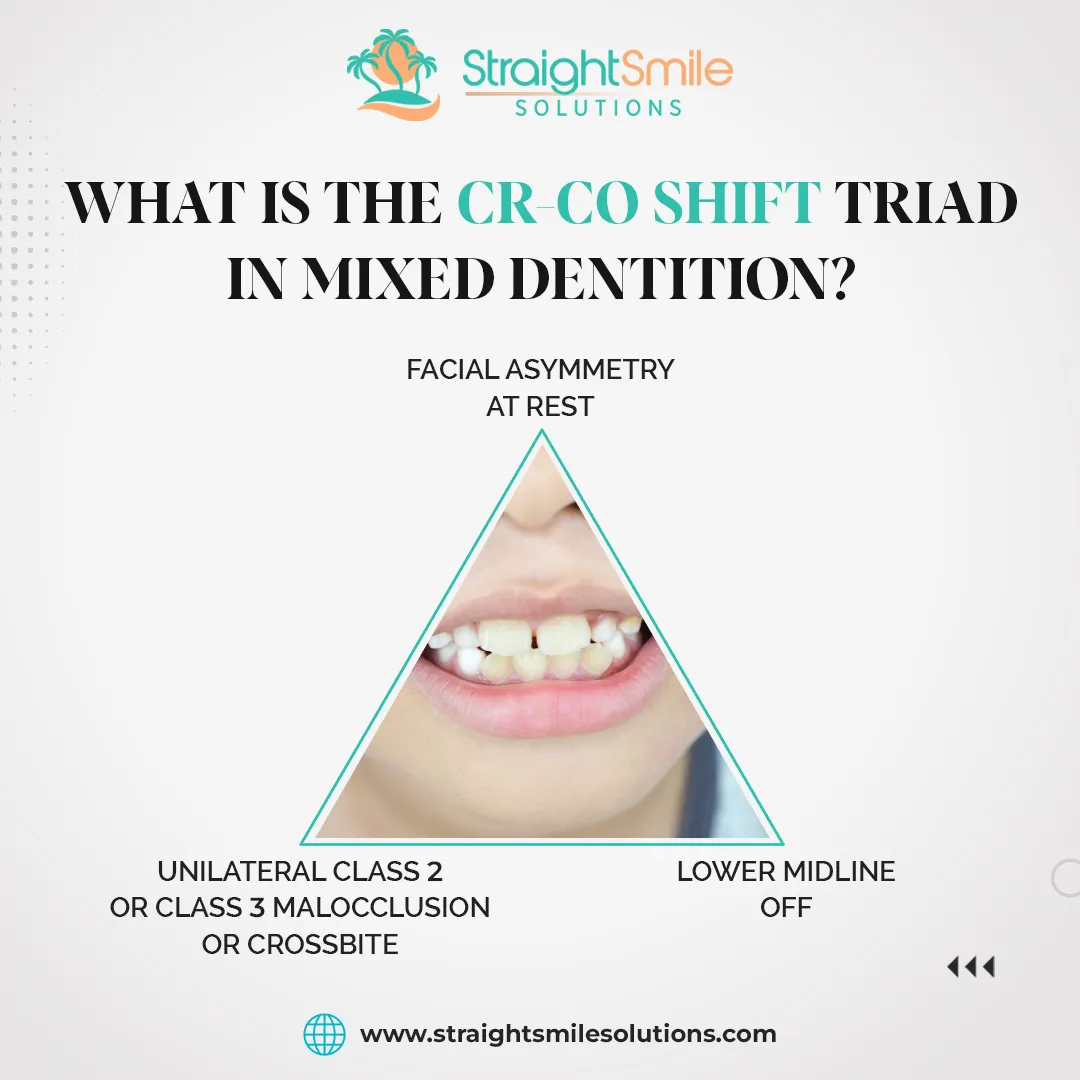
Dr. Amanda from Straight Smile Solutions discusses the CCO Shift Triad, a concept crucial for recognizing CR-CO shifts in mixed dentition patients. This knowledge is essential for general, pediatric, and aligner dentists to achieve optimal outcomes. Visit Straight Smile Solutions for more insights.
I. The CCO Shift Triad
A. CCO shifts are very common in mixed dentition patients
B. Orthodontists are trained to spot CCO shifts easily, but general and pediatric dentists may not notice them as readily
C. It’s important to identify CCO shifts before planning treatment, as treating the apparent issues without unraveling the shift first can lead to poor outcomes
D. Screen every kid patient for signs of a CCO shift
II. 3 Signs of a CCO Shift
A. Facial asymmetry
1. Jaw off to one side (usually lower jaw)
2. Likely due to a shift rather than true asymmetry B. Unilateral class 2 or 3
3. Very rare to have a true unilateral class 2 or 3 in kids – it’s usually bilateral with a shift C. Lower midline off
4. Upper midline is on, lower midline shifted
5. Seen with the other 2 signs
III. Implications for Treatment Planning
A. Don’t take apparent issues at face value without considering an underlying shift
1. Apparent midline discrepancies
2. Apparent unilateral class 2 or 3 B. Put “re-evaluate for shift” in the treatment plan
3. Reassess in 6-12 months to see if asymmetry or discrepancies persist after unraveling any shift C. Be especially vigilant with aligner cases, as a shift can’t be fully unwound like with braces
IV. Learn More
A. Other videos on the YouTube channel about CCO shifts
Assessing and managing this triad is crucial for proper orthodontic treatment planning and helping guide eruption of permanent teeth into optimal positions. Proper diagnosis and early treatment can prevent more complex issues.