
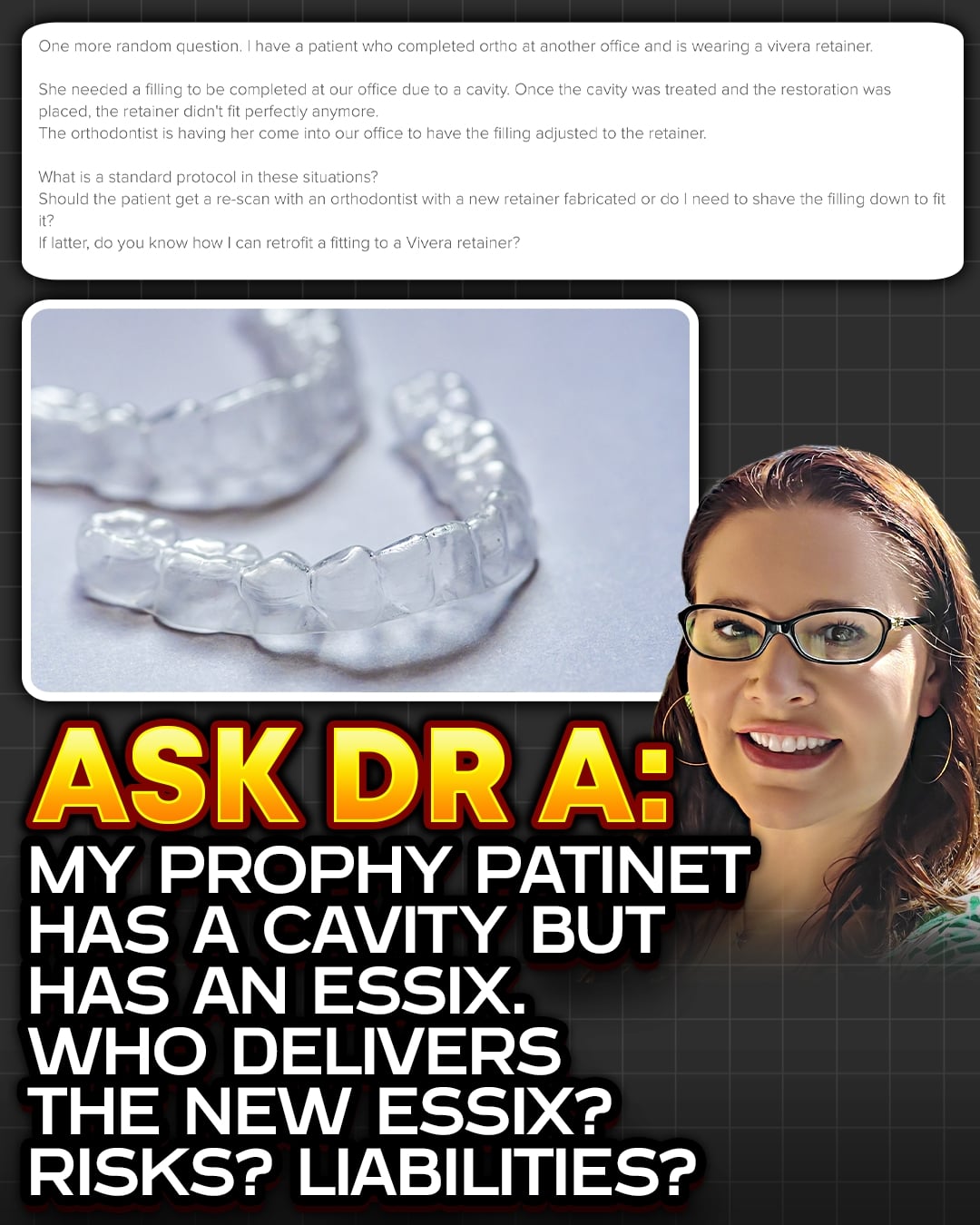
 What Happens When a Clear Retainer Stops Fitting After a New Filling?It is an incredibly common scenario in dental and orthodontic clinics. A patient completes their orthodontic treatment, receives a clear retainer like a Vivera or Essix, and later needs a standard dental filling due to a cavity. Once the dentist finishes the restoration, the patient tries to pop their retainer back in, only to find it no longer fits.Who is responsible for fixing this issue, and what is the standard medical protocol? Dr. Amanda from Straight Smile Solutions YouTube Channel breaks down exactly how dental professionals should handle this situation.The Myth of “Shaving Down” a New FillingWhen a clear retainer stops fitting over a fresh restoration, some practitioners suggest sending the patient back to the general dentist to have the new filling shaved down. According to Dr. Amanda, this is not standard protocol. Adjusting a structurally sound, medically necessary filling just to force it into an old plastic appliance can weaken the restoration and compromise the tooth.Furthermore, clear thermoformed retainers cannot be “retrofitted” or altered. Even if the patient’s original digital 3D models (STL files) are securely stored in the cloud, re-ordering a past file will not work. The old file matches the pre-cavity tooth, not the newly restored tooth shape. Anytime a patient undergoes dental work—including fillings, crowns, or veneers—a brand-new retainer is almost always required. Learn more by watching the full breakdown on the Straight Smile Solutions Video.Standard Protocol and Provider WorkflowTo prevent confusion and unexpected costs, dental teams should adopt a proactive communication protocol:Pre-Treatment Warnings: Before initiating any restorative work, general dentists should ask patients if they use an orthodontic retainer. Patients must be explicitly informed beforehand that the dental work will likely alter their tooth contour, meaning their current clear retainer will no longer fit.Obtaining a New Scan: Once the dental restoration is fully complete, the patient needs to get a fresh digital scan or impression.Determining the Provider: If the patient still sees their original orthodontist, returning to that office is often the most cost-effective route. However, if the patient has moved or the previous doctor has retired, the general dentist can choose to become the new provider for the retainer fabrication and ongoing checks.Financial Responsibility: Unless a specialized prior agreement exists, the financial responsibility for purchasing the replacement retainer rests on the patient. For a complete guide on navigating these conversations, check out the Straight Smile Solutions Channel.An Alternative Solution: Hawley RetainersFor dental patients who anticipate needing ongoing restorative care, clear aligner-style retainers might not be the most practical long-term investment. Dr. Amanda highlights the traditional Hawley retainer (an acrylic and wire appliance) as an excellent alternative.While Hawley retainers do not control vertical settling as rigidly as clear options, they offer exceptional longevity. A well-maintained Hawley retainer can easily last from 10 years to a lifetime. Because they do not completely encase the entire crown of every tooth, minor fillings or dental crowns rarely require the entire Hawley appliance to be remade. Offering patients a choice between clear plastic and durable acrylic gives them better control over their long-term oral health investments.To learn more about optimizing orthodontic workflows for general dental practices, visit the Straight Smile Solutions YouTube Channel.