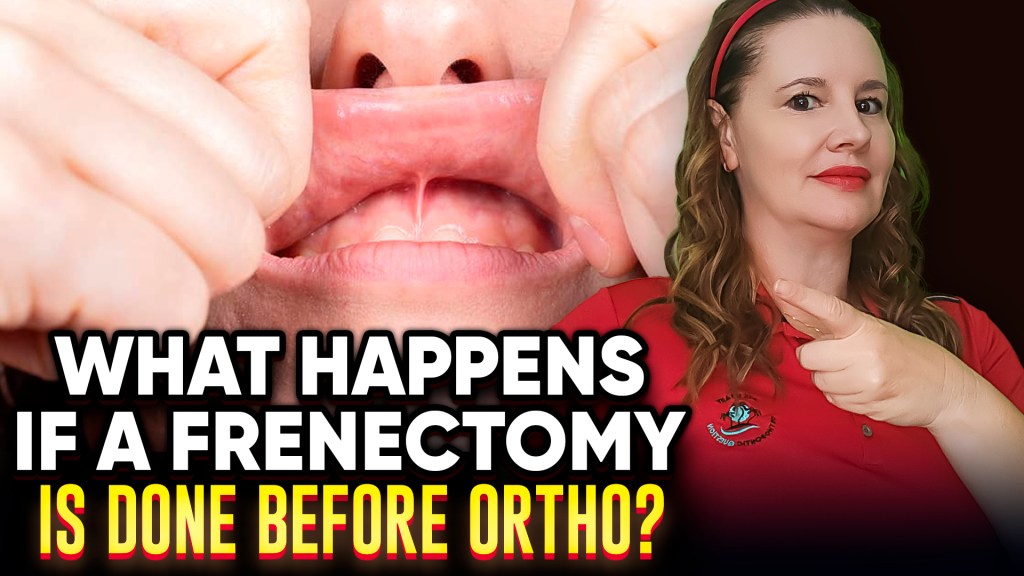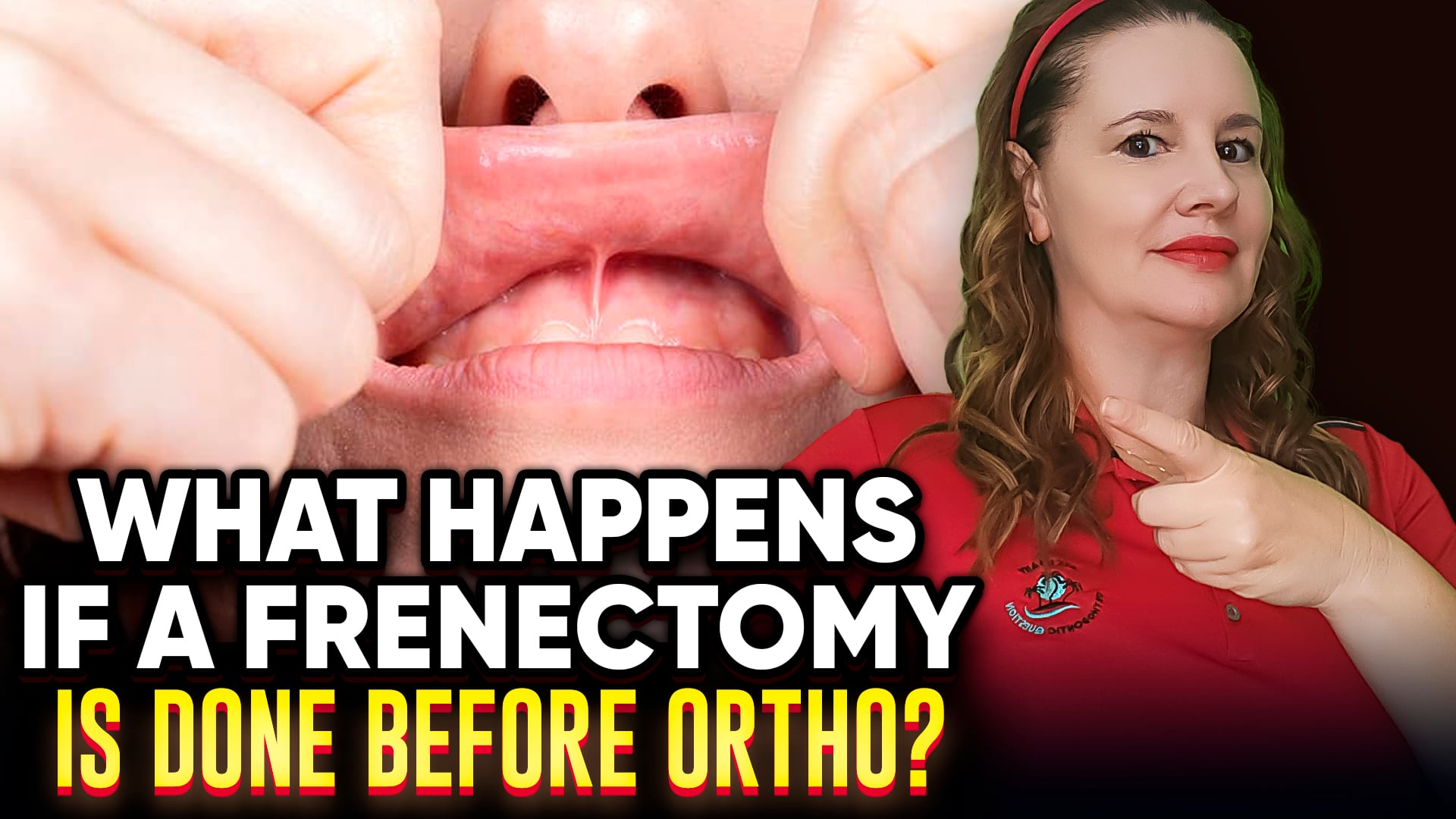
What Happens If a Maxillary Labial Frenectomy Is Done BEFORE Ortho in Braces and Invisalign?
I. Introduction
- Dr. Amanda from StraightSmile Solutions tackles a surprisingly common scenario: patients who get a frenectomy before orthodontic space closure.
- Her firm stance: Frenectomies belong at the END of ortho once the space is fully closed.
- Doing it early creates scar tissue that can prevent the space from ever closing properly.
II. The Standard Protocol
- Frenectomy before ortho is not standard of care.
- The scar tissue that forms can act as a physical barrier, preventing the central incisors from moving together.
- When the procedure is done after space closure, the scar tissue forms in a space that’s already closed, with no interference.
III. Why Some Patients Do It Early
- Occasionally, a patient gets excited after the consult and goes off to have it done without a referral.
- Sometimes, a well-meaning oral surgeon or periodontist does it without checking with the orthodontist.
- Dr. Amanda has seen this happen multiple times despite it being “wacky” and outside standard protocol.
IV. The Scar Tissue Problem
- Laser frenectomies generally heal cleanly and cause minimal issues.
- Scalpel frenectomies often create thick, fibrous, keloid-like scar tissue.
- Moving teeth through that fibrous tissue is unpredictable.
- In one case, the scarring was so botched that space closure became impossible without revision.
V. Protecting Yourself: The Consent Add-On
- Dr. Amanda recommends a simple one-page supplemental consent for any patient with a pre-existing or pre-ortho frenectomy.
- Language should include:
- Space closure may not be fully possible.
- Additional surgical revision may be needed.
- Restorative fees may be required to close the space.
- These are patient expenses not covered by insurance or the orthodontic fee.
- Document it before starting treatment.
VI. The Bottom Line
- Frenectomy before ortho creates risk. Frenectomy after ortho avoids it.
- If a patient comes to you with an existing frenectomy (or had one done early), don’t automatically decline the case.
- Do add a supplemental consent. Manage expectations upfront.
- And if the space won’t close? You’re protected. The patient was warned. The fees are theirs.