Understanding Black and Blue Dots in Invisalign Cases
In many cases, Invisalign’s system can offer a range of incredibly valuable tools, and understanding how to make the most of these is very important. In line with this thought, today, we’re looking at some of the key things you should know about the black and blue dot system with Invisalign to help you make the most of this tool.
What do Black and Blue Dots Mean in Invisalign?
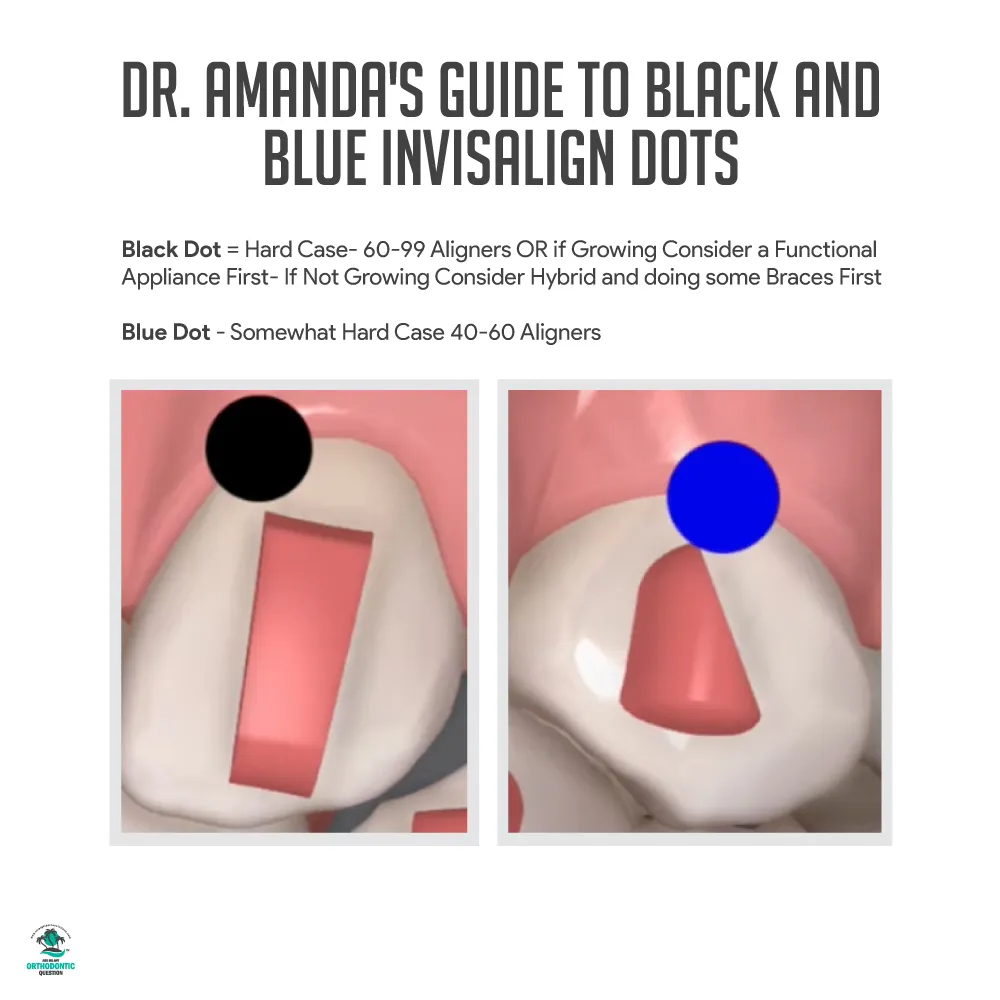
When ordering aligners through Invisalign, you can turn on the TMA system to utilize the black and blue dot guides. These dots refer to the complexity of the case and how many aligners you might need, making it very useful information to consider when selecting cases.
What Do Black and Blue Dots Mean?
Blue dots indicate a moderate case that will likely need between 40 and 60 aligners to complete. Meanwhile, black dots may need anywhere up to 99 aligners or a hybrid aligner and braces approach to complete (or you could potentially consider a functional appliance in growing patients).
If you hover over the black or blue dot, you’ll be able to view information about the tooth, such as how much extrusion there might be or the angle of tipping. This will help you decide whether you’ll need a large attachment on these teeth; if the dots refer to intrusion, this may be less necessary, but extrusion or tipping cases will often benefit from having a very large attachment instead.
Be Careful with Black Dot Cases
If you see a black dot on any of your patients, you may need to consider carefully whether you should be taking on the case with Invisalign as a general dentist. In young, growing patients, black dots may not be such a major concern; however, in adults (or patients who are past the point of skeletal maturity), black dot cases may be much more concerning, which is important to keep in mind before starting an Invisalign treatment plan.
If you’re not sure, reach out to a professional orthodontist to see whether an Invisalign treatment plan will be suitable for black dot cases. You might find that some black dot cases would benefit from a braces or hybrid treatment plan, instead.