
 In the modern world of Invisalign and 3D scans, it’s easy to forget that orthodontics is built on centuries of physical mechanics. The StraightSmile Solutions YouTube channel, which features over 3,000 free educational videos, recently explored a critical clinical challenge known as Washboard Roots—a phenomenon that bridges the gap between 19th-century tools and 21st-century technology.
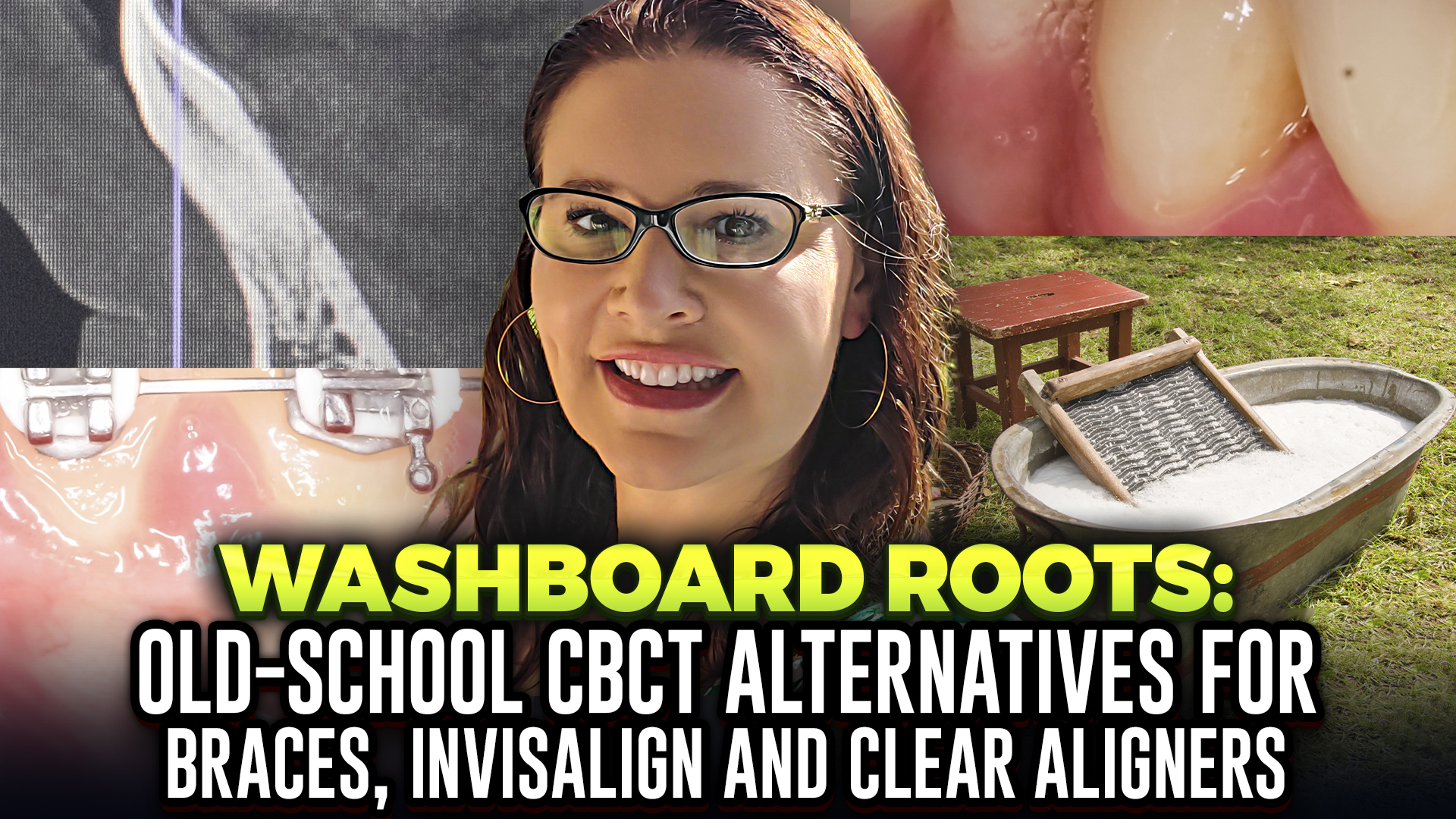
In orthodontics, the “washboard effect” refers to a condition where a tooth’s root is pushed too far toward the outer layer of the jawbone (the labial cortical plate). This causes the gums to thin and the physical contour of the underlying root to become visible or palpable through the tissue. The resulting bumpy texture looks and feels remarkably like a traditional laundry washboard.
If left unmanaged, this positioning can lead to:
Bone loss: The tooth begins to “exit” the supportive bone structure.
Root resorption: The root itself may begin to dissolve or erode—a top reason for board complaints.
Gingival recession: Thin gum tissue over the root prominence is more prone to pulling away.
The term is a nod to the essential household tool of the 1800s and early 1900s. Before electric machines, washing clothes was a grueling manual task involving a fluted metal or wood board.
The Ortho Connection: Just as those ridges applied force to fabric, “washboarding” in the mouth indicates that excessive force or improper torque is being applied to your teeth.
The “Old-School Analog Workaround” is crucial because digital software doesn’t always show where the bone actually ends. When a clinician detects that “washboard” feel, they may switch to traditional techniques—like sectional piggyback wires—to tuck the root back into the safety of the bone, an intervention digital-only workflows might miss.