
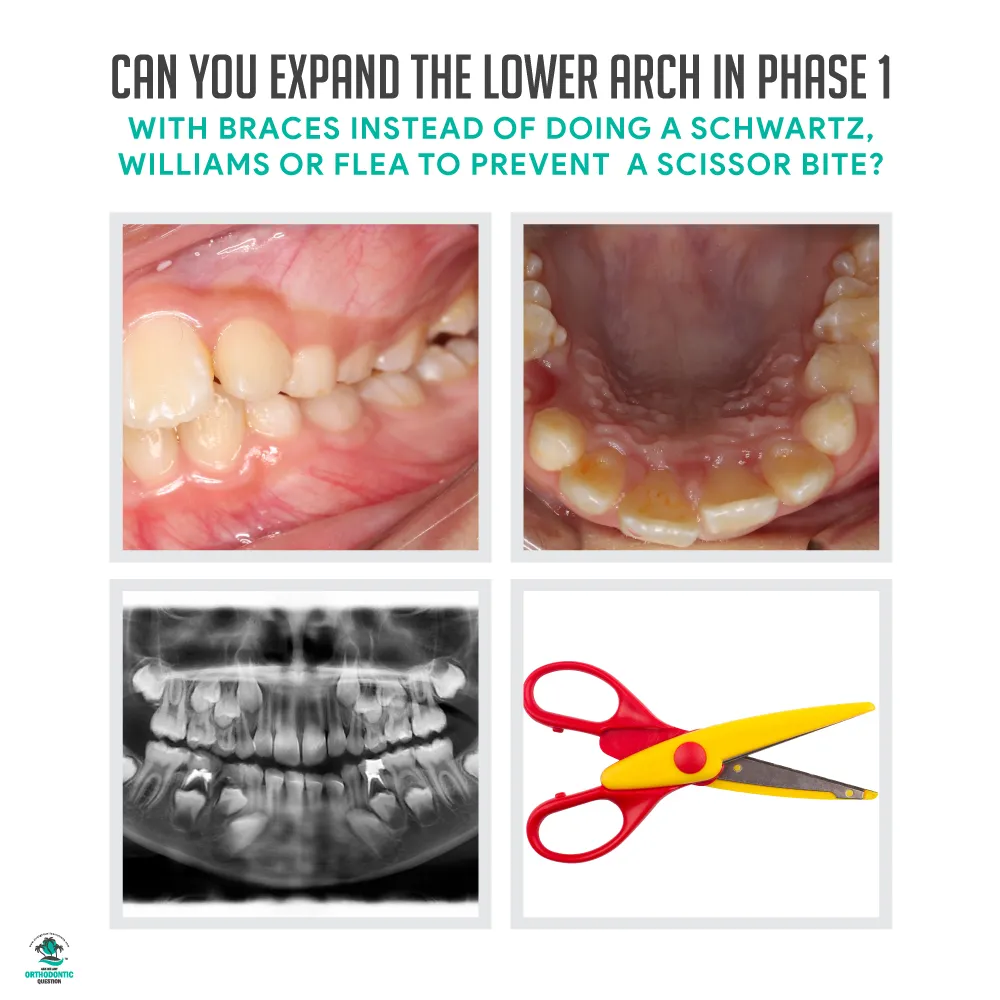
 Using Braces to Expand the Lower Arch
Phase 1 patients can present a unique range of challenges and possibilities, and considering the different options to optimize your orthodontics treatment plan is crucial. As part of this, we’ve outlined some of the core things you need to know about using braces in your orthodontics treatment plans to expand the lower arch in phase 1 patients, including whether this is a quick or practical solution versus doing a Schwartz, Williams, or Flea.
Can I Use Fast Braces to Expand the Lower Arch?
While there are several ways that you can potentially expand the lower arch in Phase 1 patients, and since the lower arch does not have a suture, it is just tipping. In line with this thought, braces (and aligners) can potentially be used to expand the lower arch in mixed dentition patients, provided that the patient isn’t likely to be losing teeth soon.
However, it’s worth noting that some patients may still need Schwartz, Flea, or Williams in order to create a wide and balanced bite.
How Using Braces Compares to Schwartz, Flea, or Williams
Some of the most common alternatives to expanding the lower arch with braces is to use a Schwartz, Flea, or Williams approach. These may be important in cases where fast braces aren’t going to be suitable to expand the lower arch.
The main example of this is when the patient is missing teeth since two lower teeth must be bonded in order for uprighting to work. Furthermore, after checking the pano, it’s also crucial to check whether the patient is likely to have any teeth attempting to erupt; if there are any that may come through any time soon, don’t attempt to use braces to expand the lower arch, as bonding the teeth together with braces can potentially do a significant degree of harm to the patient.
If the patient isn’t missing any teeth, using braces can help to give comparable results as with Schwartz, Flea, or Williams cases (but without the same lab fee costs). However, regular checkups and reports are vital to ensure the normal progression of the orthodontics case. If the patient does not attend recall appointments, you may be liable for patient abandonment.