
Understanding SN/GoGN (Mandibular Plane Angle) in CEPHs
CEPHs are an incredibly useful tool when working out the right treatment plan for an orthodontics patient. However, there’s a lot you’ll need to know as part of this – and understanding the different values is integral. Luckily, we’ve outlined some key things you should know about SN/GoGN values in your CEPH results to help inform your ortho treatment plans.
What is the SN/GoGN?
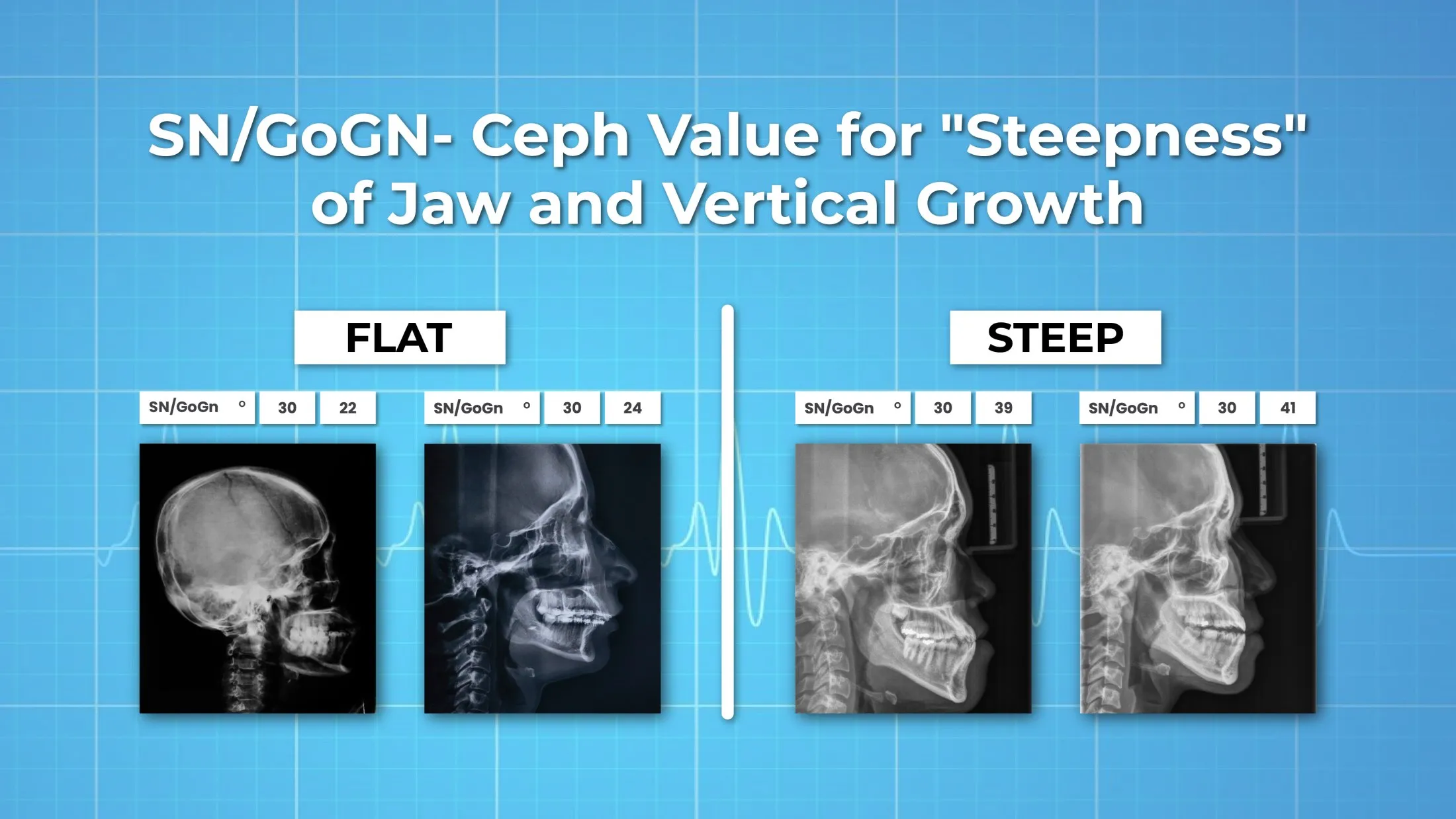
First, we need to define what the SN/GoGN measures. The SN/GoGN value in CEPHs measures the angle of the lower jaw relative to the cranial base. This can then indicate whether the growth is going flat or vertical (steep) in the patient.
As you complete more CEPHs during your orthodontic career, you’ll likely begin to recognize when a patient is growing flat or steep without even needing to reference the numbers first.
What is the Normal Value?
The normal value should be around 30. However, a patient who is growing flat will likely have a lower number than this; meanwhile, a patient growing steeply will have a higher number.
What Does a Flat or Steep Jaw Mean?
If your patient is flat, this will often be a genetic trait and accompanied by a very square-shaped jaw, or this may be the result of Class II cases. It’s rare for a flat bite to be Class III.
Contrastingly, a steep patient will often be a Class III case. It can also be due to a downwards and backward growth openbite. These steep jaw patients may commonly also experience difficulties with their airways, which may need addressing.