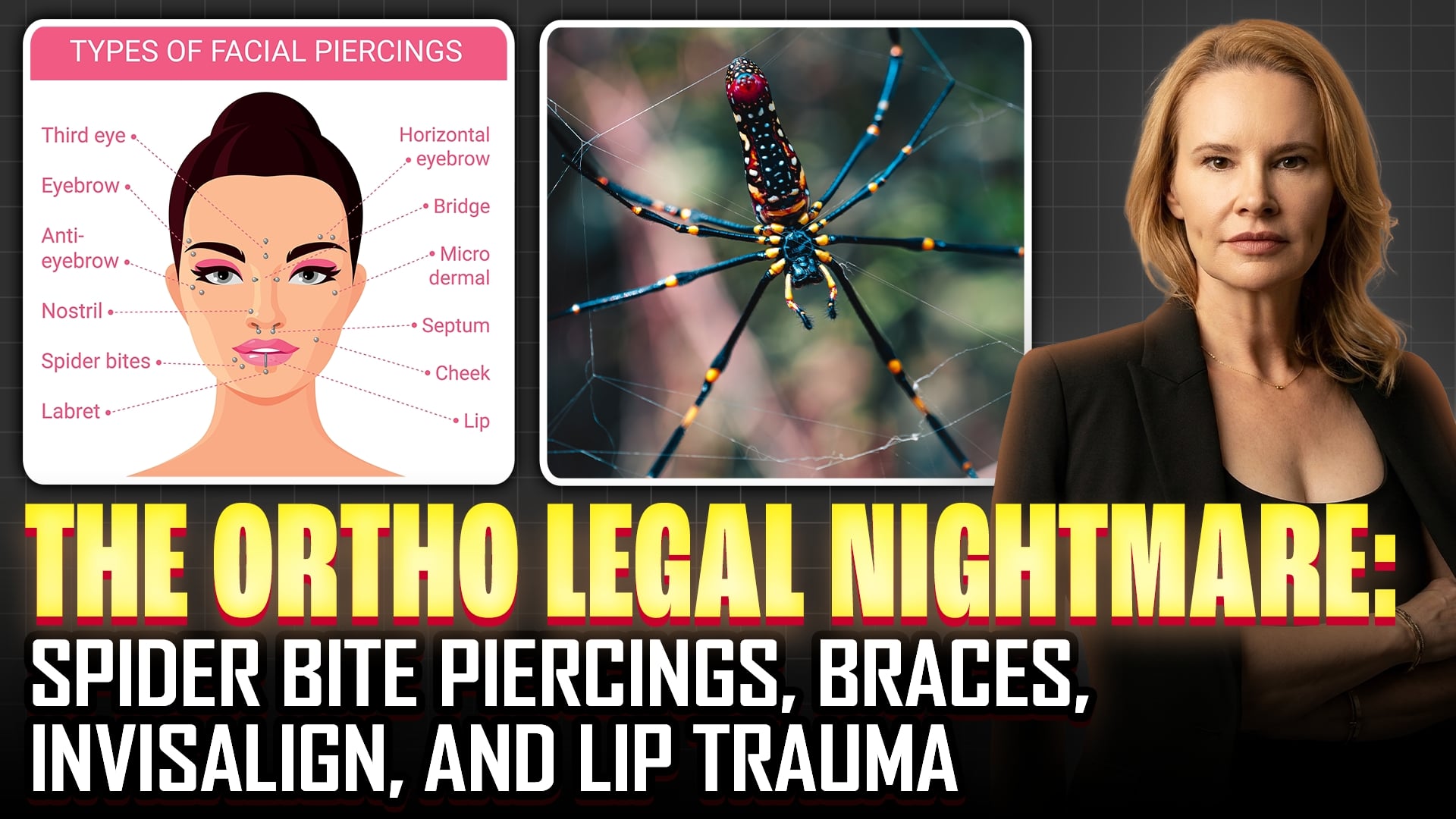
Treating Orthodontic Patients with Spider Bite Piercings: Clinical and Legal Risks
Integrating orthodontics with patients who have facial modifications introduces complex clinical challenges and liability concerns. Spider bite piercings—two side-by-side piercings positioned just below the lower lip—pose a unique threat to active orthodontic treatment, whether utilizing traditional braces or clear aligners.
While patients can legally accept the self-induced risks of body modification through specialized informed consent, the physical and administrative burdens left on the practitioner make treating these cases a high-risk endeavor.
Key Clinical Risks and Tissue Trauma
Even when equipped with a smooth flatback or a labret stud, oral jewelry is prone to catching and causing localized trauma inside a dynamic oral cavity.
- Severe Structural Snagging: Oral jewelry can easily snag on the edge of an aligner tray, an archwire, or a bracket during routine movements like yawning, speaking, or laughing. This catching can lead to sudden, painful macro-trauma and severe tearing of the inner lip tissue.
- Chronic Root and Bone Trauma: Because spider bite piercings sit directly over the roots of the lower incisors, the hard metal backing constantly bangs against the incredibly thin alveolar bone. This repetitive micro-trauma can lead to root damage and premature devitalization of the teeth.
- Localized Infections: Constant movement of the jewelry introduces micro-trauma beneath the skin layer, elevating the risk of chronic irritation and localized soft-tissue infections.
The Standard of Care and Practice Liability
Accepting a patient who refuses to remove their oral jewelry dramatically shifts your daily practice workflows and standard of care requirements.
- Mandatory In-Person Inspections: To legally defend your standard of care, you must visually inspect the piercing site and surrounding bone structure at every single appointment. This requirement completely eliminates the ability to use remote monitoring tools or virtual check-ins.
- The Insurance Limitation: Managing these high-risk cases demands extra doctor time and additional physical visits. However, if your practice operates under a standard insurance model, you cannot adjust or raise your flat-rate treatment fees to compensate for this specialized care.
- The Reality of Legal Defense: If a patient signs a supplemental informed consent form acknowledging potential damage, a malpractice lawsuit may eventually get thrown out of court. However, defending yourself against a claim still requires paying a retainer fee and enduring months of stressful litigation that drains your practice both emotionally and financially.
Practical Clinical Recommendations
The safest policy for your practice is to require the complete removal of all oral jewelry before bonding brackets or delivering aligner trays.
To preserve the piercing track without disrupting active tooth movement, patients can daily poke a hole through the site using a clean post while keeping the jewelry completely out of the mouth for the duration of their treatment. Once orthodontic alignment is finished and retention is stable, the patient can safely re-pierce or re-insert the jewelry.