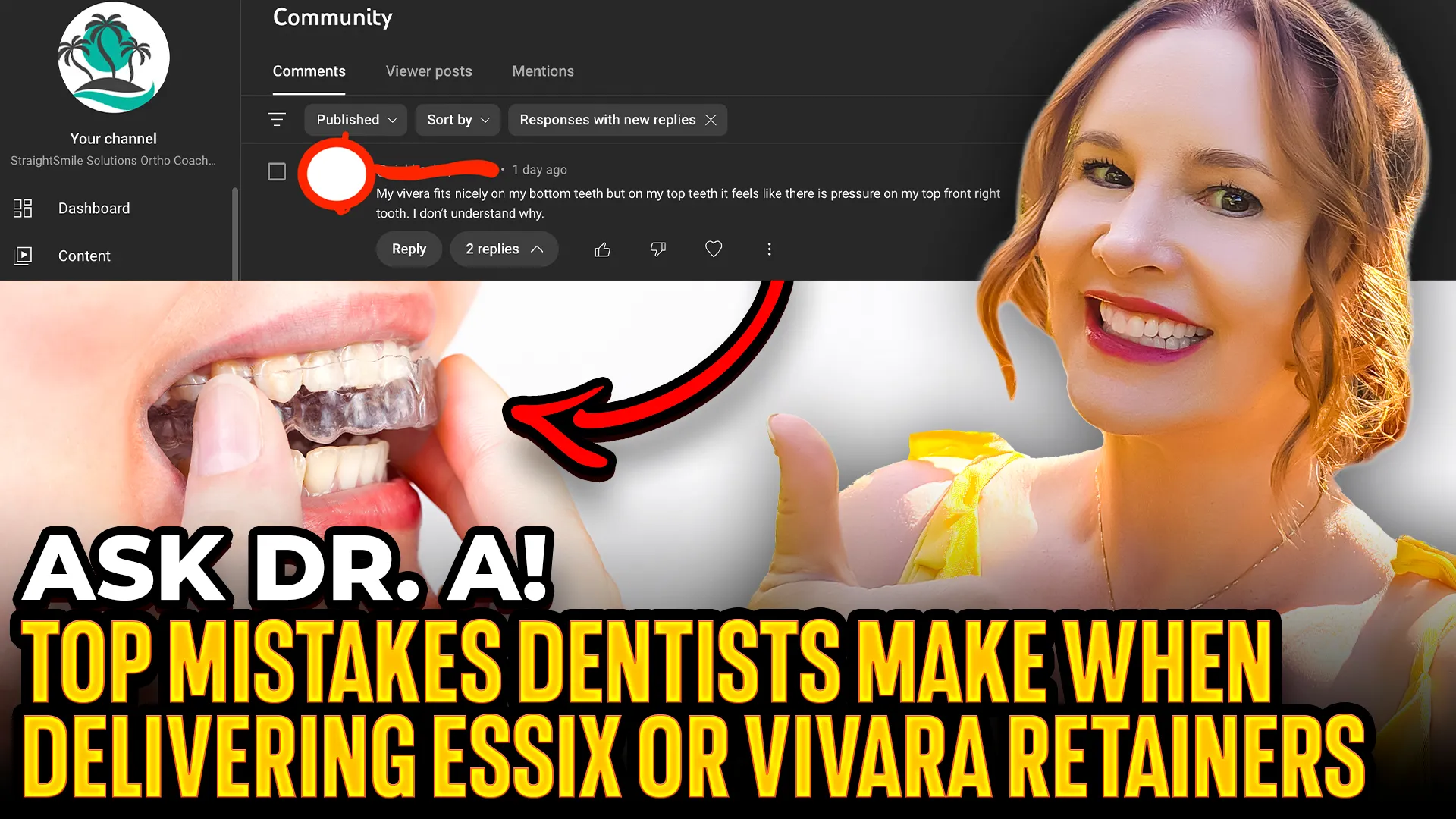
TOP RETENTION MISTAKES DOCTORS MAKE BEFORE DELIVERING ESSIX OR VIVARA RETAINERS
- Introduction: Addressing Retention Concerns
- Dr. Amanda responds to a viewer’s question regarding discomfort with a Vivara retainer, highlighting the importance of post-orthodontic care.
- The issue raised—pressure on a specific tooth from the retainer—illustrates common retention challenges.
- Retention is described as the third, often neglected, phase of orthodontic treatment.
- Dr. Amanda emphasizes that successful orthodontics doesn’t end with braces or aligners; it includes lifetime retention planning.
- The Importance of a Retention Protocol
- Many dental professionals overlook or inadequately address long-term retention.
- Dr. Amanda asserts that retention is both a patient satisfaction opportunity and a revenue stream.
- Poor retention planning leads to frustration, negative reviews, and missed referrals.
- A well-maintained outcome turns patients into “walking, talking billboards” for your practice.
III. Retainer Awareness Among Families
- Parents and teens frequently discuss retainer types and protocols in everyday settings (sports events, parks, etc.).
- Being transparent and informative about aftercare distinguishes dental providers and builds trust.
- Orthodontists are more likely than general dentists to have robust aftercare plans in place.
- Creating a Comprehensive Retention Plan
- Dr. Amanda recommends that all practices implement a clear, signed retention agreement before treatment begins.
- You should detail: type and number of retainers, replacement process, breakage protocols, and cost expectations.
- Should address relapse scenarios and future retainer needs.
- Outsourcing retainers to third parties may reduce long-term practice value; in-house management is preferred.
- Practice Growth and Support
- Dr. Amanda offers dentists a complimentary consulting session (not for case review) to explore retention strategies and services.
- Encourages participation in courses or à la carte support for deeper retention protocol implementation.
- Emphasizes hands-on learning and consistent access to professional guidance for retention success.
- Conclusion
- Retention is a critical but often neglected component of orthodontic success.
- Establishing a solid, transparent retention plan improves outcomes, reduces risk, and strengthens a practice’s reputation and longevity.