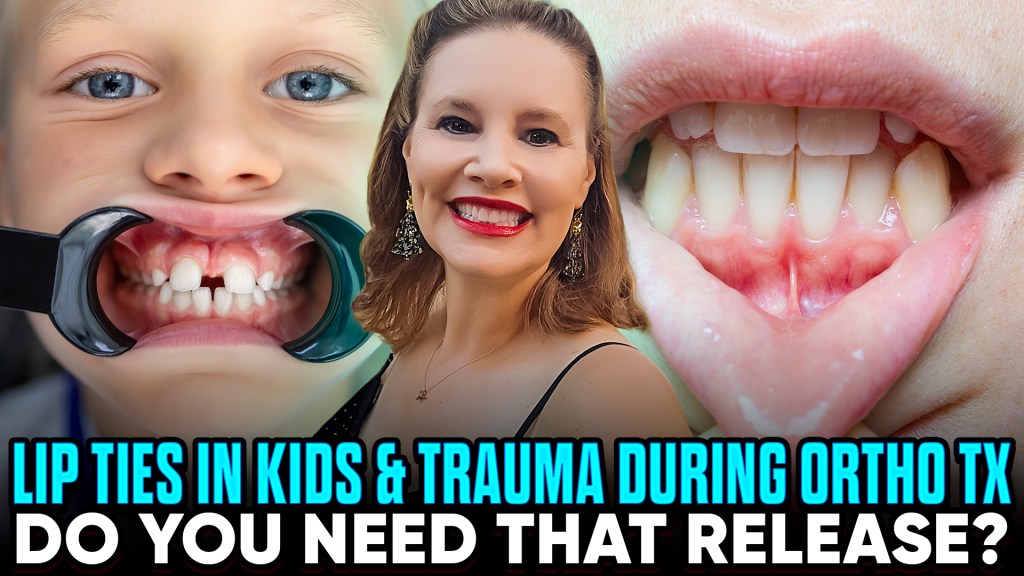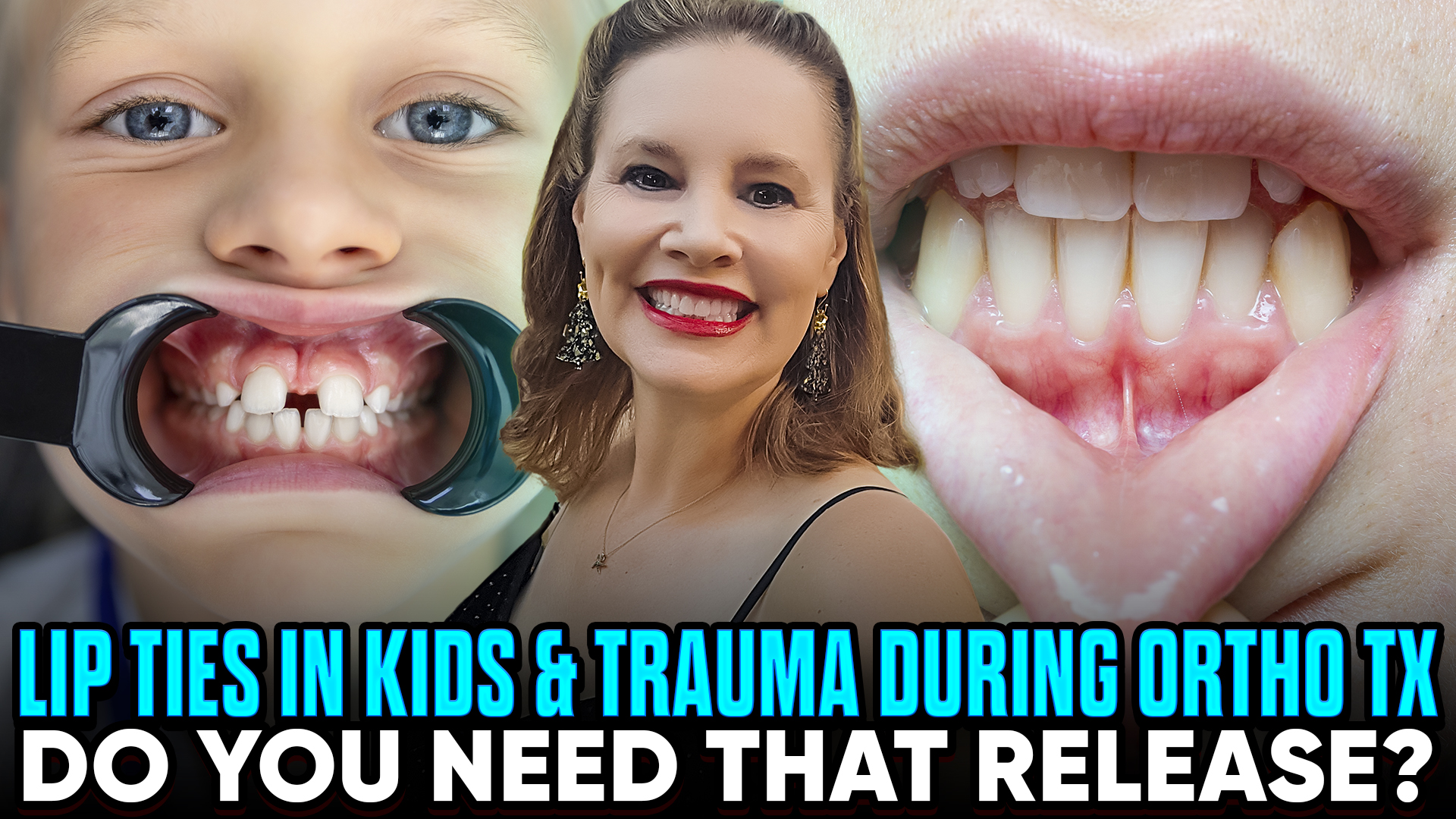
Tongue and Lip Ties in Kids and Adults: When to Trim the Frenum (Frenectomy)
Dr. Amanda with Straight Smile Solutions
- Focus: tongue and lip ties in children and adults.
- Builds on prior content about maxillary labial frenectomies (timing with braces/Invisalign/Phase 1).
- Offers an orthodontist’s perspective on when trimming is necessary vs. avoidable.
Why/When Frenectomy is Indicated
- Upper lip ties:
- If a gap (diastema) between teeth exists, pulling the lip shows blanching and a visible tissue tag.
- Must close the space first with orthodontics before trimming → prevents scar tissue from blocking closure.
- Procedure timed after Phase 1, Phase 2, or comprehensive treatment and retention.
- Lower ties:
- Usually less of a concern unless affecting orthodontic closure/retention.
- Signs to trim:
- Space reopens quickly (within 12 hours) after removing the power chain/aligners.
- Persistent relapses despite retention.
- Requires bonded (permanent) retainer after trimming.
Testing Before Deciding on Surgery
- With braces:
- Remove power chain near the end of treatment → monitor if spaces pop open.
- If reopening occurs → frenectomy + bonded retainer.
- If not → surgery is often unnecessary.
- With Invisalign/aligners:
- “Day off” test → patient skips aligner wear during the day (under orthodontist’s supervision).
- If spacing reappears, → frenectomy may be indicated.
- Orthodontist verifies results in person, not just the patient’s word.
Clinical Decision Making
- Avoid trimming too early (can complicate closure).
- Base decision on relapse behavior rather than routine trimming.
- Collaboration with an OMT (orofacial myofunctional therapist) may guide lower tie management.
Key Takeaway
- Frenectomy should be timed strategically after space closure and retention testing.
- Not every tie requires trimming; only pursue it when relapse or spacing proves persistent.