
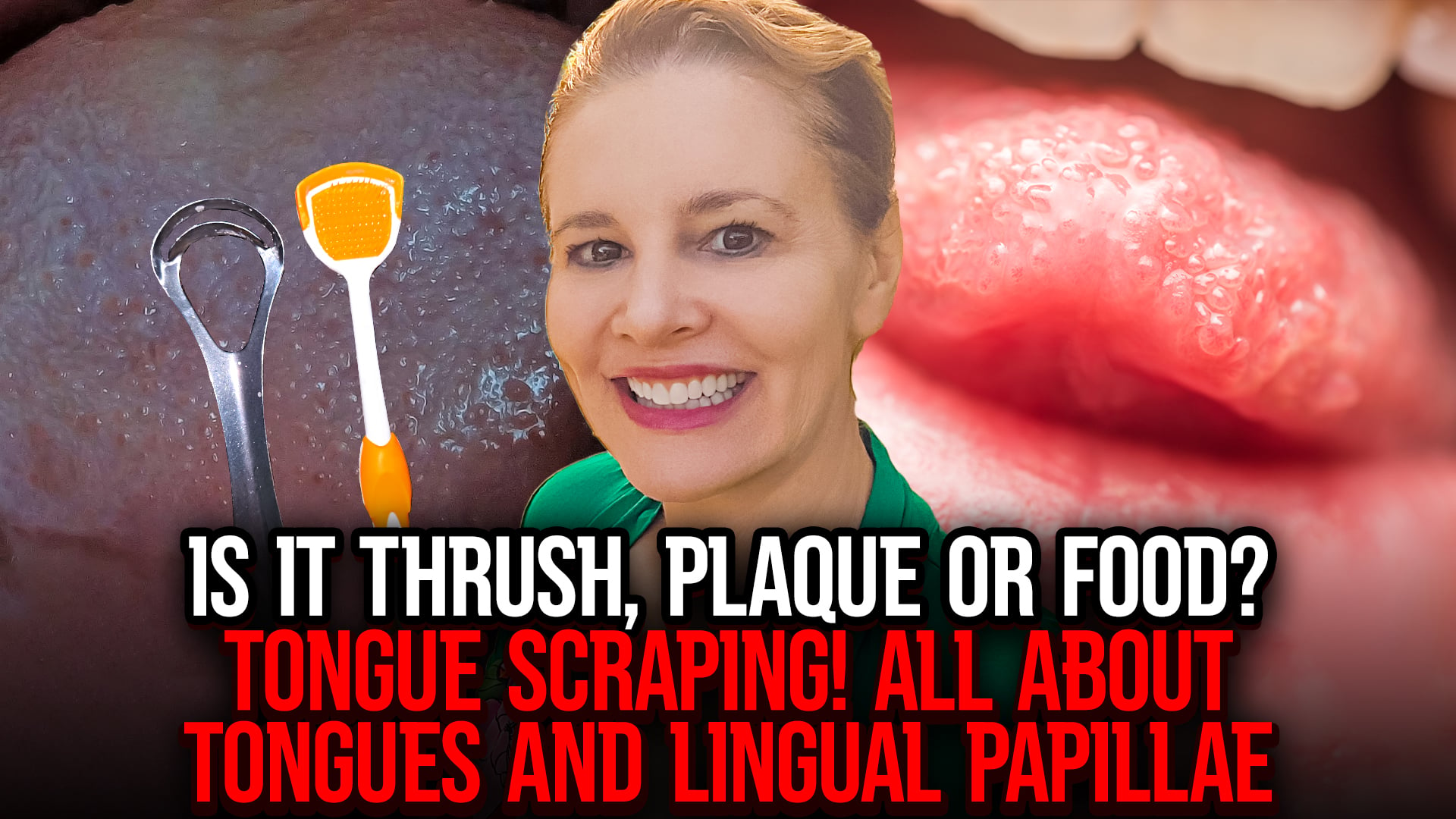
Thrush, Tongue Scraping, and How to Tell if Your Tongue Has a Yeast Infection
Dr. Amanda with Straight Smile Solutions discusses tongue health, tongue scraping, and signs of thrush (oral yeast infection).
She shares perspective from both professional experience and family traditions (grandmother checking tongue for illness).
Healthy Tongue Basics
- Tongue surface covered in papillae (taste buds) with sensory and functional roles.
- Grooved texture allows food, plaque, and bacteria to accumulate.
- Historically: brushing the tongue. Modern recommendation: scraping instead.
Tongue Cleaning Practices
- Scraping removes plaque, food, and debris more effectively than brushing.
- Tools: firmer scraper (more effective, harsher) vs. softer scraper (gentler).
- Best practice: scrape tongue twice daily along with brushing.
Normal vs. Abnormal Tongue Coating
- Normal: White coating that wipes/scrapes away easily = plaque or food residue.
- Thrush (oral yeast infection):
- Thick, creamy, cottage cheese-like patches.
- Cannot be fully removed by scraping.
- Red, raw, or bleeding tissue underneath.
- Other possible causes of white lesions: leukoplakia or lichen planus (non-fungal conditions).
Oral Microbiology & Thrush
- The mouth hosts good and bad bacteria plus fungi.
- Good bacteria → maintain balance.
- Bad bacteria → cavities, gum disease.
- Fungal imbalance (Candida) → thrush.
- Some individuals are prone to recurrent thrush, like recurring strep.
Transmission & Risk
- Thrush can spread through kissing or close contact.
- Choosing partners with poor oral or gut health increases risk.
- Links to earlier discussions on transmission of bad gut bacteria.
Management & Care
- If thrush is suspected: visit the dentist for a biopsy and diagnosis.
- Treated with antifungal medications.
- Important to distinguish from other white oral conditions.
Key Takeaway
- Practice daily tongue scraping.
- Learn to identify thrush vs. harmless debris.
- Oral health and partner health both influence long-term microbiome balance.