
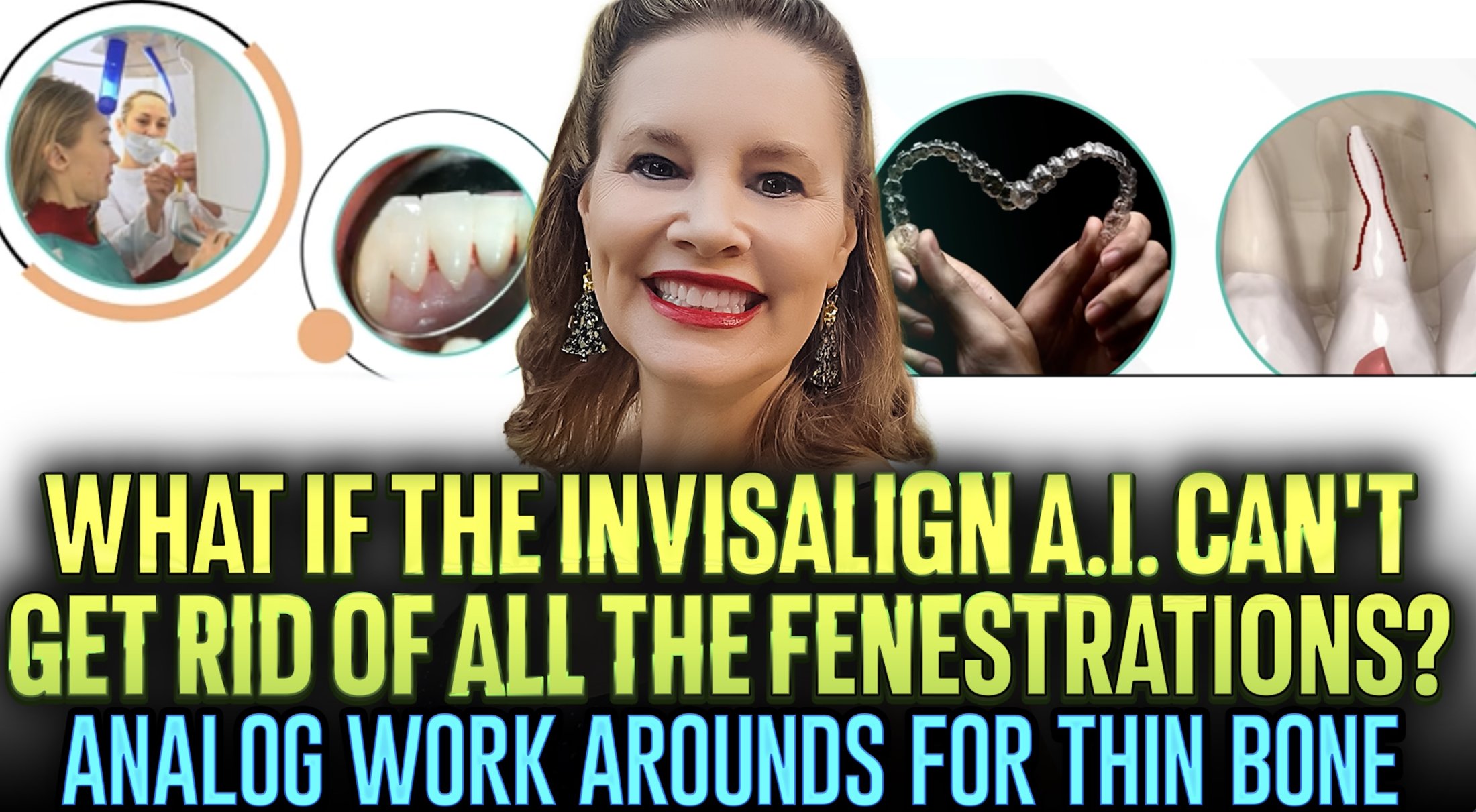
 Thin Bone vs Invisalign A.I. and Fenestrations: Using Analog Techniques to Get Better ClinChecks
Introduction
Dr. Amanda of Straight Smile Solutions discusses how Invisalign’s AI-driven ClinCheck and CBCT integration can sometimes flag root fenestrations or thin bone concerns that may not fully reflect real-world biological outcomes. While AI tools are powerful, she emphasizes that they are decision-support systems, not substitutes for clinical judgment. Understanding how to interpret these warnings and apply analog orthodontic principles is critical for predictable, safe treatment planning.
Understanding Invisalign AI and CBCT Integration
AI segments roots and alveolar bone from CBCT scans
Creates a 3D model that moves roots and crowns together
Highlights biological limits based on existing bone anatomy
Red warnings often represent worst-case scenarios, not certainties
Why Fenestrations Appear in ClinChecks
AI works within the current bony housing and does not predict future bone adaptation
Thin bone may be difficult for AI to visualize accurately
Over-torquing roots without adequate crown movement can trigger warnings
Algorithms may overcorrect in pursuit of root parallelism
The Role of Slow, Analog Tooth Movement
Very slow, deliberate movement increases osteoplastic activity
Constant, low forces favor bone build over breakdown
Slowing movements two to four times beyond default staging may reduce risk
Arch widening and controlled proclination may be tolerated biologically
Clinical Adjustments Before Abandoning a Case
Adjust torque before increasing IPR
Keep movements within existing bony housing when possible
Be precise and deliberate in instructions to the technician
Accept that some fenestrations cannot be fully engineered away
Risk Management and Interdisciplinary Planning
Loop periodontists into high-risk cases early
Obtain periodontal approval in writing
Monitor closely throughout treatment
Be prepared to discontinue treatment if risks outweigh benefits
Conclusion
Dr. Amanda emphasizes that Invisalign AI is a powerful visualization tool, but not a replacement for sound orthodontic judgment. Thin bone and fenestration warnings should prompt thoughtful planning, slower movements, and interdisciplinary collaboration. By combining modern AI insights with analog orthodontic principles, clinicians can produce safer, more realistic ClinChecks while protecting both patients and practices.