
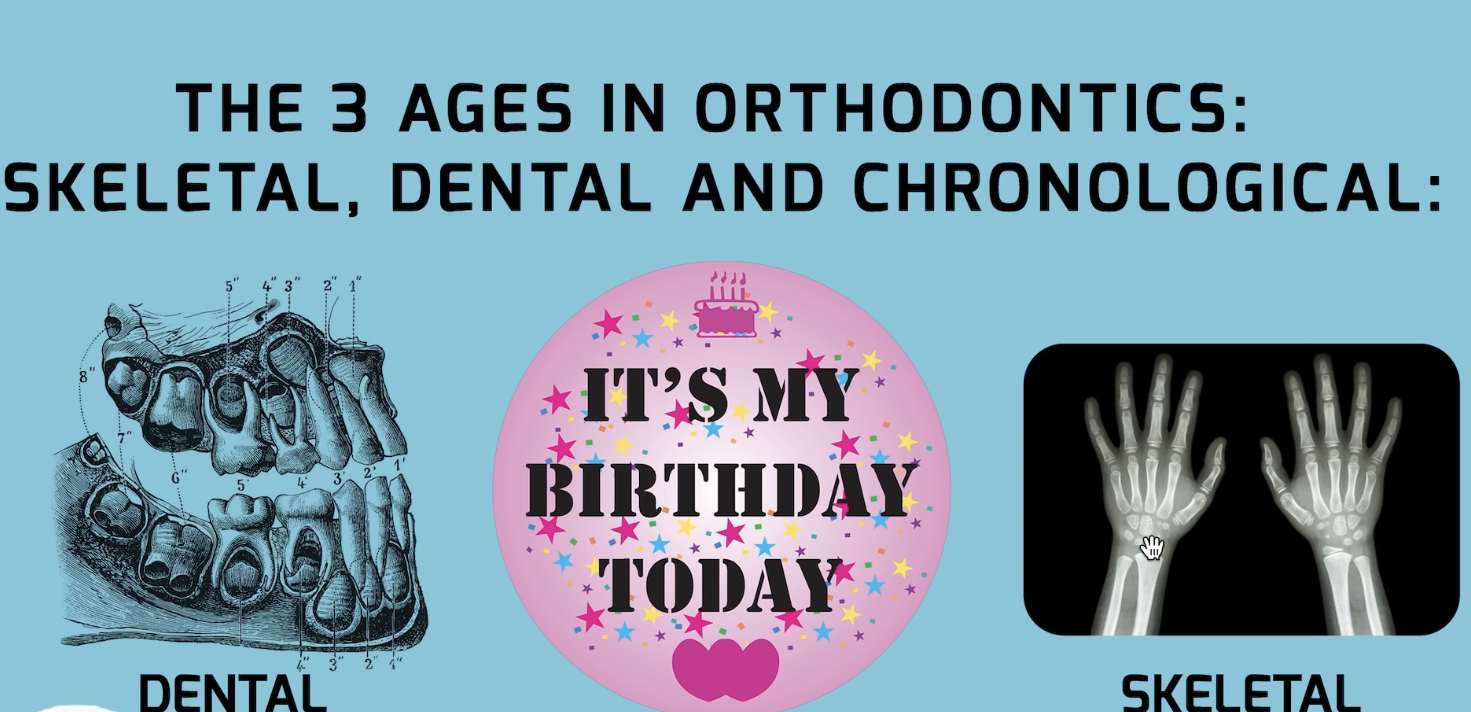
The 3 Ages in Orthodontics
When it comes to your orthodontics patients, knowing how to treat a patient can be incredibly difficult, and one of the major things you’ll need to consider as part of this is your patient’s age. It’s not enough to just know their chronological age, though (i.e., how many years they’ve been alive); instead, you’ll also want to make sure you know your patient’s level of dental and skeletal maturity and how this influences the most effective treatment plan.
The Three Ages in Orthodontics You Should Know
A young patient – especially those in Phase 1 – will have three different ages you should consider. These are as follows:
1. Chronological age: While it’s not the “be all and end all” of dental treatments, a patient’s chronological age can significantly impact their treatment plan. The chronological age is your patient’s normal age in years – in other words, how long since they were born.
2. Dental age: A patient’s dental age can strongly influence your approach to ortho treatments. Indeed, if a patient has more of their teeth in than you might expect for their chronological age, this could influence your approach to treating them.
3. Skeletal age: Similarly to dental age, a patient may potentially be more or less developed skeletally than you might expect at their age. Taking a hand-wrist x-ray is one of the simplest ways to determine this.
These three ages can directly influence how you treat your patient before ortho starts, especially when you want to expand the jaw and the like. Considering all of these factors together can help you take the necessary steps as required to treat your patients successfully.
How These Influence Your Cases
Many people assume that a patient’s chronological age is one of the most influential factors in treatment plan choices. However, understanding a Phase 1 patient’s dental and skeletal age can help you make the most effective choices for your own patients. So, when treating mixed dentition Phase 1 patients, make sure you’ve considered all aspects of their age before ortho starts to inform your decision.