
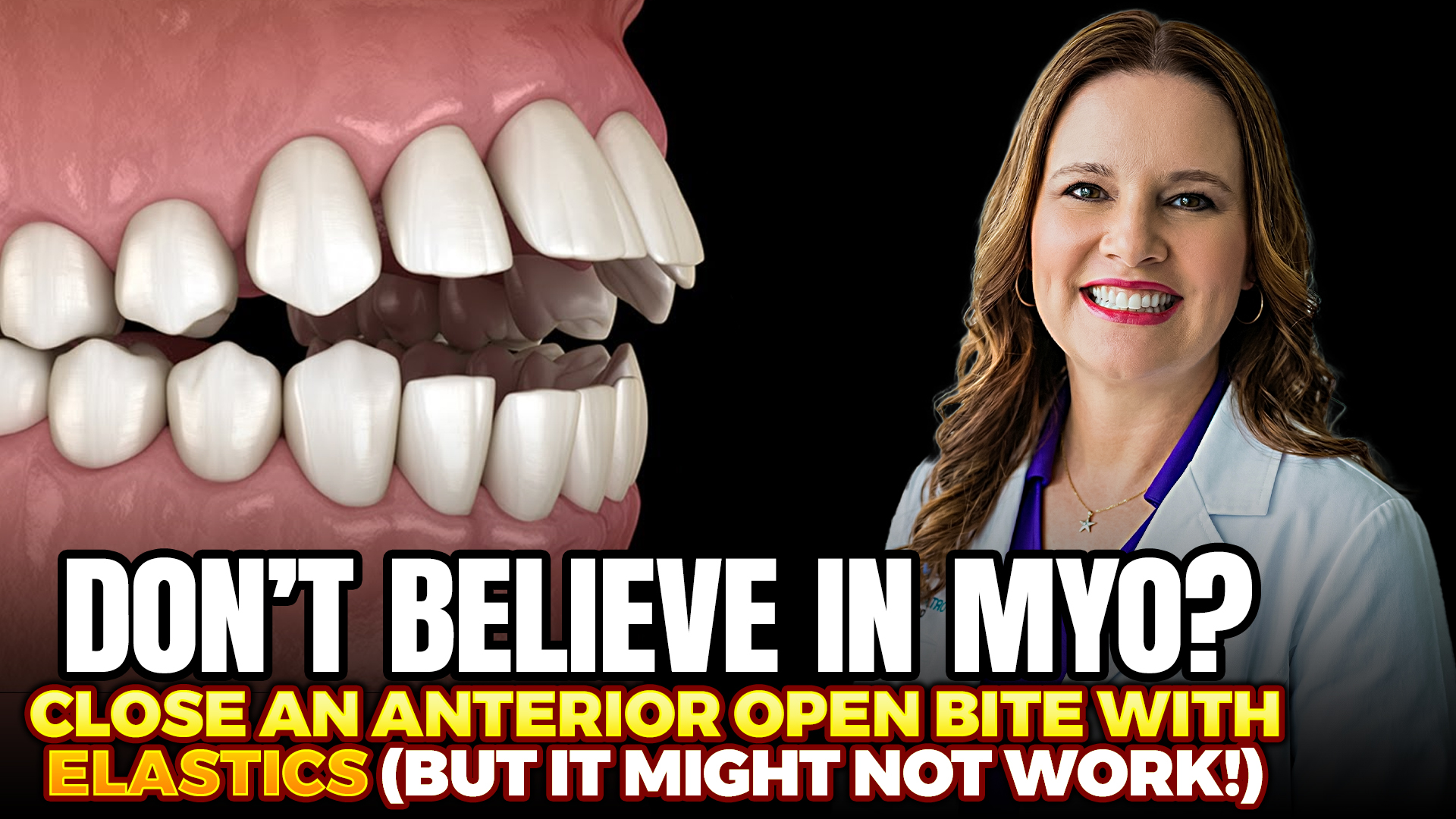
Closing an anterior open bite can feel like a major clinical victory, but if you rush to fix it with braces and elastics without understanding the root cause, you are walking into an orthodontic trap. Open bites do not just happen out of nowhere. They are heavily driven by underlying skeletal structural issues, airway obstructions, tongue thrusts, or stubborn childhood habits like prolonged pacifier use and thumb sucking. If you fail to identify and treat the root etiology first, the bite will relapse post-treatment—no matter how many bonded retainers you place.
Before you even think about ordering elastics, you must screen the patient’s airway and check for a myofunctional tongue thrust. If the open bite is skeletal in nature or extends past the canines into a posterior open bite, orthodontic treatment alone will fail. These patients require complex orthognathic jaw surgery. If your patient refuses surgery and wants to try an orthodontic-only approach, they must sign a formal clinical compromise form. Documenting that the patient was informed of the risks and alternatives protects your practice from immense liability when the bite inevitably attempts to relapse.
For mild, isolated canine-to-canine open bites where the underlying habits are fully corrected, you can utilize an anterior box or trapezoid elastic setup. However, geometry only works if your wire sequence is stable. Never jump the gun on light wires. You need to complete your leveling and aligning first, reaching at least a medium NiTi wire before applying medium elastics via Kobashis (Kobi hooks) on the lateral incisors. If you have progressed the patient into heavy rectangular wires, you can safely step up to heavy forces. Just remember: open bites are highly unstable, and your long-term success hinges on a mandatory canine-to-canine bonded retainer covered by an Essix overlay.