
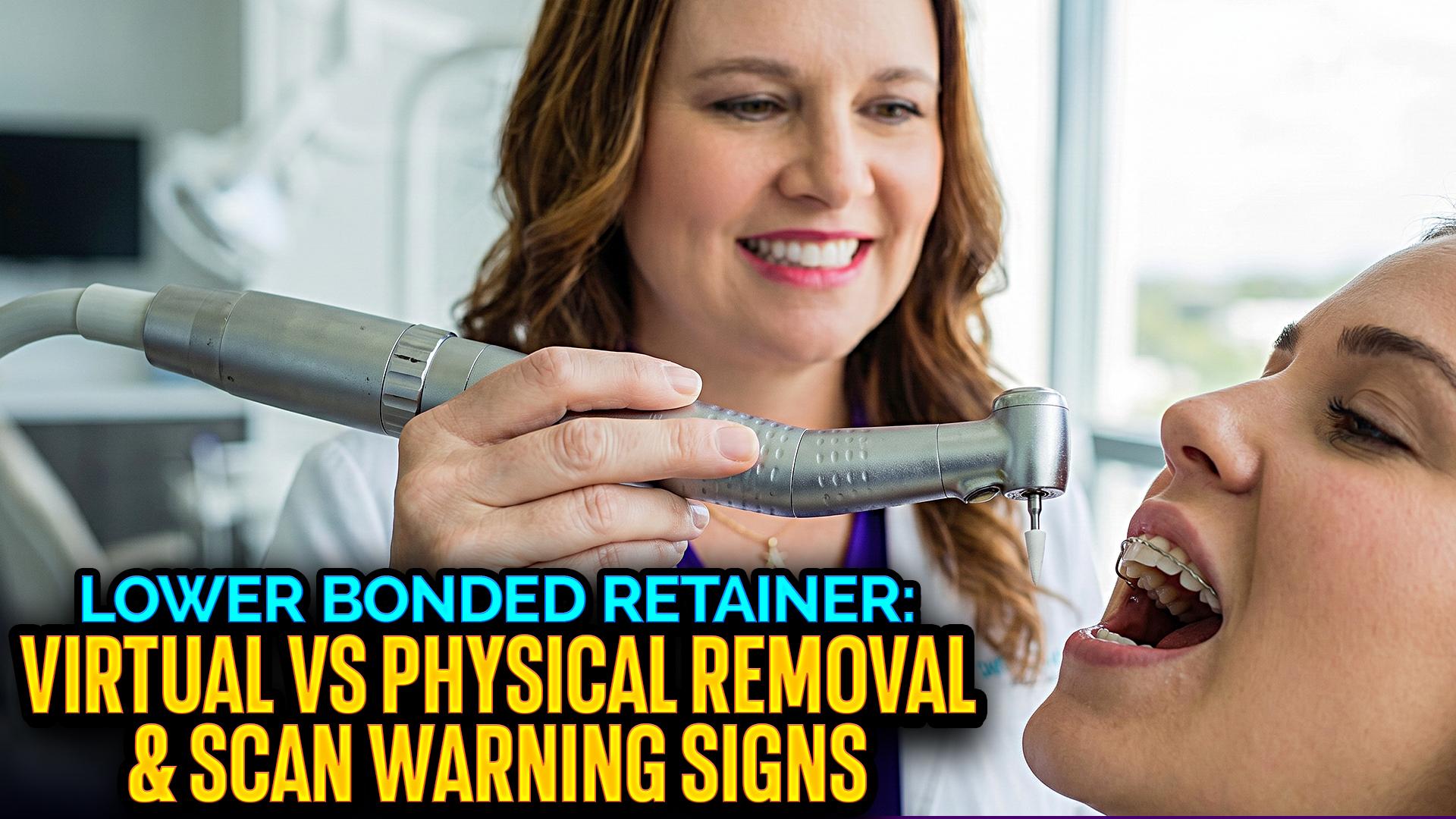
 The Hidden Risks of Bonded Retainers and Why Virtual Removal is a TrapBonded retainers are a staple in orthodontic treatment. Many general practitioners and pediatric dentists view them as a standard, permanent solution to maintain straight teeth. However, as an orthodontist, bonded retainers—whether upper or lower—often raise red flags.Taking a handpiece and zipping off a wire is easy mechanical work. The real challenge lies in managing the legal liabilities, underlying biological risks, and software tracking limitations that come with managing or removing these devices.Here is what you must evaluate before removing or placing a bonded retainer.Why Virtual Retainer Removal Failing in Aligner SoftwareWhen prepping a patient for an aligner retreatment case, clear aligner companies frequently offer to “virtually remove” the existing bonded retainer from the digital model. They tell you it is perfectly fine, but it is not.The Problem with AI GuessworkA bonded retainer is built in multiple layers. Moving from the tooth out, you have:The natural enamelThe adhesive layerThe mesh pads or wireThe artificial intelligence used by clear aligner software tries to guess where the tooth ends and the adhesive begins. AI is simply not smart enough to accurately distinguish between these layers.The Consequences of InaccuracyOverestimating Structure: If the software over-removes structure on the digital model, the fabricated aligner will have a gap on the lingual side. This gap functions like an air bubble, creating a software-induced tracking issue. The tooth will not move properly, forcing you into an early, costly refinement phase.Underestimating Structure: If the software under-removes the retainer structure, the actual physical aligner will be too tight or sit too high. It will fail to seat 100%, causing poor tooth movement and dragging out the overall treatment timeline.The Rule of Thumb: Do not rely on virtual removal. Remove the physical retainer first, clean off the residual composite completely, and then take a fresh digital scan.Red Flags: The Underlying Biomechanical FailuresIf a patient presents with a bonded retainer and their teeth have relapsed, it means something went wrong. Bonded retainers do not simply fail without cause. The breakdown is usually due to one of three issues:1. High Frenum Pulls and Anterior ContactsUpper bonded retainers are particularly problematic. If a patient had a large midline diastema caused by a high frenum pull, a bonded retainer is often slapped on as an insurance policy. However, if the patient has heavy anterior occlusal contacts, trapping the teeth tightly with a wire can cause severe trauma. This constant force frequently leads to root resorption—a major clinical failure and legal liability.2. Undiagnosed Myofunctional or Airway IssuesTeeth move when forces are out of balance. If a patient has a tongue thrust, habit, or airway issue, their tongue exerts massive outward pressure on the anterior teeth. Placing or leaving a bonded retainer against a tongue thrust creates a damaging counter-force system. The teeth are splinted together but pushed constantly, which accelerates root resorption and eventual structural failure.3. Severe Periodontal IssuesLower bonded retainers are notorious plaque traps. Even with excellent home care and specialized tools, keeping the lingual surfaces of lower incisors clean around a wire is incredibly difficult. For many patients, it leads to chronic calculus accumulation, gingival recession, and localized periodontal disease.Protecting Your Practice: Disclaimers and WarrantiesIf you decide to remove a bonded retainer for a patient, you inherit the legal responsibility for whatever happens to those teeth next. Without the proper paperwork in place, you are legally responsible for any subsequent relapse or underlying root damage.Before touching a bonded retainer case, protect your practice with these parameters:Require Myofunctional Screening: Do not touch retreatment or removal cases unless you have basic training to screen for tongue thrusts and airway blockages.Draft a Custom Informed Consent: Your paperwork must explicitly state the risks of relapse, existing periodontal issues, and the potential for underlying root resorption.Define Aftercare Boundaries: Orthodontists typically offer retainer maintenance for only one year post-treatment. If you place a bonded retainer as a general practitioner, establish clear boundaries regarding who pays for long-term checks and repairs.A smart strategy for general dentists is to tie retainer maintenance directly to hygiene compliance. Inform the patient that as long as they maintain their regular six-month hygiene appointments, you will inspect their bonded retainer at no additional cost. If they miss their checks and the wire breaks, the liability shifts entirely back to them.