The Frankel Appliance for Class II and Class III Bites
I. Introduction
- Dr. Amanda from StraightSmile Solutions revisits an old-school myofunctional appliance, the Frankel appliance.
- Developed around World War II, it remains a viable option for early Class II and Class III correction.
- While not her go-to, she acknowledges it works when used correctly.
II. The Philosophy Behind It
- Malocclusion exists because modern diets and habits lead to underdeveloped jaws.
- Soft foods, pacifiers, bottles, and a lack of prolonged breastfeeding prevent proper jaw growth.
- The Frankel appliance harnesses tongue pressure while reducing the negative forces of cheeks and lips.
III. How the Frankel Works
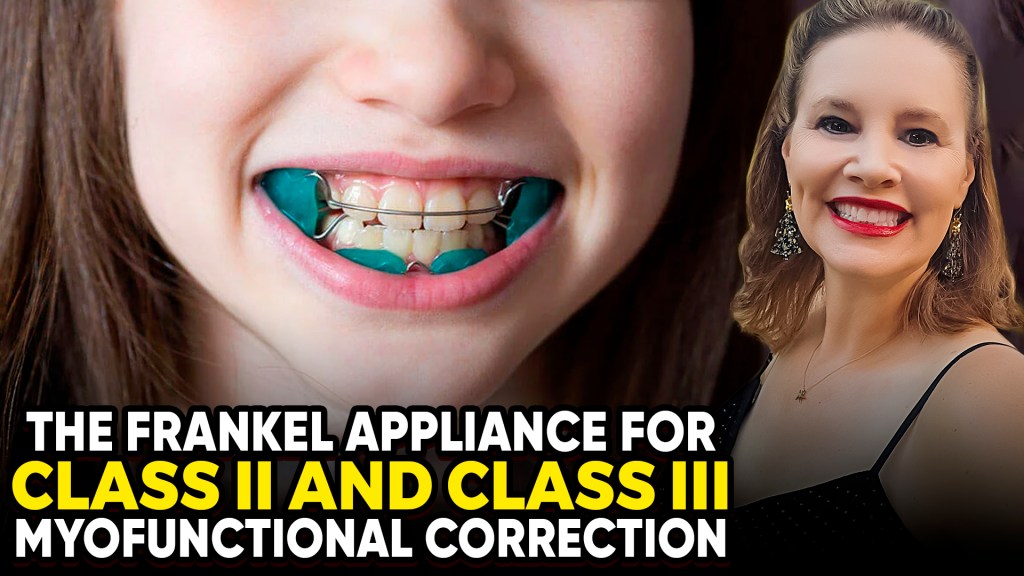
- The appliance uses acrylic shields to keep lips and cheeks away from the dental arches.
- This allows the tongue to expand the arches naturally.
- The labial bow prevents front teeth from moving forward, while the lower pad sits a few millimeters away, acting like a lip bumper.
- It places teeth in an edge-to-edge position, encouraging mandibular growth.
IV. Class II vs Class III Versions
- Class II Frankel (Frankel II):
- Labial bow at the upper front prevents proclination.
- Acrylic pads keep cheeks and lips off the lower arch.
- Encourages the lower jaw to grow forward.
- Class III Frankel (Frankel III):
- Pad is positioned in the upper vestibule, allowing upper incisors to flare.
- Lower bow prevents lower incisors from moving forward.
- Dr. Amanda still prefers reverse-pull headgear for Class III, but Frankel III remains an option.
V. Pros and Cons
Pros:
- One-piece, no attachments to braces.
- Cost-effective lab fee is around a few hundred dollars.
- Minimal office visits; no adjustments or rescans needed.
- Can achieve significant improvement in 6-9 months with compliance.
Cons:
- Extremely bulky. Difficult to speak, smile, or make facial expressions.
- Requires full-time wear for best results.
- Not comfortable for all patients; best for motivated, young kids (ages 7-9).
VI. Patient Selection and Compliance
- Ideal for homeschooled or younger children who may find the appliance “cool.”
- Compliance contract is essential: “This only works if you wear it.”
- Partial compliance yields partial results; finishing with braces is still an option.
- No guarantees, but it rarely makes things worse.
VII. Cost-Effectiveness
- Lab fee is roughly one-third that of Invisalign with MA.
- No monthly office visits, no rescans, deliver and monitor.
- A great option for budget-conscious families who need early intervention.
VIII. The Bottom Line
- Everything old is new again. The Frankel still works.
- Not the most comfortable or modern appliance, but for the right patient, young, compliant, and on a budget, it can deliver meaningful skeletal change
- Consider adding it to your Phase 1 toolkit alongside expanders, facemasks, and functional appliances.