
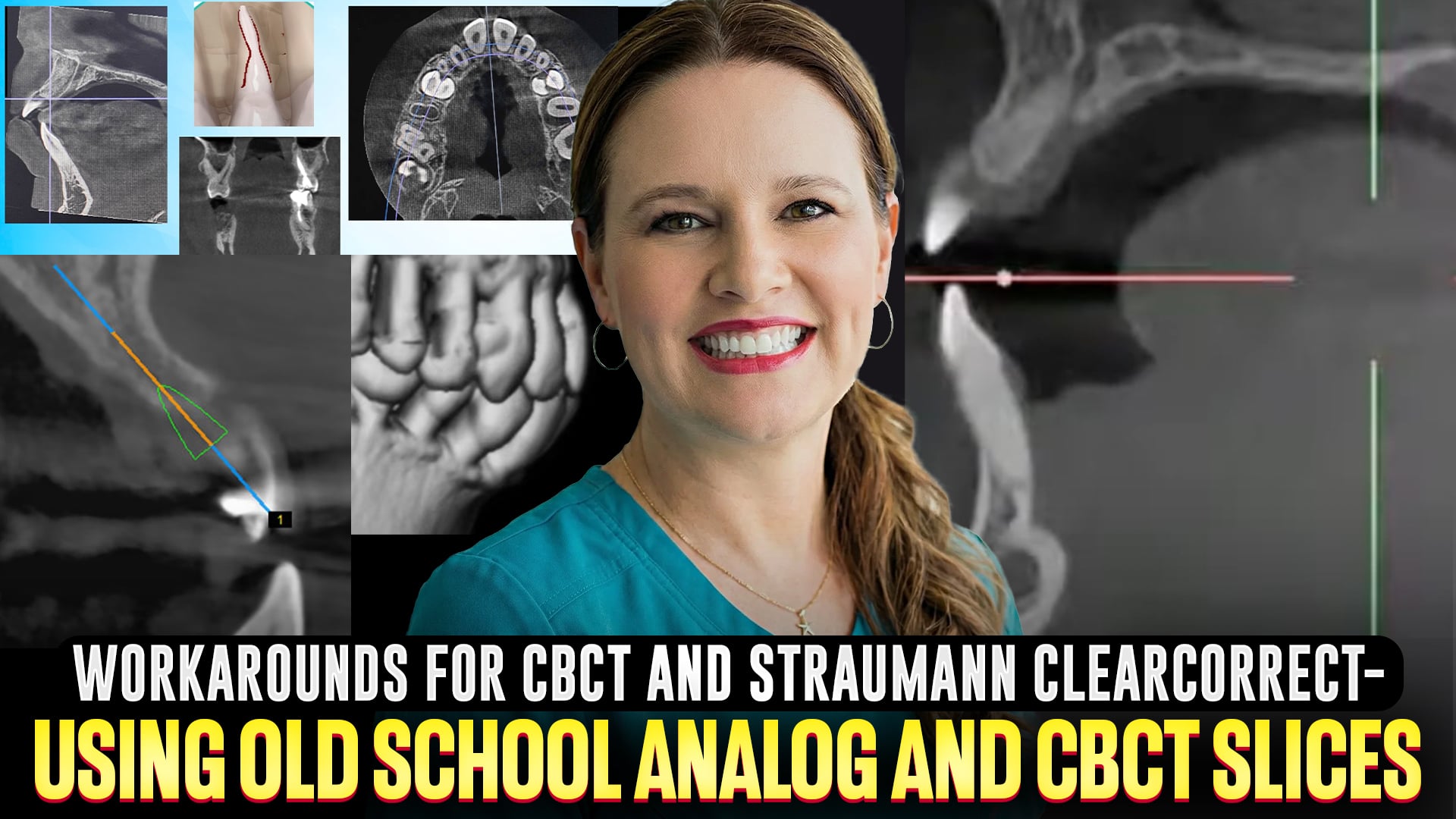
 The Dangers of “Expand and Pray”: Safe Workarounds for Clear Aligner Cases Without CBCTIn modern orthodontics, digital treatment planning tools can sometimes create a false sense of security. It is easy to look at a clean digital setup on a screen and assume the teeth will move perfectly into place. However, without the proper diagnostic imaging, you might blindly push teeth entirely through the cortical plates. In the dental community, this high-risk approach is known as the “expand and pray” workflow—and it is a recipe for permanent periodontal damage.The New Standard of CareIntegrating Cone Beam Computed Tomography (CBCT) into clear aligner planning has rapidly become the modern standard of care. Software that maps the roots against actual bone structure prevents catastrophic root perforations and dehiscence.Unfortunately, not all aligner systems offer seamless CBCT integration. When treating patients using these platforms, handing over a full box of 10 to 20 aligners without close monitoring creates immense liability. If a patient experiences severe bone loss or tissue sloughing, the responsibility falls squarely on the provider.Old-School Analog Solutions for Safer TrackingIf your clinic lacks CBCT functionality for certain aligner cases, you must switch from a “set it and forget it” mentality to proactive, old-school analog workarounds:The Palpation Technique (“Washboard Roots”): You must physically monitor the patient’s dental ridges at every single visit. Use your fingers to feel for root protrusions or a distinct “washboard” texture along the bone. If you detect washboarding, immediately halt expansion, tuck the teeth back into a safe digital envelope, and submit a refinement. This requires strictly seeing the patient every four to five weeks.The IPR-First Safe Plan: Treat the adult cortical plates like a solid brick wall. If the patient has severe crowding, do not attempt to expand or procline the arches blindly. Instead, play it safe by keeping the teeth within their existing skeletal boundaries and using Interproximal Reduction (IPR) or strategic extractions to create space.Slowing Down the Velocity: Standard software staging can sometimes move teeth too quickly for compromised bone. Consider slowing the movement velocity down by 2.5x to 3x the standard rate. Keeping patients on a strict seven-day wear cycle with much smaller fractional movements per tray provides a safer, more comfortable biological response.Ultimately, clinical common sense must override software defaults. By carefully selecting your cases and using your physical senses to track tooth movement, you can protect your patients from irreversible bone damage and protect your practice from malpractice risks.🦷 Medical DisclaimerThis blog post is for general educational and informational purposes for licensed dental professionals only. It does not constitute dental, orthodontic, or medical advice, and no doctor-patient relationship is formed. Individual consumers must consult directly with their own licensed dentist or orthodontist regarding any clear aligner treatments.