 The Blueprint for Neurodivergent Dental Students: How to Pick the Right Specialty
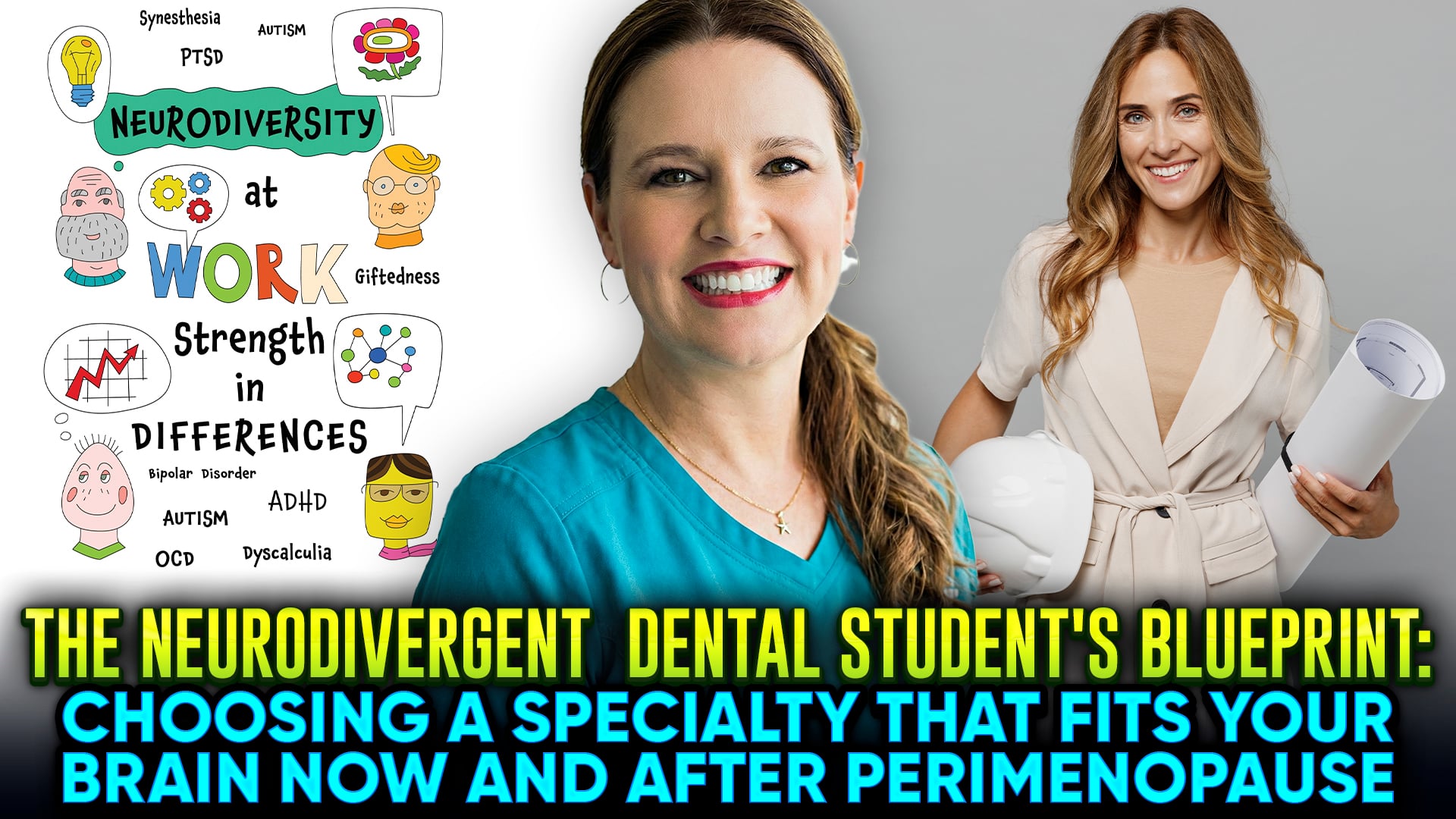
Choosing a career path in dentistry requires evaluating more than just your test scores and board results. For neurodivergent dental students—specifically those navigating ADHD, autism, or an “AuDHD” combination—the clinical environment you choose can heavily impact your long-term professional fulfillment and personal well-being.
Many neurodivergent clinicians, particularly women, mask their daily challenges through high cognitive ability and strong support systems during their early academic careers. However, a major mid-life shift or drop in dopamine can unmask these underlying traits. Planning your specialty around how your brain naturally processes information is the best way to prevent clinical burnout.
The ADHD Brain: Built for Interest and Novelty
The typical ADHD brain operates on an interest-driven nervous system that thrives on novelty, stimulation, and rapid problem-solving.
-
- The Superpowers: Individuals with ADHD are exceptionally fast and calm during severe clinical crises, bringing high-level creative problem-solving and intense hyperfocus to urgent situations.
- The Traps: Repetitive administrative tasks, slow-paced environments, or highly predictable schedules can lead to severe stagnation and understimulation.
- Optimal Fits: Oral surgery, emergency medicine, trauma surgery, and urgent care dentistry provide the necessary pace and constant procedural variety to keep an interest-driven brain fully engaged.
The Pure Autistic Brain: Mastery and Predictability
The pure autistic brain often excels at deep technical mastery, finding comfort in structured, repeatable protocols.
-
- The Superpowers: This neurotype brings unparalleled deep focus, exceptional accuracy, and systemic logic to complex medical challenges.
- The Traps: Environments with high social demands, unpredictable patient behaviors, and loud, chaotic sensory stimulation can cause rapid burnout.
- Optimal Fits: Oral pathology, oral medicine, and dental radiology allow for specialized technical expertise within low-sensory, highly controlled environments that limit overwhelming patient face-time.
The AuDHD Combination: The Dynamic Puzzle
An AuDHD individual balances both autistic and ADHD traits. While one trait can often compensate for the weaknesses of the other, an unmanaged balance can occasionally lead to a dual flare-up.
-
- The Superpowers: When the systemic focus of autism combines with the charismatic, highly communicative nature of ADHD, it creates a powerful clinical skill set. You can see solutions to structural problems rapidly while remaining exceptionally skilled at talking to people.
- The Traps: The high-volume social interaction required to run a busy multi-chair practice can completely empty your gas tank by the end of the day, especially when dealing with workplace conflict or insurance restrictions.
- Optimal Fits: Orthodontics and dentofacial orthopedics serve as excellent fields. The specialty acts as a systemic, highly predictable digital puzzle that constantly evolves alongside new technologies, providing the ideal baseline structure for the autistic traits alongside the fluid novelty needed for ADHD.
Strategic Career Planning for Long-Term Success
If you recognize these neurodivergent traits in yourself, start designing a practice model built on flexibility. Avoiding traditional insurance models in favor of a fee-for-service or a cash-based access-to-care structure can eliminate administrative burdens. Build structural boundaries into your schedule early so you never find yourself locked into an unyielding, overbooked routine that your sensory system cannot sustain.