
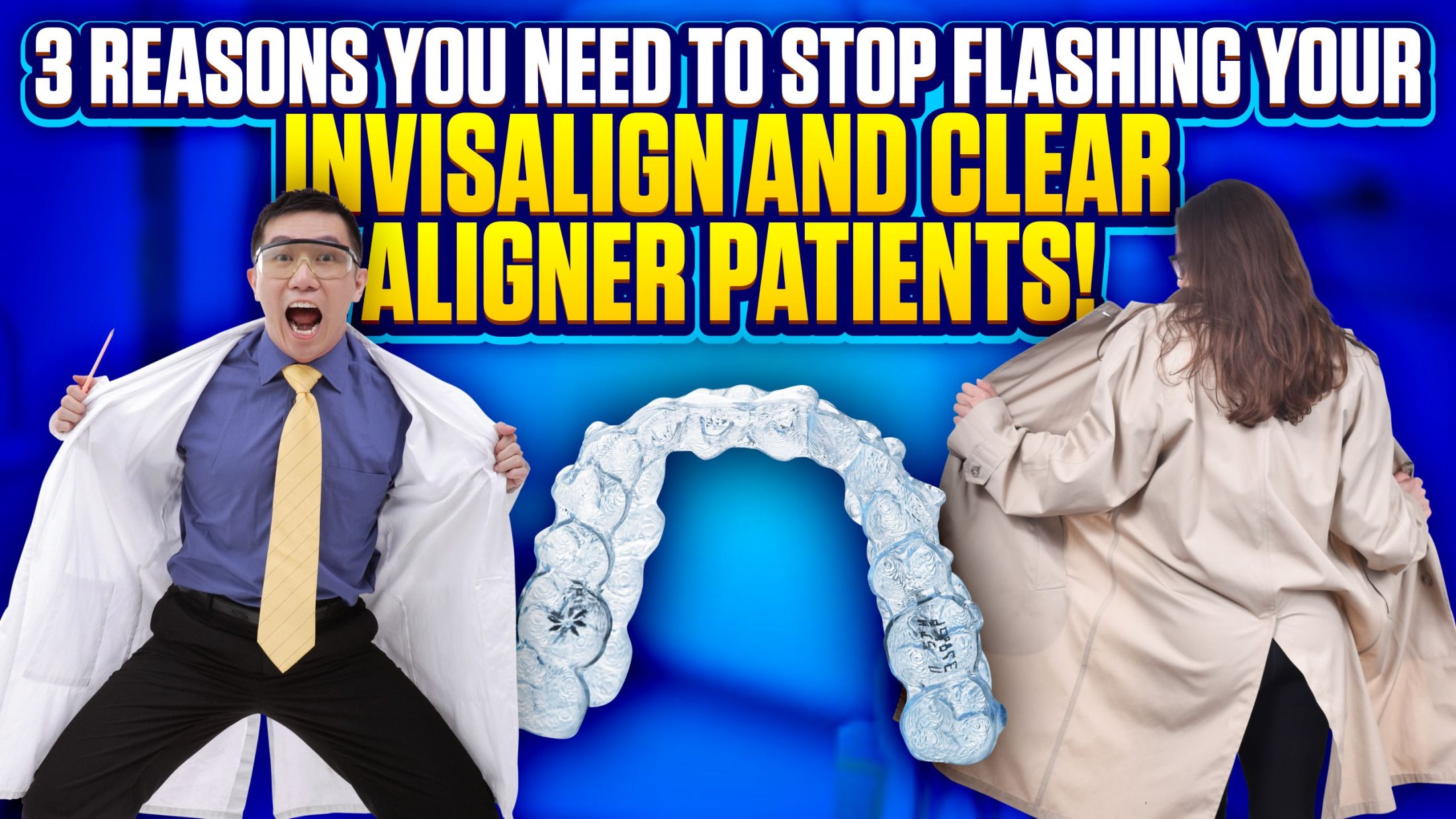
Stop Flashing your Invisalign and Clear Aligner Patients!
Dr. Amanda is a dental professional specializing in precise aligner treatments and runs a website called Straight Smile Solutions (straightsmilesolutions.com). Here are some insights from Dr. Amanda about the issues that can arise with clear aligner cases, mainly focusing on the problem of flashing around the attachments. She outlines the top three reasons practitioners may need help with aligner cases.
In orthodontics, “flashing” refers to using a high-intensity light source to cure or harden dental materials such as orthodontic adhesive or dental composite. The light source, a dental curing light, emits a specific wavelength that activates photoinitiators within the material, initiating a chemical reaction that causes the material to harden or set.
The first reason is the need for proper case selection. Choosing the suitable case for the appropriate system is crucial for successful outcomes. Dr. Amanda suggests understanding the categorization of cases as green, yellow, or red and learning how to select the proper case for a specific system can significantly improve treatment results.
The second reason is an improper treatment plan. Dr. Amanda emphasizes the importance of orthodontists thoroughly understanding the software and not solely relying on the technicians’ recommendations. She explains that accepting the initial treatment plan without modifications can lead to suboptimal outcomes. Dr. Amanda shares her experience of going through a meticulous process to customize treatment plans, which involves multiple iterations to achieve a clean check or a well-prepared treatment plan.
The third reason is the need for an accountability loop. Dr. Amanda emphasizes the significance of compliance in orthodontic treatment and suggests that many general and pediatric dentists often need to verify their accuracy to accept patients’ claims. She stresses the need for a virtual accountability loop to monitor patients wearing clear aligners, as it helps ensure compliance and reduces the likelihood of complications and refinements. Companies such as DentalMonitoring and InHand Dental provide software solutions for accountability loop systems.
Dr. Amanda advises practitioners on how to address the issue of flashing. She recommends avoiding using flowable materials for attachments and instead suggests learning to pack the trays properly. Dr. Amanda shares a technique where trays can be pre-loaded the night before the appointment and stored in airtight containers. This approach allows for a more relaxed chair-side loading process and saves time. She also suggests initially trying the first tray without attachments to check for any manufacturing issues or teeth shifting before attaching them. If the tray fits perfectly, the attachments can be added. However, a rescan and warranty fit may be necessary if there are tracking issues.
Dr. Amanda also emphasizes the importance of removing flash and suggests using a black light to identify and clean off any excess flash. She warns against leaving trays that do not fully seat and recommends having patients return to the office before progressing further with the treatment.
Conclusion
Dr. Amanda from Straight Smile Solutions emphasizes the importance of addressing the common issues associated with clear aligner cases. By focusing on proper case selection, creating customized treatment plans, implementing an accountability loop, and avoiding flashing, orthodontists can enhance the success and efficiency of their aligner treatments.