
Should You Start Comprehensive or Phase 2 Ortho? Or Wait for 7’s? — Impactions, Progress Panos
I. Introduction
● Dr. Amanda from StraightSmile Solutions tackles the perennial question: When is it safe to start Phase 2 or comprehensive treatment?
● The answer hinges on those pesky second molars—the “sevens”—and whether they’re ready to play nice.
● Starting too early or too late can derail your case, waste time, and even put you at legal risk.
II. Phase 1 vs. Phase 2: A Quick Refresher
● Phase 1 focuses on front teeth, bite correction, transverse, AP, and vertical issues—plus creating space for canines.
● Phase 2 should be “easy breezy” if Phase 1 was done right. You’re simply utilizing the space already created.
● If a Phase 2 case looks like a train wreck, you likely missed something in Phase 1—habits, ENT issues, or growth problems.
III. The Second Molar Dilemma: When to Wait
● Second molars (sevens) are the usual holdup for starting comprehensive treatment.
● Look for symmetry. If all four are lagging, it’s probably genetics—not a red flag.
● Don’t start Phase 2 unless you’re confident all second molars will erupt within the next year—or you have a clear plan to remove an obstruction.
● Common obstructions: roots of first molars or third molars crisscrossing, vertical discrepancies, or over-eruption of opposing teeth.
IV. The Risk of Waiting With Active Treatment
● Here’s the hard truth: Leaving braces on or continuing active aligner treatment—while waiting for teeth to erupt is *below standard of care*.
● Why? Prolonged treatment increases root resorption risk. And if that happens, guess who’s liable?
● Patients have more access to information (and lawyers) than ever. Don’t give them a reason to come after you.
V. Taking a Break: The Sloppy Bonded Solution
● Sometimes, you need to hit pause. Take a break from active treatment while waiting for eruption.
● During breaks, use “sloppy bondeds” temporary bonded retainers made in-house, or simple vacuum-formed retainers.
● These aren’t meant to last forever; they’re psychological and space-holding placeholders.
● Important: You cannot charge extra for temporary retention. It’s part of the original treatment fee.
VI. Payment Plans and Pauses
● Extended payment plans get messy when treatment pauses. Patients often stop paying when they don’t see active progress.
● Consider third-party financing or build pauses into your initial treatment plan discussion.
● If parents are iffy about necessary X-rays for monitoring, reconsider taking them on as long-term patients.
VII. When Intervention Is Necessary: The Halterman Appliance
● Love a good Halterman for up righting funky second molars but it’s usually not needed if you catch things early.
● If you’re too late, Haltermans can work, but no promises. Some teeth fail despite your best efforts.
● Key rule: Everything else should be finished before you upright a molar. Use heavy 19×25 stainless steel and treat it like an exposure case.
VIII. The Bottom Line
● Keep your eye on second molars. They’re tricky and can sink a beautiful case.
● Intervene early, but not aggressively. Often, extracting a wisdom tooth and using the spacer technique is better than heavy mechanics.
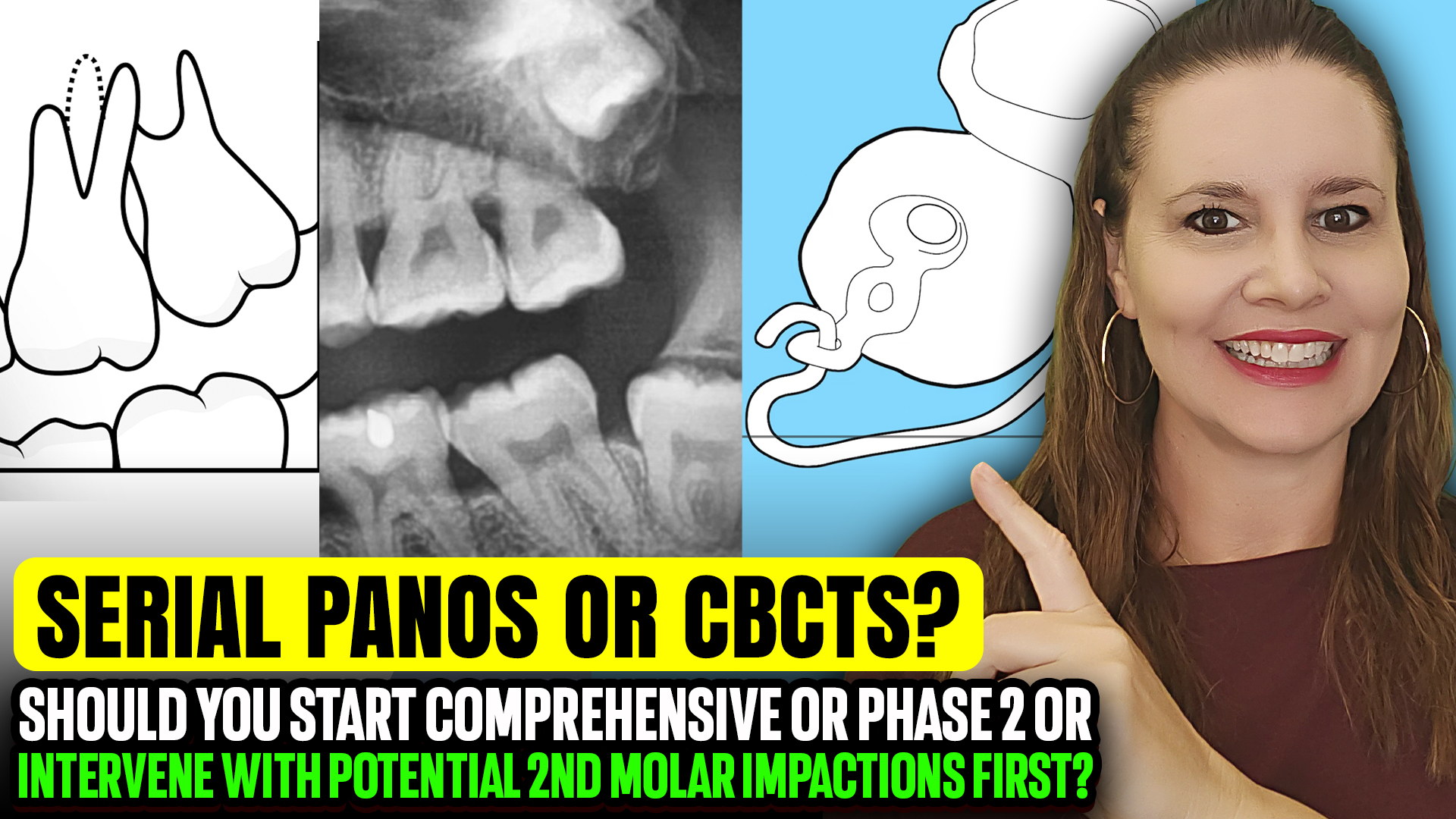
● Serial Panos or CBCTs are essential for monitoring to make sure patients are on board with radiation.
● And remember: If you do it right, Phase 2 should be the easy part.