
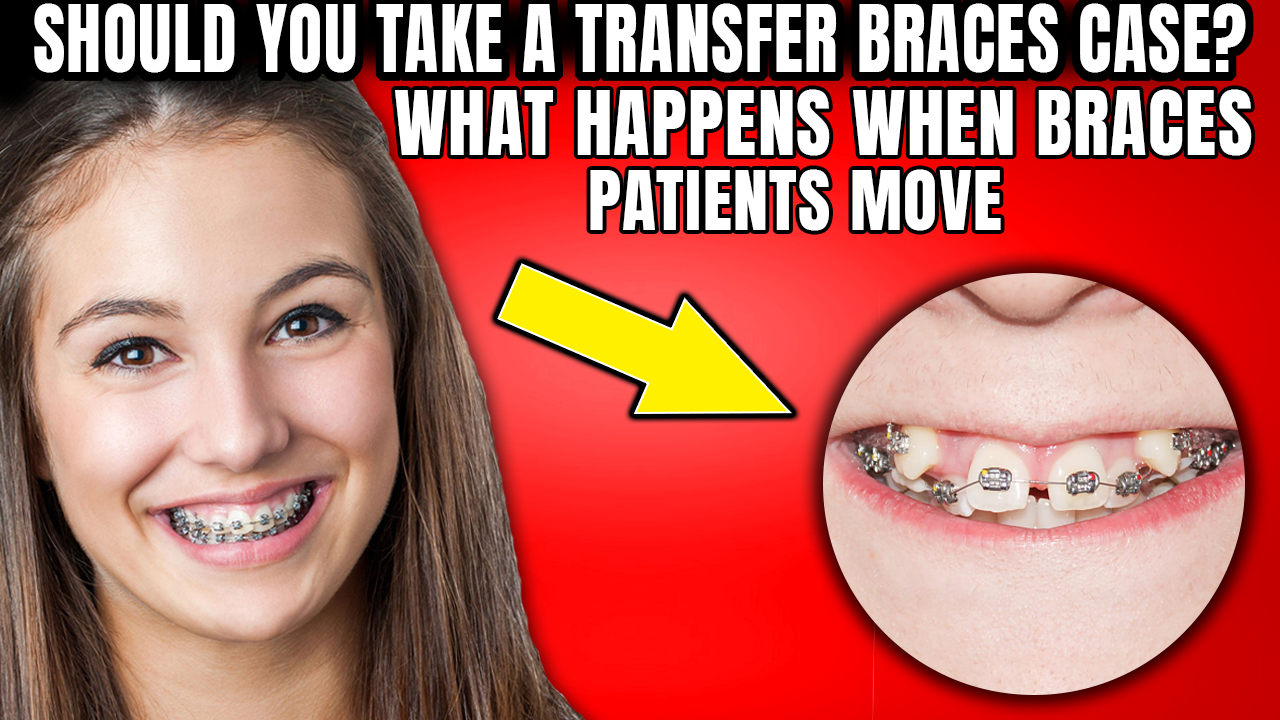
Should I Take a Transfer Braces Case?
When it comes to your case selection, making sure you know whether or not to take on a transfer braces case is hugely important. However, this is something that many general dentists just starting with ortho overlook, often assuming that a transfer case will simply give faster braces results than starting from square one. However, this may not always be as straightforward as it seems, and so we’ve outlined what you should consider when braces patients move to help you decide whether or not to take these cases.
Should I Take on Braces Transfer Cases?
Before you take on a braces case that’s already started with another provider, check whether the patient has any paperwork, and check the brackets and the type of braces. Usually, patients will have the release, the transfer documents, their initial records, the treatment plan, the bracket type, and the like in a neat packet, which can help inform your decision.
If you do not have this information, tackling the braces case as a continuation may be risky. As such, we here at Straight Smile Solutions generally recommend avoiding any transfer cases that do not have this information at minimum. If you are concerned, you can potentially debond the current braces and then complete a new set of records and rebond the braces.
Before proceeding with any case, always complete a perio exam, get clearance and signed off by a general dentist, and ensure all the x-rays and initial records are taken. Then, consider the bracketing; if it’s not already 100% perfect, it can be easier to fully remove the brackets than repositioning several.
What About Invisalign?
If you have a transfer patient who has already commenced with Invisalign treatment, this usually shouldn’t be a problem, assuming it’s a US to US transfer case; in this scenario, it’s standard of care for the dentist to fill out a transfer form, which should make the case easier. Always get a copy of the original initial records and progress records, at least, to help ensure you are taking on a case that has been treated appropriately.