
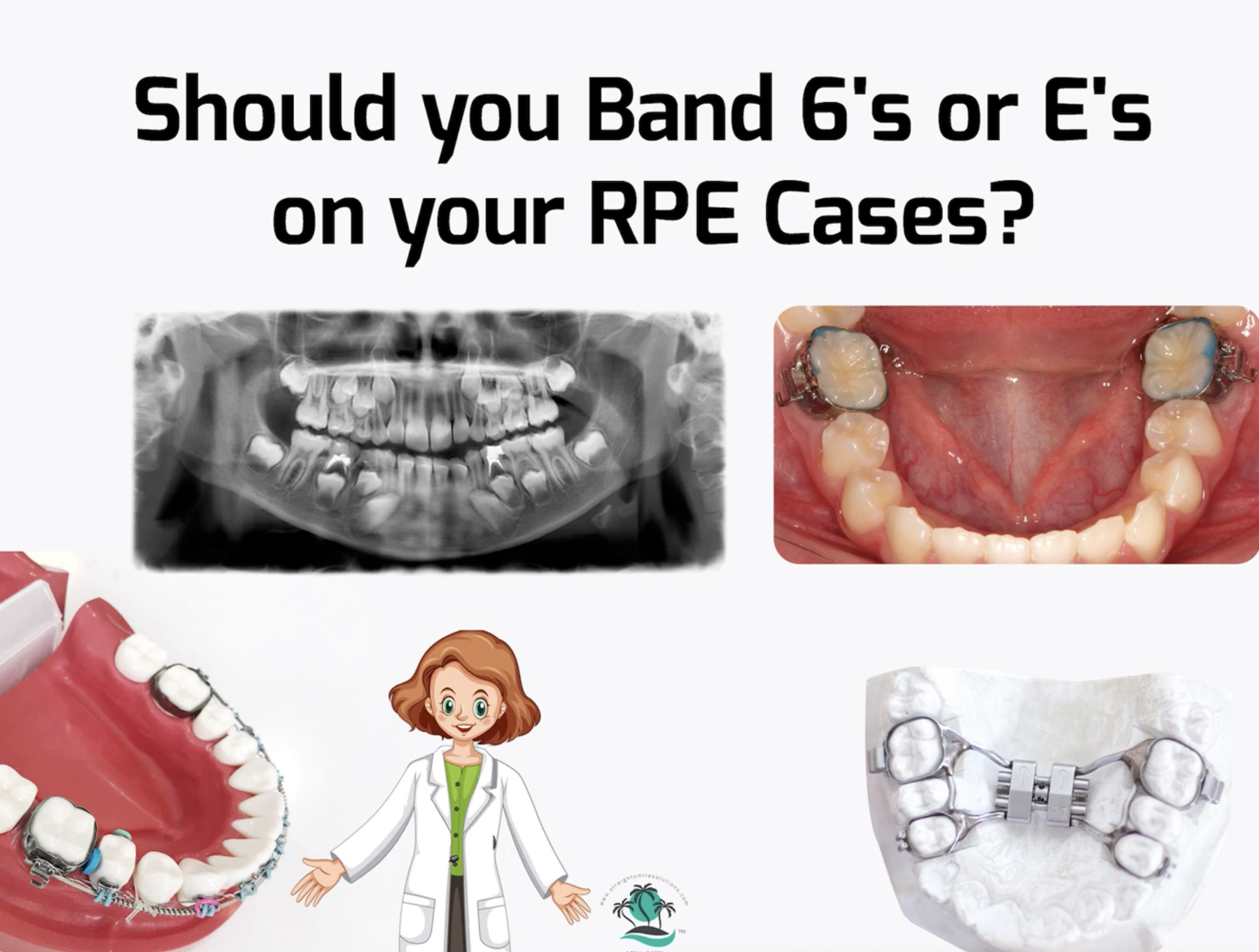
If you have an RPE case, it’s important to consider whether you should be banding Es or 6s. 6s are the first molars that come in when patients are around six years old. Meanwhile, Es are the second baby molars that come in at around the age of two years. However, it’s not clear which you should be banding in RPE, which is where we can help.
Should I Band Es or 6s in an RPE Case?
If you have an RPE case in orthodontics, you’ll need to consider your treatment plan carefully. Ideally, take an x-ray of the patient before going any further, as this can help influence your decision.
The main benefit of banding the Es is that they tend to be a little more comfortable for the patient, and the teeth will fall out later regardless. However, if the Es have begun to fall out and the 6s are through, these can be banded as well.
Critically, if you think that the patient’s baby teeth are likely to fall out during or shortly after the treatment plan, it’s worth not banding those teeth. Check the x-ray and try to make sure that you’ll have at least two to three months to complete the RPE case before any banded Es fall out.
And, of course, a more gradual orthodontics approach may give better results, especially in a general dentistry clinic, so ensuring you have plenty of time to complete the case can help reduce the risk of complications.