
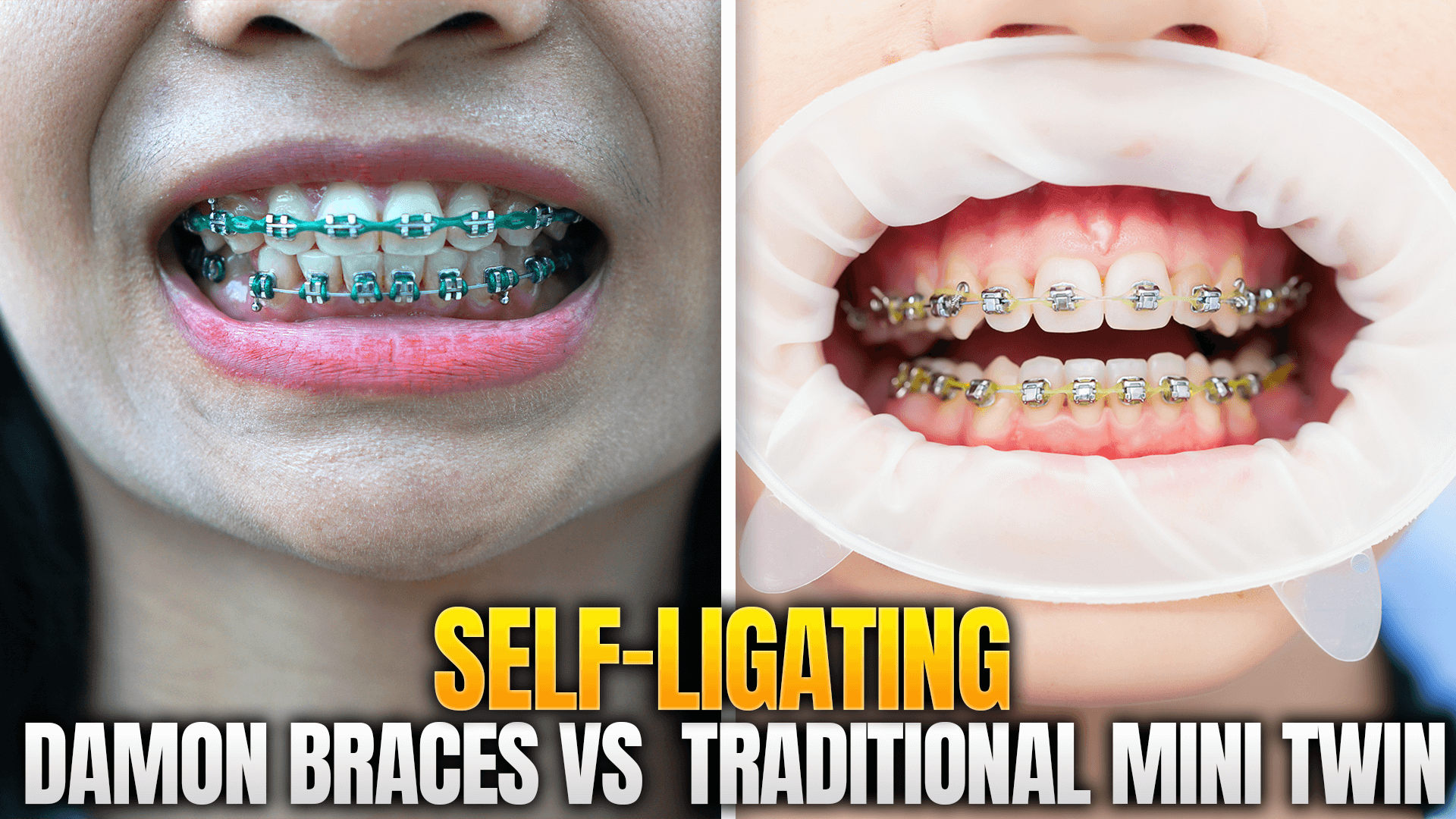
Choosing the ideal type of brackets isn’t necessarily a two-minute task. One decision you’ll need to make here is whether to use self-ligating braces (sometimes known as Damon braces) or a traditional brace design. Luckily, we’ve summarized some of the main things you need to know when developing your treatment plan to help.
How Self-Ligating Braces and Traditional Mini Twin Braces Differ
Self-ligating brackets can be an excellent option to cut down on the number of times you need to see a patient during their braces treatment plan. Critically, if you’re in the initial stage and undoing crowding, self-ligating brackets can potentially mean patients only need to come into the clinic every two or three months; this is substantially less often than traditional rubber tie or o-ring cases, which may need changing every four to six weeks.
However, it’s worth noting that self-ligating braces are significantly more expensive to purchase in many cases.
When To Use Each Type
Traditional mini twin and self-ligating braces can lend themselves to different scenarios. If you have a case that shows crowding, self-ligating brackets may be quicker or may not need as many visits to the orthodontics clinic.
However, if the patient needs spacing, self-ligating braces usually won’t offer a benefit in terms of clinic visits. After all, the patient will still need to come in regularly to get their virtual power chain changed anyway.