
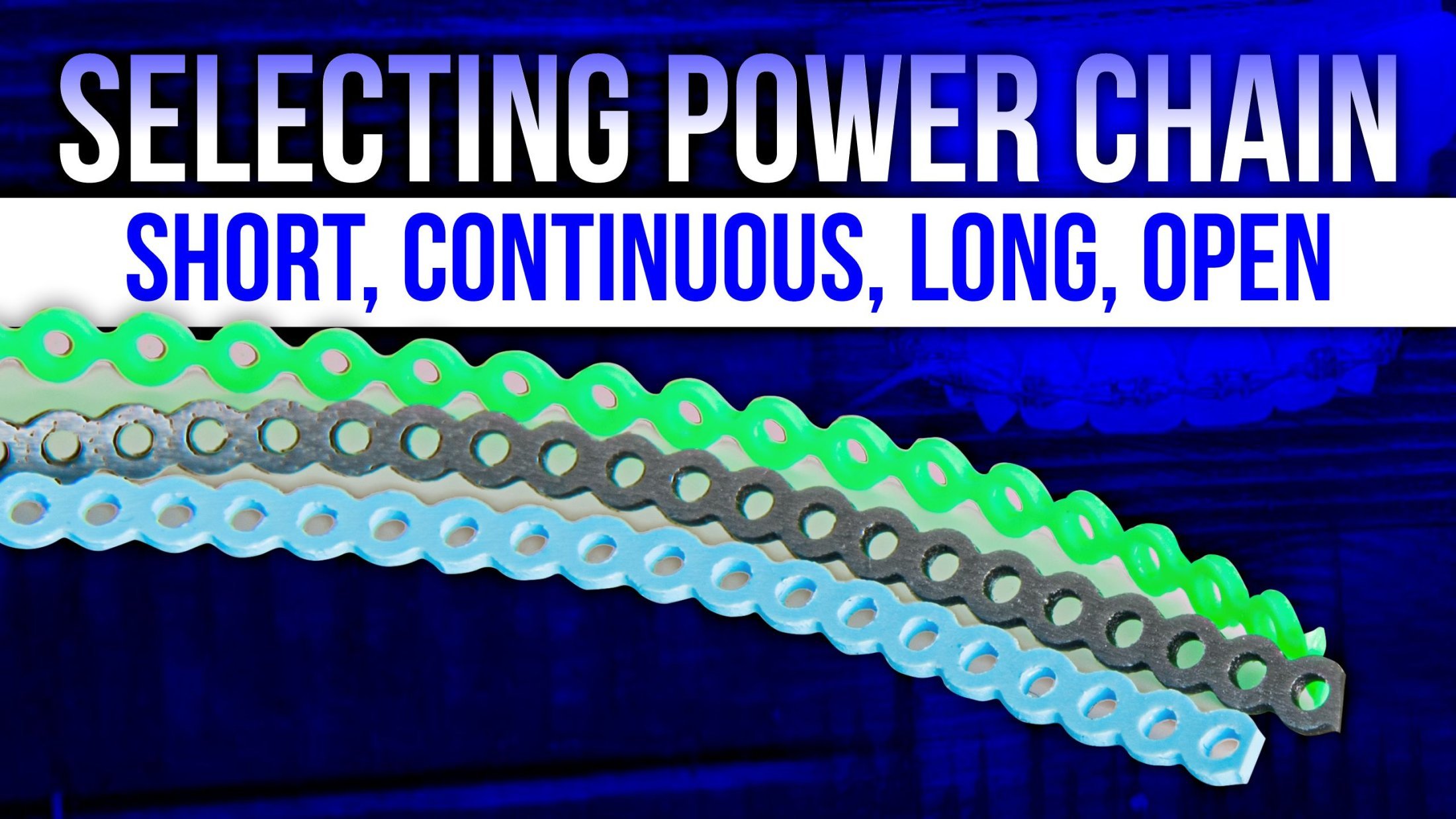
When it comes to orthodontic treatment, selecting a dental power chain is crucial in achieving desired results. A power chain is an orthodontic accessory to close gaps between teeth, maintain space, or align teeth. It consists of a series of elastic links connected together in a continuous chain. Power chains come in different types, including short, long, and continuous.
Let’s explore the characteristics of these power chains to understand how to select the most suitable one for your orthodontic needs.
Short power chains are ideal for closing gaps between teeth. They consist of shorter modules that apply concentrated pressure to specific areas. Short power chains can be an effective option if small spaces between your teeth need to be closed.
As the name suggests, continuous power chains provide a continuous force along the archwire. These chains are commonly used for overall tooth alignment and maintaining consistent pressure on all teeth. They are versatile and can be used in various orthodontic cases.
Long power chains are designed to cover a larger distance between brackets. They are useful for cases where multiple teeth need to be moved simultaneously. Long power chains distribute force evenly across multiple teeth, facilitating coordinated movement.
When selecting the right type of power chain, choosing a continuous power chain is recommended as it eliminates the need for short and long power chain variations. This saves costs and simplifies the purchasing process. Continuous power chain is available in various colors, but it is not necessary to stock every color. Selecting a few colors based on preference is sufficient.
To apply a power chain, the orthodontist estimates the length required and cuts a piece of chain. The chain is then stretched and placed around the teeth, starting from one side and progressing to the other. The chain should be stretched gently without excessive force. Ensure the power chain is centered and properly positioned on the teeth. Single ties may secure the power chain on specific teeth, particularly if not extended to the molars.
Regular check-ups are necessary for power chain patients, as the chain may lose its strength over time and require replacement. The power chain should be replaced every one to two years. Monitoring the patient’s progress and adjusting the force is important to achieving the desired orthodontic outcomes.
Summary
Power chain is a versatile orthodontic accessory used for various purposes in orthodontic treatment. Appropriately selecting and using a continuous power chain can simplify the process, save costs, and help achieve the desired tooth alignment. Regular monitoring and replacement of power chains are essential for effective treatment.